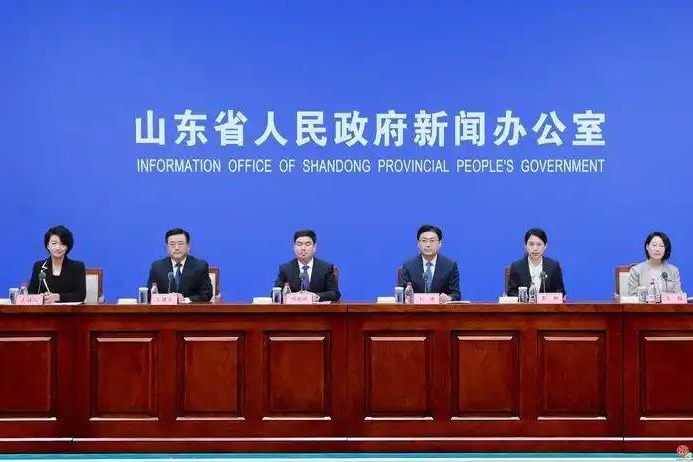
Eastern China’s Shandong province is undertaking a comprehensive restructuring of its academic curriculum to directly support the advancement of its modern industrial ecosystem, education officials announced Wednesday.
During the current 14th Five-Year Plan period (2021-2025), more than 80% of newly established degree programs—spanning doctoral, master’s, undergraduate and vocational levels—have been strategically allocated to high-demand sectors. These initiatives address critical shortages across 16 pivotal domains including integrated circuit technology and low-altitude economic development.
“Industrial transformation demands corresponding upgrades in academic disciplines and talent development strategies,” stated Wang Jianfu, senior official at Shandong Provincial Department of Industry and Information Technology. He highlighted the urgent need for specialized programs in cutting-edge fields such as artificial intelligence, quantum technology, and integrated circuits, while advocating for strengthened collaboration between educational institutions and industrial enterprises.
According to Wang Hao, Deputy Director of Shandong Provincial Department of Education, the province has established ambitious targets: by 2027, over 85% of newly created disciplines will directly respond to national and regional requirements. This alignment between academic offerings and industrial needs is projected to exceed 95% by 2030.
Rizhao Polytechnic exemplifies this educational transformation, having developed a specialized curriculum deeply integrated with local economic pillars including marine equipment manufacturing and steel production. “Our institutional philosophy ensures that industrial talent requirements directly shape our academic program development,” explained Xiao Mei, the institution’s Party Secretary.
Over the past three years, the polytechnic has dynamically adjusted its offerings by introducing 18 high-priority programs, phasing out seven obsolete curricula, and comprehensively modernizing 29 traditional specialties to maintain perfect synchronization with evolving industrial demands.