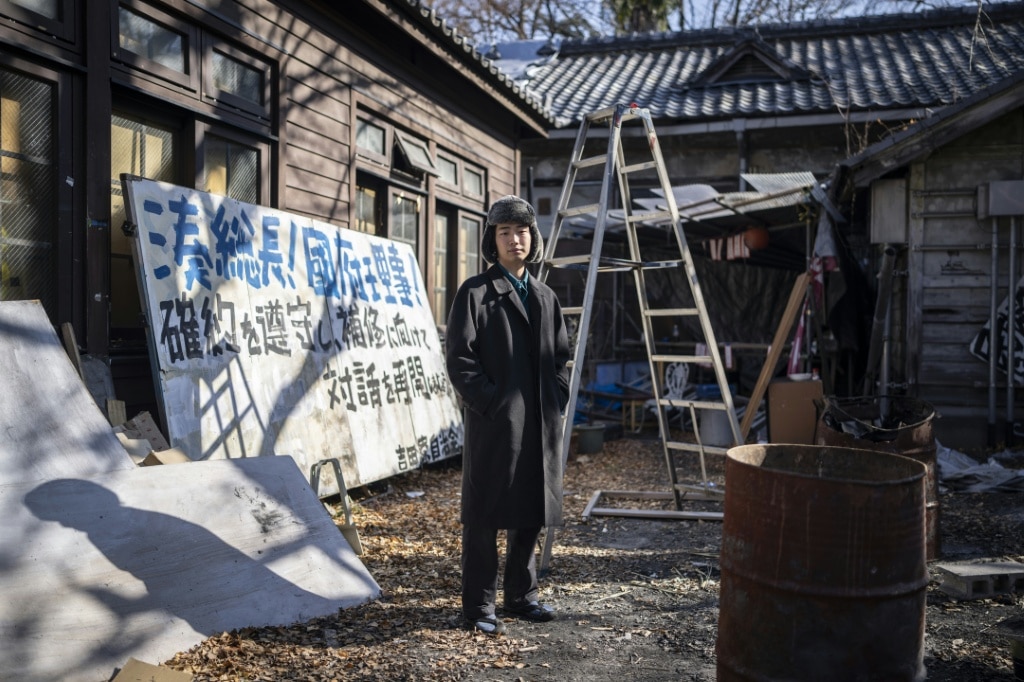
Japan’s oldest student dormitory, Kyoto University’s self-governed Yoshida Dormitory, stands at a critical juncture as students prepare for temporary evacuation by March’s end. This 113-year-old institution, comprising two residential buildings and a graffiti-covered dining hall, represents a radical departure from traditional Japanese educational housing through its commitment to student autonomy and egalitarian principles.
The dilapidated facility features crumbling clay walls, accumulated debris, and rodent infestations, yet residents cherish it as a sanctuary for free thought and democratic living. Unlike conventional Japanese dormitories that enforce strict hierarchies, Yoshida Dormitory eliminates seniority-based formalities, enabling freshmen to interact equally with senior members. Students collectively manage operations through consensus-based town hall meetings and independently select new residents.
Monthly rents of merely 2,500 yen ($16) provide crucial housing security for economically disadvantaged scholars. The aging ‘gento’ building, despite its squalid conditions with broken windows, rusty toilets, and pervasive spider webs, serves as the community’s spiritual core where students gather for mahjong, video games, and shisha smoking.
The dormitory’s history is marked by protracted conflict with university authorities. Fierce 1980s anti-closure protests resulted in arrests and injuries, while renewed tensions emerged in 2017 when Kyoto University declared the structures seismically unsafe. The institution filed lawsuits against resisting students in 2019 before reaching a court-mediated settlement last August.
Critics, including retired faculty member Masaaki Sakagami, allege renovation plans mask intentions to dismantle the dorm’s self-governance model. ‘A self-governed dorm full of students exercising critical thinking to challenge university authorities is something they want to eliminate,’ Sakagami stated.
Kyoto University maintains that renovation details ‘are currently under consideration,’ though many fear the historic building’s character will be irrevocably altered. The dorm’s cultural significance extends to its construction materials, reportedly including timber imported from pre-war Japanese-occupied Taiwan—a historical artifact residents believe shouldn’t be erased.
Alumnus Yuichi Sakamoto, 39, who frequently returns to socialize, expressed concerns: ‘I can easily picture a fence being abruptly erected one day to demolish it for a futuristic structure, which would be dreadful.’ For current resident Masako Ueda, 39, the shabby environment represents cherished humanity: ‘I feel at ease with this place. It’s steeped in humanity—a squeaky-clean place feels lifeless to me.’