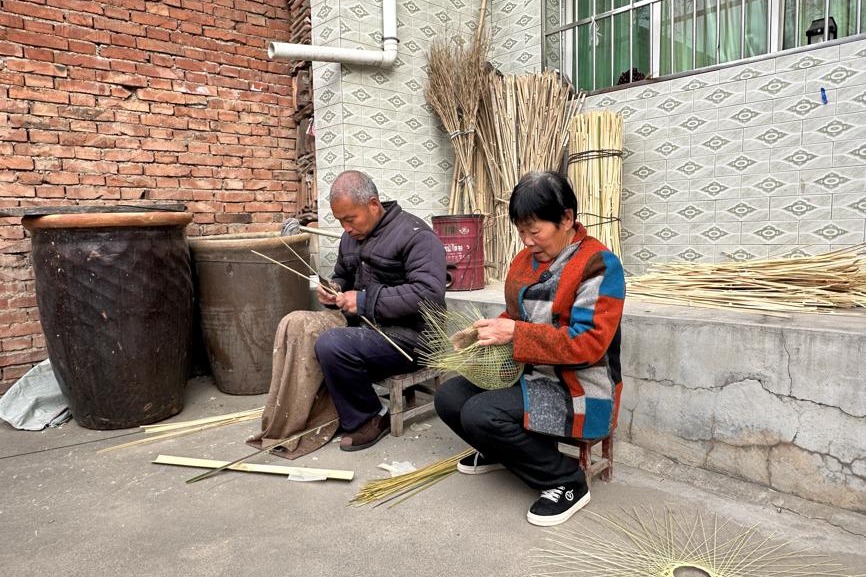
In the quiet workshops of Shaanxi province, 71-year-old Zhang Sixian and his wife Geng Meirong are sustaining a luminous legacy as Chinese New Year approaches. The elderly artisans dedicate themselves to preserving the ancient art of bamboo-weaving lanterns—a recognized intangible cultural heritage with four centuries of historical significance.
The meticulous creation process demands eight precise手工 procedures: splitting, hammering, separating, piercing, weaving, closing, shaping, and pasting. This division of labor sees Zhang mastering the initial four steps, transforming raw bamboo into delicate strips, while Geng demonstrates remarkable dexterity in completing the remaining stages, assembling scattered materials into exquisite lantern frameworks.
This traditional craft represents more than seasonal decoration—it embodies cultural continuity and artistic dedication. Each handmade lantern carries the weight of four centuries of craftsmanship, connecting contemporary celebrations to Ming Dynasty traditions. The couple’s work has gained recognition beyond their local community, drawing attention to the importance of preserving traditional arts in modern China.
As mechanization threatens many traditional crafts, the Zhang family’s commitment to manual craftsmanship offers a compelling narrative of cultural preservation. Their lanterns not only illuminate homes during Spring Festival celebrations but also shine light on the enduring value of human artistry in an increasingly automated world.