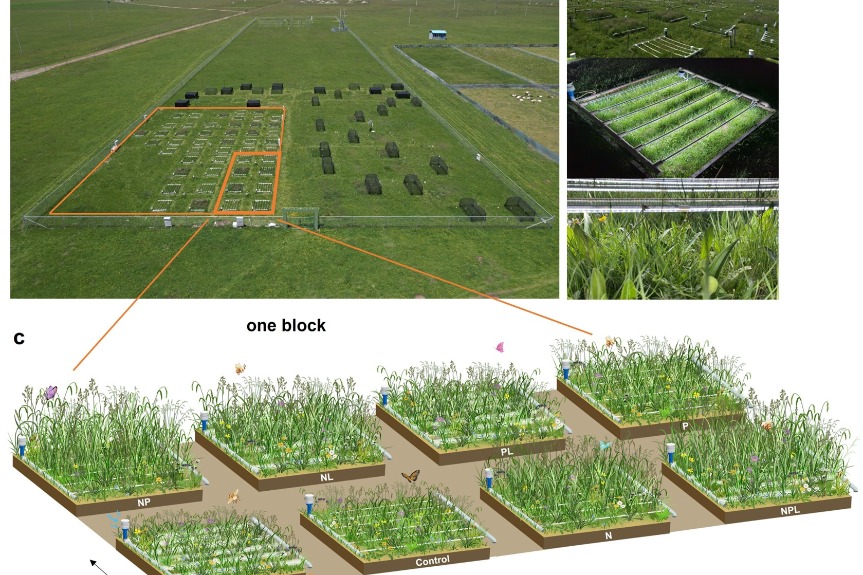
A groundbreaking study conducted by researchers from Lanzhou University in China and the Georgia Institute of Technology in the United States has unveiled that light competition plays a pivotal role in the loss of plant diversity caused by eutrophication. Published in the journal *Global Change Biology*, the research provides critical insights into the mechanisms driving biodiversity decline and offers potential strategies for ecosystem preservation. Eutrophication, characterized by excessive nutrient accumulation, has long been recognized as a major threat to plant diversity. However, the direct impact of light limitation under eutrophication conditions had not been thoroughly investigated until now. The study, led by Professor He Jinsheng of Lanzhou University, focused on alpine grasslands in the northeastern Qinghai-Tibet Plateau, a region renowned for its rich species diversity. Over three years (2021–2023), the team conducted field experiments using full-spectrum LED light strips to simulate additional light and introduced varying levels of nitrogen, phosphorus, or both. The findings revealed that supplementary light could restore lost plant diversity across all nutrient scenarios. Under nitrogen enrichment, light addition primarily promoted species gains, while under phosphorus enrichment, it reduced species losses. When both nutrients were enriched, light addition simultaneously increased species gains and minimized losses. These effects were driven by shifts in the colonization and extinction patterns of resource-acquisitive plant species. Professor He emphasized that managing light availability could mitigate plant diversity loss in natural ecosystems. The study also suggested that practices like moderate grazing or regular mowing could improve light conditions, thereby supporting biodiversity and sustainability.