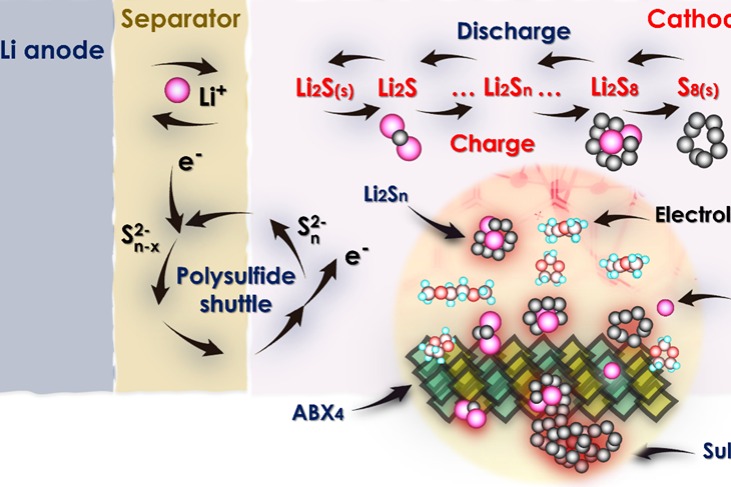
A groundbreaking study led by researchers at Tianjin University has unveiled a new family of two-dimensional (2D) topological telluride materials that could significantly enhance the performance and durability of lithium-ion and sodium-ion batteries. Published in the prestigious journal Advanced Science, the research utilized first-principle calculations to identify materials such as HfTiTe4, ZrTiTe4, and HfZrTe4. These ultrathin layers exhibit remarkable properties, including fast-charging capabilities, structural stability, and thermal endurance up to 227 degrees Celsius. Dr. Ji Kemeng, a key researcher, emphasized that these materials could pave the way for next-generation batteries with higher specific capacity and longer lifespans. The study, a collaborative effort involving institutions like Shanghai Jiao Tong University, Zhejiang University, and the University of California, Irvine, highlights the potential of theoretical computation in designing advanced energy-storage solutions. The findings are particularly promising for applications in electric vehicles, industrial-scale storage, and portable electronics, where high performance under demanding conditions is crucial.
Scientists predict new ultrastable 2D materials for fast-charging, long-lasting batteries