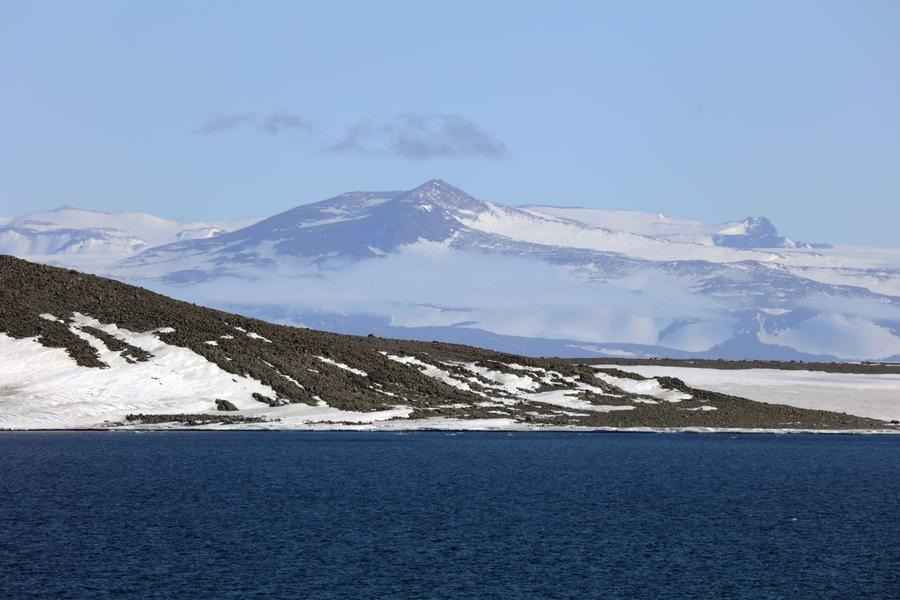
In a groundbreaking polar research achievement, an international scientific consortium has developed the first comprehensive genealogical archive of subglacial volcanoes concealed beneath Antarctica’s massive ice sheets. Designated as ANT-SGV-25, this pioneering catalogue documents 207 known volcanic formations, providing an unprecedented systematic reference for understanding these hidden geological features.
The research initiative was spearheaded by China’s Polar Research Institute (PRIC) in collaboration with Zhejiang University, Fudan University, and the United Kingdom’s University of Exeter. The team synthesized existing scientific data to address longstanding observational challenges and resolution limitations that have historically hampered systematic study of these subsurface structures.
According to lead researcher Cui Xiangbin of PRIC’s Center for Polar Ice & Snow and Climate Change Research, the volcanic inventory reveals significant morphological diversity. The documented volcanoes range dramatically in scale, with elevations spanning from 100 to 4,181 meters and volumes varying from 1 to 2,800 cubic kilometers. Their basal widths extend from 0.3 to 58 kilometers, with median slopes averaging approximately 8.1 degrees.
The distribution pattern shows pronounced concentration within the West Antarctic Rift System, where crustal stretching and elevated geothermal activity create favorable conditions for volcanic formation. By contrast, only three volcanic structures have been identified in East Antarctica to date.
This research breakthrough holds substantial implications for understanding ice sheet dynamics. Subglacial volcanoes significantly influence basal topography, promote ice melting through geothermal heat, regulate subglacial hydrological systems, and ultimately affect ice flow patterns and stability. The comprehensive parameter system established through computer vision technology and data integration enables detailed classification, origin analysis, and impact assessment of these geological features.
The findings, published in the prestigious journal Earth-Science Reviews, represent a crucial public data resource for the global scientific community studying polar environments and climate change impacts.