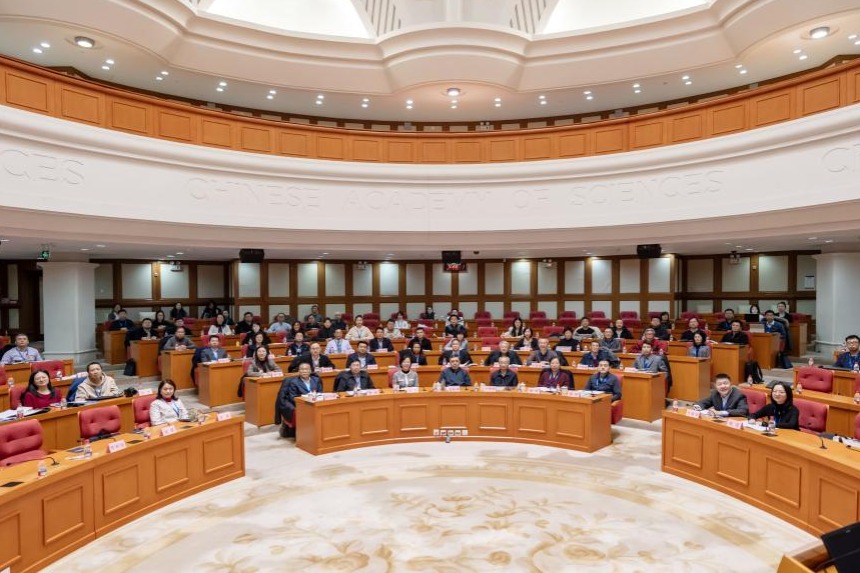
Academic leaders and research specialists convened in Beijing this weekend to establish comprehensive guidelines for responsible think tank operations in the digital era, with particular emphasis on balancing artificial intelligence capabilities with human intellectual oversight.
At the forefront of this initiative, the Chinese Academy of Sciences (CAS) has outlined an ambitious roadmap to develop a national high-level scientific think tank by 2030. Professor Pan Jiaofeng, President of the CAS Institutes of Science and Development, emphasized the critical timing of this effort: “As China advances through its modernization journey amid rapid technological transformation, we face increasingly complex decision-making environments that demand unprecedented research quality and accountability.”
The proposed framework distinguishes think tank research from conventional academic work by prioritizing practical applicability and real-world implementation. Professor Pan noted that responsible research must align with national development objectives while respecting scientific principles and guiding societal expectations toward improved public welfare.
Health policy expert Chen Jiapeng from the China Population and Development Research Center reinforced the human-centered approach, advocating for inclusive methodologies that ensure representation from even the most remote communities. “While comprehensive coverage requires substantial investment and may initially demonstrate lower efficiency, this approach remains fundamental to achieving equitable development outcomes,” Chen explained, highlighting the necessity of phased implementation and cross-departmental collaboration.
Operational standards emerged as another critical focus area. Wang Zhenyu of CAS’s Integrated Research Support Centers revealed that the academy’s newly released proposal addresses longstanding challenges including duplicate reporting, authorship confusion, and appropriate AI utilization. The guidelines incorporate both domestic experience and international best practices to standardize research values and output management.
Petroleum industry economist Wei Xinqiang articulated specific technical requirements, calling for standardized protocols covering quality control, procedural transparency, and data security. While acknowledging AI’s transformative potential in data processing and information gathering, Wei cautioned against over-reliance on technology for strategic formulation. “Insight generation and strategic planning must remain fundamentally human-driven capabilities,” he asserted, pointing to verification challenges with open-source data that necessitate multi-source validation and expert consultation.