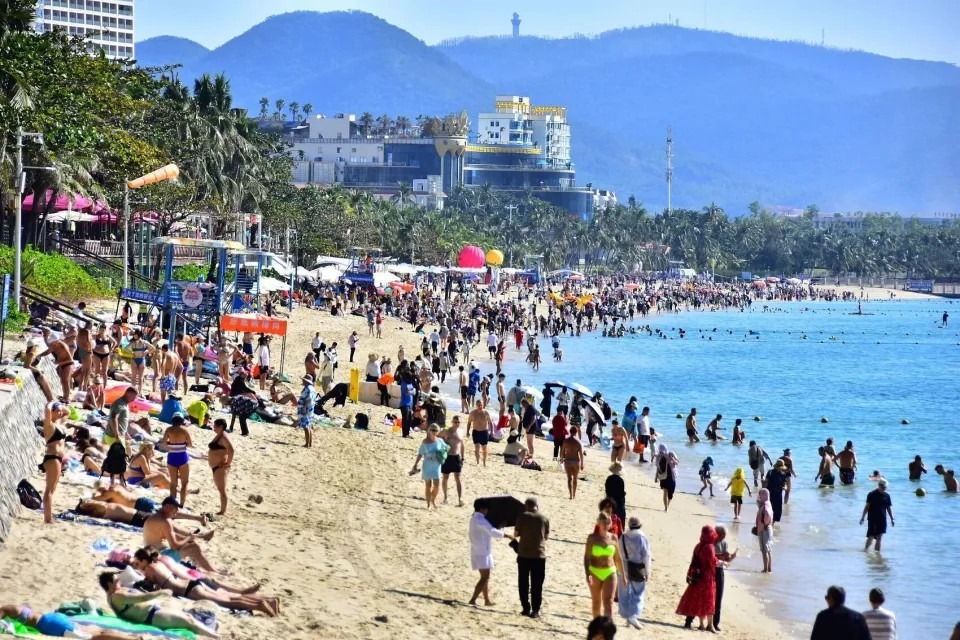
As Siberian winters descend, thousands of Russian citizens are escaping the bitter cold by flocking to the tropical shores of Sanya in China’s Hainan province. This southern Chinese island has transformed into a warm-weather sanctuary for Russians, who now join domestic Chinese tourists from northeastern regions in seeking refuge on its sun-drenched beaches.
The remarkable surge in Russian visitors directly results from the mutual visa-free policy implemented between China and Russia on September 15, 2025. This agreement permits Russian passport holders to enter China without visas for stays up to 30 days, with the policy currently set to expire in September 2026.
Travel data reveals dramatic increases in Russian interest following the policy implementation. Aviasales, Russia’s leading flight booking platform, reports China has become one of the most-searched destinations among Russian travelers. Another prominent travel platform, Travelata, indicates Hainan accounted for 88% of its recent China-bound bookings.
While air connections between Russian cities and Hainan date back to 1997 with the first chartered flight from Krasnoyarsk, transportation links have expanded significantly. Sanya Phoenix International Airport now operates 17 weekly flights connecting to various Russian cities including Vladivostok, Novosibirsk, and St. Petersburg.
The cultural imprint of Russian tourism is visibly evident throughout Sanya. In the popular Dadonghai scenic area, street signs appear in trilingual format—Chinese, Russian, and English. This crescent-shaped bay attracts visitors with its golden sands, crystalline waters, palm trees, and vibrant atmosphere.
Statistical evidence demonstrates the dramatic growth: Sanya hotels hosted approximately 170,000 Russian visitors in 2024, but this figure skyrocketed to over 400,000 in 2025, surpassing pre-pandemic levels.
For Zakirova Amina, a Russian national who previously lived in China’s Anhui province for nine years, Sanya has become a regular winter destination. Her December trip with parents marked her sixth visit, facilitated by the visa-free policy and convenient direct flights.
Amina attributes Sanya’s popularity among Russians to its inclusive atmosphere and linguistic accessibility. “Many service staff members in Sanya can speak some Russian, and they are exceptionally friendly,” she noted. “We often joke that Sanya resembles a second home for Russians.”
Beyond beach relaxation, Russian visitors are exploring diverse aspects of Chinese culture. Many have developed significant interest in traditional Chinese medicine, with services like acupuncture and massage experiencing high demand. At local TCM facilities, appointments frequently book up over a week in advance.
Yuan Ailin, vice-director of a Sanya traditional Chinese medicine hospital, confirms the trend: “We regularly receive patients from Russian-speaking countries who show particular interest in acupuncture and massage therapy.” In 2025, the hospital and its affiliated sanatoriums recorded 10,693 international visits, with 80% originating from Russian-speaking countries—prompting the hiring of Russian translators in several physiotherapy departments.
Russian entrepreneur Dmitry Garifulin, who operates a grocery store in Dadonghai selling imported Russian staples, observes: “The increased flight connectivity has directly translated into more Russian tourists here.” Many visitors report that combining sun therapy with TCM treatments in Sanya surpasses their experiences at Black Sea resorts.