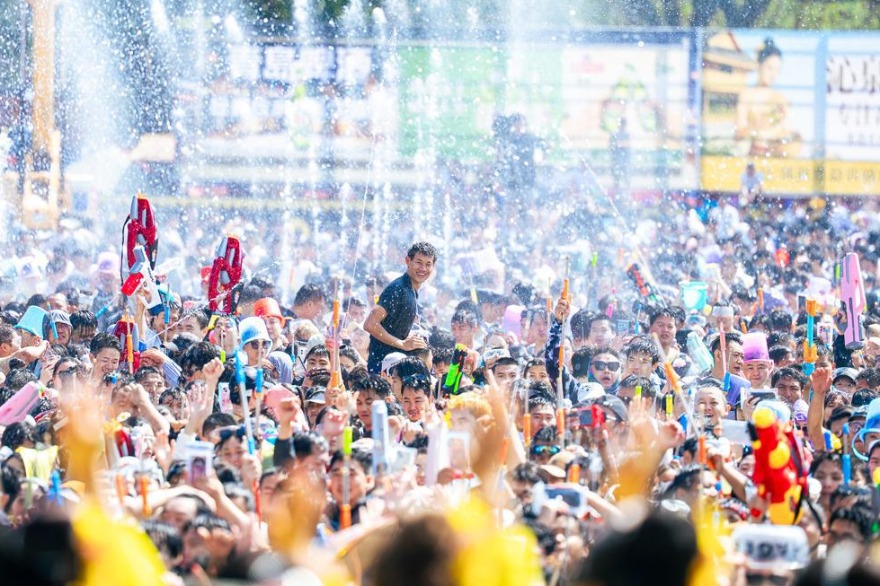
Nestled in southwest China’s Yunnan Province within the Dehong Dai and Jingpo Autonomous Prefecture, the border city of Ruili came alive with vibrant color, joyful laughter and age-old tradition over the weekend of April 11, 2026, as it hosted its iconic annual Water-Splashing Festival. The event, a cornerstone of local Dai cultural identity that marks the beginning of the Dai New Year, drew participants from dozens of ethnic communities across the region, turning the city into a sprawling celebration of shared heritage and collective goodwill.
The festivities kicked off with a grand opening ceremony that placed intangible cultural heritage front and center. Traditional performances from the Dai and De’ang ethnic groups dominated the stage, bringing centuries-old artistic practices to life for attendees. The iconic peacock dance, renowned for its graceful, fluid movements that mimic the elegant bird central to Dai mythology, blended seamlessly with the thunderous, rhythmic elephant-foot drum dance. Every beat of the large carved drums and every fluid gesture of the dancers held deep cultural meaning, captivating onlookers and setting a festive tone for the days of celebration ahead.
Once the official opening concluded, the celebration spilled out onto the streets and riverbanks of Ruili, particularly along the scenic shoreline of the Ruili River. Equipped with everything from traditional wooden basins to modern water guns, participants of all ages and ethnic backgrounds rushed into the fun, splashing one another with cool, refreshing water as a symbolic gesture of blessing. For generations, this ritual has carried profound meaning: the water is believed to wash away misfortunes and negativity from the past year, clearing the way for good luck, prosperity and health in the coming months.
Joyful shouts and peals of laughter echoed across the riverbank as crowds sang, danced and joined together in the fun, embodying the spirit of unity that defines the festival. What began as a sacred cultural observance for local ethnic communities has grown into an inclusive event that brings together people from all walks of life, showcasing the rich multicultural tapestry of southwest China and preserving beloved traditions for new generations.