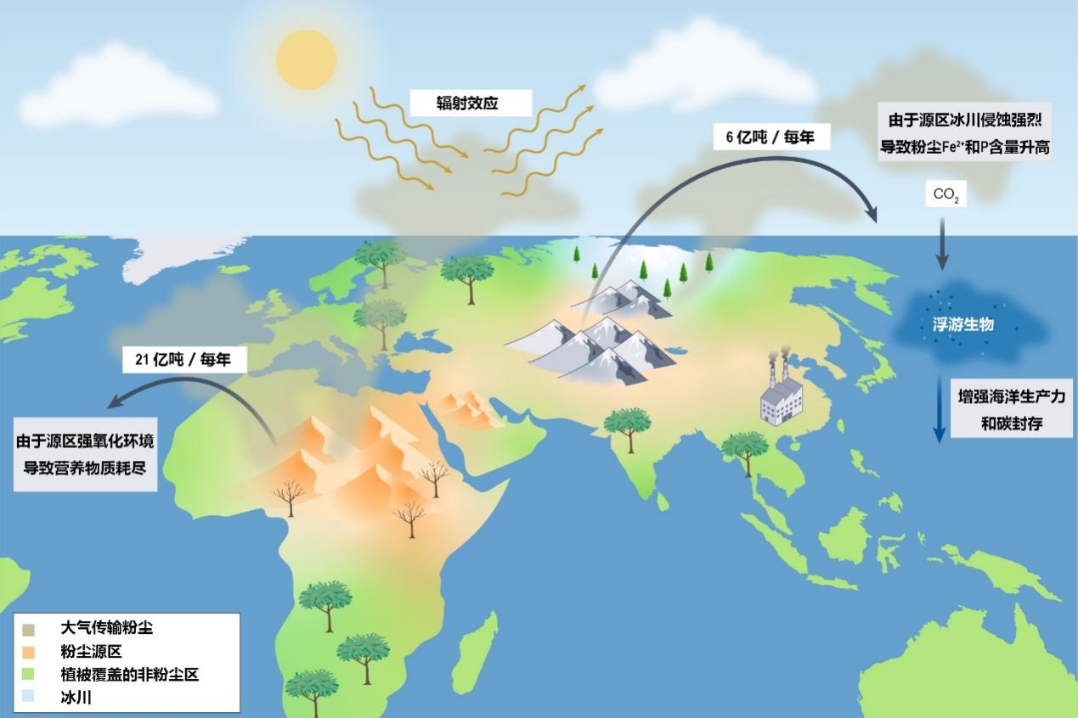
A groundbreaking study has revealed the pivotal role of global dust in regulating the Earth’s carbon cycle and influencing climate change. Conducted by a collaborative team from the Institute of Tibetan Plateau Research under the Chinese Academy of Sciences (CAS), alongside British and Swedish researchers, the findings were published in the journal Nature Reviews Earth & Environment. The research analyzed 22 global dust records from sediment cores, uncovering that dust deposition in major ocean basins has increased significantly since the Cenozoic era, particularly during periods of Northern Hemisphere ice sheet expansion and aridification in regions like Asia, North America, and Africa. Each year, over 4 billion tonnes of dust are released from global land surfaces, carrying essential nutrients such as iron and phosphorus into the oceans through atmospheric circulation. This process fertilizes marine phytoplankton, enhancing ocean productivity and strengthening the ‘biological pump,’ which transfers substantial amounts of carbon dioxide from the atmosphere into the deep ocean. The study also highlighted varying fertilization effects based on dust origin, with Asian glacial dust showing a stronger impact in the North Pacific compared to North African dust. The research underscores the need for future studies to focus on the nutrient composition of global dust sources and integrate these insights into Earth system models to improve projections of global climate change.