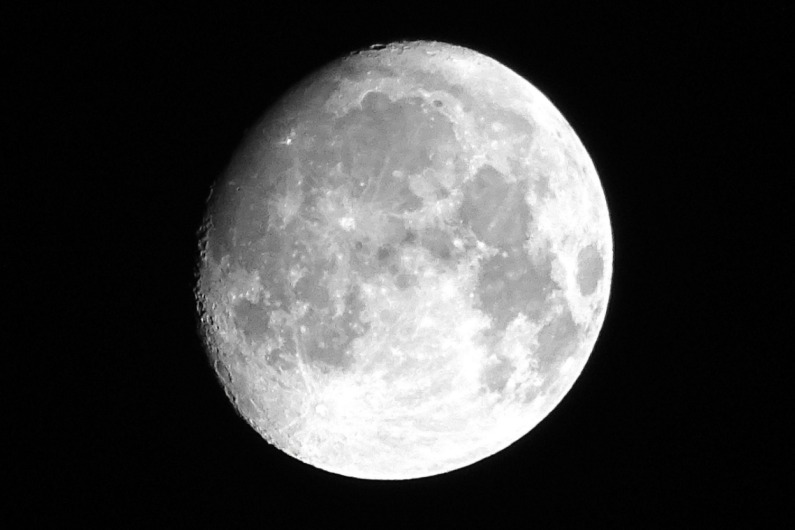
A groundbreaking study published in Proceedings of the National Academy of Sciences has potentially solved one of the Moon’s most enduring geological mysteries—why its Earth-facing near side and hidden far side exhibit such dramatically different characteristics. The research points to a cataclysmic asteroid impact billions of years ago that permanently altered the Moon’s chemical composition and volcanic capabilities.
For decades, planetary scientists have been perplexed by the lunar dichotomy. The near side displays extensive dark volcanic plains formed by ancient lava flows, while the far side presents a rugged, mountainous terrain with significantly fewer volcanic features and a thicker crustal layer.
The international research team, led by Professor Tian Hengci from the Institute of Geology and Geophysics at the Chinese Academy of Sciences, analyzed microscopic samples retrieved by China’s historic Chang’e 6 mission—the first-ever collection of geological specimens from the Moon’s far side, specifically from the massive South Pole-Aitken basin impact crater.
The investigation focused on potassium isotopes, which serve as chemical fingerprints of past thermal events. The researchers discovered an abundance of heavier potassium isotopes in the far side samples, indicating that an enormous asteroid impact generated such intense heat that it vaporized lighter volatile elements—including potassium, zinc, and sulfur—causing them to escape into space.
This elemental loss had profound geological consequences. Volatile elements typically lower the melting point of subsurface rocks, facilitating magma formation and volcanic activity. Their depletion from the far side meant this region lost its capacity for significant volcanic eruptions, explaining its mountainous, geologically dormant nature.
In contrast, the near side retained its volatile elements, allowing prolonged volcanic activity that created the expansive dark plains visible from Earth. The research demonstrates that asteroid impacts can fundamentally alter a planetary body’s internal chemistry and geological evolution, not merely create surface craters.
While previous theories attributed the Moon’s asymmetry to Earth’s gravitational influence or uneven radioactive heating, this study provides direct chemical evidence highlighting the transformative power of giant impacts in shaping planetary bodies throughout our solar system.