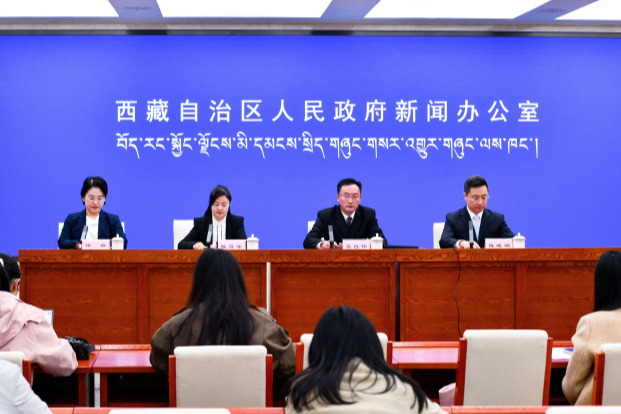
The Xizang Autonomous Region has witnessed a remarkable transformation in public scientific literacy over the past six decades, evolving from a largely uninformed population to a society where science drives social stability and high-quality development. This progress was highlighted by Zhang Hongwei, vice-chairman of the regional association for science and technology, during a recent press conference. He emphasized that the region’s efforts to promote science began shortly after Xizang’s peaceful liberation, with the establishment of basic science boards in towns. Today, the proportion of scientifically literate residents has surged from a mere 0.1% in 2010 to 7.6% in 2023, marking a 75-fold increase. This growth is particularly pronounced among young adults aged 18 to 39, as well as farmers and herders. Xizang now boasts a regional natural science museum, 14 mobile science museum exhibits, and over 300 school-based science museums, ensuring county-level coverage. Additionally, 86 science caravans traverse the region, supported by bilingual science materials and multimedia programs. The region has also extended science outreach to monks, nuns, and grassroots officials, achieving full social group coverage. Digital platforms have further bridged geographical barriers, enabling remote communities to explore advanced fields like astronomy and artificial intelligence. Science education in schools has become a cornerstone of curiosity and discovery, with students like Tsering Yudron expressing newfound fascination with scientific principles. This comprehensive approach underscores Xizang’s commitment to fostering a scientifically literate society.