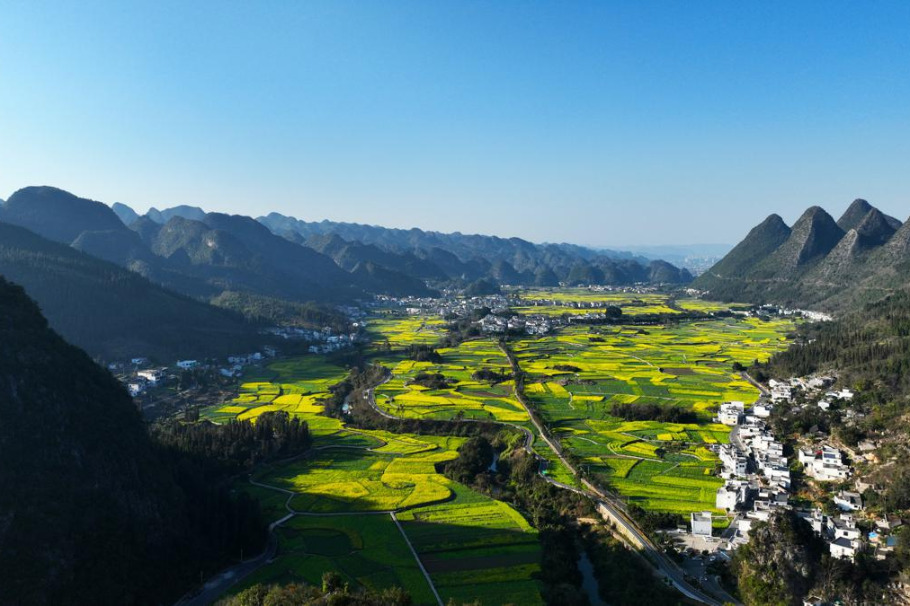
The karst mountain regions of Xingyi in Guizhou province have undergone a spectacular transformation as vast expanses of rapeseed flowers burst into full bloom, creating a breathtaking golden tapestry that signals the arrival of spring in southern China. This annual natural phenomenon has evolved into a major tourist attraction, drawing visitors from across the nation to witness the extraordinary spectacle where nature’s beauty converges with cultural heritage.
Spanning over 400 hectares, the vibrant yellow blossoms create an immense floral ocean that stretches across the picturesque landscape, perfectly framed by dramatic karst formations and traditional Bouyei ethnic villages. This stunning visual harmony between cultivated flowers and natural geology offers a unique photographic opportunity and cultural experience that has gained increasing popularity among domestic travelers seeking springtime destinations.
The recent accessibility revolution brought by transportation infrastructure has significantly boosted tourist numbers. The November inauguration of the Panzhou-Xingyi high-speed railway has dramatically reduced travel times, converting what was once a lengthy bus journey into a comfortable and efficient rail experience. The provincial capital Guiyang is now merely two hours away, while direct connections from major metropolitan centers including Chengdu, Chongqing, and Guangzhou have opened the region to a broader demographic of visitors.
This enhanced connectivity has transformed the local tourism economy, providing economic opportunities for surrounding communities while offering urban residents an easily accessible natural escape. The convergence of natural beauty, cultural authenticity, and modern transportation infrastructure exemplifies how rural regions can leverage their unique assets to develop sustainable tourism while preserving environmental and cultural heritage.