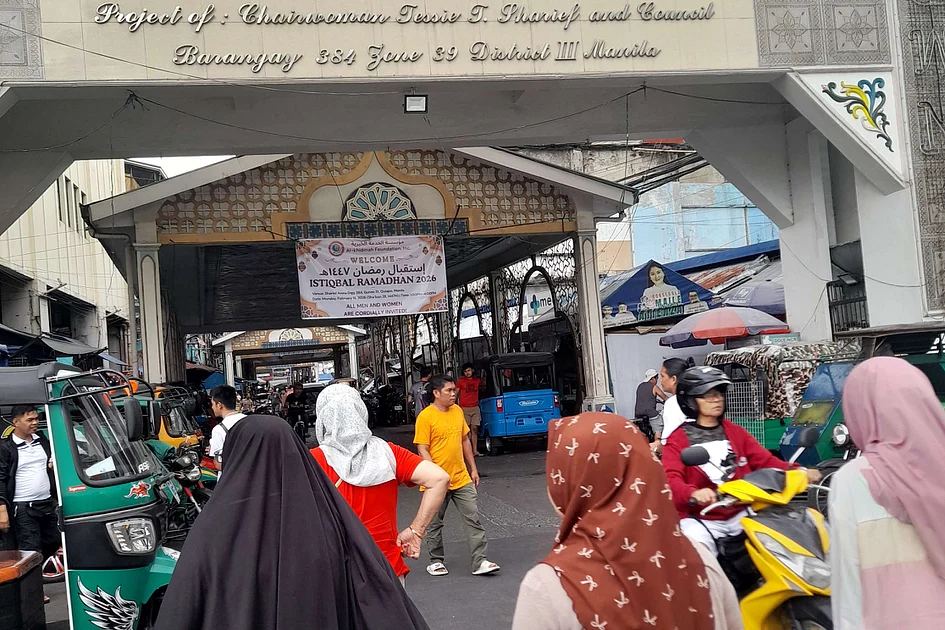
As Ramadan 2026 approaches, Manila’s Quiapo district reveals a hidden historical narrative that contrasts sharply with its contemporary identity as Asia’s epicenter of Catholic devotion. This bustling urban quarter, now preparing for Islamic celebrations, was originally a thriving Muslim community before Spanish colonization.
Community leader Hadji Ali Alawi, founder of Quiapo’s Arabic School, extends an open invitation for all to participate in the Istiqbal celebrations marking Ramadan’s commencement. The district has adorned itself with welcome banners and erected reception tents around the Golden Mosque, creating an atmosphere of inclusive religious celebration.
The historical significance of Quiapo traces back to the pre-colonial Rajahnate of Manila, which functioned as a coalition of barangays (indigenous communities) heavily influenced by Islamic traditions, particularly along the Pasig River. Spanish conquest eventually dismantled these Muslim-ruled kingdoms that once stretched from Batangas to Pampanga.
The etymology of ‘Quiapo’ itself reflects this cultural intersection. While commonly believed to derive from ‘kiyapo’ water plants, an alternative oral history suggests the name originated when a Muslim resident responded ‘Kay Apo’ (I am going to the old man’s house) to Spanish inquiries, which colonizers subsequently heard as ‘kiyapo’ and spelled according to Spanish conventions.
Modern Quiapo presents a unique religious dichotomy: the western portion dominated by the Minor Basilica housing the venerated Black Nazarene (which attracted 10 million Catholic devotees in January 2026), while the eastern sector has reemerged as a Muslim community since postwar migration from Mindanao began in the 1940s. Quezon Boulevard now neatly divides these two religious spheres.
The district has gained culinary prominence through social media vlogging, with its Muslim section offering halal cuisine influenced by global Islamic traditions. Alawi particularly highlights palapa, an indigenous Maranao sauce made from Lanao del Sur’s unique sakurab onions, turmeric, chili, and ginger, which he describes as ‘potent in waking up one’s blood and mind.’
This Ramadan celebration symbolizes both religious devotion and cultural reclamation, as Quiapo’s Muslim community invites all Manileños to rediscover the district’s Islamic origins and participate in their spiritual traditions.