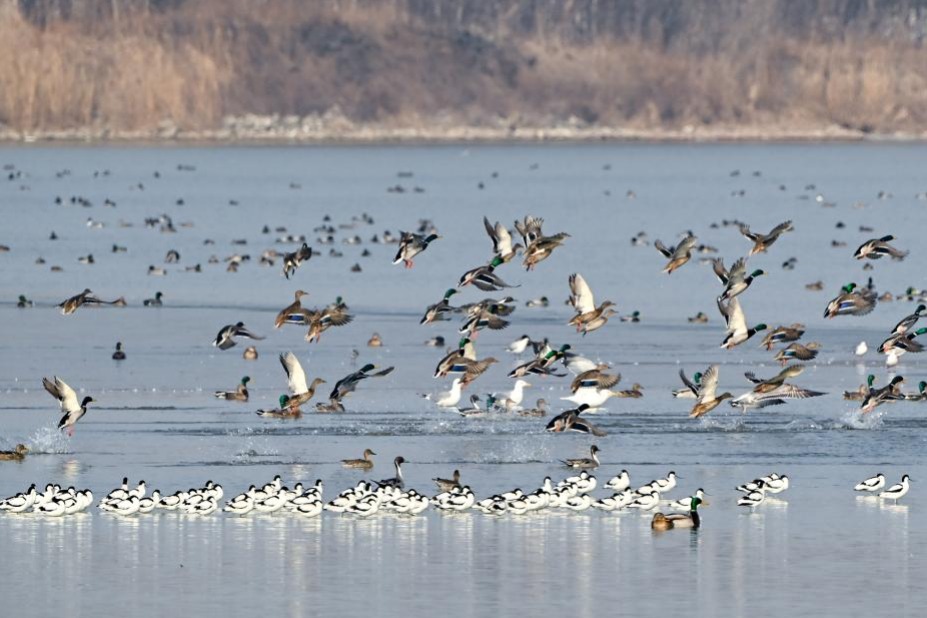
The Qilihai Wetland in Tianjin, northern China, has witnessed a historic surge in bird species this autumn, with migration patterns starting earlier than usual. Conservation officials reported that the wetland, a crucial stopover on the East Asian-Australasian Flyway, has recorded 308 bird species, surpassing the previous high of 258 in 2021. This remarkable increase is attributed to an early cold snap in northern regions, which froze habitats and reduced food sources, prompting birds to migrate sooner. Among the early arrivals were oriental storks, a nationally protected species, which appeared nearly ten days earlier than in 2024. The wetland is currently at the peak of its migration season, hosting large flocks of Eurasian spoonbills, pied avocets, and black-tailed godwits. Notably, the Eurasian spoonbill population has doubled to over 3,000, setting a new record. Other rare species, such as white-naped cranes and common cranes, have also been observed in significant numbers. To support this ecological phenomenon, the reserve management has enhanced restoration efforts, implemented water level regulation, and deployed drones and smart monitoring systems for comprehensive surveillance. Over 600,000 birds are expected to pass through the wetland this season, underscoring its global importance as a migratory hub.