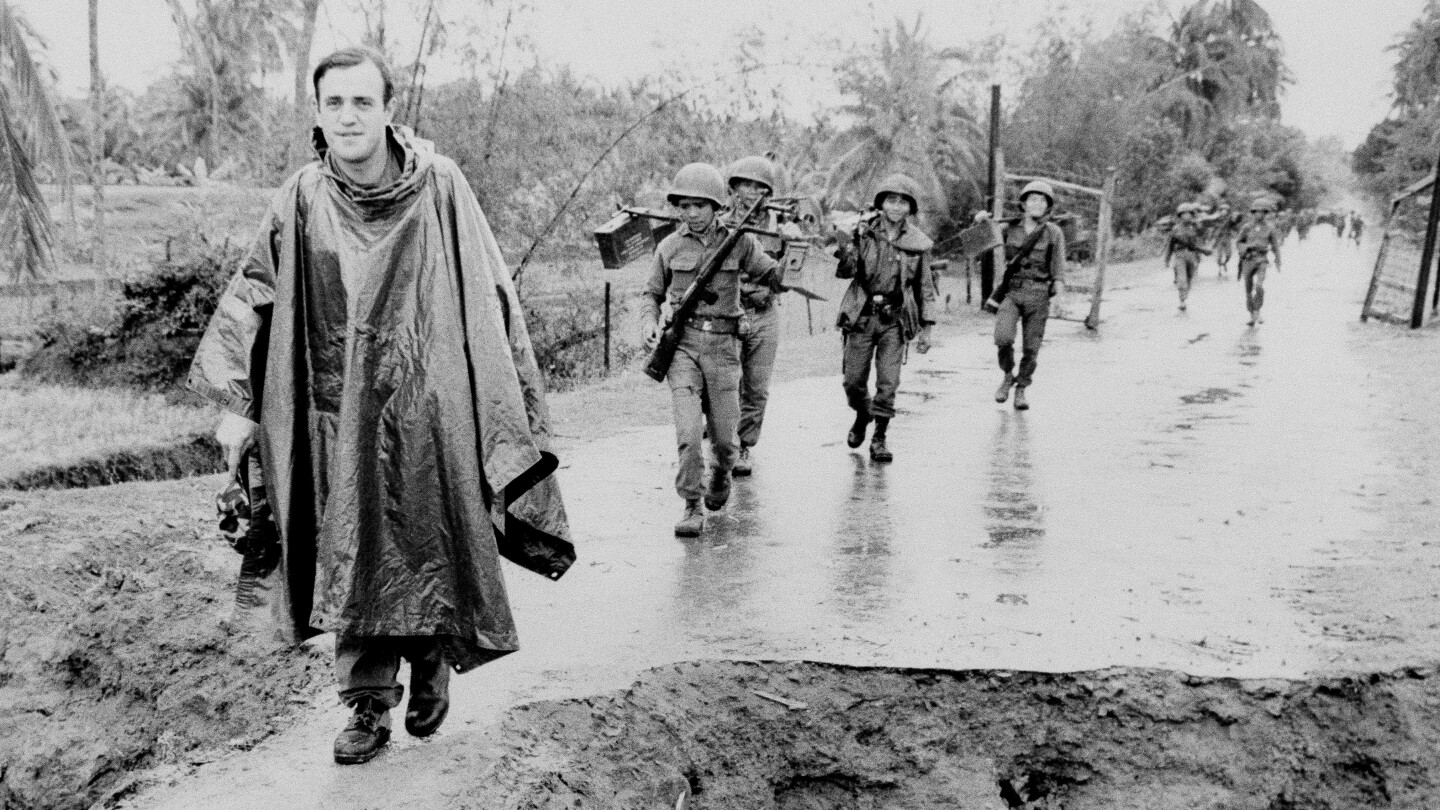
Pioneering war correspondent Peter Arnett, whose fearless frontline reporting shaped global understanding of modern conflicts from Vietnam to Iraq, has passed away at age 91. The Pulitzer Prize-winning journalist died Wednesday in Newport Beach, California, surrounded by family and friends after recently entering hospice care for prostate cancer.
Arnett’s extraordinary career spanned five decades of conflict journalism, earning him international recognition for his uncompromising battlefield coverage. He first gained prominence during the Vietnam War while reporting for The Associated Press, where his courageous reporting from the front lines earned him the 1966 Pulitzer Prize for International Reporting.
The New Zealand-born correspondent achieved household recognition during the 1991 Gulf War when he delivered historic live broadcasts from Baghdad as Coalition missiles struck the Iraqi capital. While most Western journalists had evacuated, Arnett remained at his hotel, providing calm, real-time descriptions of the bombardment through cellular phone connections to CNN’s global audience.
His proximity to danger became legendary. During Vietnam combat operations in 1966, Arnett narrowly escaped death when a North Vietnamese sniper’s bullets tore through a map held by a battalion commander standing inches from him. These experiences informed his survival philosophy, learning never to stand near medics or radio operators who represented prime enemy targets.
Beyond Vietnam and Iraq, Arnett secured exclusive interviews with both Saddam Hussein and Osama bin Laden while maintaining controversial relationships with various conflict parties. His 1995 memoir, ‘Live From the Battlefield,’ documented his 35 years reporting from global war zones.
Despite professional controversies that included dismissals from major networks, Arnett’s commitment to frontline journalism never wavered. Following his retirement from active reporting in 2014, he settled in Southern California with his wife Nina Nguyen after teaching journalism at China’s Shantou University.
Arnett’s legacy extends beyond his groundbreaking reporting to the preservation of historical records. Defying orders to destroy documents during Saigon’s fall in 1975, he preserved the Associated Press bureau’s papers, which now reside in the organization’s official archives.