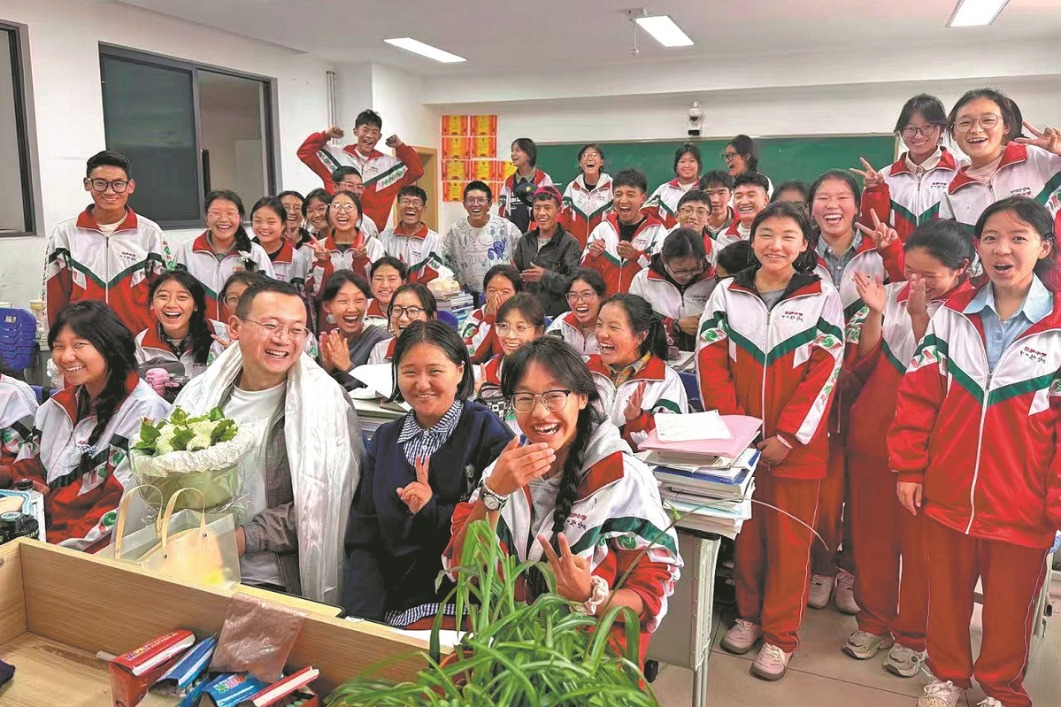
On the morning of his departure to Lhasa, English instructor Shi Lei discovered his five-year-old son secretly curled inside his suitcase—a poignant symbol of the personal sacrifices made by educators serving Tibet’s remote communities. The young boy had concealed himself hoping to accompany his father, whispering fearfully, “I’m afraid you’ll leave me behind.
This emotional moment encapsulates the challenging reality faced by hundreds of educators from Shaanxi Normal University who have dedicated their careers to teaching on the ‘roof of the world.’ Since 2007, SNNU has enrolled 1,196 students either originating from Tibet or committed to working in the region post-graduation. Between 2011 and 2025, the institution dispatched 884 graduates to classrooms across the autonomous region, with over 80% of teaching interns choosing to remain long-term.
Shi Lei’s journey began during his formative years at SNNU, where he served as class monitor, joined the Communist Party of China, and met his future wife Wang Baohua. The university’s rigorous teacher training program equipped him with both pedagogical skills and philosophical foundations that would prove essential for high-altitude education.
His commitment was solidified during a 2011 teaching internship at Gonggar Middle School in Lhokha, where he initially faced classrooms with only quarter of students possessing English textbooks. Through innovative methods incorporating English songs and poetry, Shi witnessed a remarkable transformation—within three weeks, nearly all students not only acquired textbooks but had carefully covered them in protective wrapping.
Despite receiving attractive job offers from prestigious schools in Guangzhou, Chongqing, and his hometown Xi’an, Shi honored his commitment to teach at Lhasa Middle School. What began as a five-year plan has extended into nearly 14 years of service, despite significant physical tolls from the high-altitude environment. The region’s oxygen levels—approximately 60% of sea level—have contributed to serious health conditions including hyperthyroidism, hypothyroidism, pulmonary edema, immune system damage, and cardiac issues. Shi has collapsed twice during classes and experienced nine-hour blackouts from exhaustion.
The personal costs extend beyond health concerns. Shi carries profound guilt for being unable to adequately care for his mother during cancer treatment, for his wife who abandoned a stable career in Fujian to restart in Xi’an, and for the son who desperately misses his absent father.
Yet these sacrifices are balanced by exceptional professional fulfillment. Shi employs full English immersion techniques, brain science-based memorization methods, and focuses on holistic student development beyond academic scores. His dedication has earned him the affectionate title ‘big brother’ from students and the ultimate professional validation: two former pupils now study at his alma mater, continuing the educational legacy he helped establish.