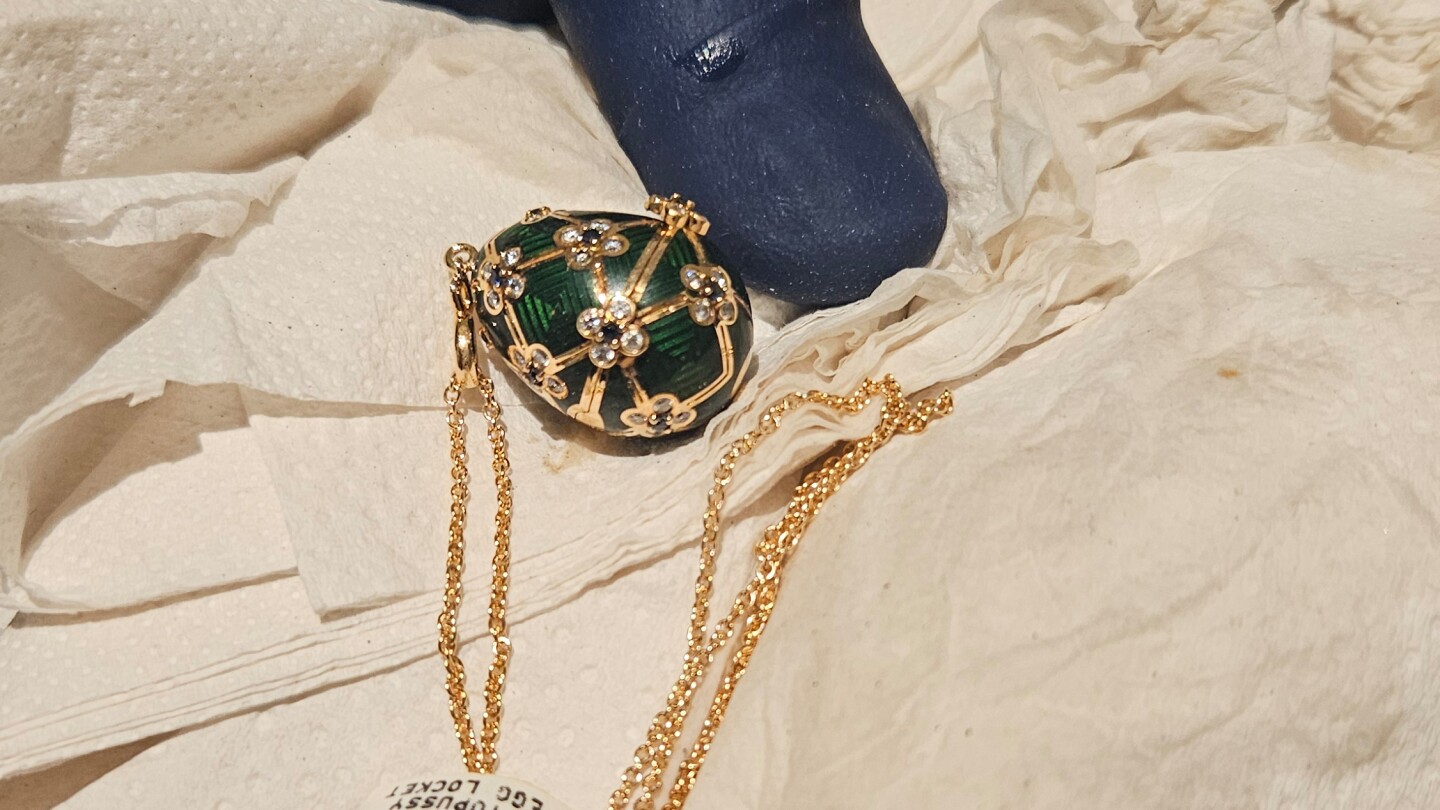
WELLINGTON, New Zealand — New Zealand law enforcement has successfully recovered a luxury Fabergé pendant valued at NZ$33,000 (approximately US$19,000) through an extraordinary six-day monitoring operation of a suspect’s digestive system. The jeweled octopus-inspired piece, allegedly swallowed during a theft incident at Partridge Jewelers in Auckland on November 28, was naturally excreted on Thursday evening without requiring medical intervention.
The 32-year-old suspect, whose identity remains protected under New Zealand privacy laws, has been held in police custody since his immediate arrest at the upscale jewelry store. Authorities maintained constant surveillance of the man’s biological functions to secure the valuable evidence, demonstrating an unusual but necessary approach to evidence preservation in extraordinary circumstances.
This limited-edition pendant draws direct inspiration from the 1983 James Bond film “Octopussy,” which features a similar jewel-smuggling plot involving counterfeit Fabergé eggs. The recovered piece represents one of only 50 such creations worldwide, crafted from gold with green enamel coating and adorned with 183 diamonds and two sapphires. Measuring 8.4 centimeters in height, the pendant contains an intricate internal mechanism revealing a gold octopus embellished with white and black diamonds.
Police released photographic evidence showing the recovered pendant still attached to its gold chain with price tag intact. Both the jewelry and the suspect remain in custody as the judicial process continues. The man is scheduled for appearance in Auckland District Court on December 8, having previously appeared on November 29 without entering a plea to theft charges.
Inspector Grae Anderson explained the unusual police procedure in an official statement: “Given this man is in Police custody, we have a duty of care to continue monitoring him given the circumstances of what has occurred.” This case represents one of the most unusual evidence recovery operations in New Zealand’s law enforcement history, blending criminal investigation with extraordinary patient monitoring responsibilities.