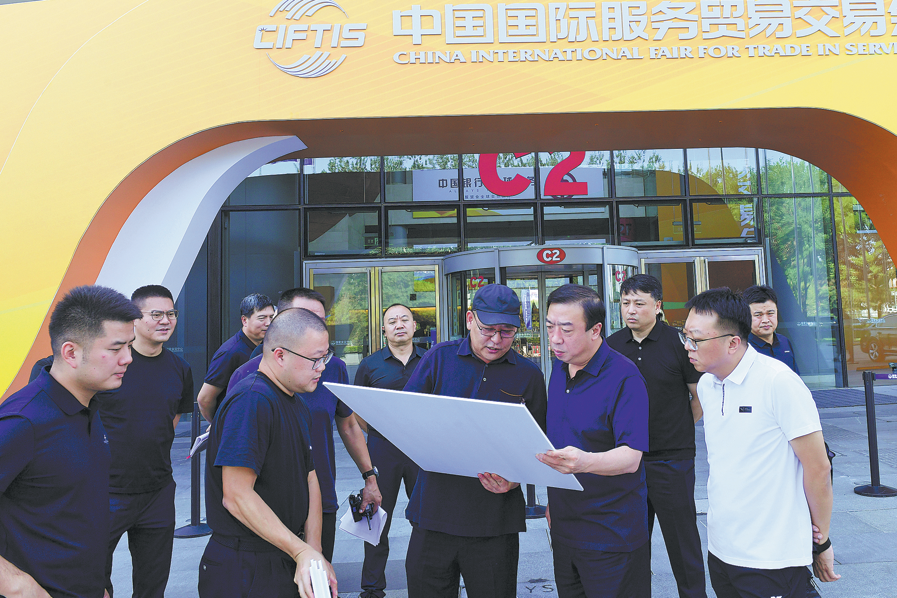
In the complex ecosystem of Beijing’s urban mobility, where traffic is typically quantified through vehicle volume metrics and peak-hour speed analytics, the late Dong Yijun pioneered an unconventional measurement: footsteps. The former deputy director of the Beijing Municipal Public Security Bureau and head of its traffic management bureau, who passed away unexpectedly in October 2025 at 58, developed his transformative approach to urban governance through relentless ground-level observation.
Over his 36-year policing career, Dong cultivated a methodology centered on firsthand investigation. He routinely walked congested bridges during late hours, traced neighborhood alleys on foot, stationed himself at bus terminals during rush hours, and engaged directly with citizens whose daily routines were shaped by the city’s transportation dynamics. His fundamental operating principle was simple yet profound: “If you haven’t seen it yourself, you haven’t really understood it.”
Dong’s career trajectory exemplified this ground-up philosophy. After graduating from the People’s Public Security University of China in 1989, he began as a community officer in Xicheng district, one of Beijing’s most densely populated areas. Despite being a rare university graduate in grassroots policing at the time, he quickly distinguished himself by immersing completely in his assigned community—memorizing residents, businesses, and risk points through constant visitation rather than relying on paperwork.
His leadership roles expanded significantly over the decades. Between 2021 and 2023, as head of the Tongzhou District Public Security Bureau, Dong spearheaded administrative reforms that simplified procedures and improved accessibility. Under his guidance, Tongzhou implemented over 120 measures that digitized approvals and expanded “one-stop” services, making policing and public services more responsive to residents and businesses alike.
In 2023, Dong assumed what many considered Beijing’s most demanding public service role: director of the city’s traffic management bureau. He approached traffic not as an isolated system but as a reflection of urban functionality. Each morning and evening rush hour found him in the command center monitoring live feeds and directing responses. Late nights were dedicated to data analysis and planning for the following day, embodying his insistence that “no issue should wait until tomorrow.”
Dong’s problem-solving methodology produced tangible results. When he noticed repeated pedestrian violations near Deshengmen in Xicheng, his investigation revealed that bus terminal placement and route design forced commuters to cross dangerously. His solution—which required cross-departmental coordination—led to the relocation of long-distance bus routes and optimization of traffic flow around key nodes, incorporated into Beijing’s broader transport governance plan.
A strong advocate for technological integration, Dong championed digital public services that reduced burdens on citizens. Under his leadership, Beijing expanded the “Traffic 12123” mobile platform, enabling residents to handle dozens of services remotely. Today, approximately 80% of traffic-related services in Beijing can be completed online—a testament to his vision that “data should travel more and people should travel less.”
Despite his seniority, Dong maintained exceptional personal discipline and humility. He worked extensively, often staying overnight at the office, yet rarely spoke of fatigue. Colleagues describe him as strategically minded yet detail-oriented—someone who cared about everything from traffic sign placement to drainage covers. Outside work, he remained private; his family learned of many professional achievements only through public reports.
Dong, who joined the Communist Party of China in 1989, received numerous commendations including two first-class individual merits and the title of National Model Police Officer. His posthumous recognition as a “Role Model of the Times” celebrates a legacy visible in smoother traffic around major hospitals, streamlined administrative services, and policing models that prioritize coordination over confrontation. As one colleague summarized: “He showed us that leadership doesn’t come from distance, but from walking the same roads as the people you serve.”