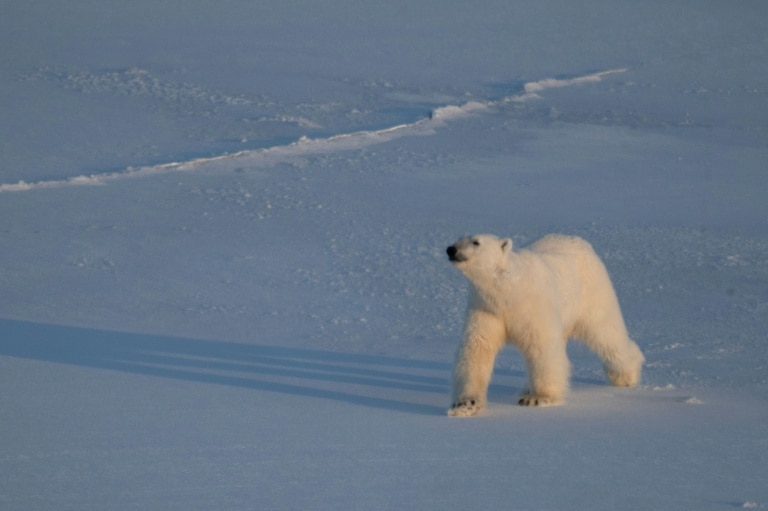
In a remarkable ecological paradox, polar bears inhabiting Norway’s Svalbard archipelago have demonstrated unexpected resilience to climate change by actually increasing their body mass despite significant habitat degradation. Published in Scientific Reports, the comprehensive study reveals these Arctic predators have adapted their feeding strategies to survive in rapidly changing conditions.
The Barents Sea region has experienced among the most dramatic temperature increases globally, with some areas warming by up to 2°C per decade since 1979. This accelerated warming has caused sea ice habitats to vanish at twice the rate observed in other polar bear territories, losing approximately four days of ice coverage annually. Yet contrary to scientific predictions, the local bear population has not only maintained but enhanced its physical condition.
Researchers from the Norwegian Polar Institute conducted detailed analysis of 770 adult bears over a 24-year period (1995-2019), measuring body condition indices to track fat reserves. The findings revealed a surprising trend: after initial declines until 2000, bear fitness metrics showed consistent improvement despite accelerating ice loss.
The secret to their success lies in dietary adaptation. With reduced access to their traditional seal hunting grounds, Svalbard’s polar bears have increasingly turned to land-based prey including reindeer and walrus calves. These alternative food sources have become more abundant due to successful conservation efforts and reduced human exploitation. Additionally, warmer temperatures have concentrated ringed seals into smaller ice areas, making hunting more efficient where ice remains.
Lead researcher Jon Aars acknowledged the counterintuitive nature of these findings: ‘The increase in body condition during significant sea ice loss was unexpected. Had I been asked to predict outcomes in 2003, I would have anticipated skinnier bears.’
The study highlights critical regional variations in climate impact responses, cautioning against extrapolating findings from other Arctic areas where polar bears have indeed suffered nutritional stress. While currently thriving, scientists warn this adaptation may represent a temporary reprieve rather than long-term salvation, as continued habitat degradation will eventually overcome even these remarkable adaptive capabilities.