A groundbreaking archaeological discovery in southern Germany is fundamentally reshaping our understanding of human communication’s origins. Researchers have uncovered compelling evidence that symbolic writing systems emerged approximately 40,000 years earlier than previously documented, challenging conventional historical timelines.
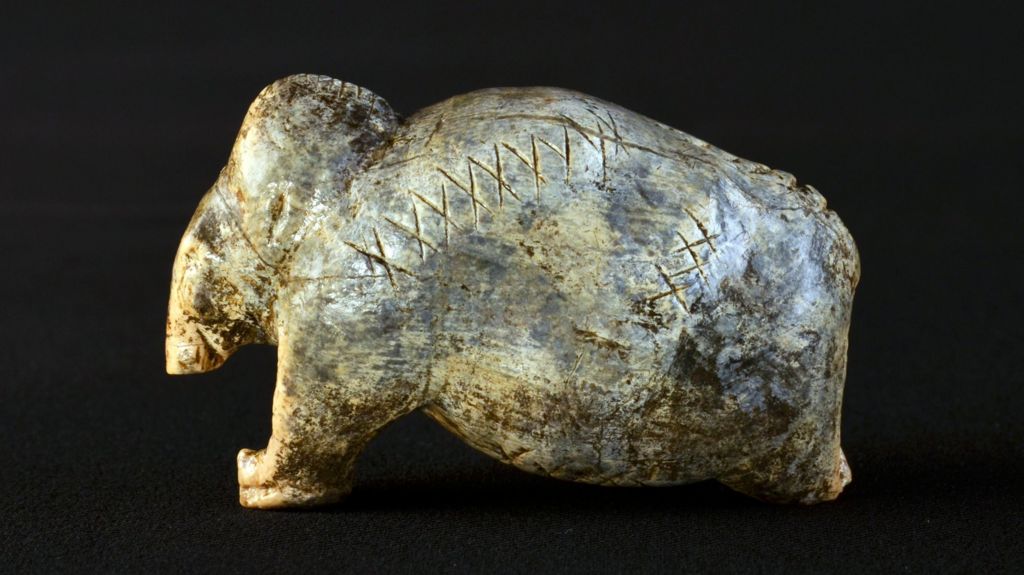
Analysis of Paleolithic artifacts from German cave systems, particularly the extensive Lonetal network in Baden-Württemberg, reveals sophisticated symbolic patterns carved onto mammoth ivory figurines and other objects. These intricate markings—comprising carefully arranged rows of crosses, dots, and notches—demonstrate statistical complexity comparable to later proto-cuneiform scripts from ancient Mesopotamia.
The research team, including Professor Christian Bentz from Saarland University and Dr. Ewa Dutkiewicz from Berlin’s Museum of Prehistory and Early History, examined over 3,000 characters across 260 artifacts dating back 45,000 years. Their investigation focused on objects created just as Homo sapiens migrated from Africa into Europe, potentially interacting with Neanderthal populations.
Notable among the findings is a meticulously carved mammoth figurine featuring engraved rows of crosses and dots, and an ‘adorant’ artifact from Geißenklösterle cave depicting a lion-human hybrid with systematic dot and notch patterns. The researchers observed that symbolic density was particularly pronounced on figurative objects rather than utilitarian tools, suggesting ritual or communicative purposes beyond mere decoration.
Statistical analysis revealed these Paleolithic symbol sequences possessed information density remarkably similar to Mesopotamian proto-cuneiform tablets created 40,000 years later. The patterns demonstrate predictable sequencing and repetitive structures that researchers interpret as deliberate communication attempts by highly skilled craftspeople.
This discovery positions Stone Age humans as cognitive equals to modern humans, capable of developing complex symbolic systems tens of thousands of years before writing was traditionally believed to have emerged in ancient Iraq. While the precise meaning of these symbols remains undeciphered, their systematic arrangement suggests they represent an early alternative to writing rather than arbitrary decorations.
The research, published in the prestigious journal PNAS, indicates that current understanding of prehistoric symbolic communication represents merely ‘scratching the surface’ of what might be discovered through continued analysis of Paleolithic artifacts across Europe and beyond.