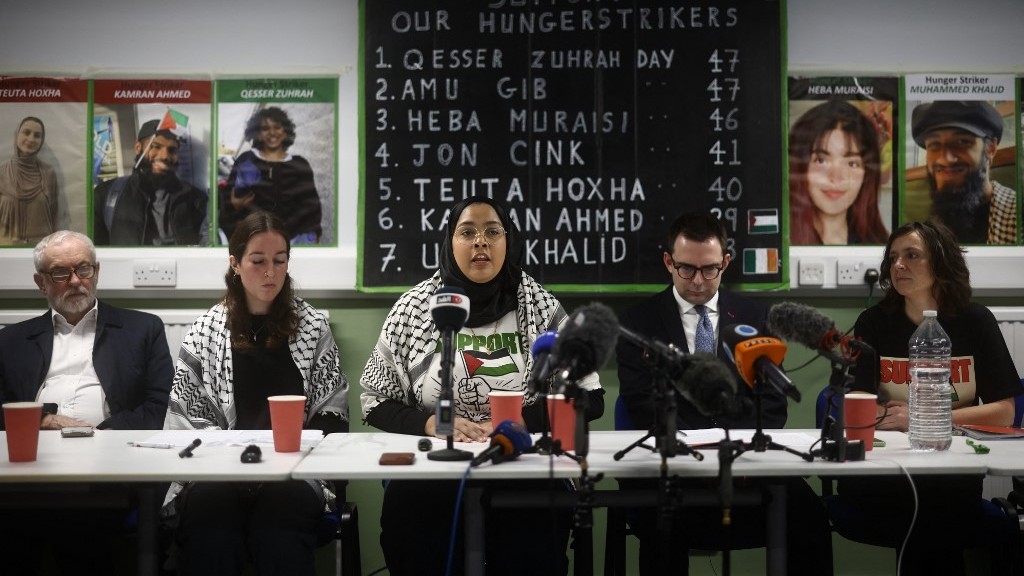
A profound human rights and judicial crisis is unfolding in London as Kamran Ahmed, a 28-year-old mechanic and activist, approaches his seventh month in detention without trial at HMP Pentonville. His case has drawn significant attention due to his ongoing hunger strike, now exceeding 40 days, and the severe toll it is taking on both his health and his family.
Ahmed was arrested in November 2024 for allegedly breaking into an Israeli arms factory, with his trial not scheduled until June 2026—a delay that far exceeds Britain’s typical six-month legal limit for holding prisoners on remand. He faces charges of criminal damage, aggravated burglary, and violent disorder, all of which he denies. His activism is affiliated with the direct-action group Palestine Action, which is currently banned.
The heart of the crisis lies in the deteriorating health of Ahmed and the immense suffering of his family. His hunger strike, joined by seven other prisoners, is a protest against his prolonged detention, the ban on Palestine Action, and alleged interference with personal communications in prison. Medical reports indicate his weight has plummeted from 74kg to 60.1kg, with dangerously high ketone levels. He has been hospitalized three times, suffering from intense chest pains and tremors described by his sister as akin to being tasered.
His family’s anguish is palpable. His mother, Sanwara Begum, has developed heart palpitations and struggles to sleep or eat, traumatized by the early morning police raid that led to her son’s arrest. His father, Mohammed Ali, is also severely unwell, too distressed to speak to his son for fear of revealing his own deteriorated state. The family’s despair is compounded by a near-total breakdown in communication. The prison has blocked Ahmed’s phone numbers, and when he is hospitalized, updates cease, leaving the family in a state of constant fear that they will be the last to know if his condition worsens fatally.
This case raises serious questions about the UK’s judicial process and prison protocols. An emergency doctor supporting the hunger strikers, James Smith, stated that the lack of communication from the prison service during hospitalizations directly contradicts established guidance. Ahmed’s sister, Shahmina Alam, a pharmacist who has moved back to London to care for her parents, has become his primary advocate, even confronting Justice Secretary David Lammy, who claimed he was unaware of the hunger strikes.
Portrayed by his family as a gentle, caring individual who helped neighbors with their cars and diligently cared for his unwell parents at home, Ahmed’s prolonged detention without conviction represents a personal tragedy and a broader debate over justice, activism, and the right to a timely trial.