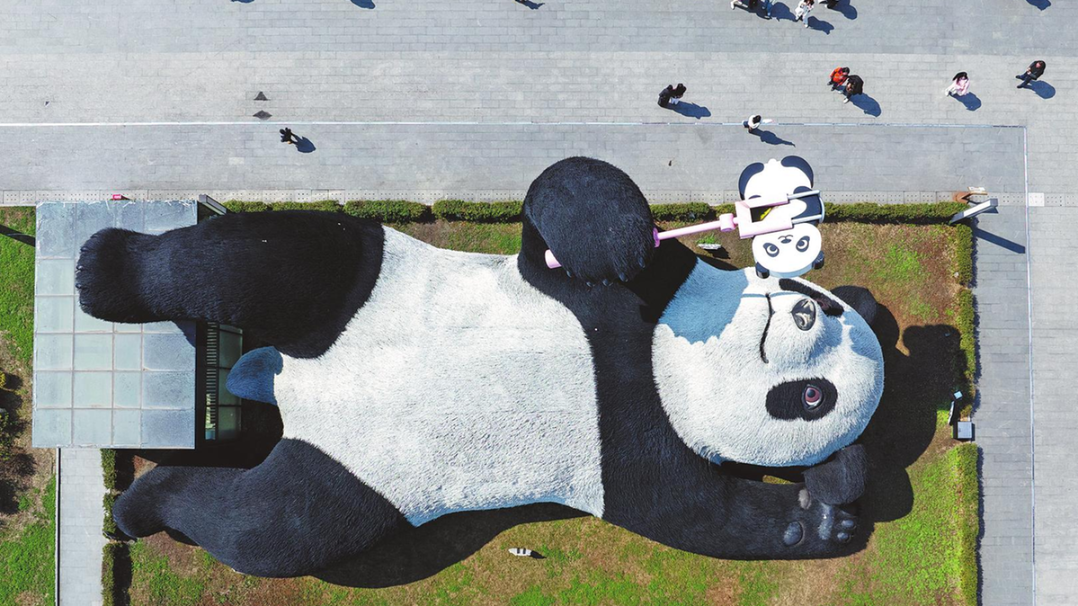
Across Chinese cities, the iconic panda has transcended its status as merely a national symbol to become an integral part of contemporary urban culture. Recent photographic documentation reveals how panda-themed elements have seamlessly integrated into the daily lives of citizens, creating a unique fusion of cultural identity and modern living.
In Dujiangyan, Sichuan province—a region synonymous with panda conservation—a striking selfie panda sculpture installed at Yangtianwo Square in February 2025 exemplifies this trend. The artistic installation has become a popular gathering point where residents and tourists interact with the beloved symbol in innovative ways.
The phenomenon extends beyond standalone sculptures to encompass various aspects of urban design. Panda motifs now appear on public infrastructure, consumer products, and architectural elements, creating unexpected moments of joy and cultural connection in ordinary settings. This integration represents a conscious effort to maintain cultural identity amid rapid urbanization.
Urban planners and cultural experts note that this blending of wildlife symbolism with urban environments reflects a broader philosophical approach to city development. The presence of panda elements in public spaces serves as a constant reminder of nature conservation values while creating aesthetically pleasing environments that resonate with local cultural identity.
The trend demonstrates how traditional symbols can adapt to contemporary contexts without losing their cultural significance, offering a model for other cities seeking to balance modernization with cultural preservation.