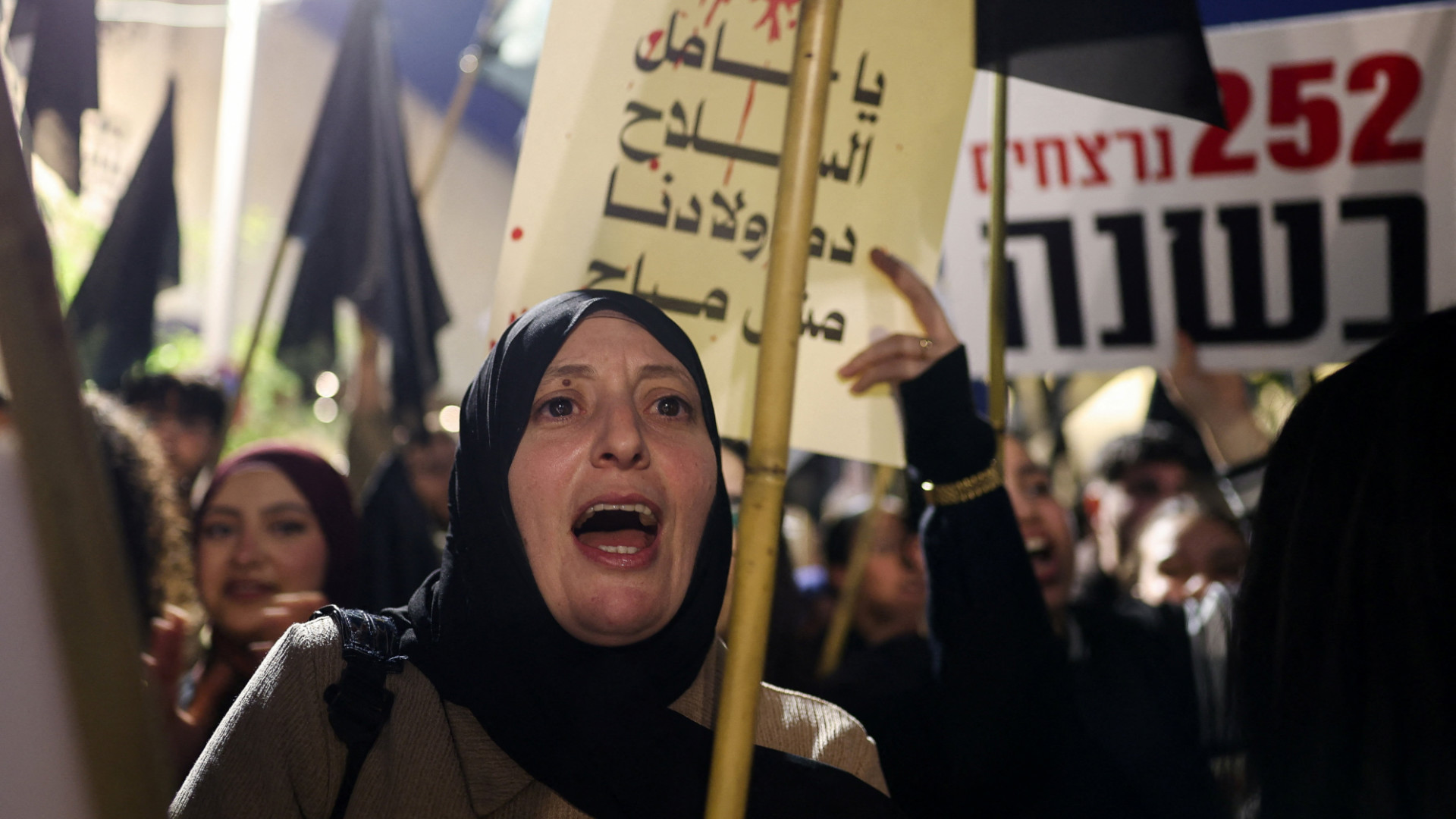
Thousands of Israeli citizens of Palestinian descent converged on Jerusalem in a motorized procession this Sunday, staging one of the largest demonstrations in recent history to protest escalating violent crime and perceived state indifference toward their communities. The protest marks the culmination of weeks of nationwide activism that began last month in Sakhnin and Tamra before gaining momentum across the country. Last week’s gathering in Tel Aviv drew approximately 100,000 participants—an unprecedented mobilization highlighting the community’s growing desperation.
The crisis has reached alarming proportions with at least 36 Palestinian citizens of Israel killed in crime-related incidents since January, maintaining a near-daily fatality rate. This disturbing trend follows 2025’s record violence that claimed 252 lives across 218 separate incidents according to monitoring by the Abraham Initiatives NGO. Criminologist Dr. Walid Haddad notes that fatalities have quadrupled over the past decade, with 2016 recording approximately 50 victims compared to projections exceeding 300 this year.
Protesters and experts alike accuse Israeli authorities of systematic neglect and discriminatory enforcement. They argue that law enforcement agencies respond decisively to criminal networks in Jewish communities while demonstrating ineffective interventions in Palestinian areas. National Security Minister Itamar Ben Gvir—previously convicted of inciting racism against Arabs—has overseen continued violence since assuming office in 2023. The community also recalls former police commissioner Kobi Shabtai’s controversial 2023 statement suggesting crime in Arab communities was “in their nature.”
Beyond organized crime, many perceive the violence as part of broader systemic discrimination. Palestinian citizens of Israel—descendants of those who remained after the 1948 Nakba—constitute approximately 20% of Israel’s population yet face decades of discriminatory practices. During Israel’s recent military operations in Gaza, expressions of solidarity were heavily restricted, and historical precedents show violent state responses to Palestinian protests.
Human rights advocate Ahmed Khalifa describes the situation as “deliberate negligence” aimed at internally dismantling the community. Rawyah Handaqlu, founder of the Center for Advancing Security in Arab Society, warns that the crisis threatens to displace families seeking safety, potentially creating lasting social fragmentation. As armed gangs operate with impunity and illegal weapons proliferate, many neighborhoods have transformed into virtual battlefields, forcing citizens to confront both criminal elements and what they perceive as institutional complicity.