For fifteen consecutive years, the Huangnan Tibetan Autonomous Prefecture in China’s northwestern Qinghai province has witnessed remarkable transformation through a comprehensive regional assistance initiative. This program, mandated by China’s central government, pairs economically advanced eastern regions with less developed areas to foster balanced national development.
Tianjin municipality has emerged as a key partner for Huangnan, channeling substantial resources into infrastructure, healthcare, and education since 2010. The collaboration represents one of China’s most enduring regional pairing programs, designed to bridge development gaps between coastal and inland regions.
Infrastructure development has been a cornerstone achievement. In Hornasha township, situated approximately 3,000 meters above sea level, Tianjin allocated 15 million yuan ($2.1 million) to construct a 41.7-kilometer road network connecting four administrative villages. Completed in 2022, this transportation infrastructure has replaced previously treacherous paths that became impassable during rainy seasons and dangerously icy in winter.
The road infrastructure has dramatically improved mobility and economic opportunities for local residents. Nyangga, a 76-year-old village shopkeeper, reported that travel time to Tongren city has reduced from a three-hour trek by mule or foot to a 40-minute drive.
Complementing transportation upgrades, Tianjin engineers completed a critical water-supply project in October 2019, delivering potable water to both residents and livestock. The system features pipelines buried 2.6 meters underground to prevent freezing during harsh plateau winters, replacing dependence on collected rainwater.
Healthcare transformation has been equally significant in Zekog county, where 95% of the 80,000 residents are Tibetan. A specialized medical team from Tianjin, led by Dr. Fan Hongguang, has strengthened local medical services through regular outreach across eight townships and 64 villages. The team focuses on treating and raising awareness about prevalent conditions including hypertension, diabetes, and respiratory infections.
The medical mission has established 34 mentor-student partnerships, cultivated 15 core local medical professionals, conducted over 500 training sessions, and facilitated medical licensing for nine staff members. Dr. Li Peng, a Tianjin radiologist working at Zekog’s People’s Hospital, emphasized his commitment to enhancing local diagnostic capabilities.
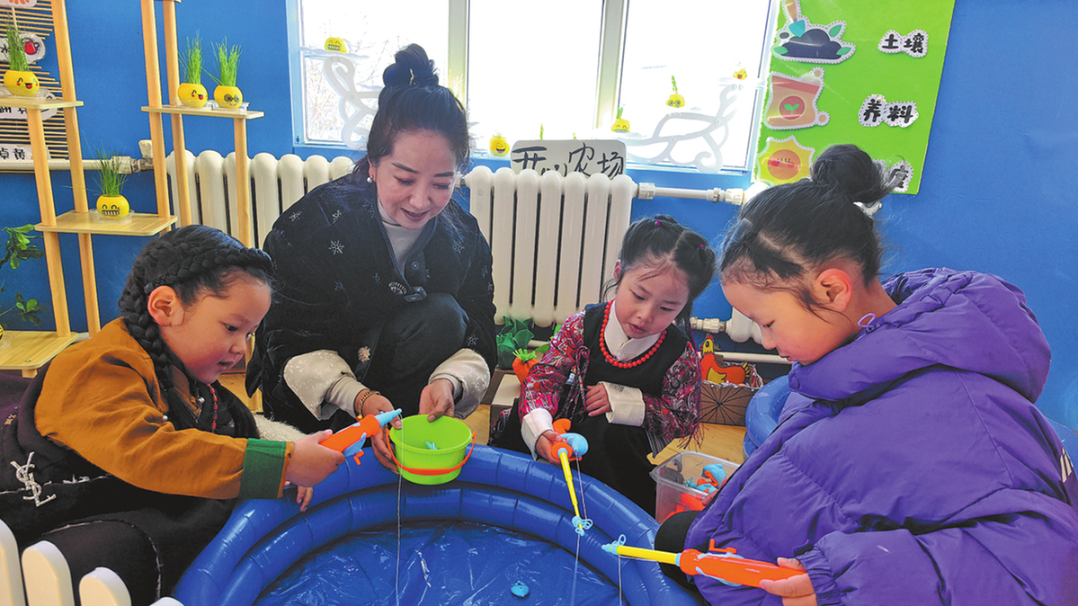
Educational advancement has manifested through the construction of the Central Kindergarten in Quze town, a 4,320-square-meter facility built with 15 million yuan in Tianjin funding between 2017-2022. The institution now serves 252 children across seven classes with 27 staff members, equipped with digital screens, playhouses, science learning spaces, and comprehensive outdoor facilities.
According to Yamma Tso, the kindergarten principal, the facility has eliminated the previous practice of preschool children studying alongside primary school students. The principal noted that Tianjin’s support has significantly broadened educational horizons for plateau children.
Overall, Tianjin has invested approximately 2 billion yuan in Huangnan, supporting 661 distinct projects aimed at comprehensive economic and social development. Pei Zhi, Chief Commander of the Tianjin Aid Qinghai Command Post, emphasized the program’s commitment to directing resources where they are most needed while ensuring residents tangibly experience the benefits of development assistance.