博客

  • Chinese researchers develop blink-powered eye-tracking device to help paralyzed patients control wheelchairs

    Chinese researchers develop blink-powered eye-tracking device to help paralyzed patients control wheelchairs

    In a groundbreaking advancement for assistive technology, Chinese research teams have pioneered a self-sustaining eye-tracking system that converts blink energy into operational power for controlling external devices. This innovation emerges from collaborative efforts between Qingdao University and the Hong Kong University of Science and Technology, representing a significant leap in human-computer interaction systems.

    The technology centers on a triboelectric nanogenerator (TENG) device, designated ET-TENG, which captures microscopic friction generated between eyelids and eyeballs during natural blinking. This mechanical energy is transformed into electrical power sufficient to operate the entire tracking system without external batteries. The device demonstrates remarkable precision with 99% accuracy in detecting eyeball deflection angles as minimal as 2 degrees.

    Unlike conventional camera-based eye trackers, the ET-TENG system maintains full functionality in complete darkness, overcoming a critical limitation of light-dependent technologies. This capability ensures reliable operation in various environmental conditions, enhancing its practical application potential.

    The primary application targets individuals with severe mobility impairments, particularly those with amyotrophic lateral sclerosis (ALS) and other conditions that preserve eye movement while limiting other motor functions. These patients could potentially operate wheelchairs, computers, and communication devices through intentional eye movements, restoring significant autonomy.

    Beyond medical applications, researchers envision implementations in space exploration for hands-free control panels, automotive safety systems for driver fatigue monitoring, and virtual reality hardware for creating more lightweight, energy-efficient headsets. The technology’s simple structure, high sensitivity, and anti-interference capabilities position it as a versatile platform for numerous human-computer interaction scenarios.

    The research, documented in the January 2026 edition of Cell Reports Physical Science, reflects the accelerating integration of artificial intelligence with sustainable energy solutions in technological development. This innovation represents not merely an incremental improvement but a fundamental reimagining of how biological energy can be harnessed for technological empowerment.

  • China’s commercial crewed spacecraft test capsule completes land-buffering verification

    China’s commercial crewed spacecraft test capsule completes land-buffering verification

    In a significant advancement for China’s commercial space sector, the test module of the CYZ1 crewed spacecraft has successfully completed comprehensive landing-buffering system verification trials. The spacecraft developer InterstellOr announced the breakthrough on Sunday, confirming all performance metrics not only met but exceeded design specifications.

    The rigorous testing simulated actual re-entry landing conditions with remarkable precision. Engineers elevated a 5-tonne test capsule to over three meters above ground level before executing an instantaneous release command. This carefully orchestrated free-fall maneuver replicated the steady descent velocity equivalent to a capsule under fully deployed main parachute.

    During the critical landing phase, the spacecraft’s buffering system activated seamlessly. The integrated retro-thruster expelled high-pressure gas to generate consistent reverse thrust while coordinating perfectly with the energy-absorbing structure at the capsule’s base. This sophisticated synchronization achieved effective deceleration and impact cushioning within an extremely limited stroke distance.

    Post-test examination revealed an impeccably executed buffering sequence with completely intact capsule structure and fully operational onboard equipment. These results demonstrate exceptional system reliability and technical feasibility for human spaceflight applications.

    The InterstellOr research team is now conducting exhaustive analysis of the test data to refine system parameters further. This successful verification establishes a robust technical foundation for subsequent development phases of the CYZ1 spacecraft, marking substantial progress toward China’s ambitions in commercial human spaceflight capabilities.

  • How could Europe respond to Trump’s Greenland tariffs?

    How could Europe respond to Trump’s Greenland tariffs?

    A fresh transatlantic trade confrontation has erupted following former President Donald Trump’s unexpected ultimatum to eight European nations regarding Greenland. On Saturday, Trump threatened to impose escalating tariffs—starting at 10% on February 1st and potentially rising to 25% by summer—unless these countries support his administration’s initiative to purchase Greenland.

    The targeted nations include major EU economies France and Germany, alongside the UK, Denmark, Norway, Sweden, Netherlands, and Finland. European leaders have responded with firm opposition, with the European Commission vowing to protect the bloc’s economic interests through available mechanisms.

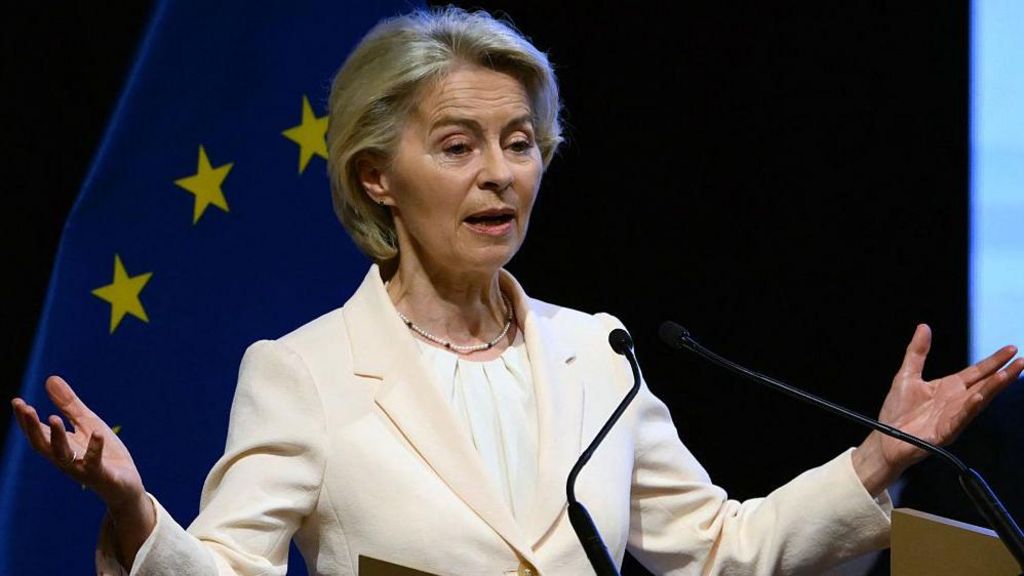
    This development jeopardizes the fragile trade détente established less than six months ago when European Commission President Ursula von der Leyen negotiated a reduction of threatened US tariffs from 30% to 15% on EU exports. That agreement, which was scheduled for European Parliament ratification next week, now faces suspension according to influential German MEP Manfred Weber.

    Without formal approval or extension of the current suspension, previously prepared EU counter-tariffs totaling €93 billion on American goods—ranging from livestock to aircraft parts and whiskey—will automatically activate on February 7th. This would create significant political pressure on Trump from US exporters facing European market restrictions.

    The EU’s most powerful trade weapon, the Anti-Coercion Instrument (ACI), represents a potential nuclear option. This mechanism allows the bloc to impose comprehensive trade and financial restrictions while bypassing international treaties, effectively blocking access to the single market. However, deploying the ACI involves a lengthy process—potentially exceeding one year—and risks substantial economic collateral damage to EU members themselves.

    Meanwhile, UK Prime Minister Keir Starmer has adopted a conciliatory stance, explicitly rejecting immediate retaliatory measures and emphasizing that “a tariff war is in nobody’s interests.” Alternative options under consideration include expanding the Digital Services Tax, which could impact major US tech corporations like Amazon and Meta.

    The legal foundation of Trump’s tariff strategy remains uncertain, with the US Supreme Court poised to rule on whether the former president overstepped his authority by implementing taxes through the International Emergency Economic Powers Act.

  • Five face trial in Peru in rare prosecution over the killing of an Amazon defender

    Five face trial in Peru in rare prosecution over the killing of an Amazon defender

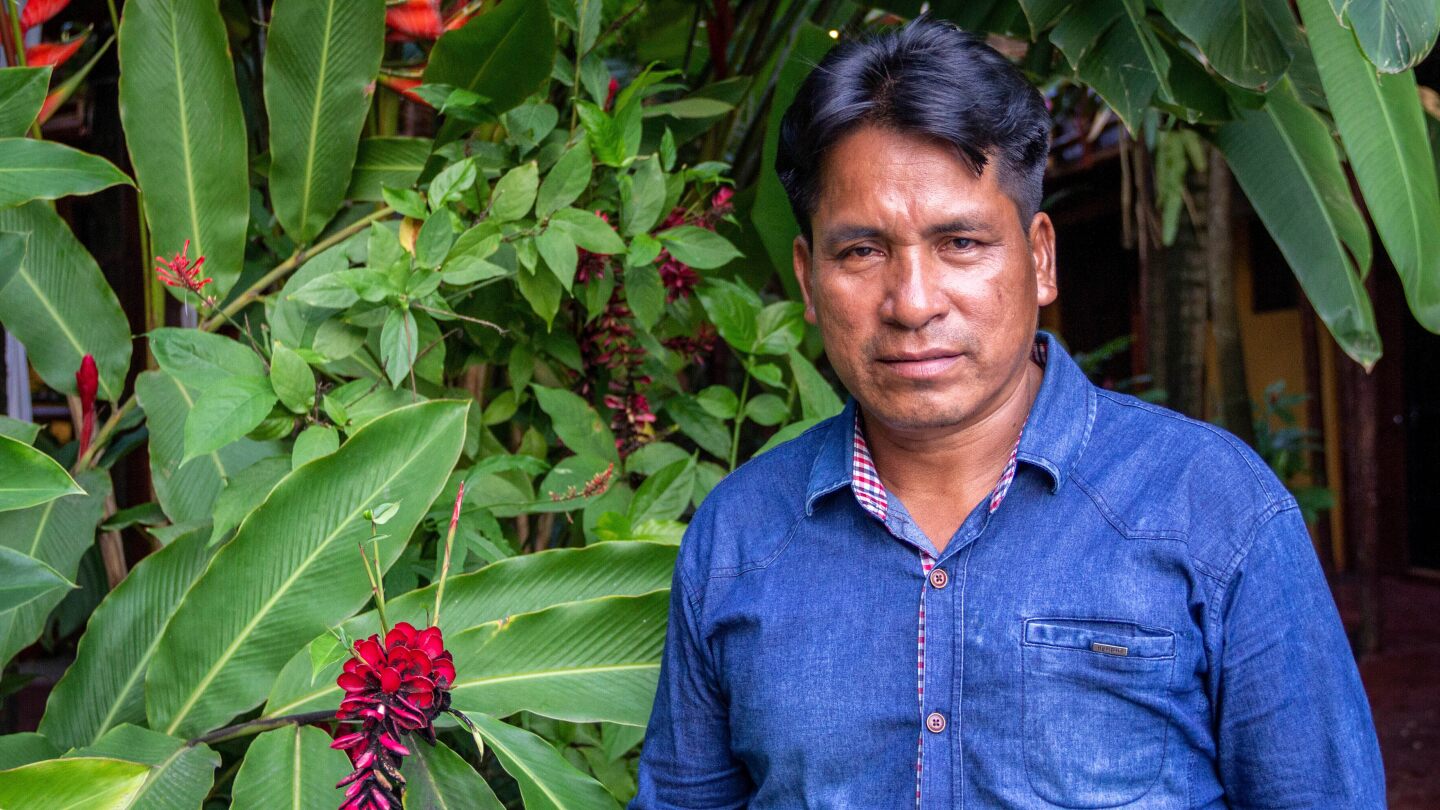
    In a groundbreaking legal proceeding, Peru has commenced the trial of five individuals charged with the contract killing of Indigenous Kichwa leader Quinto Inuma Alvarado, marking a pivotal moment for environmental justice in one of the world’s most dangerous regions for land defenders.

    The 50-year-old tribal leader from Peru’s northern Amazon region of San Martin was ambushed and fatally shot on November 29, 2023, while traveling by boat along a river route to his community of Santa Rosillo de Yanayacu. The attack occurred shortly after Inuma had participated in an event for Indigenous defenders, culminating years of threats he had received for opposing illegal logging and drug trafficking operations within his community’s territory.

    Prosecutors are seeking life sentences—an unprecedented penalty in cases involving the murder of Indigenous environmental defenders in Peru. The case represents the first time contract killing charges have been applied in such a context, with investigators linking the suspects to individuals Inuma had repeatedly reported to authorities for illegal activities.

    The judicial process has drawn intense scrutiny from Indigenous organizations, environmental advocates, and international observers who view it as a critical test of Peru’s ability to combat violence associated with illegal deforestation and narcotics trafficking in the Amazon basin. According to human rights groups, at least 35 Indigenous defenders have been killed in Peru over the past decade, with most cases never reaching the courtroom.

    Cristina Gavancho, a lawyer with the Lima-based Instituto de Defensa Legal, noted that the killing was ‘a result that was already foreseeable,’ given the persistent threats against Inuma. The prosecution’s case incorporates forensic evidence including gunshot-residue tests and witness testimony placing the accused at the scene around the time of the attack.

    The trial has also exposed critical failures in Peru’s protection mechanisms for environmental and Indigenous defenders. Despite being granted official security measures under a state protection mechanism created in 2021, these safeguards were never implemented due to budget constraints, according to legal representatives.

    International bodies including the Inter-American Commission on Human Rights and United Nations rapporteurs are monitoring the proceedings closely. Mary Lawlor, the UN Special Rapporteur on human rights defenders, described the investigation as ‘ground breaking’ given that crimes against environmental activists often go uninvestigated in the region.

    For Inuma’s family, the trial represents bittersweet justice. His son Kevin, 30, recounted how his father had prepared them for this possibility, stating: ‘He used to tell us that one day they might kill him and that we should be prepared.’ The family has since been forced to abandon their community and traditional way of life, struggling to adapt to urban existence.

    Legal experts suggest that convictions in this case could establish a powerful precedent not only for Peru but throughout Latin America, demonstrating that thorough investigations are possible and that lack of resources should no longer justify impunity in killings linked to environmental defense.

  • US Catholic cardinals urge Trump administration to embrace a moral compass in foreign policy

    US Catholic cardinals urge Trump administration to embrace a moral compass in foreign policy

    In an unprecedented move, three influential American Catholic cardinals have publicly called upon the Trump administration to realign its foreign policy with ethical principles, warning that current approaches risk causing extensive human suffering rather than fostering global peace. Cardinals Blase Cupich of Chicago, Joseph Tobin of Newark, and Robert McElroy of Washington jointly expressed deep concerns regarding recent U.S. military operations in Venezuela, considerations about acquiring Greenland, and substantial reductions in foreign assistance programs.

    The religious leaders characterized the contemporary foreign policy discourse as dangerously mired in “polarization, partisanship, and narrow economic and social interests,” emphasizing the absence of a coherent moral vision. Cardinal McElroy notably observed that “Most of the United States and the world are adrift morally in terms of foreign policy,” while acknowledging America’s continuing significant global influence.

    This declaration represents the second instance in recent months where high-ranking U.S. Catholic figures have openly challenged administration policies perceived as conflicting with fundamental human dignity principles. The cardinals’ statement draws intellectual inspiration from Pope Leo XIV’s substantial January address to Vatican diplomats, in which the pontiff delivered a comprehensive critique of nations employing force to assert global dominance, thereby undermining international peace and the post-World War II legal framework.

    The church leaders specifically questioned the ethical foundations of military intervention in Venezuela, potential Greenland acquisition attempts, ongoing conflict in Ukraine, and drastic cuts to international development aid. They articulated a vision for American foreign policy that prioritizes human dignity, religious liberty, and economic assistance, stating: “We renounce war as an instrument for narrow national interests and proclaim that military action must be seen only as a last resort.”

    Cardinal Cupich revealed that the statement originated from concerns raised by multiple cardinals during early January Vatican meetings, finding resonance with Pope Leo’s diplomatic address. While acknowledging potential justification for opposing Venezuelan leadership, Cupich criticized the methodology: “When we go ahead and do it in such a way that is portrayed as saying, ‘Because we can do it, we’re going to do it, that might makes right’—that’s a troublesome development.”

    The cardinals emphasized their intervention transcends partisan politics, seeking instead to advocate for ethical governance focused on the common good. Cardinal Tobin summarized this perspective: “It can’t be that my prosperity is predicated on inhuman treatment of others. The real argument isn’t just my right or individual rights, but what is the common good.”

  • Pakistan: Death toll rises to 11 after Karachi’s Gul Plaza fire; over 60 still missing

    Pakistan: Death toll rises to 11 after Karachi’s Gul Plaza fire; over 60 still missing

    A devastating fire at Karachi’s Gul Plaza shopping center has resulted in a rising death toll and massive structural damage, with rescue operations continuing amid precarious conditions. The blaze, which ignited on Saturday evening in Pakistan’s commercial capital, raged for over 24 hours before being contained, leaving at least 11 confirmed fatalities and more than 60 individuals unaccounted for.

    Emergency responders faced extreme challenges due to the building’s inadequate ventilation system, which caused dense smoke to accumulate throughout the multi-story complex. The smoke infiltration significantly hampered rescue attempts to reach those trapped inside the facility, which contains approximately 1,200 retail establishments.

    By Sunday evening, substantial portions of the building had suffered catastrophic collapse, scattering twisted steel beams, concrete debris, and commercial wreckage across adjacent streets. Rescue teams have issued warnings about the unstable nature of the remaining structure, indicating potential further collapse risks that complicate search operations.

    Authorities received the initial emergency notification at 10:38 PM local time on Saturday, reporting fires at ground-level shops. Firefighting units arriving at the scene encountered rapidly spreading flames that had already ascended to upper floors, consuming large sections of the building before containment efforts could be fully implemented.

    Karachi Mayor Murtaza Wahab confirmed the scale of the missing persons crisis while police surgeon Dr. Summaiya Syed verified the increased fatality count. The incident represents one of the most severe commercial building fires in recent Pakistani history, highlighting concerns about urban safety standards in densely populated areas.

  • Pro-Greenland protesters mock Trump’s MAGA slogan with ‘Make America Go Away’ caps

    Pro-Greenland protesters mock Trump’s MAGA slogan with ‘Make America Go Away’ caps

    COPENHAGEN, Denmark — A wave of creative resistance has swept through Denmark as citizens respond to U.S. President Donald Trump’s expressed interest in acquiring Greenland. The movement has found its symbol in parody baseball caps that transform Trump’s iconic “Make America Great Again” slogan into “Make America Go Away.”

    These satirical accessories, created by Copenhagen vintage store owner Jesper Rabe Tonnesen, have evolved from commercial failure to cultural phenomenon following the Trump administration’s serious overtures toward the autonomous Danish territory. What began as a limited run last year has exploded into a nationwide statement, with thousands of caps now in production to meet surging demand.

    The headwear has appeared at public demonstrations, including a weekend protest in freezing temperatures outside Copenhagen City Hall, where participants waved Danish and Greenlandic flags while carrying signs with messages like “No Means No” and “Make America Smart Again.”

    European governments have formally rallied behind Denmark, emphasizing Arctic security concerns and the importance of respecting territorial sovereignty. Meanwhile, Danish citizens have adopted a more direct approach to expressing their disapproval. “I want to show my support to Greenland and also show that I don’t like the president of the United States,” stated 76-year-old Copenhagen resident Lars Hermansen, who participated in the weekend demonstration.

    Tonnesen, 58, described his motivation: “When a delegation from America went up to Greenland, we started to realize this probably wasn’t a joke—it’s not reality TV, it’s actually reality. So I said, OK, what can I do? Can I communicate in a funny way with a good message and unite the Danes?”

    The movement has also produced linguistic creativity with an alternative design featuring the phrase “Nu det NUUK!”—a clever play on words that replaces the Danish expression “Nu det nok” (meaning “Now it’s enough”) with the name of Greenland’s capital city.

    Protesters maintained a balance between serious messaging and lighthearted expression. Kristian Boye, 49, who attended the Copenhagen rally, captured this dual approach: “I’m here to support the Greenlanders, who are going through a very hard time right now. They are being threatened with having their country invaded. I think it’s totally unacceptable.”

  • Dubai: Gold price jumps over Dh8 per gram to record high

    Dubai: Gold price jumps over Dh8 per gram to record high

    Dubai’s gold market surged to unprecedented levels on Monday morning as escalating geopolitical tensions triggered a massive flight to safe-haven assets. The precious metal recorded a dramatic increase of Dh8.25 per gram, pushing 24K gold to Dh562 while 22K gold reached Dh520.25 per gram according to Dubai Jewellery Group data.

    The remarkable rally stems from multiple international crises simultaneously unfolding. Intensifying protests across Iran and mounting transatlantic tensions between the United States and European Union over Greenland have created perfect conditions for gold’s ascent. The situation intensified when US President Donald Trump threatened additional tariffs against the EU regarding control of the Arctic territory.

    Global markets mirrored Dubai’s surge with gold reaching $4,671.72 per ounce, representing a 1.64 percent increase at 9:25 AM UAE time. Silver similarly climbed to $94 per ounce before settling at $93.19. All gold variants in Dubai traded at record levels with 21K at Dh499.0, 18K at Dh427.75, and 14K at Dh333.5 per gram.

    Vijay Valecha, Chief Investment Officer at Century Financial, confirmed the bullish fundamentals: ‘As geopolitical risks multiply, investors traditionally seek refuge in safe-haven assets like gold. The White House’s recent executive order protecting US rare earth supplies has further contributed to this momentum.’ Valecha also noted lingering concerns about the Federal Reserve’s independence after Trump’s threats against the Fed Chair, which drew support from central bankers worldwide.

    Technically, Valecha identified potential resistance around $4,685 on the ascending trendline, suggesting the rally might face temporary hurdles at that level. The combination of political uncertainty, trade tensions, and monetary policy concerns has created ideal conditions for sustained gold appreciation.

  • Djokovic equals two all-time records and wins his 100th match at Australian Open

    Djokovic equals two all-time records and wins his 100th match at Australian Open

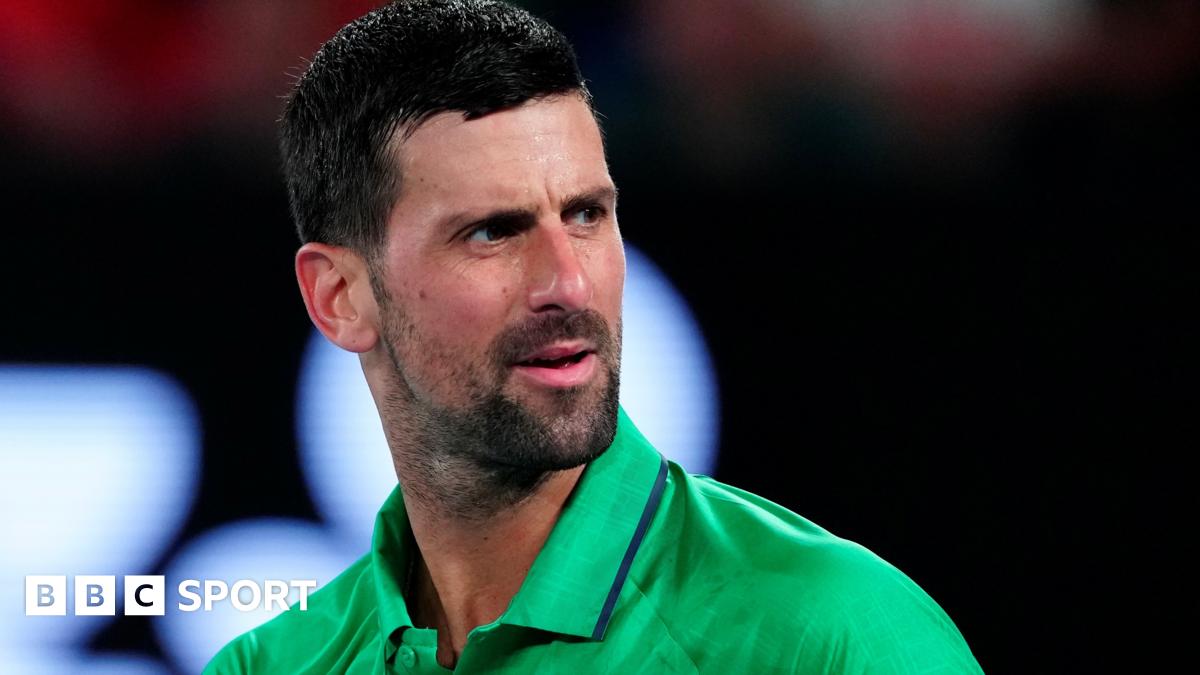
    MELBOURNE, Australia — Novak Djokovic delivered a commanding performance at the Australian Open, simultaneously celebrating his 100th victory at Melbourne Park while sending an unequivocal message to his competitors: his pursuit of an unprecedented 25th Grand Slam title remains undiminished.

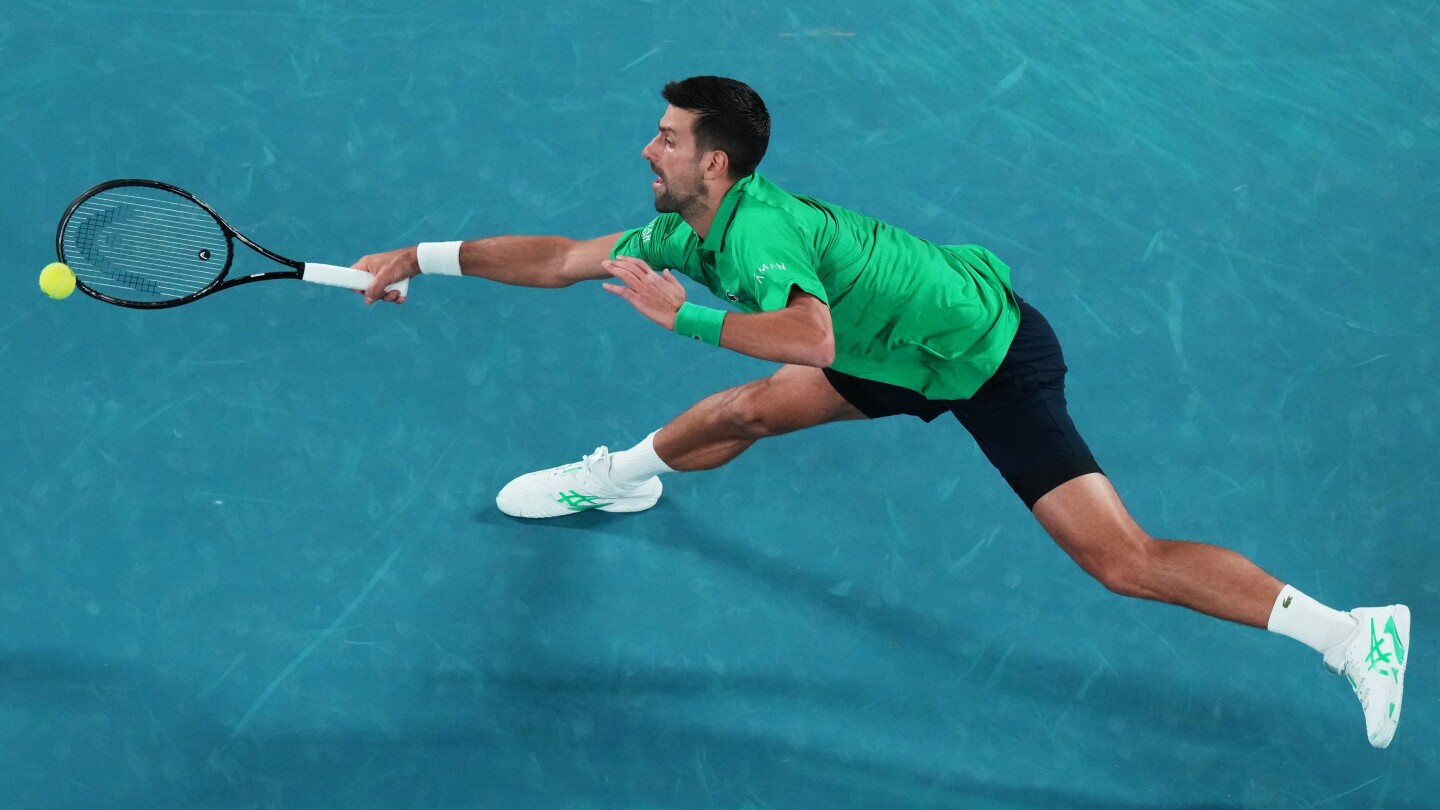
    The 38-year-old tennis legend matched two historic records by appearing in his 21st Australian Open and 81st Grand Slam tournament. His dominant 6-3, 6-2, 6-2 first-round triumph over Spain’s Pedro Martínez propelled him into exclusive territory as the first male player to achieve 100 or more wins on three different Grand Slam surfaces—adding to his 102 victories on Wimbledon’s grass and 101 at Roland Garros on clay.

    Djokovic expressed particular satisfaction with this latest milestone, remarking, “Centurion is pretty nice. Nice feeling.” His service statistics underscored his formidable form: 77% first serves in, 93% first serve points won, 85% second serve points won, and 14 aces without facing a single break point.

    The Serbian champion displayed flashes of his signature brilliance, including a running crosscourt forehand winner that prompted his characteristic cord-ripping celebration. He later channeled French player Gaël Monfils with an athletic leaping forehand during the third set.

    Despite his advancing age, Djokovic remains intensely motivated by record-breaking opportunities. Having reached the semifinals in all four majors last year without securing a title, he now seeks to overcome the dominance of rivals Carlos Alcaraz and Jannik Sinner—the duo known as ‘Sincaraz’ who have controlled men’s tennis for the past two seasons.

    In a lighthearted moment, Djokovic joked about Alcaraz’s recently modified service motion, which bears resemblance to his own. “I sent him a message saying we have to speak about the copyrights!” he quipped. “Every ace I expect a tribute to me!”

    While acknowledging the elevated performance level of his younger competitors, Djokovic maintains confidence in his ability to triumph when executing his game plan effectively. His preparation for this tournament involved skipping warmup events to prioritize physical recovery, stating, “I’m using every hour that I can to get my body recovered and in shape for the next challenge.”

  • Djokovic registers 100th Australian Open win

    Djokovic registers 100th Australian Open win

    In a breathtaking display of serving precision, Novak Djokovic achieved a monumental milestone at the Australian Open, securing his 100th career victory at Melbourne Park while delivering what commentators described as one of the most dominant serving performances in recent tennis history.

    The Serbian champion, currently ranked world number four and pursuing an unprecedented 25th Grand Slam singles title, dismantled Spain’s Pedro Martínez with surgical efficiency. Djokovic’s service statistics bordered on the supernatural: he dropped merely five points out of 57 on serve throughout the two-hour contest, maintained a 77% first-serve accuracy rate, and won a staggering 93% of points behind his first delivery. The match concluded fittingly with Djokovic’s 14th ace of the evening, sealing a 6-3, 6-2, 6-2 triumph.

    Tennis legend Mark Woodforde, a 17-time Grand Slam doubles champion, characterized Djokovic’s performance as “supreme” and “exceptional” during BBC Radio 5 Sports Extra commentary. Djokovic himself offered a characteristically measured assessment: “Tonight’s performance was great, I can’t complain about anything. I served very well. It’s always a challenge to kick-start the tournament on the right note and send the right signal not only to yourself but your opponents watching you play.”

    The victory places Djokovic in an exclusive club of players who have achieved 100 wins at multiple Grand Slam events, having previously reached this milestone at Wimbledon (102 wins) and Roland Garros (101 wins). During his post-match interview, tournament organizers commemorated the achievement with video highlights from his 2005 main-draw debut, though Djokovic remained focused on the present, quipping that he would only reflect on his accomplishments when “putting the racquet aside [and] sipping some nice cocktail on the beach.”

    Looking ahead, Djokovic will face Italian qualifier Francesco Maestrelli in the second round, using the intervening days to recover and prepare. Beyond immediate tournament objectives, Djokovic revealed that “history-making is great motivation,” particularly in the latter stages of his career. He credited early mentors for guiding him “to play the long shot with my career, not to burn out too quickly, and take care of my body and my mind.”

    Elsewhere in the draw, Australian hope Alex de Minaur launched his campaign with a commanding straight-sets victory, declaring his ambition to become the first home men’s champion since 1976. Higher seeds Andrey Rublev, Casper Ruud, Alejandro Davidovich Fokina, and Tommy Paul all advanced comfortably, while Czech 17th seed Jiří Lehečka suffered an unexpected early exit against French qualifier Arthur Gea.