博客

  • ASX 200 drops for third day as US trade fears rattle market, gold trumps global uncertainty

    ASX 200 drops for third day as US trade fears rattle market, gold trumps global uncertainty

    Australia’s financial markets recorded a third consecutive day of declines as escalating trade disputes between the United States and Europe continued to dampen investor sentiment. The benchmark ASX 200 index fell 0.37 percent to close at 8782.90 points, while the broader All Ordinaries index dropped 0.33 percent to settle at 9108.6.

    The market downturn mirrored substantial losses on Wall Street, triggered by renewed geopolitical tensions surrounding U.S. trade policies toward Greenland. Market analysts attributed the sustained decline to growing concerns about potential disruptions to global trade frameworks and supply chains.

    Amid the market volatility, gold continued its remarkable ascent, climbing 0.02 percent to reach $4,857 per ounce and positioning itself for a potential breakthrough of the $5,000 psychological barrier. The precious metal’s persistent strength reflects its status as a traditional safe-haven asset during periods of economic uncertainty.

    Sector performance revealed a mixed landscape, with eight of eleven industry categories finishing in negative territory. Information technology and consumer discretionary sectors experienced the most significant declines, dropping 2.5 percent and 2.14 percent respectively. Conversely, materials sector stocks continued their strong performance with a 2.5 percent gain, while utilities and energy sectors also closed positively.

    Individual stock movements highlighted the day’s volatility. Emerald Resources NL led gainers with a 13.2 percent surge to $7.96, followed closely by Paladin Energy’s 13.1 percent rise to $13.17. Westgold Resources also posted substantial gains, climbing 9.6 percent to $7.53. Conversely, Droneshield shares plummeted 8.86 percent to $4.32, marking the session’s sharpest decline.

    Australia’s banking sector faced broad pressure, with all four major banks closing lower. ANZ and Commonwealth Bank both fell more than 2 percent, while NAB declined 1.62 percent and Westpac dropped 1.24 percent. Mining giant BHP bucked the trend, advancing 1.46 percent to $48.48.

    The Australian dollar showed resilience amid the equity market turbulence, trading at 67.52 U.S. cents with analysts suggesting potential movement toward 69 cents if current trends persist.

    Market participants now await key developments including former President Trump’s scheduled address at Davos and an emergency EU summit in Brussels, both of which could provide clarity on the direction of international trade relations.
  • Japan bids farewell as pandas set to return home

    Japan bids farewell as pandas set to return home

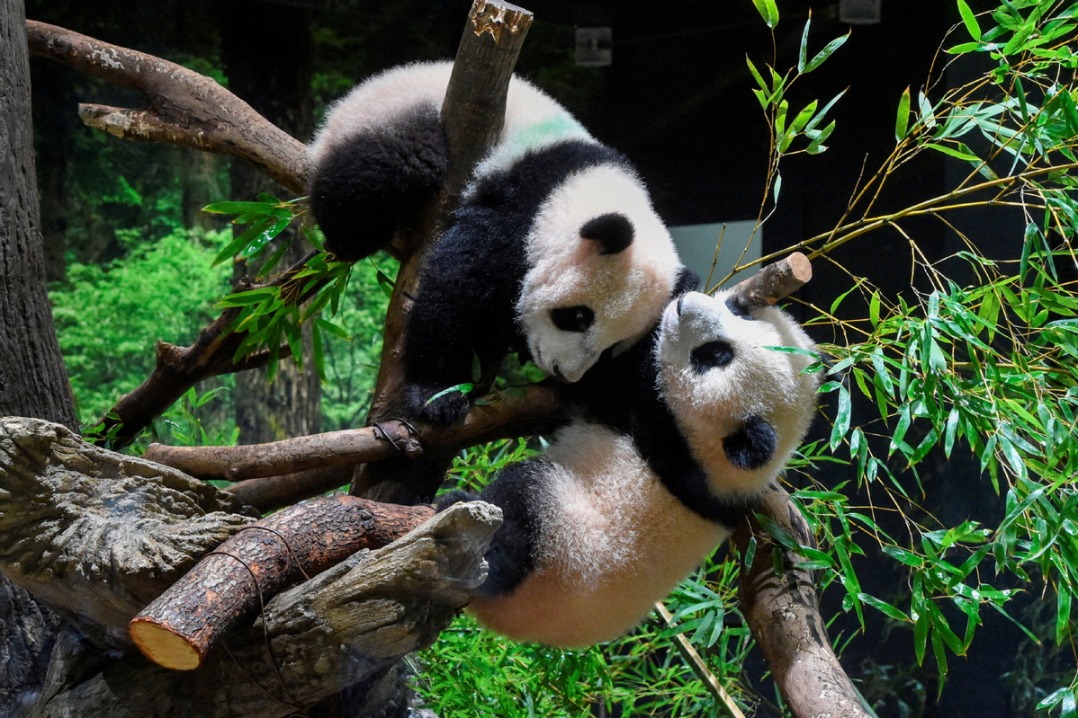
    Tokyo’s Ueno Zoo is witnessing emotional farewells as Japan prepares to return its last remaining giant pandas to China, marking the end of a five-decade tradition. The twin cubs Xiao Xiao and Lei Lei, born in June 2021, will depart on January 27 under the terms of the China-Japan panda loan agreement expiration, leaving Japan without pandas for the first time since 1972.

    The zoo has implemented sophisticated crowd management measures to accommodate overwhelming public interest. Since December 16, visitor numbers have been restricted, with an online reservation system introduced on December 23. The final viewing period from January 14-25 utilized a lottery system that attracted intense competition, with approximately 24.6 applications for each available slot. The zoo estimates 178,000 visitors will have viewed the pandas during this farewell period.

    Japanese visitors have expressed deep emotional connections to the departing pandas. Tokyo resident Tezuka, though unsuccessful in securing a viewing slot, still visited the zoo to participate in the collective farewell experience. ‘I couldn’t see the pandas, but I still came,’ she told China Daily. ‘Watching photos taken by others and helping visitors take pictures made me feel part of the farewell.’

    Another visitor, Shirakuma, who identifies as part of Japan’s ‘panda generation,’ secured access through persistent online applications. She recalled childhood visits to see the original pandas Kang Kang and Lan Lan with her father, noting how pandas have provided ‘fond memories at different stages of her life.’

    Ueno Zoo has organized extensive farewell activities including commemorative photo spots, developmental photo exhibitions, keeper message displays, and an online message board where Japanese netizens have posted heartfelt messages such as ‘Thank you for your companionship all this time’ and ‘Thank you, lovely pandas, for healing me.’

    The pandas will undergo quarantine at China’s Ya’an Bifengxia base upon arrival. This panda diplomacy program, initiated in 1972 to commemorate normalized diplomatic relations, has been widely regarded as successful, yielding significant progress in breeding techniques, veterinary care, and public education. Over 30 pandas have been loaned to Japan or born there during this cooperation period.

  • Retired spacesuit to help design upgrades

    Retired spacesuit to help design upgrades

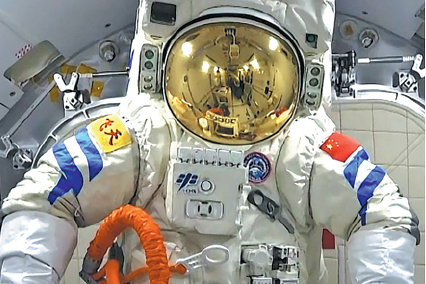
    Chinese aerospace engineers have commenced comprehensive analysis of a retired extravehicular spacesuit recently returned from the Tiangong space station, marking a significant milestone in the nation’s space technology development. The B-type spacesuit, transported back to Earth aboard the Shenzhou XX return capsule on January 20, 2026, represents China’s first spacewalk garment to complete orbital service and undergo systematic post-mission examination.

    According to the China Manned Space Agency, the suit possesses exceptional scientific value and historical significance following its extensive service in orbit. The garment was originally delivered to Tiangong via the Tianzhou 2 cargo spacecraft in May 2021 and achieved operational distinction during the Shenzhou XII mission’s inaugural spacewalk that July – a landmark extravehicular activity outside China’s space station that lasted six hours and 46 minutes.

    Astronaut Tang Hongbo utilized the suit during this pioneering mission to install critical station components including robotic arm systems while simultaneously validating the suit’s performance parameters in actual space conditions. The returned equipment will now undergo meticulous technical evaluation and material degradation analysis to gather precise data on its orbital endurance characteristics.

    Research outcomes are expected to directly inform design enhancements for future orbital spacesuits and establish fundamental engineering benchmarks for China’s developing lunar extravehicular activity system. The investigation particularly aims to support the nation’s ambitious crewed moon landing initiatives by providing authentic performance data from actual space operations.

  • Retired judges lend skills to’silver-haired mediation’

    Retired judges lend skills to’silver-haired mediation’

    In a innovative approach to justice administration, retired judges across China are returning to courtrooms as mediators, leveraging their decades of legal expertise to resolve complex disputes that have eluded conventional resolution. This ‘silver-haired mediation’ program represents a strategic utilization of experienced legal professionals to strengthen grassroots governance and promote the rule of law.

    The effectiveness of this initiative was recently demonstrated in Beijing’s Chaoyang District, where 71-year-old retired judge Hou Chunying successfully mediated a 37-year-old heating fee dispute that had persisted since 1987. The case involved 48 households of former radio factory employees facing a collective debt exceeding 1 million yuan ($142,000) in overdue heating fees, plus substantial penalties.

    Judge Hou discovered that the conflict stemmed from outdated accounting methods, differing opinions among residents, and the factory’s financial difficulties. Rather than proceeding with litigation that would have placed undue burden on the residents, she identified an existing agreement between the heating provider and the factory that offered a pathway to resolution.

    Through separate negotiations with both parties, Hou persuaded the factory to acknowledge its social responsibilities while convincing the heating center to reduce the debt amount considering the factory’s financial constraints. Her mediation resulted in a one-time settlement payment of 700,000 yuan, resolving the nearly four-decade-old dispute to the satisfaction of all parties involved.

    The Supreme People’s Court has officially endorsed this growing movement, recognizing retired judges as valuable legal assets whose extensive experience and specialized knowledge make them particularly effective in alternative dispute resolution. These veteran jurists bring not only technical legal expertise but also the wisdom gained from handling thousands of cases throughout their careers.

    Beyond resolving specific cases, the program addresses systemic challenges within China’s judicial system by reducing caseloads for active judges, easing court congestion, and providing cost-effective resolution mechanisms for complex historical disputes. For the retired judges themselves, the initiative offers meaningful engagement in their post-retirement years, allowing them to continue contributing to the legal system and society.

  • ‘Near perfect’ Gauff joins Sabalenka in third round

    ‘Near perfect’ Gauff joins Sabalenka in third round

    Melbourne witnessed a masterclass in power and precision on day four of the Australian Open as two of the tournament’s foremost contenders, Coco Gauff and Aryna Sabalenka, delivered emphatic statements of intent.

    Reigning French Open champion Coco Gauff showcased what she described as a ‘near perfect’ performance, dismantling Serbia’s Olga Danilovic 6-2, 6-2 in a commanding 77-minute display on Margaret Court Arena. The American phenom immediately imposed her authority, racing to a 5-0 lead in the opening set before sealing victory with impressive composure. Gauff’s statistical improvement was particularly notable—reducing her double faults to just one and hitting 14 winners—a significant refinement from her error-prone first-round encounter. The victory sets up an all-American third-round clash against Hailey Baptiste.

    Meanwhile, world number one and two-time Australian Open champion Aryna Sabalenka continued her relentless form, dispatching China’s Bai Zhuoxuan 6-3, 6-1 in just 72 minutes. The top-seeded Belarusian demonstrated why she remains unbeaten in 2026, overwhelming her opponent ranked 701 places below her with characteristic power. Despite brief resistance that saw Sabalenka denied on six set points, she maintained her dominant record at Melbourne Park, where she has now won 45 of her last 50 sets. This achievement places her among Open era legends like Graf, Hingis, Seles, and Williams. Sabalenka will face Russian-born Austrian Anastasia Potapova, who advanced after defeating Britain’s Emma Raducanu.

    The tournament’s top ten women’s seeds all remain in contention, with Russian eighth seed Mirra Andreeva also delivering a spectacular 6-0, 6-0 victory over Greece’s Maria Sakkari in just 67 minutes, underscoring the depth of competition at this year’s event.

  • Japan to restart world’s biggest nuclear plant Wednesday

    Japan to restart world’s biggest nuclear plant Wednesday

    Japan is poised to reactivate the world’s largest nuclear power facility on Wednesday, marking a historic milestone in the nation’s energy policy since the 2011 Fukushima catastrophe. The Kashiwazaki-Kariwa plant in Niigata province, operated by Tokyo Electric Power (TEPCO), will initiate reactor operations after receiving final regulatory approval, despite significant public safety concerns and ongoing protests.

    The restart follows Niigata Governor’s endorsement last month, though regional surveys indicate 60% of residents oppose the reactivation while only 37% support it. The facility has undergone substantial safety enhancements including a 15-meter tsunami wall and elevated emergency power systems. However, critics highlight TEPCO’s problematic track record—including recent alarm system failures and data falsification scandals—as evidence of ongoing operational risks.

    Japan’s push for nuclear revival stems from energy security needs and climate commitments. As the fifth-largest global carbon emitter, Japan aims to achieve carbon neutrality by 2050 and reduce fossil fuel dependency from nearly 70% to 30-40% of its energy mix. Nuclear power is projected to supply 20% of national energy by 2040, up from current 8.5% levels.

    The restart represents TEPCO’s first nuclear reactivation since the Fukushima disaster, where decommissioning efforts continue after 15 years. While 14 reactors have resumed operations under stricter safety protocols nationwide, Kashiwazaki-Kariwa’s revival remains contentious due to its location on active seismic faults and evacuation plan inadequacies highlighted by local residents.

  • Heady scent of wintersweet beckons all this season

    Heady scent of wintersweet beckons all this season

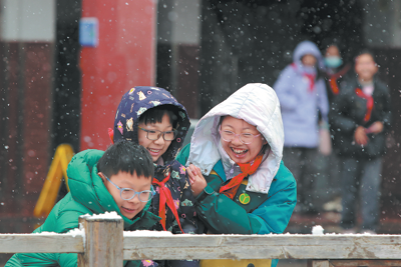
    As an unusual cold snap blankets even southern Chinese cities in snow, a timeless seasonal tradition has captivated citizens nationwide: the pursuit of wintersweet blossoms. This hardy flower, scientifically known as Chimonanthus praecox, transforms winter landscapes with its vibrant yellow petals and intoxicating fragrance from December through March each year.

    In Beijing’s Summer Palace, the golden-glazed roofs dusted with snow create an imperial backdrop for clusters of wintersweet that burst forth against vermilion walls. This striking contrast of imperial red, pure white, and floral gold forms living paintings that embody both elegance and endurance against the harsh winter elements.

    Southern classical gardens offer equally exquisite settings for the seasonal spectacle. Jiangsu Province’s Humble Administrator’s Garden features delicate pavilions and winding corridors that artfully frame the blossoms, while Shanghai’s Guyi Garden showcases the flowers against ancient architecture with ornate towers and terraces. The blooms’ subtle beauty reflects China’s deep appreciation for seasonal transitions and natural resilience.

    The phenomenon has gained particular attention this year as rare snowfall in southern cities like Wuhan and Shanghai has created extraordinary photographic opportunities. Social media platforms have been flooded with images of snow-dusted wintersweet branches, with many citizens braving the cold to capture the perfect shot of these fragrant blossoms against unusual snowy backdrops.

  • ‘Really scary’: Sydney residents react to shark attacks

    ‘Really scary’: Sydney residents react to shark attacks

    A wave of apprehension has swept across Sydney’s coastal communities following an unprecedented series of four shark encounters within a mere 48-hour timeframe along New South Wales’ coastline. The BBC conducted street-level interviews with residents and beachgoers, capturing raw emotional responses to what many described as deeply frightening incidents that have disrupted the region’s quintessential beach culture.

    The cluster of attacks, occurring in close geographical and temporal proximity, represents a significant deviation from historical patterns, triggering immediate safety reassessments by marine authorities. Lifesaving agencies have intensified surveillance operations while deploying additional aerial patrols to monitor shark movements near popular swimming areas.

    Marine biologists specializing in shark behavior suggest environmental factors including unusual water temperature fluctuations and baitfish migrations closer to shore may have contributed to this anomalous situation. Meanwhile, local authorities have implemented temporary beach closures and installed advanced shark detection technologies while urging swimmers to avoid dawn and dusk ocean activities.

    This series of incidents has reignited debates about coastal management strategies, with community members expressing divided opinions on shark mitigation measures ranging from traditional netting programs to newer non-lethal deterrent technologies. The psychological impact on the community appears substantial, with many residents reconsidering their relationship with the ocean that has long defined Sydney’s identity.

  • Rapid unravelling of SDF removes ‘main irritant’ in US-Turkey ties

    Rapid unravelling of SDF removes ‘main irritant’ in US-Turkey ties

    The rapid collapse of the Kurdish-led Syrian Democratic Forces (SDF) amid President Ahmed al-Sharaa’s military offensive has fundamentally transformed the geopolitical landscape in Syria while removing a persistent source of tension between the United States and its NATO ally Turkey, according to regional experts.

    The disintegration of Rojava—the semi-autonomous Kurdish administration in northeastern Syria—marks the culmination of a strategic shift within the Trump administration that has effectively endorsed Turkey’s security concerns over Kurdish aspirations for autonomy. This development represents a dramatic reversal of Washington’s previous policy that had supported Kurdish forces as primary partners in the fight against the Islamic State since 2015.

    Ankara had long viewed the SDF as an extension of the Kurdistan Workers’ Party (PKK), which both the US and European Union designate as a terrorist organization. The SDF’s defeat, facilitated by Arab tribal forces switching allegiances to Damascus, has enabled Syrian government forces to reclaim territories including the oil-rich provinces of Deir Ezzor and Raqqa for the first time in over a decade.

    The Trump administration’s appointment of billionaire envoy Tom Barrack signaled a new approach prioritizing alignment with Turkish interests. Barrack declared the US security partnership with Kurdish forces ‘largely expired’ and backed a ceasefire agreement that requires SDF fighters to integrate individually into the Syrian army, explicitly rejecting any form of Kurdish semi-autonomy or federal system.

    Regional analysts note that this resolution of the Kurdish question has created unprecedented alignment between Washington and Ankara that could influence ongoing conflicts in Gaza and Ukraine, where the Trump administration seeks Turkish cooperation. The absence of Israeli intervention despite Kurdish efforts to solicit support further strengthened Turkey’s position, according to experts at the Middle East Institute.

    While some US lawmakers like Senator Lindsey Graham threatened sanctions against Damascus, the administration’s support for the new Syrian government—reportedly facilitated by Turkish and Saudi diplomacy—appears to have prevailed, fundamentally reshaping America’s Middle East policy and its relationship with key regional allies.

  • Opposition issues ISIS-brides warning as Kurdish-led forces abandon Syrian camp

    Opposition issues ISIS-brides warning as Kurdish-led forces abandon Syrian camp

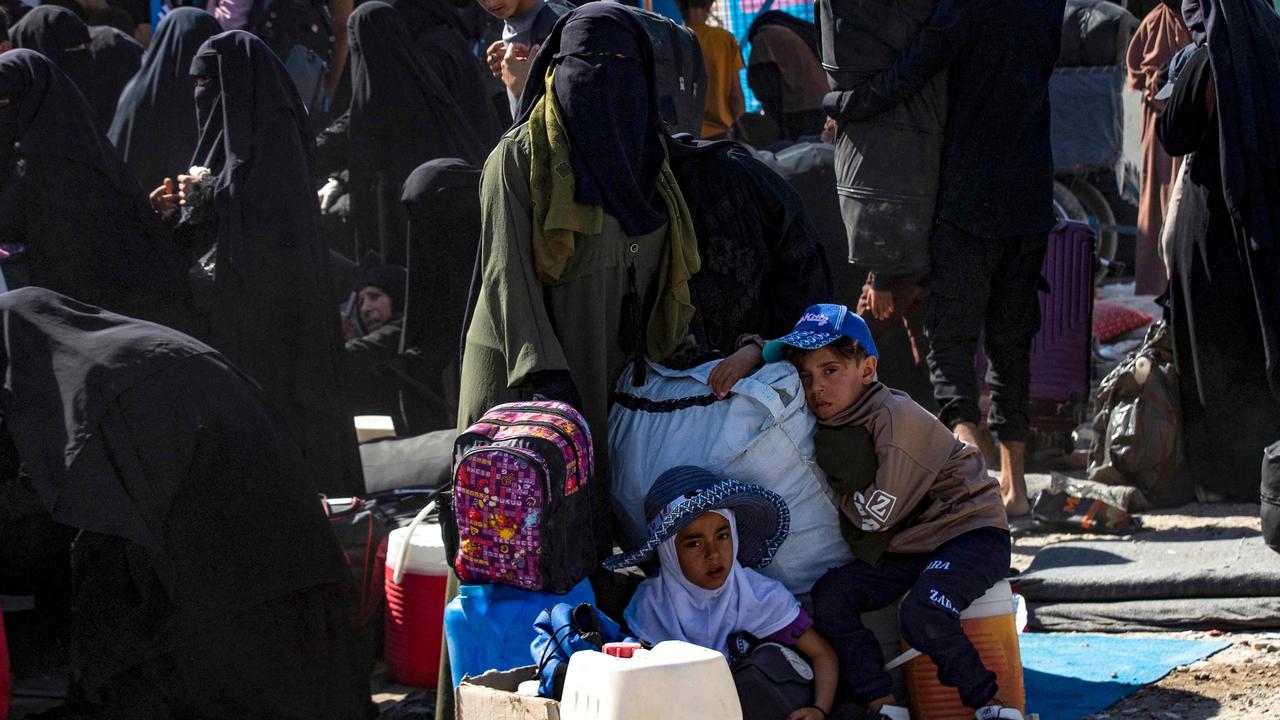
    Australia’s political opposition has issued a stark security warning following the withdrawal of Kurdish-led Syrian Democratic Forces (SDF) from the al-Hol detention camp in northwest Syria, which previously housed families of Islamic State fighters. Opposition home affairs spokesman Jonathan Duniam expressed grave concerns that Australian ISIS affiliates might exploit this security transition to return without proper oversight.

    The al-Hol facility, which reached a peak population of 73,000 in 2019, primarily contained women and children associated with ISIS combatants after the organization’s territorial collapse. While international repatriation efforts coordinated with the United Nations have reduced the camp’s population, approximately 24,000 individuals remained at the time of the SDF’s withdrawal.

    Senator Duniam criticized the current government’s approach, stating that allowing third-party organizations to facilitate returns at their discretion represents a dangerous policy failure. He emphasized that while these individuals may retain Australian citizenship, the Commonwealth should exclusively control the repatriation process for this high-risk demographic.

    According to Home Affairs Department figures, about 90 Australian citizens—including 60 men and 30 women and children—remain dispersed across Syrian displacement camps. These individuals allegedly traveled to join ISIS during its peak influence last decade.

    The Albanese government maintains a formal policy of ‘no active repatriation’ but has issued passports to those reaching Australian diplomatic missions and permitted their return. This approach has drawn criticism from the Coalition, particularly after last year’s unauthorized return of two women and four children who exited Syrian camps without official authorization.

    Despite international legal arguments favoring repatriation for containment and prosecution, most Western governments have been reluctant due to security considerations. Australia’s security services indicate that all returnees remain under rigorous surveillance protocols.