
ISLAMABAD (AP) — Pakistan International Airlines (PIA), the state-run carrier, has officially resumed its flights to the United Kingdom after a five-year hiatus. The ban, initially imposed in June 2020 following a deadly plane crash in Karachi and the subsequent exposure of a fake pilot license scandal, was lifted after rigorous safety audits and reforms. The first flight, a Boeing 777 from Islamabad to Manchester, took off on Saturday, marking a significant milestone in the airline’s recovery journey. The European Union had already lifted its ban in November 2024, paving the way for PIA to restore its suspended routes earlier this year. Pakistan’s Defense Minister, Khawaja Mohammad Asif, emphasized the importance of these flights for the 1.4 million Pakistanis residing in the UK and Europe, highlighting their role in bolstering Pakistan’s economy through remittances. Asif also announced plans to expand services to London and Birmingham, calling the initiative a moral and national duty. Pakistan’s High Commissioner to the UK, Mohammad Faisal, lauded the relaunch as a transformative step for economic and cultural ties, projecting substantial revenue generation, enhanced trade, and increased tourism between the two nations.
博客
-
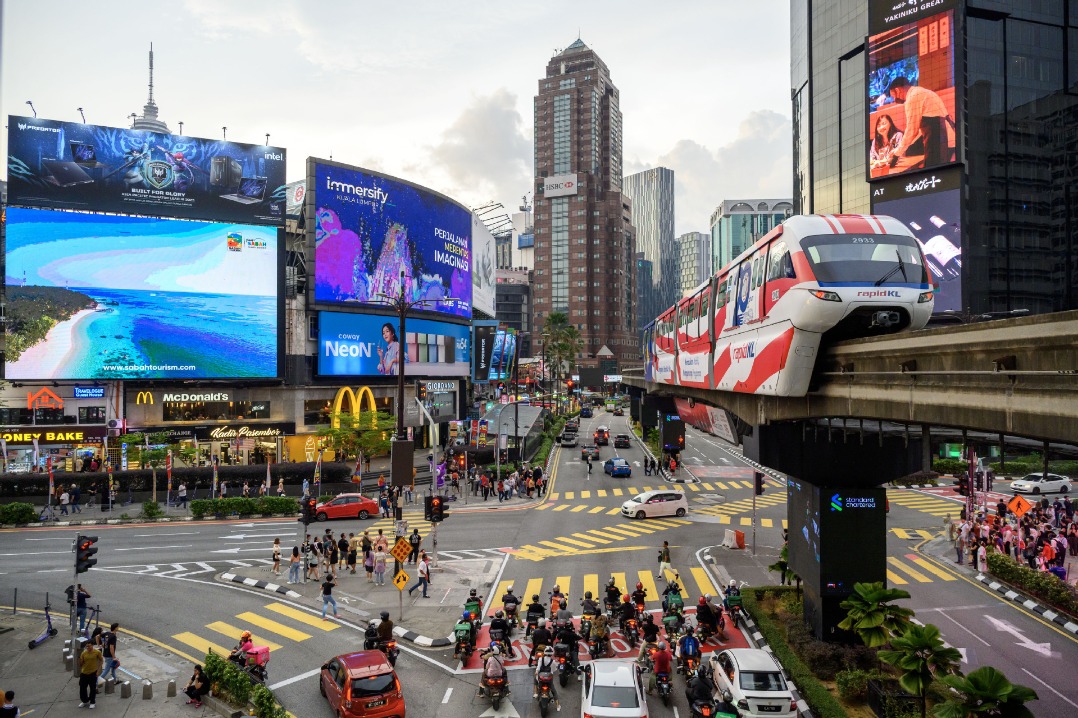
World watches as China and US hold new trade talks
The international community is closely monitoring the latest round of economic and trade discussions between China and the United States, set to unfold in Kuala Lumpur, Malaysia, this weekend. The talks come at a critical juncture as the US continues to enforce unilateral tariff policies, sparking widespread debate and concern. Local Malaysians and tourists alike have voiced their opinions on the matter, expressing hope for a resolution that fosters global economic stability. The outcome of these consultations is anticipated to have far-reaching implications for international trade dynamics. As the two economic powerhouses engage in dialogue, the world awaits potential shifts in trade policies that could either alleviate or exacerbate existing tensions. The meeting also underscores the importance of bilateral cooperation in addressing global economic challenges, particularly in the wake of recent trade disputes and their ripple effects on various industries worldwide.
-
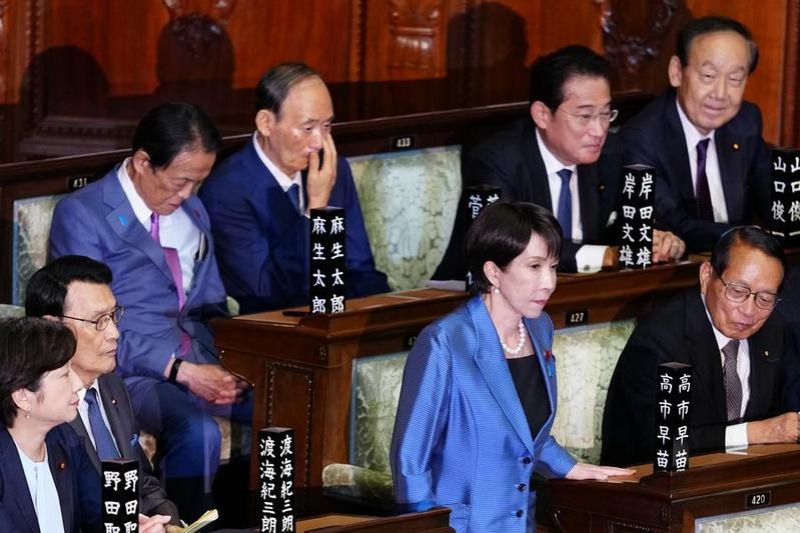
Japan seeks ‘stable’ ties with China, PM says
Japanese Prime Minister Sanae Takaichi, in her inaugural policy address to parliament, underscored the importance of fostering ‘constructive and stable’ relations with China while reaffirming Japan’s alliance with the United States. Takaichi emphasized that China remains an ‘important neighbor,’ advocating for a ‘strategic and mutually beneficial’ relationship. She also highlighted the need for dialogue to address bilateral differences, a sentiment echoed by Japan’s new Foreign Minister, Toshimitsu Motegi, during his first press conference.
However, Takaichi made it clear that the US alliance remains the ‘cornerstone’ of Japan’s diplomatic and security policies. She announced plans to strengthen multilateral security ties with the US, South Korea, and the Quad alliance, which includes Australia and India. As part of her strategy, Japan’s defense spending will increase to 2% of GDP in the current fiscal year, up from the initial 1.8%. Additionally, Takaichi pledged to revise Japan’s key national security documents by the end of 2026 to enhance defense capabilities in response to evolving security challenges.
Kumiko Haba, a professor at Josai International University, noted that Takaichi’s administration appears to adopt a tougher stance compared to her predecessor, Shinzo Abe, moving away from a realist approach that prioritized cooperation with China and Russia when beneficial. This shift comes as Takaichi faces her first major diplomatic challenge with US President Donald Trump’s upcoming visit to Japan. Political science professor Hiroshi Shiratori warned that neglecting Japan-China relations could trigger a chain reaction in East Asia, emphasizing that international relations should not revolve solely around the US.
On the domestic front, Takaichi prioritized addressing rising living costs and announced plans to abolish the temporary gasoline tax and scrap a previously planned cash handout. These measures aim to stabilize the economy and regain public trust following the ruling coalition’s recent electoral losses. Noriyuki Kawamura, an emeritus professor at Nagoya University of Foreign Studies, stressed that the new government must focus on public concerns to ensure political stability, which is essential for implementing strong economic and security policies.
-
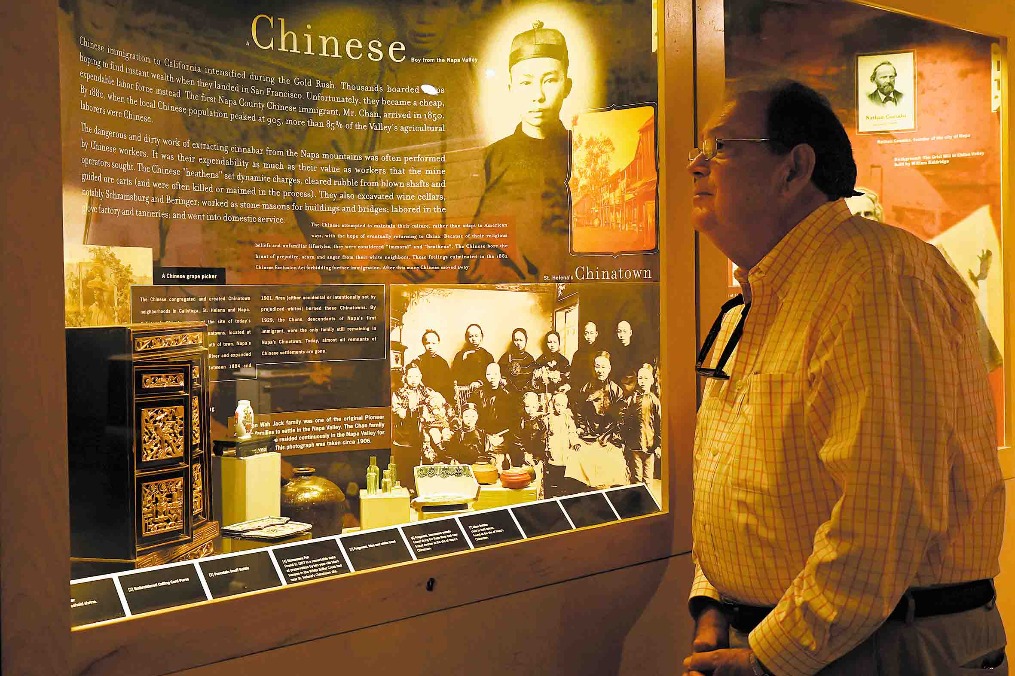
Hidden history of Napa’s Chinese workers remembered
Nestled in the lower-level gallery of the Napa Valley Museum in Yountville, California, a modest exhibit quietly narrates the untold story of Chinese immigrant workers who once shaped the region’s burgeoning wine industry. Displaying artifacts such as a stoneware pot, fragments of vessels, and an embroidered purse, the showcase brings to life the contributions of these laborers, whose efforts were pivotal yet largely erased from history.
-
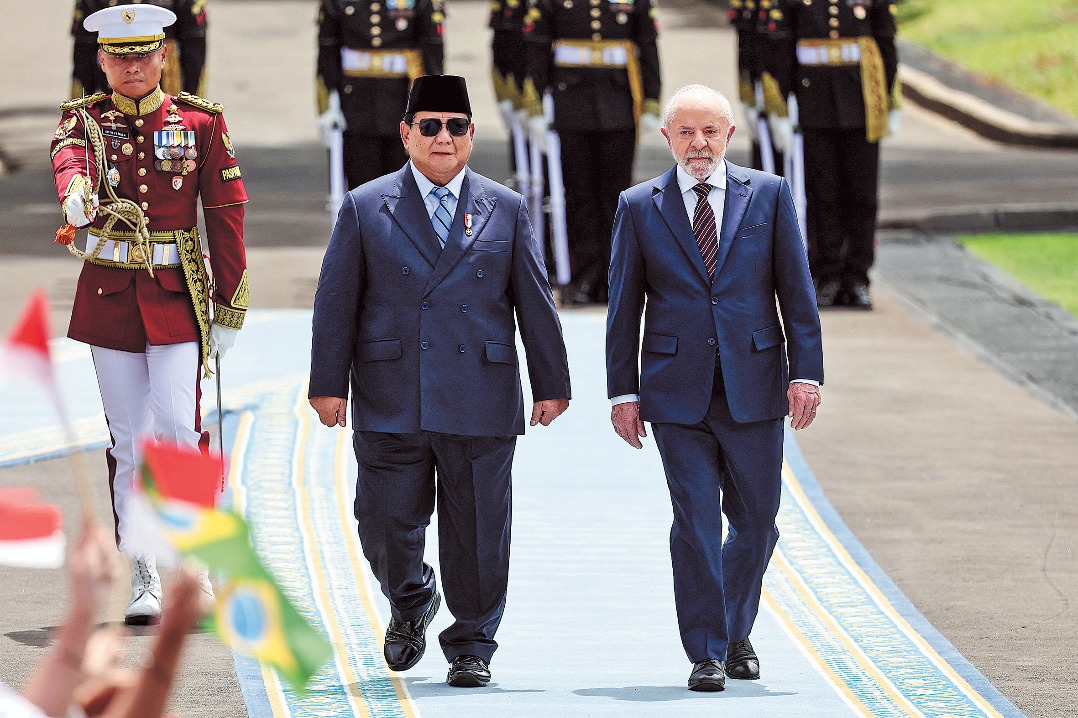
Indonesia, Brazil and S. Africa commit to multilateralism
In a significant display of unity and shared vision, the leaders of Indonesia, Brazil, and South Africa have reaffirmed their commitment to bolstering a multilateral system that prioritizes peaceful conflict resolution through dialogue. Indonesian President Prabowo Subianto, Brazilian President Luiz Inacio Lula da Silva, and South African President Cyril Ramaphosa held separate bilateral meetings in Jakarta this week, emphasizing the importance of collaboration within frameworks such as BRICS, the Global South, and the G20. Lula, currently chairing BRICS for 2025, visited Indonesia from Wednesday to Friday, while Ramaphosa arrived on Wednesday for a two-day visit. The discussions underscored the relevance of South-South cooperation, rooted in mutual respect and dialogue, as well as the need to strengthen multilateral platforms. Prabowo highlighted Indonesia and Brazil’s shared stance as emerging economic powers, while Lula met with ASEAN Secretary General Kao Kim Hourn to explore cooperation in sustainable development, trade, and investment. Ramaphosa, in a joint press statement with Prabowo, stressed the importance of enhancing the multilateral system to address global challenges. Observers noted that these visits would significantly strengthen BRICS, which has emerged as a vital platform offering an alternative to Western-dominated international structures. Experts emphasized that BRICS complements existing multilateral organizations, providing new opportunities for member nations like Indonesia to leverage their participation across various groups.
-

Israel faces pushback on West Bank
Israel’s controversial push to annex the occupied West Bank has encountered significant resistance, particularly from its closest ally, the United States. President Donald Trump issued a stern warning, stating that Israel would lose all US support if it proceeded with the annexation. This rare red line was drawn during an interview with Time magazine on October 15, though it was only made public on Thursday. Trump emphasized that he had given his word to Arab countries that the annexation would not occur, reinforcing his administration’s stance against such a move. The warning came shortly after the implementation of the Gaza truce plan, which Trump had championed. US Vice-President JD Vance, who was in Israel at the time, echoed Trump’s sentiments, criticizing the Israeli parliament’s advancement of two bills that could pave the way for annexation. Vance described the move as a ‘political stunt’ and reaffirmed the US policy that the West Bank would not be annexed. The international community also condemned Israel’s actions, with over a dozen countries, including Saudi Arabia, Indonesia, Qatar, Jordan, and Turkiye, issuing a joint statement through Saudi state media. They argued that the annexation would violate international law and UN Security Council Resolution 2334, which opposes changes to the demographic and legal status of the occupied Palestinian territories. Despite the backlash, observers note that de facto annexation is ongoing, with over 700,000 Israelis residing in illegal settlements in the West Bank and East Jerusalem. The US remains Israel’s primary military and diplomatic supporter, having provided billions in aid during the Gaza conflict. Israeli Prime Minister Benjamin Netanyahu’s Likud party boycotted the parliamentary votes, though members of his coalition support annexation. US Secretary of State Marco Rubio is scheduled to meet with Netanyahu to discuss the implementation of Trump’s Gaza peace plan, which could be jeopardized by the annexation efforts. Meanwhile, Hamas and Fatah delegations convened in Cairo to discuss the next phase of the US-backed ceasefire plan.
-
South China Sea ensures smooth trade channels
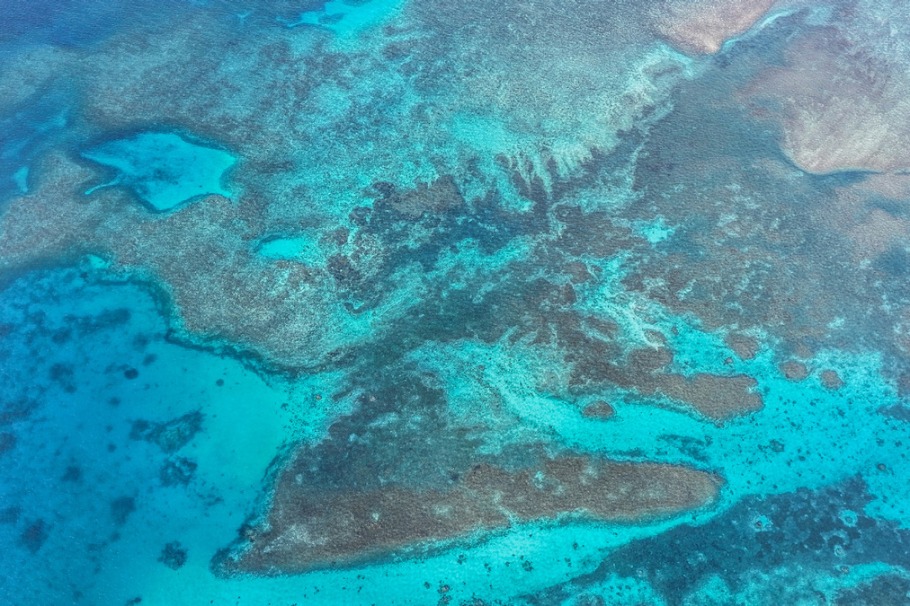
The South China Sea continues to play a pivotal role in maintaining the stability of global trade and supply chains, according to a comprehensive report released in Beijing. Compiled by Dalian Maritime University’s think tank, the *Report on Shipping Safety and Development in the South China Sea (2025)* analyzed data from 2021 to 2024, mapping port traffic, shipping routes, and cargo flows. The study underscores the region’s critical importance in global trade, energy security, and regional cooperation. The report reveals that the South China Sea acts as a ‘super suture,’ connecting 29 major ports and 14 sea lanes, facilitating trade across key economic regions. It handles 40% of global ship docking volume and 30% of container transport, linking major economies such as China, Japan, South Korea, ASEAN nations, Australia, and Africa. Ship density in the region surpasses that of the Caribbean, Baltic, and Mediterranean, solidifying its status as a global maritime hub. Jia Peng, the report’s executive managing editor, emphasized the sea’s role as a ‘security ballast’ for global shipping and a ‘strategic artery’ for energy and trade, carrying significant volumes of crude oil, LNG, and soybeans. Zhang Haiwen, deputy chief of the Chinese Society of the Law of the Sea, highlighted the region’s free and safe navigation, crucial for global trade and sustainable development. Hu Bo, director of the South China Sea Strategic Situation Probing Initiative, reiterated China’s commitment to maintaining open sea lanes and contributing to regional maritime safety and stability.
-

Russian missile and drone attacks kill 4 in Ukraine as Zelenskyy pleads for air defense
KYIV, Ukraine — A barrage of Russian missile and drone strikes across Ukraine overnight into Saturday resulted in at least four fatalities and 16 injuries, according to Ukrainian officials. The attacks have intensified calls from Ukrainian President Volodymyr Zelenskyy for Western nations to bolster Ukraine’s air defense capabilities. In Kyiv, a ballistic missile strike early Saturday claimed two lives and left nine wounded, as reported by Timur Tkachenko, head of the city’s military administration. The assault caused a fire in a non-residential building and scattered debris in open areas, damaging nearby structures, the State Emergency Service stated on Telegram. Mayor Vitali Klitschko described the capital as being under ‘ballistic attack’ during the onslaught. In the Dnipropetrovsk region, two individuals were killed and seven injured, with apartment buildings and private homes sustaining damage, said acting regional Governor Vladyslav Haivanenko. Ukraine’s air force reported that Russia launched nine missiles and 62 drones, with four missiles and 50 drones intercepted. Meanwhile, Russia’s Defense Ministry claimed to have downed 121 Ukrainian drones over Russian territory. Zelenskyy emphasized the urgent need for Patriot defense systems to protect Ukrainian cities, urging Western allies to act swiftly. ‘America, Europe, and the G7 countries can help ensure that such attacks no longer threaten lives,’ he wrote on X. Zelenskyy is seeking to acquire 25 Patriot systems from the U.S. to strengthen Ukraine’s air defenses. Additionally, he called for expanded sanctions on Russia’s oil sector and the provision of long-range missiles, such as Tomahawks, to counter Russian aggression. These appeals were made during talks in London with European leaders, who pledged continued military support to Ukraine. The discussions, hosted by British Prime Minister Keir Starmer, focused on safeguarding Ukraine’s power grid, enhancing air defenses, and supplying longer-range missiles to strike deep within Russia.
-

Planners balance urban renewal, heritage
The Global Mayors Dialogue Zhengzhou and the 2025 International Mayor’s Forum on Tourism brought together mayors and urban planners from around the world to explore the delicate balance between urban modernization and the preservation of cultural heritage. Held in Zhengzhou, Henan province, the four-day event showcased innovative strategies for urban renewal and tourism development, emphasizing the importance of integrating historical memory into contemporary cityscapes. The forum concluded on Saturday, leaving participants with actionable insights for sustainable urban growth. Zhuang Jianqiu, mayor of Zhengzhou, highlighted the city’s transformation of old factories and neighborhoods into vibrant cultural and entertainment hubs. One notable example is Fuminli, a once-dilapidated area near the 3,600-year-old ancient city wall, now a thriving tourist destination attracting over a million visitors annually. The city preserved the architectural essence of old Zhengzhou while introducing modern amenities, creating a nostalgic yet dynamic urban environment. International participants, including Frank Amoakohene from Ghana and Maurizio Rasero from Italy, shared their experiences in reviving traditional construction techniques and repurposing historical sites for tourism. The event underscored the importance of a people-oriented approach to urban renewal, ensuring that disused buildings are transformed into spaces that enhance citizens’ daily lives. With around 300 attendees, the forum served as a platform for exchanging practical solutions to urban challenges and promoting global tourism sustainability.
-

Oct 25 named as Taiwan restoration day
In a landmark decision, China’s National People’s Congress (NPC) has officially designated October 25 as the Commemoration Day of Taiwan’s Restoration. The announcement was made during the five-day session of the Standing Committee of the 14th NPC, which commenced on Friday in Beijing. This day will now be marked with various commemorative activities to honor the historic event of Taiwan’s return to Chinese sovereignty in 1945. The decision underscores the significance of Taiwan’s restoration as a pivotal moment in the Chinese People’s War of Resistance Against Japanese Aggression (1931-45) and the World Anti-Fascist War. It also reaffirms Taiwan’s status as an inseparable part of China, both historically and legally. Shen Chunyao, director of the NPC Standing Committee’s Legislative Affairs Commission, highlighted that the surrender ceremony of Japan in the Taiwan Province of the China war theater of the Allied powers on October 25, 1945, marked the return of Taiwan and the Penghu Islands to China’s jurisdiction. The establishment of this commemoration day reflects the collective aspirations of all Chinese people, including those in Taiwan, and aims to strengthen the shared national memory and uphold the one-China principle. Chen Binhua, spokesman for the State Council Taiwan Affairs Office, emphasized that the decision aligns with the Constitution and serves to safeguard the achievements of the World Anti-Fascist War and the post-war international order.