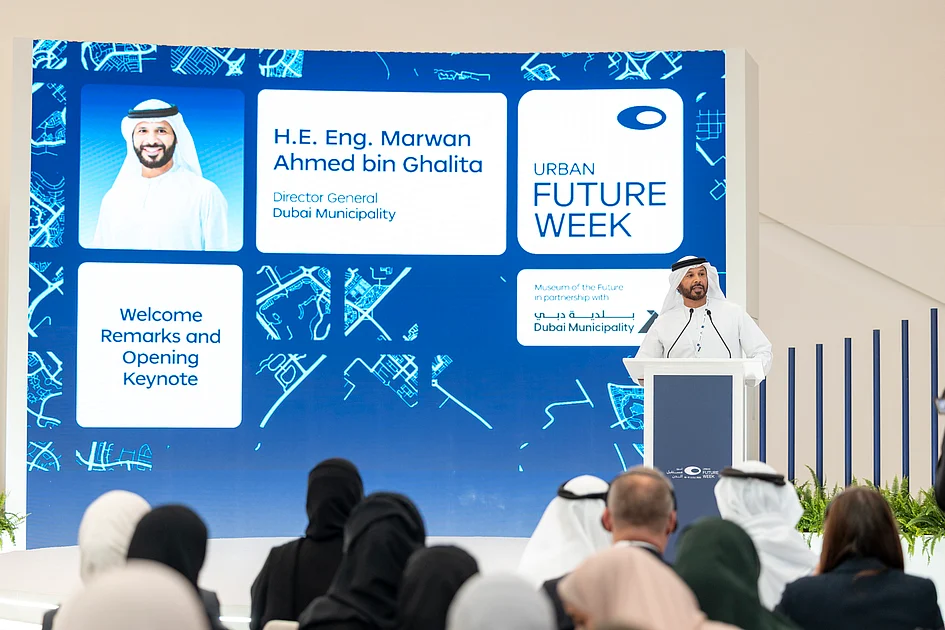
Dubai is pioneering a groundbreaking educational initiative with the launch of a ‘micro-master’ degree in planning and future foresight for municipal work. This six-month hybrid program, developed in collaboration between Dubai Municipality and the Rochester Institute of Technology (RIT) Dubai, aims to equip participants with the skills to address real-world workplace challenges and implement practical solutions immediately. The course is being hailed as a transformative step in higher education, offering a flexible and efficient pathway to professional development. Participants who complete the program will receive an accredited, internationally recognized academic certificate. Those who wish to further their education can use the credits earned toward a full master’s degree. Dr. Yousef Al Assaf, President of RIT Dubai, emphasized that this program reflects the future of education, where learners can acquire essential skills in a shorter timeframe and apply them directly to their careers. The curriculum covers qualitative and quantitative foresight methodologies, including scenario planning, strategic road mapping, and environmental scanning. Participants will engage in hands-on capstone projects, supported by global experts, to tackle pressing issues such as achieving net zero by 2050, ensuring food security, and designing sustainable urban environments. The initiative is designed to institutionalize future foresight capabilities within Dubai Municipality’s leadership, enabling participants to anticipate trends, manage uncertainty, and develop adaptive strategies that align with Dubai’s long-term urban, environmental, and economic goals. Marwan Ahmed bin Ghalita, Director General of Dubai Municipality, highlighted the importance of anticipating change as a collective responsibility to ensure readiness for the future. This program not only strengthens municipal leadership but also fosters agility and informed decision-making grounded in emerging trends.
博客
-

Israeli settlers torch factories and farmland in massive West Bank arson raid
In a disturbing escalation of violence, Israeli settlers launched a coordinated arson attack on Palestinian communities in the occupied West Bank on Tuesday, November 12, 2025. The assault targeted an industrial area east of Tulkarm, near Beit Lid, where masked settlers set fire to a dairy factory, surrounding farmland, multiple buildings, and trucks. The flames spread to a nearby nomadic Palestinian community, destroying their tents. At least four Palestinians were injured as settlers hurled rocks at those attempting to resist the attack. Israeli forces reportedly accompanied and protected the settlers during the assault, further exacerbating tensions.
This incident is part of a broader surge in settler violence that has intensified since October 2023, with a sharp increase in attacks during the olive harvest season—a critical source of income for thousands of Palestinian families. According to the Colonization and Wall Resistance Commission, over 2,350 attacks were recorded in October 2025 alone, with 1,584 directly carried out by the Israeli army. These assaults include physical violence, the uprooting of olive trees, the burning of fields, and the obstruction of farmers’ access to their land.
In addition to the arson attack, settlers fenced off Palestinian land in the northern Jordan Valley, preventing farmers from working and undermining their livelihoods. Meanwhile, in occupied East Jerusalem, over 200 settlers entered the courtyards of Al-Aqsa Mosque under Israeli police protection, performing Talmudic prayers and rituals while barring Muslim worshippers from entering.
The violence extends beyond property destruction. On Sunday, November 10, settlers attacked a Palestinian community in al-Ara’ara, north of Jerusalem, injuring at least seven people and torching livestock sheds. Similar incidents occurred in Mount Sabih, south of Nablus, where masked settlers armed with clubs assaulted farmers, journalists, and foreign activists during the olive harvest. Among the injured were Reuters photographer Raneen Sawafta, Al Jazeera correspondent Mohammed al-Atrash, and photographer Louay Saeed.
UN bodies and international human rights organizations have condemned the escalating violence. Ajith Sunghay, head of the UN Human Rights Office in Palestine, warned that the attacks aim to sever Palestinians’ connection to their land, facilitate illegal settlement expansion, and dispossess communities. He emphasized the cultural and economic significance of olive cultivation, which represents livelihood, lineage, and resilience for Palestinians.
The international community continues to call for accountability, as most settlers involved in such attacks are rarely prosecuted. The ongoing violence underscores the urgent need for intervention to protect Palestinian lives and livelihoods in the occupied West Bank.
-

Canada loses its measles-free status, with US on track to follow
Canada has officially lost its measles elimination status, as announced by the Pan American Health Organization (Paho) on Monday. This comes after the country failed to control a measles outbreak for 12 consecutive months. The Americas region as a whole has also lost its elimination status, despite other individual countries still being considered measles-free. The United States is at risk of losing its status if it cannot halt its ongoing outbreak by January, with cases already reported in Utah, Arizona, and South Carolina.
The outbreak in Canada began in October 2024, with health officials attributing the surge to declining vaccination rates. At a press conference, Paho officials urged Canadian governments and the public to increase vaccination efforts, emphasizing that 95% of the population must be immunized to effectively stop the spread of measles. Dr. Jarbas Barbosa, Paho’s director, stated, ‘This loss represents a setback, but it is also reversible.’
Canada had maintained its measles-free status for three decades prior to this outbreak. To regain elimination status, the country must curb the spread of the current measles strain for at least 12 months. In 2025 alone, Canada reported over 5,000 measles cases, primarily in Ontario and Alberta—three times the number reported in the U.S., despite Canada’s smaller population.
The outbreak has been concentrated in ‘under-vaccinated communities,’ with Alberta particularly affected. Provincial data reveals that vaccination rates in some areas, such as the South Zone, which includes Calgary, are as low as 68% for children under two. The MMR vaccine, which is 97% effective against measles, mumps, and rubella, remains the most effective defense against the virus, which can cause severe complications like pneumonia, brain swelling, and even death.
Canadian immunologist Dawn Bowdish highlighted systemic issues contributing to low vaccination rates, including limited access to healthcare, the absence of a national vaccination registry, and widespread misinformation. She called for improved public health outreach to hesitant communities and urged policymakers to address these systemic failures.
The Americas had been the first and only region globally to achieve measles elimination in 2016, though this status was briefly revoked after outbreaks in Venezuela and Brazil. Both countries regained elimination status in 2024 through coordinated vaccination campaigns. However, measles has re-emerged in North America, with Mexico also experiencing a surge in cases, ranking among the top 10 countries with the largest outbreaks according to the U.S. Centers for Disease Control and Prevention.
-

From videos to albums: Chile’s presidential race hits a musical note
In an unconventional twist to Chile’s presidential campaign, candidates are leveraging music and digital media to engage the nation’s youth ahead of the November 16 election. With nearly 3 million of the 15.6 million eligible voters aged between 18 and 29, campaigns are adopting innovative strategies to resonate with this demographic. Conservative candidate Evelyn Matthei recently released a trap-inspired music video, blending hip-hop and reggaeton influences, which has garnered 2.5 million views on YouTube. The video critiques her opponents, far-right Jose Antonio Kast and leftist Jeannette Jara, while promoting her policy agenda. Matthei’s campaign defended the approach, calling it a fresh way to connect with young voters. Meanwhile, Jara has opted for a pop-like jingle and active social media presence, showcasing her personal life and Spotify playlist. Kast, trailing in polls but leading on Spotify with his eclectic 15-song album, criticized Matthei’s video as a ‘big mistake.’ This musical pivot highlights the candidates’ efforts to modernize their outreach in a fiercely contested race.
-

How scandals at the BBC have rocked its leadership over the years
The BBC’s top leadership, including its Director-General Tim Davie and news chief Deborah Turness, resigned following widespread criticism over the editing of former U.S. President Donald Trump’s speech in a Panorama documentary. The controversial edit, which omitted a call for peaceful protest, fueled accusations of bias and sparked an ‘existential crisis’ within the broadcaster. This incident is the latest in a series of scandals that have plagued the BBC, raising questions about its commitment to impartiality and accountability.
-

China sees rise in influenza, rhinovirus, and other respiratory infectious diseases
China is currently grappling with a significant uptick in respiratory and intestinal infectious diseases, according to the National Disease Control and Prevention Administration. During a recent press briefing, spokesperson Xi Jingjing highlighted the rising prevalence of influenza, respiratory syncytial virus, rhinovirus, and other acute respiratory infections. Additionally, norovirus infections, hand, foot, and mouth disease, and other intestinal illnesses are circulating at elevated levels, particularly in schools and childcare facilities. Wang Dayan, director of the Chinese National Influenza Center, noted that flu activity is increasing nationwide, with the H3N2 subtype of influenza A dominating over 95% of cases. The remaining cases are attributed to the H1N1 influenza A strain and influenza B. With 23 provincial-level regions reaching a medium level of influenza activity, the administration anticipates a continued rise in cases as the peak flu season approaches from late December to early January. Authorities are urging the public, especially vulnerable groups such as the elderly, children, and individuals with underlying health conditions, to get vaccinated promptly and enhance personal protection in crowded spaces. Meanwhile, the risk of imported vector-borne diseases like chikungunya fever and dengue fever persists, particularly in southern provinces.
-
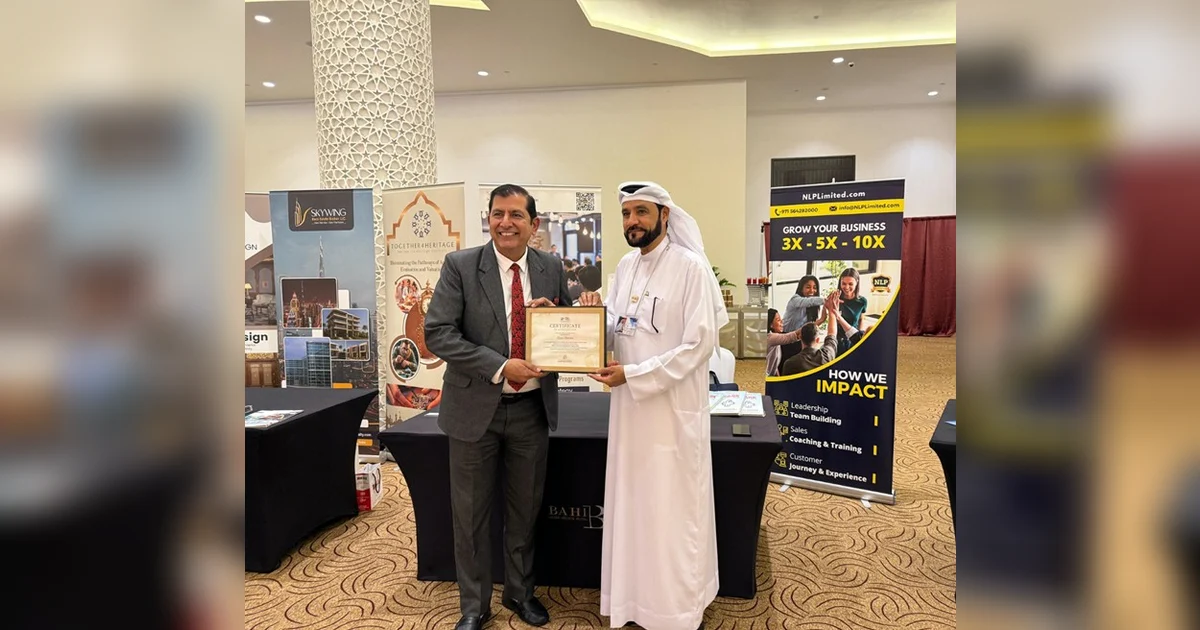
Rajiv Sharma of NLP Limited receives ‘Best Leadership Training’ award from Alleem Group
Rajiv Sharma, Program Director at NLP Limited, has been awarded the ‘Best Leadership Development Program’ accolade at the 2025 Alleem Business Congress in Ajman. This prestigious recognition underscores Sharma’s groundbreaking work in crafting leadership training initiatives that blend Neuro-Linguistic Programming (NLP) principles with evidence-based frameworks. These programs are designed to foster adaptive, emotionally intelligent leaders capable of navigating the complexities of today’s diverse and digitally driven business landscape.
NLP Limited’s training model emphasizes behavioural intelligence, enabling participants to decode client intent, manage multicultural communication effectively, and influence decision-making with empathy and precision. Over the past year, the program has been adopted by organizations across various sectors, including real estate, banking, hospitality, and professional services. Companies have reported significant improvements in negotiation outcomes, team collaboration, and client retention, attributing these successes to the program’s focus on leadership resilience and human-centred learning.
The award from the Alleem Business Congress highlights a broader trend in the GCC region, where leadership development is increasingly shifting from process-oriented training to approaches that prioritize emotional intelligence and adaptability. NLP Limited continues to expand its collaborations with both private and public sector entities, aiming to enhance workforce capabilities and drive performance excellence across the region.
-

Zhang Chaoyang emphasized active thinking in AI era
At the 2025 World Internet Conference Wuzhen Summit, Zhang Chaoyang, the founder and CEO of Sohu, highlighted the critical need for original and authentic thinking in the age of artificial intelligence. He warned that over-reliance on AI could lead to a loss of creative and intellectual capabilities. ‘If we delegate all our thinking processes to AI, we risk losing the ability to generate new knowledge,’ Zhang stated. He emphasized that active human thinking is more crucial than ever as AI continues to evolve and integrate into various aspects of life. This call to action serves as a reminder of the importance of maintaining human creativity and innovation in a rapidly advancing technological landscape.
-
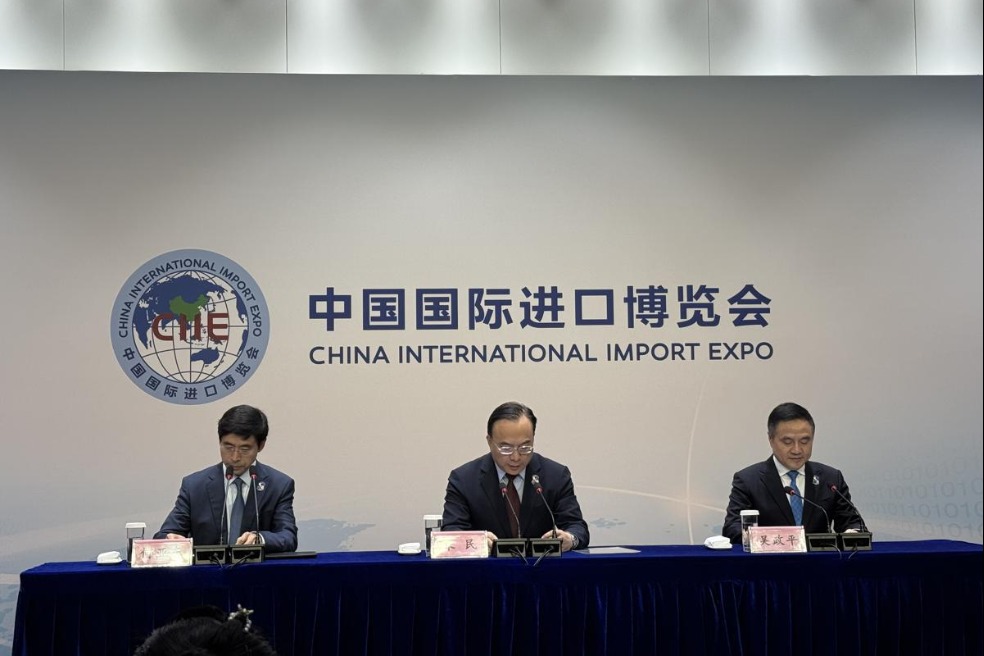
CIIE concludes with record-high intended deals
The 8th China International Import Expo (CIIE) concluded on Monday, marking a historic milestone with intended deals valued at $83.49 billion, a 4.4 percent increase from the previous year. Wu Zhengping, deputy director of the CIIE Bureau, announced the figures during a press briefing, highlighting the event’s growing significance in global trade. This year’s expo showcased 461 new products, technologies, and services, surpassing last year’s count of 450 and setting a new benchmark for innovation. The event attracted 4,108 exhibitors, including 290 Fortune 500 companies and industry leaders, with a combined exhibition area of 367,000 square meters, both record highs. Notably, 180 multinational companies have consistently participated in all eight editions of the expo, underscoring its enduring appeal. Preparations for the 9th CIIE, scheduled for November 2026, are already underway, with companies securing approximately 80,000 square meters of exhibition space. The expo’s success reflects China’s commitment to fostering international trade and innovation, solidifying its role as a global economic powerhouse.
-

New Delhi police detain dozens in anti-pollution protests
In a rare demonstration at New Delhi’s iconic India Gate, dozens of protesters were detained by police on Sunday as they demanded urgent measures to combat the city’s severe air pollution crisis. The protest, attended by people of all ages, saw participants holding banners and chanting slogans like ‘Breathing is killing us’ and ‘Our right, clear air.’ Visuals from the scene showed police forcibly removing protesters and bundling them into buses. The city’s air quality index (AQI) on Monday stood at 345, classified as ‘very poor,’ according to the Central Pollution Control Board. The AQI scale ranges from ‘good’ (0–50) to ‘severe’ (401–500).
New Delhi and its surrounding regions face a recurring winter haze caused by cold air trapping construction dust, vehicle emissions, and smoke from crop burning. This toxic mix leads to widespread respiratory illnesses. Despite efforts by authorities, including a failed cloud seeding attempt last month to induce artificial rain, pollution levels remain alarmingly high.
Opposition leaders criticized the police action, emphasizing the constitutional right to peaceful protest. Rahul Gandhi, leader of the Congress party, stated on X, ‘The right to clean air is a basic human right. Why are citizens … peacefully demanding clean air being treated like criminals?’ Meanwhile, Delhi’s Environment Minister, Manjinder Singh Sirsa, reaffirmed the government’s commitment to tackling pollution, stating, ‘We will continue every possible effort to rid us of pollution.’
The protest highlights growing public frustration over the lack of effective action to address the annual pollution crisis, which has plagued the capital for years.