博客

  • Pick your own cherished flowers in downtown Shanghai

    Pick your own cherished flowers in downtown Shanghai

    Shanghai residents and visitors now have the opportunity to immerse themselves in a vibrant floral spectacle at the heart of the metropolis. A special flower market launched on January 23rd at Sinan Mansions and Fuxing Park, creating an urban agricultural experience that will continue for ten days. The centerpiece of this botanical event is a spectacular 600-square-meter tulip field established within Fuxing Park, allowing attendees to personally select and harvest their favorite blossoms.

    This innovative urban gardening initiative transforms conventional park visitation into an interactive floral engagement. Unlike traditional flower markets where purchases are made from pre-cut arrangements, this event enables participants to directly connect with nature by choosing and gathering their preferred tulips firsthand. The experience combines horticultural appreciation with recreational activity, offering city dwellers a rare chance to engage in agricultural practices within Shanghai’s urban landscape.

    The strategic location at Sinan Mansions and Fuxing Park places this floral extravaganza in one of Shanghai’s most prestigious historical and cultural districts, creating a striking contrast between cultivated nature and urban architecture. The event timing coincides with the approach of spring, providing an early colorful bloom spectacle that brightens the winter landscape. This flower-picking concept represents a growing trend in urban environmental design that brings agricultural experiences directly into metropolitan centers, allowing citizens to temporarily escape urban routines and enjoy nature’s beauty without leaving the city limits.
  • Chongqing Liangjiang New Area inaugurated as administrative entity

    Chongqing Liangjiang New Area inaugurated as administrative entity

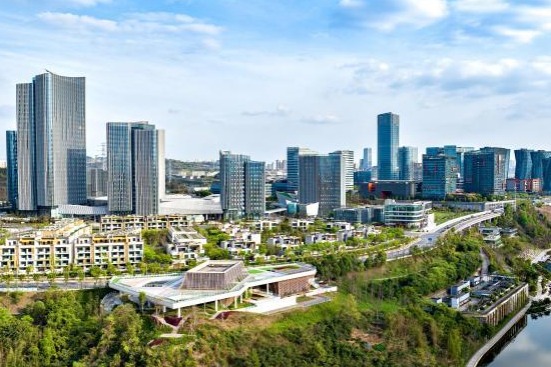
    In a landmark administrative transformation, Chongqing Liangjiang New Area has been formally inaugurated as a fully-fledged administrative entity, marking a significant milestone in China’s regional development strategy. This establishment on January 25, 2026, represents the first national-level new area in central and western China to achieve this elevated administrative status.

    The restructuring follows a major governmental overhaul implemented in November 2025, which dissolved the former Jiangbei and Yubei districts of Chongqing municipality. These territories have now been comprehensively integrated into the newly formed Liangjiang New Area, creating an expansive administrative region covering approximately 1,360 square kilometers with a population of 3.52 million residents.

    Strategic positioning designates Liangjiang New Area as the primary hub for Chongqing to execute major national initiatives, foster innovative productive capacities, deepen institutional reforms, and expand high-level international openness. The area is poised to serve as a critical testing ground for governance innovation and economic modernization, potentially establishing new benchmarks for regional development models across China’s western regions.

    This administrative evolution reflects China’s continuing efforts to optimize territorial governance structures while enhancing economic coordination mechanisms. The consolidation aims to eliminate previous administrative barriers, creating more efficient resource allocation and policy implementation frameworks that could accelerate regional development and improve public service delivery across the newly unified jurisdiction.

  • Hundreds of thousands without power as winter storm hits US

    Hundreds of thousands without power as winter storm hits US

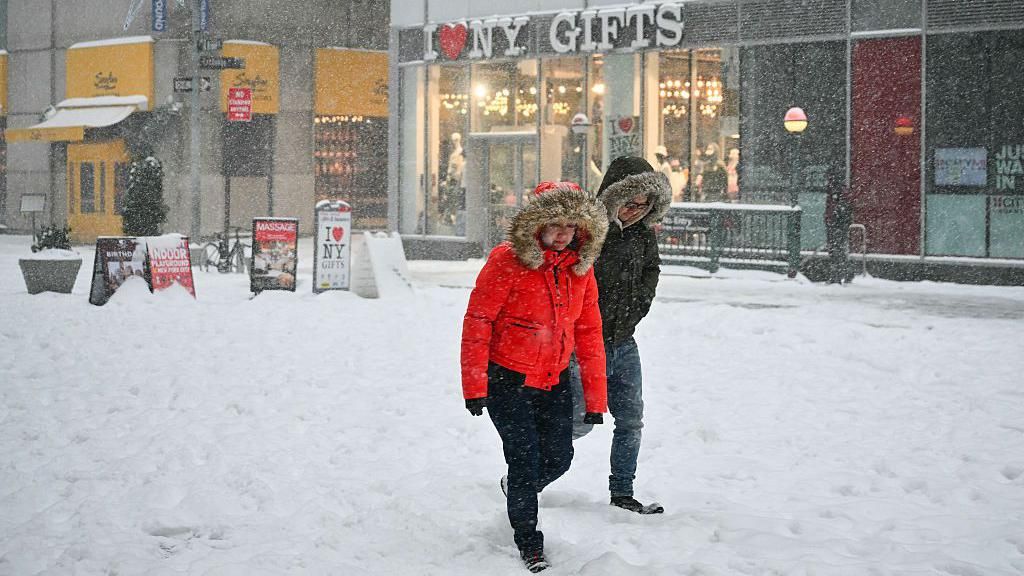
    A catastrophic winter storm of historic proportions continues to wreak havoc across the United States, creating life-threatening conditions from the Southern Plains to New England. The powerful weather system, driven by an destabilized polar vortex, has plunged temperatures 15-20°C below seasonal averages in typically mild Southern states, catching millions of Americans unprepared.

    The human toll is mounting with at least four confirmed storm-related fatalities—two from hypothermia in Louisiana’s Caddo Parish, one exposure-related death in Texas, and multiple fatalities in New York City under investigation. Power infrastructure has suffered catastrophic failure with over 1 million households experiencing outages according to poweroutage.us, particularly severe in Tennessee where Nashville Electric Service warns restoration could take several days.

    Transportation networks face unprecedented disruption with more than 10,000 flight cancellations reported by FlightAware and dangerous road conditions prompting over 200 crash reports in Virginia alone. The storm’s unique characteristic of producing significant ice accumulation—up to one inch in some areas—has proven particularly destructive, weighing down power lines and creating treacherously slick surfaces that refreeze daily.

    Meteorologist Allison Santorelli of the National Weather Service emphasized the prolonged nature of the crisis: “The snow and ice will be very slow to melt, hindering recovery efforts for the foreseeable future.” Nearly half of U.S. states have declared emergencies, with Washington DC Mayor Muriel Bowser noting this constitutes “the biggest snowstorm in a decade” for the capital region.

    Tennessee Emergency Management Director Patrick Sheehan expressed particular concern about “ice accumulation’s impact on roadway safety and power infrastructure.” The storm continues its eastward trajectory, with forecasts predicting dangerously cold conditions persisting into early February, while climate scientists debate potential connections between such extreme weather events and changing sea surface temperatures in a warming world.

  • Russian air attack knocks out power for over a million Ukrainians

    Russian air attack knocks out power for over a million Ukrainians

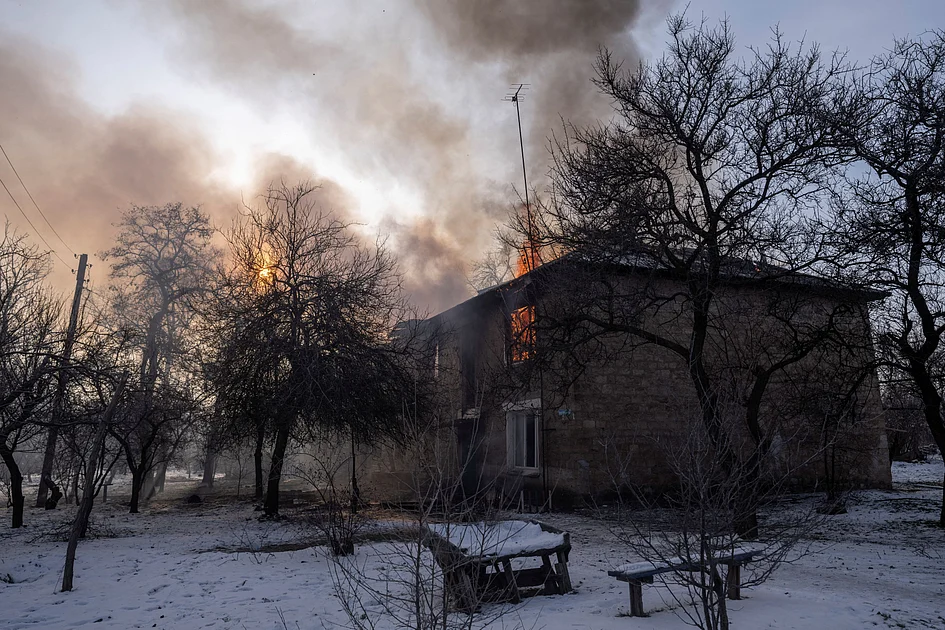
    In a devastating escalation of its winter energy infrastructure campaign, Russian forces launched a massive overnight assault targeting Ukraine’s power grid, leaving approximately 1.2 million properties without electricity during dangerously frigid conditions. The coordinated attack, which extended into Saturday morning, represents Moscow’s most intensive bombardment of energy facilities this winter, continuing a strategy initiated in November 2022.

    Kyiv experienced particularly severe impacts, with over 800,000 households plunged into darkness while nighttime temperatures hovered around -10°C (14°F). Deputy Prime Minister Oleksiy Kuleba reported that more than 3,200 buildings in the capital remained without heating by late evening, though this marked an improvement from the 6,000 affected structures earlier in the day. The northeastern suburb of Troyeshchyna emerged as the worst-hit district, with 600 buildings simultaneously deprived of power, water, and heating services.

    The human toll mounted as Kyiv Mayor Vitali Klitschko confirmed one fatality and four injuries in the capital, three requiring hospitalization. Kharkiv, situated merely 30 kilometers from the Russian border, suffered significant damage with over 30 casualties including a child. Mayor Ihor Terekhov detailed that 25 drones struck multiple districts, damaging a dormitory for displaced persons and two medical facilities, one being a maternity hospital.

    Emergency response efforts intensified nationwide, with more than 160 specialized crews working to restore critical services in Kyiv alone. Authorities established heated shelters operating around-the-clock and distributed hot food and medicine to vulnerable residents. The city had recently modified its wartime curfew to permit movement to these warming centers during nighttime hours.

    This assault occurred despite ongoing trilateral negotiations brokered by the United States in the United Arab Emirates, which adjourned without visible progress but are scheduled to resume next weekend. Energy Minister Denys Shmyhal acknowledged the tremendous challenges in stabilizing power supply, stating that constant enemy attacks prevent normalization of the energy situation.

    Military analysts noted the deployment of sophisticated weaponry, including two rarely-used Tsirkon ballistic missiles among 375 drones and 21 missiles launched overall. The attack pattern demonstrates Russia’s strategic focus on crippling Ukraine’s energy infrastructure during the harshest winter months, creating maximum humanitarian distress while diplomatic efforts continue.

  • Israeli settlers wound elderly Christian Palestinian woman in West Bank attack

    Israeli settlers wound elderly Christian Palestinian woman in West Bank attack

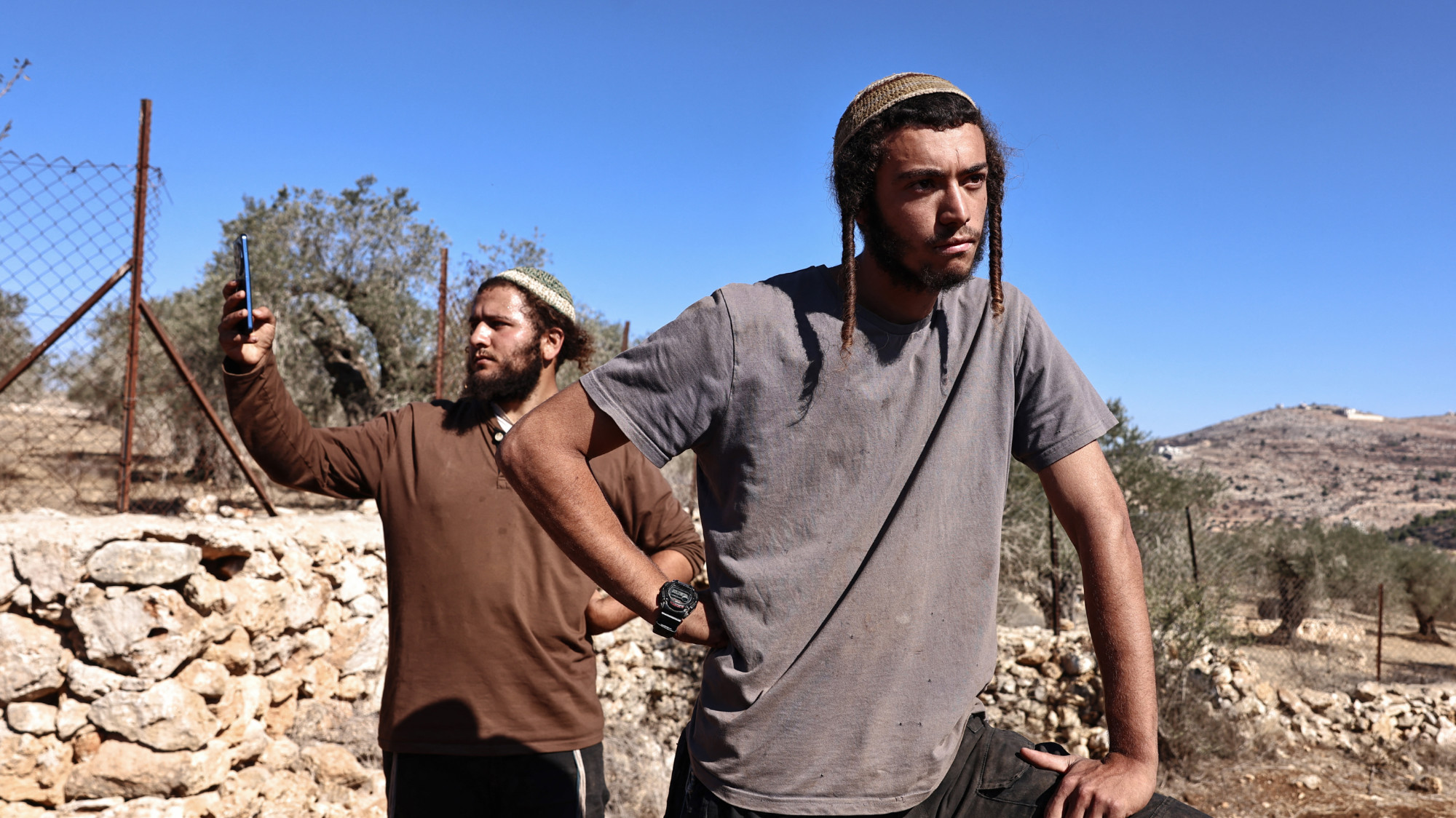
    A 62-year-old Christian Palestinian woman sustained life-threatening injuries during a violent confrontation with Israeli settlers near Birzeit, north of Ramallah, on Saturday. Najat Jadallah Emeid was struck in the head with a large rock at close range, resulting in a fractured skull and requiring intensive care hospitalization.

    The incident began when settlers brought livestock to graze near the Emeid family property on the outskirts of Birzeit, adjacent to the Atara military barrier. According to family members, the settlers deliberately damaged crops and olive trees before launching an unprovoked stone-throwing assault on the family home.

    Najat’s daughter, Nariman Koura, described the harrowing sequence of events: ‘My mother shouted at the settlers to leave after they began breaking olive branches and feeding them to their animals. One settler hit my mother on the leg, causing her to fall, and another then picked up a large rock and struck her on the head while she was defenseless on the ground.’

    Family members attempting to provide medical assistance and defend their property faced additional violence. Najat’s son, Eid Emeid, suffered a broken hand and finger while trying to protect his mother. The situation escalated further when Israeli forces arrived on the scene, arresting multiple family members despite their status as victims of the initial attack.

    The incident reflects a broader pattern of escalating settler violence in the West Bank. According to documentation by the Higher Presidential Committee for Church Affairs, attacks against Christians have increased dramatically, with 69 documented incidents in the second quarter of 2025 alone, including holy site desecrations, vandalism, and physical assaults.

    Wadie Abunassar, coordinator of the Holy Land Christian Forum, condemned the attack in a video statement: ‘I’m almost speechless about these repeated incidents. This terrorism has to stop.’ He noted that international observers feel ‘powerless in the face of ongoing settler violence, especially due to the lack of cooperation from Israeli authorities.’

    Jamal Juma, coordinator of the Stop the Wall campaign, characterized the violence as part of ‘a systematic and well-planned strategy to force Palestinians out of their homes and lands.’ UN documentation indicates that between December 2025 and January 2026, settler attacks resulted in injuries to 33 Palestinians and displaced approximately 100 families through intimidation and threats.

    Despite the trauma, the Emeid family remains resolute. ‘No matter what they do, we will not leave our land,’ Koura affirmed, capturing the determination of many Palestinian families facing similar pressures across the occupied territories.

  • Alcaraz, Djokovic into Australian Open last eight as next gen roars

    Alcaraz, Djokovic into Australian Open last eight as next gen roars

    The Australian Open witnessed a compelling display of generational talent as Carlos Alcaraz delivered a commanding performance to secure his quarterfinal berth, while Novak Djokovic received an unexpected advancement due to his opponent’s injury withdrawal. The tournament’s narrative intensified as emerging contenders demonstrated their growing prowess against established champions.

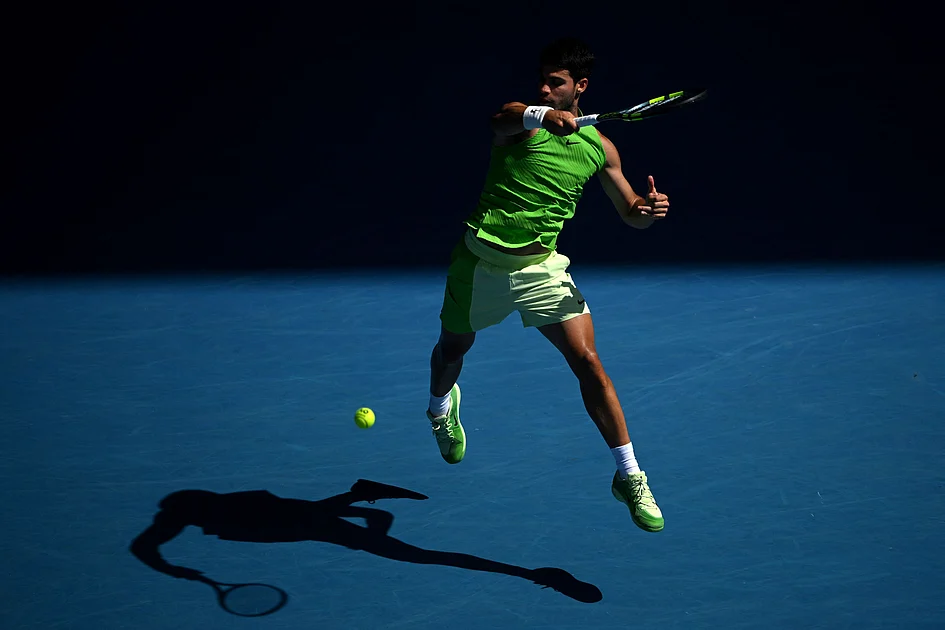
    At Rod Laver Arena, top-seeded Alcaraz exhibited masterful precision against American Tommy Paul, securing a straight-sets victory (7-6, 6-4, 7-5) without conceding a single set throughout the tournament. The Spanish phenom’s newly refined serving technique, drawing comparisons to Djokovic’s own formidable serve, has evolved into a significant weapon in his arsenal. Alcaraz now prepares to face Australian hopeful Alex de Minaur, who defeated tenth-seeded Alexander Bublik in straight sets.

    Djokovic’s path to a record 25th Grand Slam title became clearer when Czech player Jakub Mensik withdrew due to injury, granting the Serbian champion automatic passage to the quarterfinals. Djokovic awaits the winner between American Taylor Fritz and Italy’s Lorenzo Musetti.

    The women’s draw showcased equally impressive performances as defending champion Aryna Sabalenka maintained her dominant run with a decisive victory against Canadian teenager Victoria Mboko (6-1, 7-6). The Belarusian top seed now confronts American sensation Iva Jovic, who delivered a stunning 53-minute demolition of Yulia Putintseva (6-0, 6-1). The 18-year-old Jovic has emerged as the youngest player to reach the women’s quarterfinals without dropping a set since Venus Williams in 1998.

    Third-seeded Coco Gauff faced substantial resistance before overcoming Karolina Muchova in a three-set battle (6-1, 3-6, 6-3). The American will next face either Ukraine’s Elina Svitolina or Russian teenager Mirra Andreeva.

    The tournament’s emerging storyline features 20-year-old American Learner Tien, who achieved a remarkable straight-sets victory over three-time finalist Daniil Medvedev despite requiring medical treatment for a nosebleed. Tien becomes the youngest men’s quarterfinalist at Melbourne Park since Nick Kyrgios in 2015.

  • Dubai motorists lose nearly 4 days to traffic in 2025 as congestion rises

    Dubai motorists lose nearly 4 days to traffic in 2025 as congestion rises

    Dubai’s escalating traffic congestion reached critical levels in 2025 as motorists collectively wasted 72 hours stuck in gridlock—equivalent to losing three full days to commuting delays. This represents a significant deterioration from previous years, with drivers spending an additional 6.23 hours in traffic compared to 2024.

    The root cause of this transportation crisis stems from Dubai’s unprecedented population growth, which surpassed four million residents for the first time. This demographic surge directly translated to increased vehicle numbers, with toll gate operator Salik reporting 4.65 million active registered vehicles by Q3 2025—nearly 100,000 more than the previous quarter.

    Traffic analytics from TomTom’s comprehensive study reveal alarming metrics: the average 10-kilometer journey now requires 19.1 minutes—a substantial increase from 13.7 minutes in 2024. During peak hours, average speeds plummeted to 26.3 km/h, while highway velocities decreased by 2.1 km/h to 70.5 km/h.

    November 11 emerged as the year’s most congested day, with evening rush hour congestion reaching 168% at 5 PM. The data highlights a striking disparity between morning and evening commutes—traveling 10 kilometers took 18.4 minutes in mornings but ballooned to 26.3 minutes during evening peaks, reducing average speeds from 32.1 km/h to 22.6 km/h.

    In response to this growing challenge, Dubai’s Roads and Transport Authority has initiated billion-dirham infrastructure projects including new bridges at World Trade Centre Roundabout, expanded lanes on Al Hessa Street, enhanced airport access roads, and critical upgrades to Emirates Road. The situation is further complicated by daily inbound traffic from neighboring emirates including Sharjah, Ajman, and Abu Dhabi.

  • Arsenal rocked by Man Utd, Villa rekindle Premier League title bid

    Arsenal rocked by Man Utd, Villa rekindle Premier League title bid

    The Premier League title landscape underwent a seismic shift on Sunday as Manchester United delivered a devastating blow to Arsenal’s championship aspirations with a dramatic 3-2 victory at the Emirates Stadium. The result marked Arsenal’s first home defeat of the campaign and threw the title race wide open.

    United’s triumph was characterized by remarkable resilience after falling behind to an early Lisandro Martinez own goal. The Red Devils demonstrated their fighting spirit with Bryan Mbeumo capitalizing on a defensive error to equalize before Patrick Dorgu’s spectacular strike gave the visitors the lead after the interval.

    Despite Arsenal’s persistent pressure and Mikel Merino’s late set-piece equalizer in the 84th minute, United had the final word. Matheus Cunha’s stunning long-range effort moments later secured three crucial points for Michael Carrick’s resurgent side, who now find themselves in the top four for the first time this season.

    Meanwhile, Aston Villa capitalized on Arsenal’s stumble with a commanding 2-0 victory at St. James’ Park against Newcastle United. Unai Emery’s tactical mastery was on full display as Emiliano Buendia’s brilliant outside-the-box strike and Ollie Watkins’ clinical header secured Villa’s first win at Newcastle in 21 years. The victory brings Villa level on points with Manchester City and within four points of league leaders Arsenal.

    In London, Chelsea continued their impressive form under interim manager Liam Rosenior with a 3-1 victory at Crystal Palace. Brazilian talents Estevao and Joao Pedro combined effectively before Enzo Fernandez’s penalty sealed Chelsea’s fourth win in five matches, further cementing their European qualification ambitions.

    At the other end of the table, Nottingham Forest significantly boosted their survival hopes with a crucial 2-0 win against Brentford, moving five points clear of the relegation zone through goals from Igor Jesus and Taiwo Awoniyi.

  • Voting concludes for all three phases of Myanmar’s general election

    Voting concludes for all three phases of Myanmar’s general election

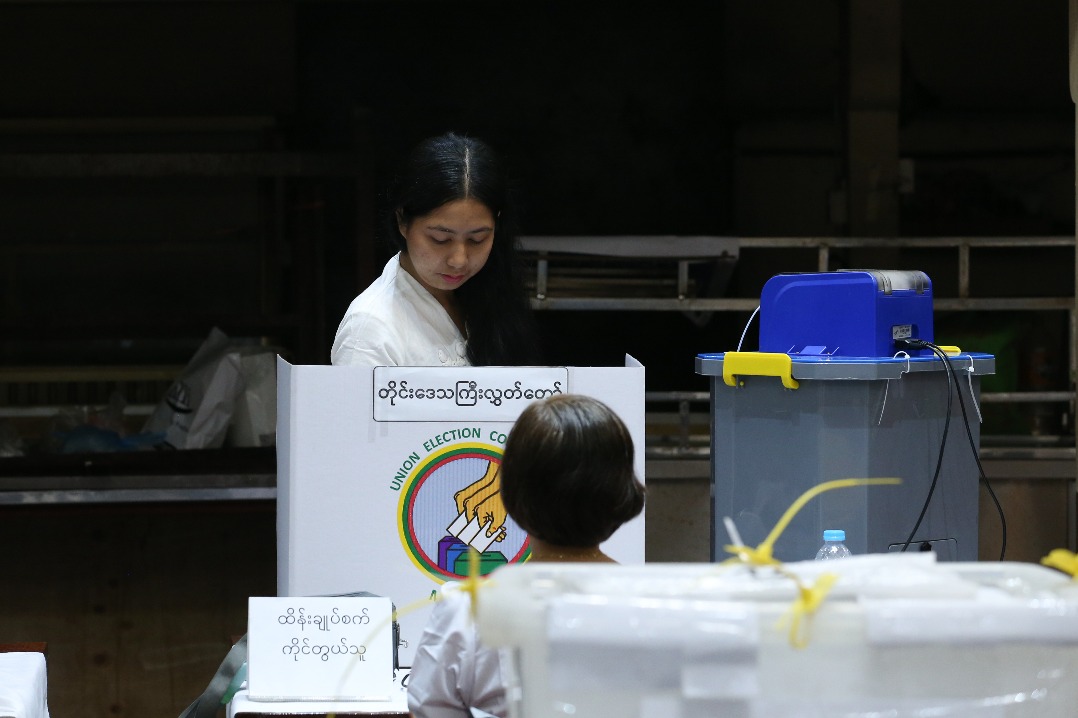
    Myanmar has successfully completed its extensive three-phase general election process, marking a significant milestone in the nation’s democratic journey. The final voting phase concluded on Sunday afternoon across approximately 60 townships, bringing closure to a comprehensive electoral exercise that spanned multiple regions.

    The electoral process, characterized by its staggered approach, commenced with the initial phase conducted in 102 townships on December 28 of the previous year. This was followed by the second electoral round covering 100 townships on January 11, culminating in Sunday’s final voting session. The multi-phase structure allowed for thorough administration across Myanmar’s diverse constituencies.

    According to official data released by the Union Election Commission (UEC), the electoral contest featured an impressive roster of approximately 5,000 candidates representing 57 distinct political parties. These candidates competed for representation across multiple legislative bodies, including the Pyithu Hluttaw (Lower House), the Amyotha Hluttaw (Upper House), and various Region and State Hluttaws (regional parliaments).

    The electoral framework encompassed 263 constituencies for the Pyithu Hluttaw, while the Amyotha Hluttaw elections utilized a dual-system approach with 73 constituencies operating under the first-past-the-post (FPTP) system and 26 following proportional representation (PR) principles. Regional parliamentary elections similarly employed both FPTP (255 constituencies) and PR (42 constituencies) systems, supplemented by 29 specialized ethnic constituencies.

    Zaw Min Tun, spokesperson for Myanmar’s National Defense and Security Council, has indicated that the newly elected parliament will convene in March, with the formal transition to a new government scheduled for April. This electoral cycle represents Myanmar’s first general election since November 2020, signaling a renewed commitment to democratic processes amid the country’s ongoing political evolution.

  • Dubai airport and mall trips topped ride-hailing journeys in 2025, report reveals

    Dubai airport and mall trips topped ride-hailing journeys in 2025, report reveals

    New mobility data from Yango Ride reveals Dubai’s airports and major shopping centers dominated ride-hailing destinations throughout 2025, highlighting shifting urban transportation patterns across the UAE. The comprehensive report indicates Zayed International and Dubai International Airports recorded the highest frequency of rides, closely followed by prominent leisure and retail hubs including Yas Mall and Dubai Mall.

    The study demonstrates how ride-hailing services have transitioned from occasional convenience to essential urban infrastructure, seamlessly integrating into daily routines for work commutes, shopping expeditions, and social engagements. Concurrently, the data reveals a pronounced consumer preference for practical economy vehicles over premium options across the MENA region. Mid-size sedans, particularly Toyota Camry models, emerged as the most frequently utilized vehicle category, reflecting user prioritization of predictable pricing, consistent availability, and functional comfort.

    Hisham Bakry, a frequent business traveler, commented: ‘I utilize airport rides weekly for both professional and personal commitments. Economy options provide optimal practicality and affordability when traveling light—reliability consistently outweighs luxury considerations for my needs.’

    The report further notes remarkably efficient service metrics, with Abu Dhabi maintaining average pickup times under six minutes, underscoring the sector’s evolution toward dependable urban mobility solutions.

    Concurrently, artificial intelligence integration has dramatically expanded within transportation platforms. Yango Yasmina recorded substantial user engagement growth during Q4 2025, with average daily interactions reaching 22 and peaking at 44 on high-demand days. Notably, 60% of platform interactions occurred primarily in Arabic, indicating strong localization adoption.

    Ahmed El-Sayed, 22, explained: ‘AI assistants streamline ride requests through natural language processing and comparative service analysis. However, dynamic traffic conditions and sudden surge pricing can occasionally impact recommendation accuracy.’

    Sara Magboul praised Arabic-language interfaces for reducing booking complexities: ‘Native language functionality eliminates navigation guesswork and ensures transparent pricing and pickup details, significantly reducing travel stress.’