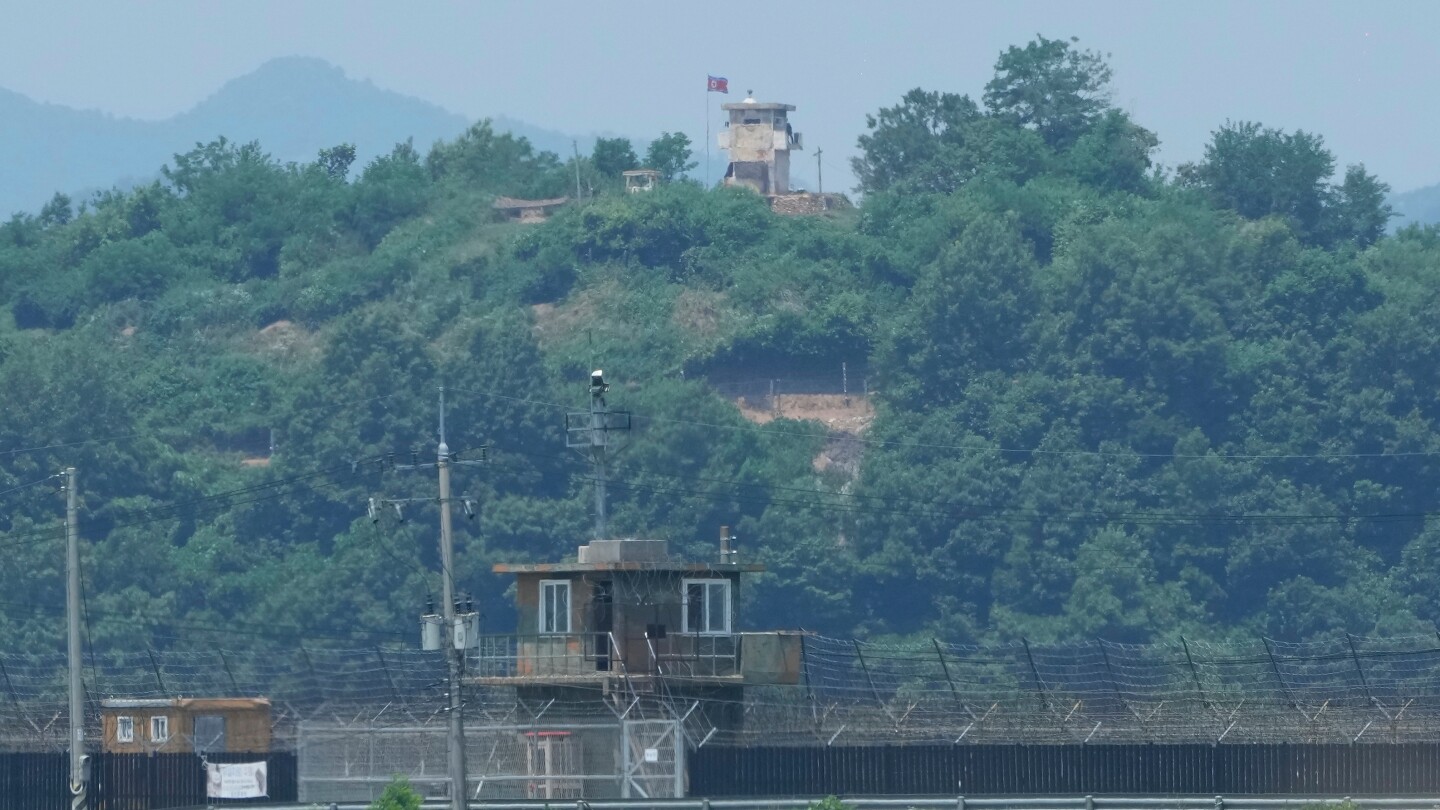
In a bid to mitigate escalating military tensions, South Korea has extended an offer for talks with North Korea to clarify the disputed border line and prevent potential armed clashes. The proposal comes amid repeated border intrusions by North Korean soldiers, which have raised concerns about accidental confrontations. South Korea’s military has reported firing warning shots to repel North Korean troops who have allegedly violated the military demarcation line multiple times since last year, when Pyongyang began fortifying its front-line defenses. North Korea, however, has denied these claims, asserting that its soldiers operated within its own territory and threatening unspecified retaliatory measures. Kim Hong-Cheol, South Korea’s deputy minister for national defense policy, emphasized that the talks aim to reduce tensions and address differing interpretations of the border, as many demarcation posts established after the 1950-53 Korean War have disappeared. The likelihood of North Korea accepting the offer remains uncertain, given its reluctance to engage in dialogue with South Korea and the U.S. since the collapse of nuclear negotiations between Kim Jong Un and former U.S. President Donald Trump in 2019. Observers suggest that the proposal reflects South Korean President Lee Jae Myung’s broader efforts to reopen communication channels with the North. Last year, Kim Jong Un declared an end to the long-standing goal of peaceful unification, designating South Korea as a permanent adversary and reinforcing border defenses with anti-tank barriers and landmines. The 248-kilometer-long border, one of the world’s most heavily fortified frontiers, remains a volatile legacy of the unresolved Korean War.
博客
-
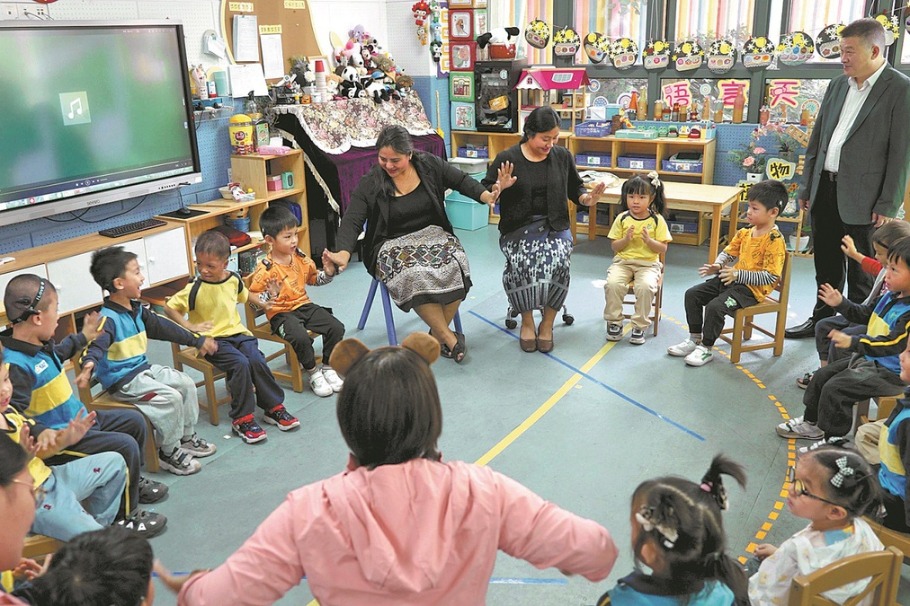
Laotian teacher gains Chinese education insights
Sophaphone Heuanglith, a dedicated special education teacher from Laos, recently embarked on a transformative journey to China, where she gained profound insights into the country’s advanced approaches to educating hearing-impaired children. During her visit to Guangzhou, Heuanglith was deeply moved by the inclusive education practices she observed, where children with cochlear implants studied alongside their hearing peers, supported by innovative teaching methods and resources.
-

Yi lacquerware gets a new lease of life
In the heart of Zhaojue County, Sichuan Province, Qumu Shiwu, a 29-year-old inheritor of the ancient Yi lacquerware craft, is breathing new life into a centuries-old tradition. With a paintbrush in hand, she meticulously creates vibrant patterns on wooden cores, a skill passed down through 14 generations of her ethnic Yi family. Her captivating short videos, showcasing the intricate process of lacquerware decoration, have amassed over 200 million views on social media, transforming this traditional art form into a modern sensation. Born into a family of artisans, Qumu defied gender norms to become the first female inheritor of the craft. Despite challenges, including a severe allergic reaction to raw lacquer, she persevered, completing her first independent work in 2017. Leveraging platforms like Douyin, Kuaishou, and Xiaohongshu, Qumu has expanded the reach of Yi lacquerware, attracting customers from across China and overseas. By integrating traditional designs into contemporary products like phone cases and tea sets, she has revitalized her father’s workshop, increasing its annual revenue from 400,000 yuan to over 3 million yuan. Qumu’s efforts also include nurturing the next generation of artisans through university partnerships and exploring cross-sector collaborations. Her ultimate goal is to introduce Yi lacquerware to a global audience, showcasing the rich cultural heritage of Liangshan.
-
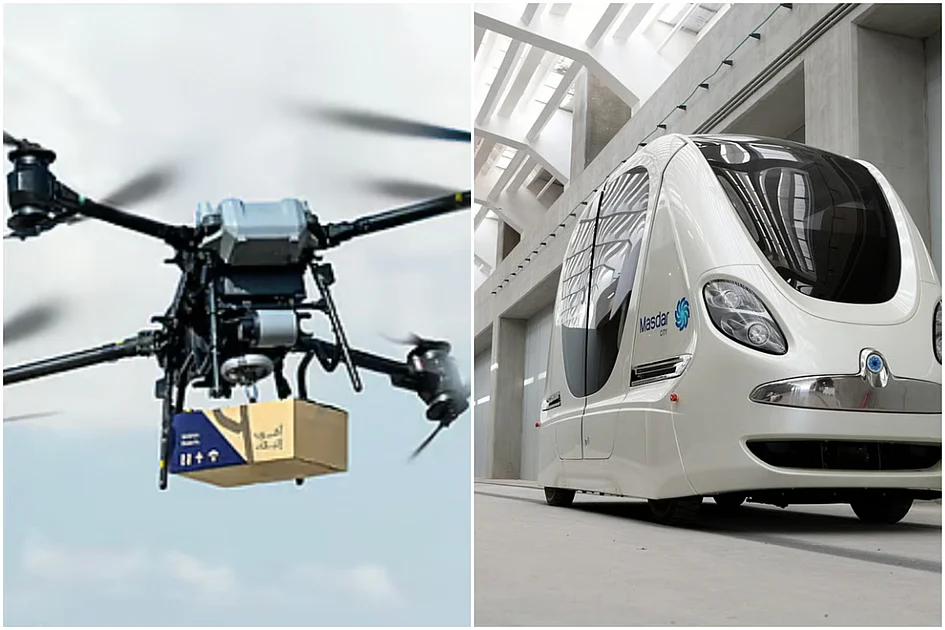
Traffic drones, automated public transport: 9 deals to ease Abu Dhabi commutes
Abu Dhabi is taking a giant leap toward revolutionizing urban transportation with the signing of nine strategic agreements aimed at creating a smart, safe, and sustainable mobility ecosystem. These initiatives, unveiled during the DRIFTx 2025 event as part of the Abu Dhabi Autonomous Week, span across air, land, and sea, showcasing the emirate’s commitment to cutting-edge technology and innovation. The Integrated Transport Centre (ITC), in collaboration with global and national partners, is spearheading these efforts to transform the way residents and visitors navigate the city. Key projects include AI-powered traffic-monitoring drones, personal driverless vehicles, mini robo-buses, electric air taxis, and autonomous marine vessels. Additionally, the agreements focus on enhancing connectivity through 5G and 5.5G networks, bolstering cybersecurity, and advancing autonomous logistics with self-driving trucks and cargo drones. These initiatives not only aim to reduce congestion and emissions but also to improve first- and last-mile connectivity, ensuring a seamless and eco-friendly transportation experience. With these partnerships, Abu Dhabi is positioning itself as a global leader in smart mobility, setting a benchmark for other cities to follow.
-
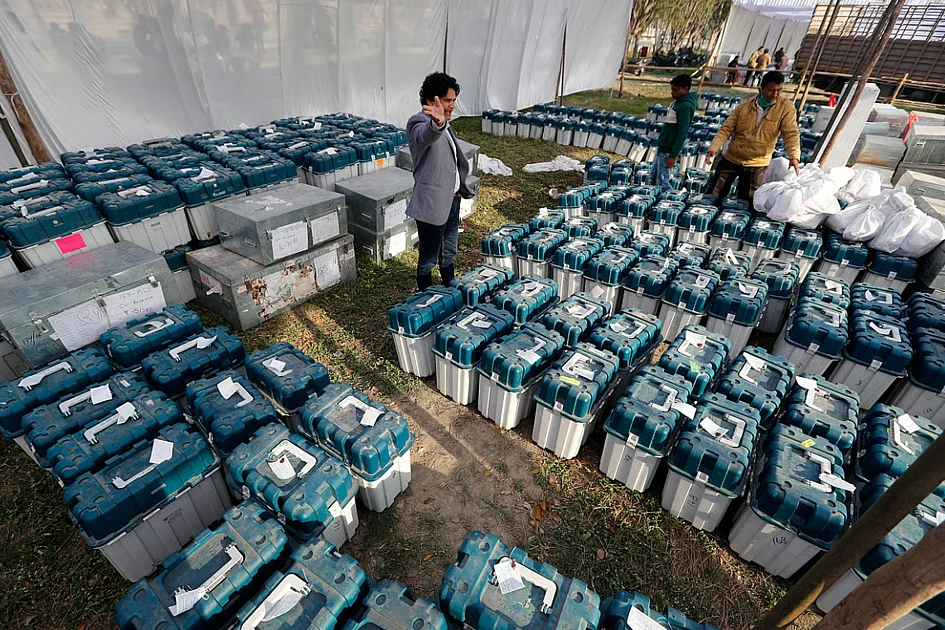
SIR forms: Indian expats in UAE rush to update, verify voter status
Indian expatriates residing in the UAE are actively engaging in the Special Intensive Revision (SIR) process to update and verify their voter status ahead of the 2026 elections in India. The Election Commission of India is conducting this initiative across 12 states and Union Territories, including Kerala and Karnataka, to ensure accurate voter rolls by removing fraudulent entries and adding eligible voters. This marks the first such comprehensive revision in 21 years. Only those listed on the electoral roll will be eligible to vote in upcoming local and national elections. Many expats are sending necessary documents, such as Aadhar cards and passports, to their families in India to facilitate the process. Dubai resident Asheem PK shared, ‘My father urged me to complete the process, so I sent all required documents as soon as it began.’ The first draft of the voter list will be published on December 9, after which new applicants can submit Form 6A online to be added. Muneer Berike, an Indian social worker, emphasized the significance of this opportunity for non-resident Indians (NRIs), stating, ‘We fought hard for this right, and now it’s crucial for NRIs to exercise it.’ NRI voter registration began in 2010, with overseas electors allowed to register since 2011. Applicants must provide details such as their overseas address, reason for residing abroad, and a relative’s voter information. Proof documents, including the Aadhar card, may also be required. Unlike resident voters, NRIs do not receive voter IDs and must vote in person in India using their passports. To assist expats, Indian social groups are planning to set up help desks, though the Indian consulate has yet to confirm its involvement in the registration process. The final voter list will be published in February 2026.
-

UAE: Gold prices fall from record highs, but analysts predict another surge
Gold prices, which recently soared to an unprecedented $4,500 per ounce, have experienced a slight decline, closing at $4,080.78 over the weekend. This 2.62% drop is attributed to profit-taking by investors. In the UAE, 24K and 22K gold were trading at Dh492.25 and Dh455.5 per gram, respectively. Despite the current dip, market analysts predict a potential resurgence, with prices potentially revisiting the $4,500 mark in the near future. Amir Boucetta, a marketing team leader at CPT, anticipates a temporary decline to $3,700-$3,800 before a bullish recovery. He emphasizes that this correction is healthy and advises investors to focus on fundamentals rather than panic selling. Komalpreet Kaur of XtremeMarkets highlights a gradual recovery, projecting gold could reach $5,000 by 2026-27, driven by factors such as US tariffs, China’s gold reserves buildup, and the US economy. Alex Kuptsikevich, chief market analyst at FxPro, notes that the US dollar’s weakness and Federal Reserve’s monetary policies have historically favored gold. However, he warns of potential volatility, as recent market trends suggest a shift in sentiment. Despite short-term fluctuations, the long-term outlook for gold remains optimistic, supported by global economic uncertainties and central bank activities.
-

CNS Sichuan achieves desired results on its maiden sea trial
China’s first Type 076 amphibious assault ship, the CNS Sichuan, has successfully concluded its maiden sea trial, marking a significant milestone in the nation’s naval advancements. The vessel, which is the largest and most advanced of its kind in China, returned to the Hudong-Zhonghua Shipbuilding yard in Shanghai on Sunday afternoon after a three-day voyage. During the trial, engineers meticulously tested and verified the ship’s electric, propulsion, and other critical systems, achieving the desired results. Further tests are planned as part of the ship’s construction blueprint. The Sichuan, with a hull code of 51, displaces over 40,000 metric tons and is equipped with an electromagnetic catapult system, making it the first Chinese amphibious assault ship capable of deploying fixed-wing drones. This technology, previously seen only on the CNS Fujian aircraft carrier, underscores China’s growing prowess in naval innovation. Once commissioned, the Sichuan will support a range of operations, including amphibious landings, airstrikes, and airborne missions. The PLA Navy currently operates four Type 075 amphibious assault ships, each with a full displacement of nearly 40,000 tons, built at the same Shanghai shipyard.
-
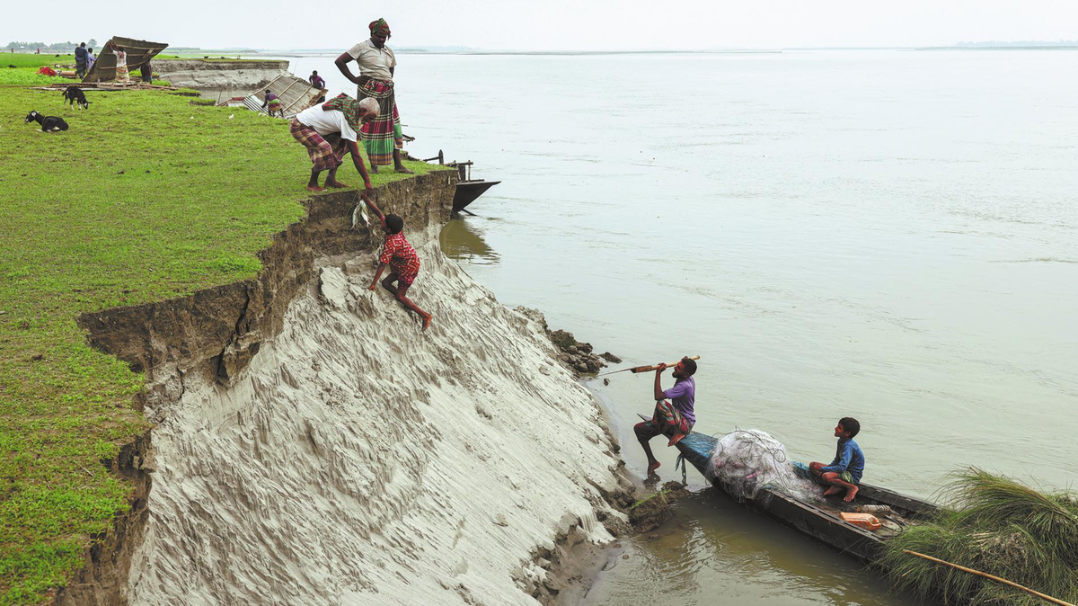
Engulfed by water
As global leaders convene at COP30 to address climate challenges, Bangladesh continues to grapple with the devastating effects of river erosion. On a somber morning in Kurigram, Nurun Nabi prepares to relocate his family for the second time in a year. His home, constructed just twelve months ago on the precarious Char Youthnet island in the Brahmaputra River, is now threatened by the encroaching waters. ‘The river is coming closer every day,’ Nabi lamented, his voice heavy with fatigue. ‘We are born to suffer. Our struggle is never-ending. I’ve lost count of how many times the river took my home.’
The plight of Nabi and countless others underscores the urgent need for effective climate solutions. The Brahmaputra River, a lifeline for many, has become a source of relentless destruction, swallowing homes, schools, and livelihoods. The only school on Char Youthnet island, where children continue their education amidst the crisis, stands as a fragile symbol of resilience.
As nations gather to strategize at COP30, the situation in Bangladesh serves as a stark reminder of the human cost of climate change. The country, already vulnerable to rising sea levels and extreme weather events, faces an existential threat from river erosion. The international community’s response will be crucial in determining whether nations like Bangladesh can adapt and survive in an increasingly unstable climate.
-

Global energy challenges targeted through China-UN collaboration
In a groundbreaking initiative to address global energy transition challenges, a Chinese international NGO, the Global Energy Interconnection Development and Cooperation Organization (GEIDCO), has partnered with United Nations agencies to launch a comprehensive research program. Announced during the COP30 climate conference in Belem, Brazil, this collaboration aims to identify capacity gaps and training needs across different regions to foster a just and inclusive energy transition. GEIDCO, established in 2016 as China’s first international energy organization, brings extensive experience in capacity-building, having trained over 10,000 participants from 80+ countries through 30+ international programs. The research will focus on energy policies, technologies, talent development, and financing, with a particular emphasis on regional disparities. For instance, African participants prioritize distributed renewable energy and project financing, while West Asian stakeholders are more interested in emerging technologies like hydrogen energy. The program, developed in collaboration with the UN Framework Convention on Climate Change and the Paris Committee on Capacity-building, seeks to create targeted training initiatives to bridge these gaps. Gloria Alvarenga of the Latin American Energy Organization praised the initiative, highlighting the importance of shared experiences and collaborative mechanisms in accelerating climate action. Riad Meddeb of the UN Development Programme emphasized the urgency of addressing capacity gaps to ensure a just transition, noting that 60% of global energy production remains inefficient. He also underscored the role of digitalization in transforming clean energy systems, while pointing out the stark digital divide, with only 27% of people in low-income countries having internet access. The initiative reflects a growing global consensus to limit temperature rise to 1.5°C, as outlined in the Paris Agreement, to avoid catastrophic climate impacts.
-
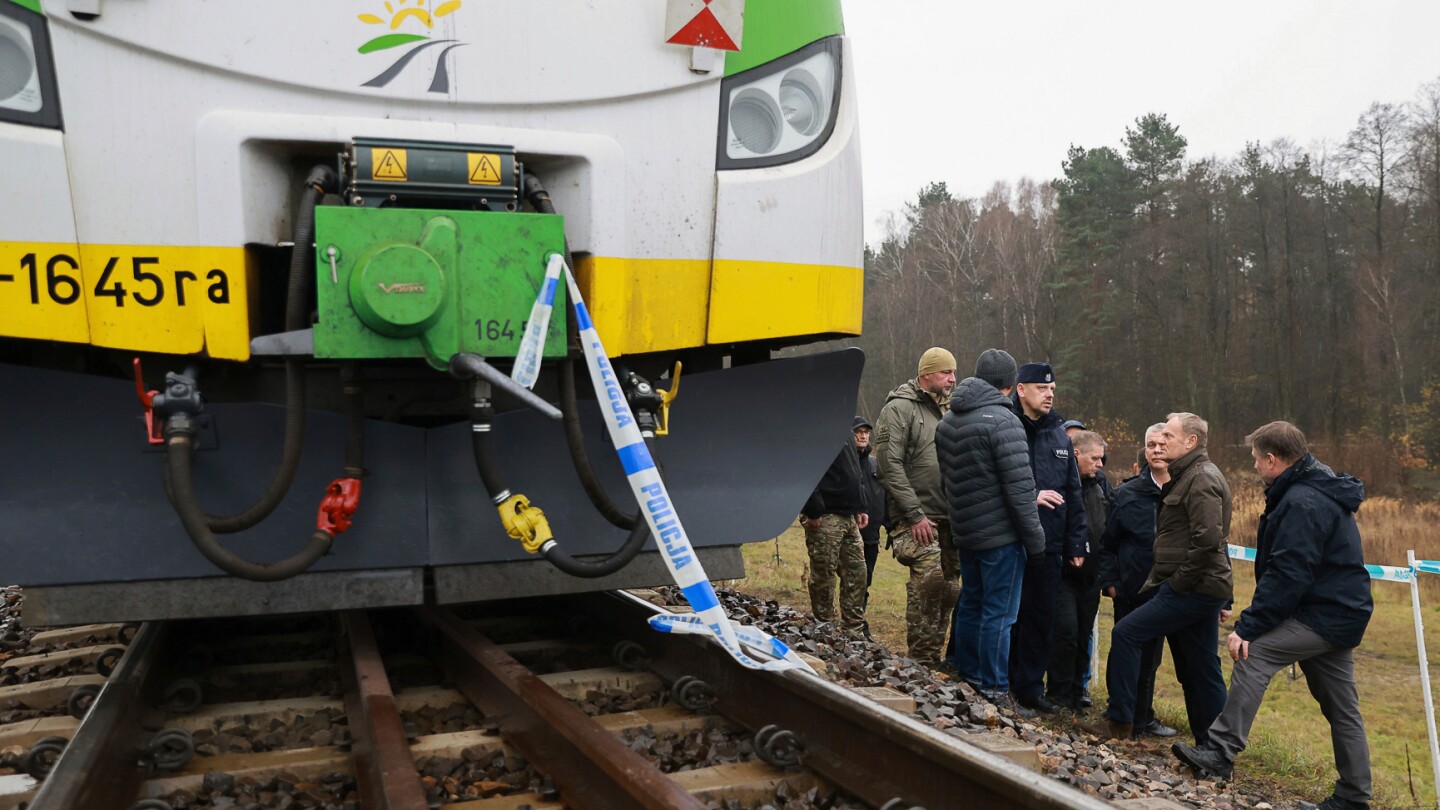
Polish prime minister says weekend rail line explosion near Warsaw was act of ‘sabotage’
WARSAW, Poland — A critical railway line connecting Warsaw to southeastern Poland was severely damaged by an explosion on Sunday, which authorities have labeled as an act of sabotage. Prime Minister Donald Tusk confirmed the incident on Monday, stating that the explosion occurred on the Warsaw-Lublin route near the village of Mika, approximately 100 kilometers (62 miles) southeast of the capital. The blast destroyed a section of the railway track, disrupting train services. Fortunately, no injuries were reported among the two passengers and several staff members aboard the train at the time. The incident was first detected by a train driver who reported irregularities on the track around 7:40 a.m. Sunday. Subsequent investigations revealed damage at multiple locations along the route. Tusk vowed to apprehend the perpetrators, calling the act ‘unprecedented’ and emphasizing that justice would be served ‘regardless of who is behind them.’ This incident adds to a series of suspected sabotage and espionage cases in Poland since Russia’s invasion of Ukraine in February 2022, with dozens of individuals detained in connection with these activities.