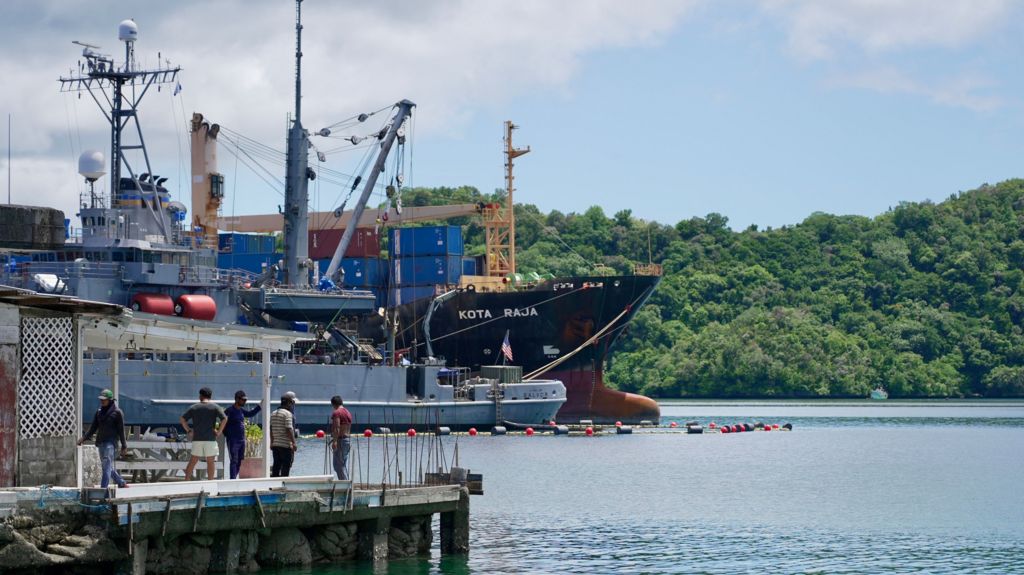
Nestled in the western Pacific, Palau’s serene waters and vibrant marine life once drew throngs of tourists, particularly from China. However, the tourism boom that peaked between 2015 and 2017 has since collapsed, leaving local businesses struggling. The decline, according to Palauan officials, was no accident but a calculated move by Beijing to pressure Palau into severing ties with Taiwan. China, which views Taiwan as a breakaway province, has long sought to isolate the island diplomatically. Palau remains one of the few nations recognizing Taiwan, a stance that has placed it at the center of a geopolitical tug-of-war involving China, Taiwan, and the United States.
博客
-
Machu Picchu hit by a row over tourist buses
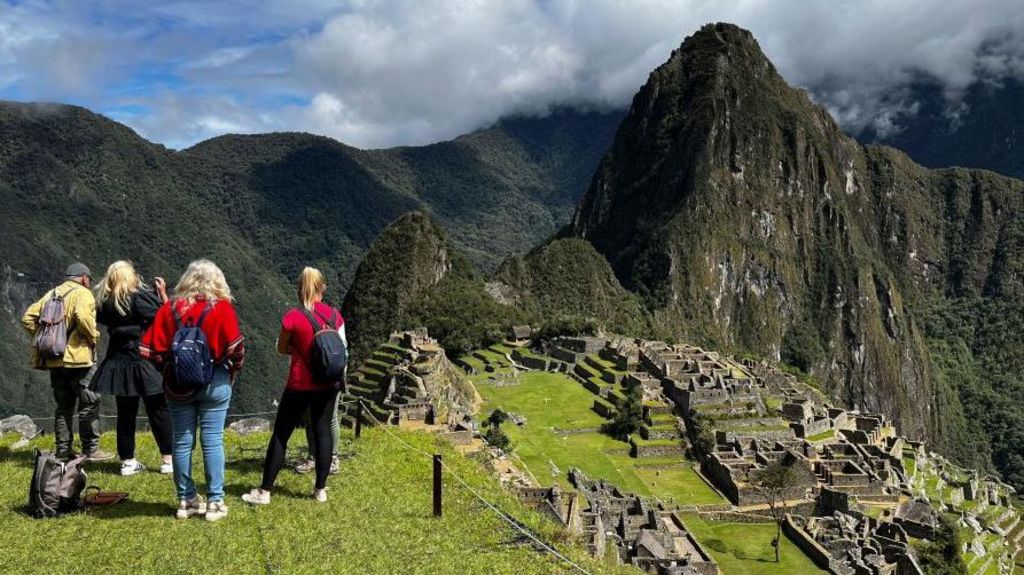
Machu Picchu, Peru’s iconic 15th-century Inca citadel and a UNESCO World Heritage Site, attracts over 1.6 million tourists annually. However, recent disputes over bus services have disrupted access to the mountain-top site, leaving 1,400 tourists stranded and requiring evacuation. The conflict centers around Consettur, the bus company that has operated for 30 years, losing its license to a rival firm, San Antonio de Torontoy, following a contentious bidding process. Local protests erupted in September, with demonstrators blocking the railway to Aguas Calientes, the gateway town to Machu Picchu, forcing authorities to clear the tracks and arrange special train services. Critics argue that Consettur’s monopoly on the lucrative bus service, charging $24 for foreigners and $15 for locals, has fueled tensions. Despite its expired license, Consettur continues operations due to legal challenges, while San Antonio de Torontoy remains unable to start. Cristian Alberto Caballero Chacón, Consettur’s operations head, denies monopoly claims, stating the company comprises 12 partners, including the local district council, which owns 38%. Meanwhile, tourists face high costs, with train tickets to Aguas Calientes ranging from $140 to $2,000, and Machu Picchu entry fees at $57. Aguas Calientes Mayor Elvis La Torre criticizes the revenue distribution, with only 10% staying locally. Local vendors like Dina Huillca highlight the lack of basic services, while Carlos González, president of Cusco’s tourism chamber, advocates for state-controlled transport and enhanced visitor experiences. Despite challenges, Caballero welcomes competition, stating Consettur would cooperate with San Antonio de Torontoy if approved.
-

Philippines deports 23 Chinese nationals over illegal gaming operations, cyberfraud
In a significant move against illegal activities, the Philippines’ Bureau of Immigration (BI) deported 23 Chinese nationals on November 21, 2025, for their involvement in illegal Philippine Offshore Gaming Operations (POGO) and cyberfraud. The individuals were found to have violated multiple immigration laws, including participation in POGO-related activities, running fraudulent schemes, and being wanted criminals in their home country. The deportees were sent on a Philippine Airlines flight from Ninoy Aquino International Airport to Shanghai Pudong International Airport. Immigration Commissioner Joel Viado emphasized that additional arrests and deportations are anticipated as authorities intensify efforts to dismantle illegal online gaming facilities and scam operations. This crackdown aligns with President Ferdinand Marcos Jr.’s 2024 State of the Nation Address, where he announced a nationwide ban on POGOs due to their association with human trafficking, money laundering, and organized crime. The ban was formalized on October 29, 2025, with the signing of Republic Act No. 12312, also known as the Anti-Pogo Act of 2025, which prohibits all offshore gaming operations and revokes existing visas and work permits of foreign POGO employees.
-
50 children kidnapped from Nigerian Catholic school escape captivity
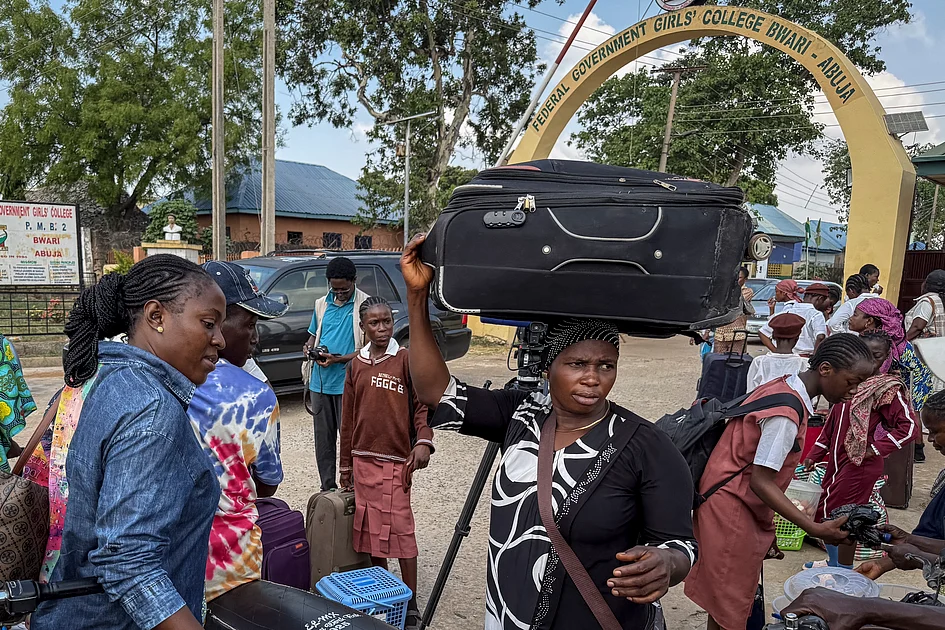
In a glimmer of hope amidst a grim situation, 50 children abducted from St Mary’s Catholic School in Nigeria have managed to escape their captors. The mass kidnapping, which occurred on Friday in Niger state, saw gunmen seize 303 students and 12 teachers, marking one of the largest such incidents in the country’s history. The Christian Association of Nigeria (CAN) confirmed the escape, stating that the children, aged between eight and 18, reunited with their families between Friday and Saturday. This group represents nearly half of the school’s total student population of 629. The Nigerian government has yet to issue an official statement on the abduction. Reverend Bulus Dauwa Yohanna, CAN chairman in Niger State, urged continued prayers for the safe return of the remaining victims. The incident has reignited concerns over Nigeria’s escalating security crisis, which has led to widespread school closures. Since the infamous Chibok schoolgirls’ abduction over a decade ago, Nigeria has faced a surge in mass kidnappings, often orchestrated by criminal gangs seeking ransom. Pope Leo XIV expressed ‘deep sorrow’ for the victims and their families, calling for the immediate release of all hostages. The recent spate of kidnappings and attacks, including an assault on a church in western Nigeria, has drawn international attention, with former US President Donald Trump condemning the violence as ‘a disgrace.’ Meanwhile, Nigeria continues to grapple with a deadly militant insurgency in its northeast, which has claimed over 40,000 lives and displaced millions since 2019.
-
Trump blasts Ukraine for ‘zero gratitude’ to US as talks start
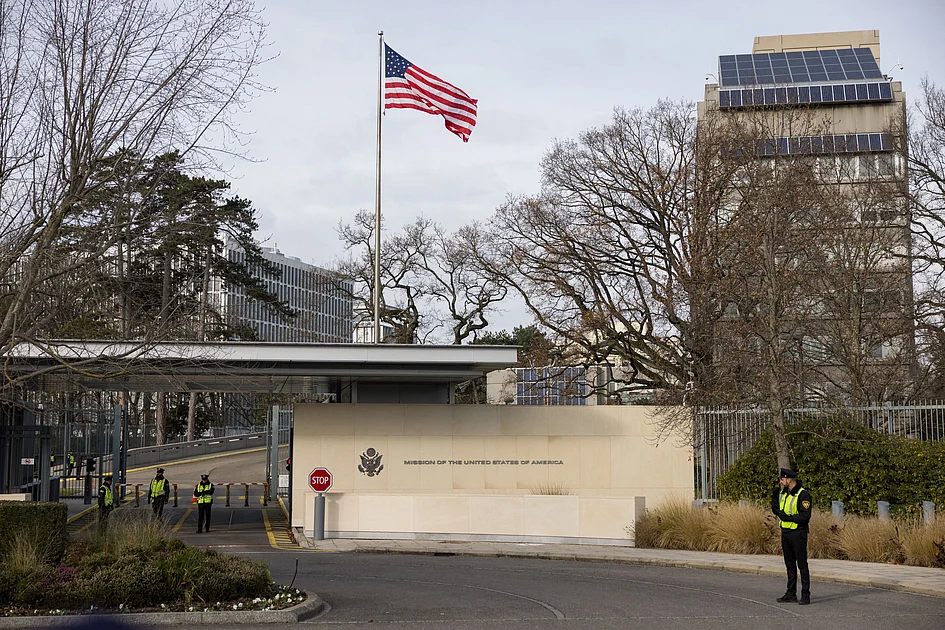
US President Donald Trump has once again lashed out at Ukraine, accusing its leadership of showing ‘zero gratitude’ for Washington’s support in its conflict with Russia. This criticism came as top US and Ukrainian officials convened in Geneva to discuss a potential peace proposal aimed at ending the ongoing war. Trump voiced his frustrations on his Truth Social platform, labeling the conflict a ‘human catastrophe’ and taking aim at his predecessor, Joe Biden, while notably refraining from directly condemning Moscow. Trump’s remarks underscore his longstanding dissatisfaction with the war, which erupted in 2022 when Russia launched a full-scale invasion of Ukraine, resulting in significant territorial losses and widespread destruction. During his presidential campaign last year, Trump had promised to broker peace within 24 hours, but his sporadic diplomatic efforts have yielded little progress. He now faces criticism from within his own party over a 28-point plan being discussed in Geneva, which some argue could favor Russia’s war objectives. While Trump has expressed disappointment in Russian President Vladimir Putin, he has rarely criticized him directly, instead focusing his ire on Ukrainian President Volodymyr Zelensky. In his recent social media post, Trump also criticized European nations for continuing to purchase Russian oil and derided Biden as ‘crooked Joe’ for providing Ukraine with military aid. Zelensky, however, has consistently expressed gratitude for the substantial US military support, which has been crucial in Ukraine’s ongoing defense against Russian forces.
-

Outcomes of COP30 show multilateralism is alive despite headwinds
The 30th session of the Conference of the Parties to the United Nations Framework Convention on Climate Change (COP30), held in Belem, Brazil, concluded with significant outcomes, underscoring the enduring strength of multilateralism despite global challenges. The conference adopted a comprehensive package of decisions, including a commitment to triple adaptation finance by 2035, emphasizing the need for developed nations to enhance climate finance for developing countries. A set of 59 voluntary indicators was finalized to track progress under the Global Goal on Adaptation, covering sectors such as water, food, health, ecosystems, and livelihoods. Additionally, COP30 introduced a just transition mechanism to foster international cooperation and equitable transitions. A historic framework titled ‘Global Mutirao: Uniting Humanity in a Global Mobilization Against Climate Change’ was also adopted, featuring the Global Implementation Accelerator to support countries in meeting their climate commitments. Chinese officials, including Wang Yi and Li Gao, highlighted the importance of these outcomes, particularly the inclusion of mechanisms to counter unilateral measures. UN officials, including Executive Secretary Simon Stiell and Secretary-General Antonio Guterres, praised the conference for its unprecedented political signals and called for continued global efforts to address the climate crisis. The event marked a pivotal moment in global climate governance, reaffirming the collective resolve to combat climate change despite political and economic headwinds.
-
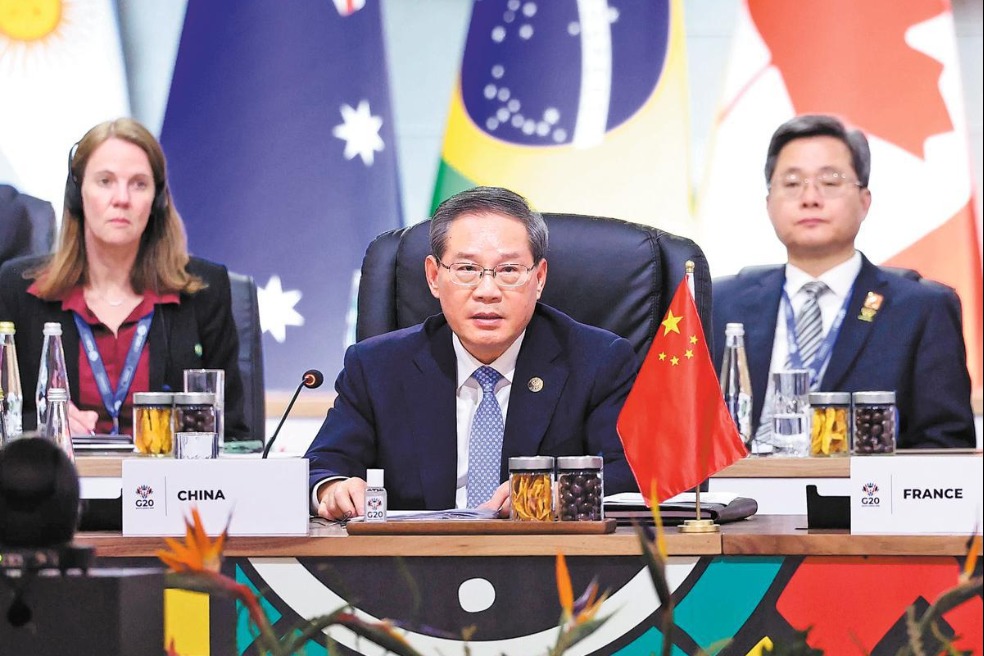
G20 called on to firmly uphold free trade
At the 20th G20 Summit held in Johannesburg, South Africa, Chinese Premier Li Qiang emphasized the urgent need for global solidarity and cooperation to address pressing economic challenges. The summit, themed ‘Solidarity, Equality, and Sustainability,’ focused on fostering inclusive and sustainable economic growth, building resilience, and ensuring a fair future for all. Premier Li highlighted the rise of unilateralism and protectionism, which have exacerbated trade restrictions and confrontations, hindering international cooperation. He urged G20 members to confront these issues head-on, advocating for multilateralism and the reform of global institutions like the World Bank, IMF, and WTO. Li also underscored the importance of supporting developing countries, announcing China’s initiatives to reduce debts and promote industrialization in Africa. The summit concluded with a leaders’ declaration addressing climate change and other global challenges, signaling a strong commitment to multilateralism. Additionally, Premier Li engaged in bilateral meetings with leaders from Italy, France, South Korea, Angola, Spain, and the WTO, reinforcing China’s dedication to fostering international partnerships and fair trade practices.
-

Japan’s high-stakes gamble to turn island of flowers into global chip hub
Hokkaido, Japan’s northernmost island, has long been celebrated for its agricultural prowess and tourism appeal. However, the region is now poised to become a global epicenter for advanced semiconductor production, thanks to a multi-billion-dollar investment by the Japanese government and key industry players. Spearheading this ambitious transformation is Rapidus, a government-backed company supported by corporate giants like Toyota, Softbank, and Sony. Rapidus aims to establish Japan’s first cutting-edge chip foundry in decades, with a $12 billion semiconductor factory under construction in Chitose, Hokkaido. The company has already achieved a significant milestone by successfully producing prototype 2-nanometer (2nm) transistors, a feat matched only by industry leaders TSMC and Samsung. This breakthrough positions Rapidus as a potential contender in the $600 billion global semiconductor market. The selection of Chitose was strategic, leveraging its robust infrastructure, natural beauty, and lower earthquake risk. Rapidus CEO Atsuyoshi Koike emphasized the importance of partnerships, particularly with IBM, in achieving this technological leap. The company is on track to mass-produce 2nm chips by 2027, though challenges remain in achieving the necessary yield and quality to compete with established players. Japan’s broader economic challenges, including a shrinking population and a shortage of semiconductor engineers, add complexity to this endeavor. However, the government’s commitment to revitalizing the semiconductor industry is evident, with $27 billion invested between 2020 and early 2024, and a $65 billion package unveiled in late 2024 to support AI and semiconductor development. This initiative is part of Japan’s strategy to reduce reliance on foreign suppliers and regain its former dominance in the global semiconductor market. The success of Rapidus could not only transform Hokkaido’s economy but also position Japan as a formidable player in the high-stakes semiconductor race.
-

Donald Glover reveals on stage he had a stroke last year
In a heartfelt revelation during his performance at Tyler, the Creator’s Camp Flog Gnaw festival in Los Angeles, multi-talented artist Donald Glover, known by his stage name Childish Gambino, disclosed that he suffered a stroke last year. The 42-year-old actor and rapper shared the harrowing experience with the audience, explaining that the stroke occurred shortly after he began his New World tour in August 2024. Glover recounted feeling severe head pain during a show in Louisiana, which he initially ignored. However, after experiencing vision problems in Houston, he sought medical attention and was diagnosed with a stroke. The health scare forced him to postpone and eventually cancel the remainder of his tour. Glover also revealed that doctors discovered a hole in his heart, necessitating two surgeries. During his emotional on-stage confession, Glover reflected on the fragility of life, stating, ‘They say everybody has two lives, and the second life starts when you realize you have one.’ He expressed gratitude to his fans for their unwavering support, emphasizing the importance of health and resilience. Glover’s candid disclosure has sparked widespread concern and admiration, highlighting the challenges faced by performers in balancing their careers and well-being.
-

UAE women leaders back AI as key to gender equality amid regional push for inclusion
Women leaders in the United Arab Emirates (UAE) are increasingly viewing artificial intelligence (AI) as a pivotal force in advancing gender equality within the technology sector. Despite persistent structural challenges, a recent survey by Cloudera reveals that 91% of female IT leaders in the UAE anticipate achieving gender parity in AI leadership within the next five years. This optimism underscores the transformative potential of AI in fostering a more inclusive tech landscape. The survey highlights that 88% of respondents believe AI will play a crucial role in promoting gender balance, while an equal percentage are confident that women will significantly influence future AI strategies and governance. However, concerns remain. Nearly half (46%) of the respondents expressed worries about the scarcity of women in senior AI roles, and 44% fear that underrepresentation could lead to biases being embedded into AI systems. Additionally, 52% identified limited opportunities at the top as a major hurdle, and 84% emphasized the need for organizations to provide targeted AI training for women. Eman Gammoh, Head of AI at Arab Bank, remarked, ‘Women are not only participating; we are key drivers, fundamentally shaping the future of AI strategy and governance.’ Manasi Vartek, Chief AI Architect at Cloudera, stressed the importance of a unified data foundation and targeted training for women to ensure trustworthy AI. The UAE’s efforts align with broader regional initiatives. The UAE Gender Balance Council has achieved significant milestones, with women constituting 70% of university graduates and 56% of STEM graduates at public universities. Saudi Arabia has also surpassed its Vision 2030 target for female labor force participation, reaching 36.3% in early 2025. Corporate strategies are evolving, with 78% of Middle Eastern women business leaders expressing confidence in growth, though nearly half seek clearer AI and ESG strategies. Programs like She Leads 2025 are equipping women entrepreneurs across the Middle East and North Africa (MENA) with AI skills and leadership training, fostering a regional network for inclusive innovation. Despite these advancements, two-thirds of respondents believe gender equality is often treated as a ‘tick-box exercise,’ and 64% cite limited access to upskilling as a critical bottleneck. The Middle East’s tech ambitions are clear, with women increasingly at the forefront of this transformation. However, as AI reshapes industries, the question remains whether structural reforms will keep pace with technological advancements.