博客

  • How authorities trace BlueChip scam money trail; CCTV shows founder stuffing cash into bags

    How authorities trace BlueChip scam money trail; CCTV shows founder stuffing cash into bags

    The unraveling of the BlueChip investment scandal, which defrauded UAE residents of approximately Dh400 million ($109 million), demonstrates a paradigm shift in how global authorities now pursue digital financial crimes once considered untraceable. The case took a dramatic turn with the November 30 arrest of founder Ravindra Nath Soni in Dehradun, India, ending an 18-month international manhunt that began when his Dubai-based operation collapsed abruptly in March 2024.

    Newly emerged CCTV footage from the company’s final operational days depicts Soni systematically removing substantial cash volumes from office drawers, stacking currency bundles on tables, and concealing them within suitcases and carry bags. This visual evidence has become crucial for investigators quantifying capital extraction during the scheme’s terminal phase.

    The investigation has revealed sophisticated financial maneuvering, including a previously documented $41.35 million transfer to an unidentified cryptocurrency wallet immediately preceding the company’s shutdown. According to Rayad Kamal Ayub, Managing Director of Rayad Group Technology, this case exemplifies how blockchain intelligence tools have revolutionized financial crime investigations. “Modern forensic capabilities can map relationships across thousands of wallets, flag suspicious movements in real-time, and identify connections to darknet operations and sanctioned entities,” Ayub explained.

    Indian authorities report the scam’s financial scope continues expanding beyond initial estimates. Forensic accounting has identified over ten domestic bank accounts operated by Soni across multiple cities, with transactions suggesting coordinated movement through both hawala channels and cryptocurrency conversions. Kanpur Police Commissioner Raghubir Lal confirmed the operation now exhibits clear characteristics of cross-border financial crime, with twelve international associates—including individuals in Dubai—implicated in the money movement network.

    The case reflects broader advancements in global regulatory cooperation, with platforms like Chainalysis, Elliptic, and TRM Labs enabling investigators to trace funds across blockchain networks with unprecedented speed. “What previously required months now takes hours,” Ayub noted. “Blockchain anonymity is largely mythological—every transaction creates permanent forensic evidence that regulators can reconstruct.”

    For affected investors, many of whom have traveled to India to join the expanding criminal case, the sophisticated investigation offers renewed hope for potential asset recovery after months of financial uncertainty and losses.
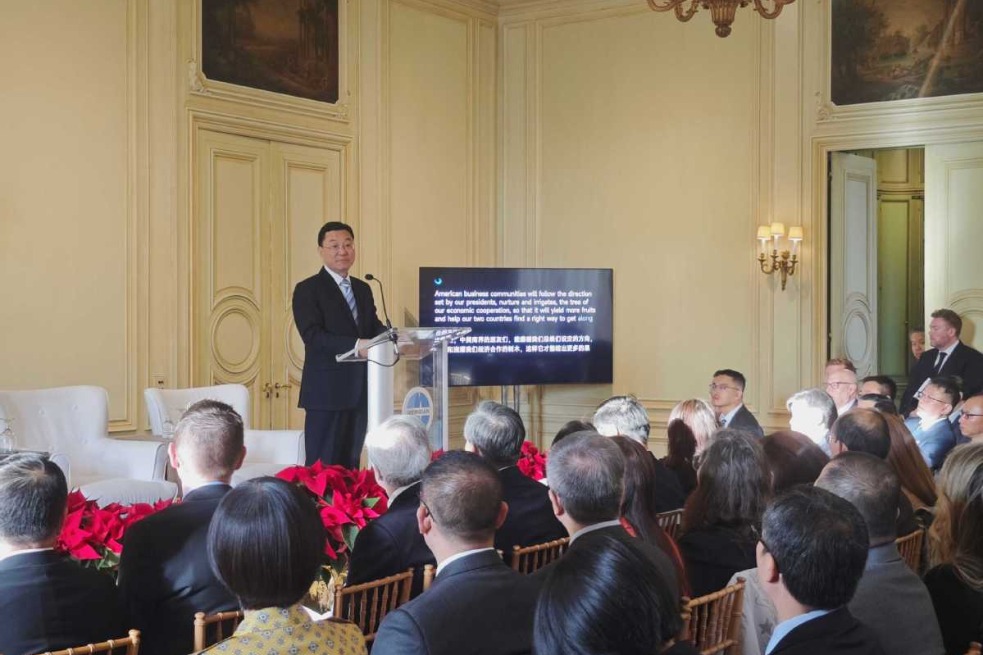

  • China, US businesses urged to enhance ties

    China, US businesses urged to enhance ties

    Senior officials and corporate leaders from the world’s two largest economies are spearheading a concerted push to revitalize commercial ties through enhanced dialogue and collaborative ventures. This development emerges against a backdrop of stabilizing diplomatic relations and China’s forthcoming economic planning cycle.

    At the China-US Business Cooperation Forum in Washington on December 4th, Chinese Ambassador Xie Feng emphasized the business community’s pivotal role in transcending political differences and capitalizing on opportunities generated by head-of-state diplomacy. The event, jointly organized by the China Council for the Promotion of International Trade and Washington’s Meridian International Center, brought together executives seeking clarity on navigating the relationship’s ‘new era’.

    Ambassador Xie highlighted how presidential commitments from both nations have injected ‘precious certainty’ into economic cooperation, with head-of-state diplomacy expected to remain the anchor of bilateral relations. He outlined substantial opportunities arising from China’s pursuit of high-quality development under the 15th Five-Year Plan (2026-2030), particularly with China hosting the 2026 APEC Economic Leaders’ Meeting and the US convening the G20 Summit.

    Concurrently on the West Coast, the ‘Port of Opportunity: US-China Business Exchange Breakfast’ in Berkeley, California facilitated connections between 25 Chinese companies and approximately 100 local executives and officials. Discussions spanned finance, agriculture, logistics, aviation, healthcare, renewable energy, and cultural industries.

    Ren Hongbin, Chairman of the China Council for the Promotion of International Trade, noted that recent high-level interactions have reinvigorated business confidence, urging concrete implementation of leadership consensus. Oakland Mayor Barbara Lee emphasized China’s significance as the port’s largest import partner (29% of total trade volume), advocating for sustained economic focus despite geopolitical challenges, particularly in green economy initiatives.

    John Grubb, Interim President and CEO of the Bay Area Council, highlighted California’s substantial role in US-China trade (approximately 25% of total), emphasizing the importance of maintaining commercial bridges through changing circumstances. The San Francisco Bay Area’s innovation ecosystem, home to companies like Apple, Intel and Nvidia that have significantly benefited from China’s market, was identified as a key driver of future cooperation in emerging sectors including renewable energy, biopharmaceuticals, and the low-altitude economy.

    Chinese Consul General in San Francisco Zhang Jianmin underscored the reality of economic interdependence in today’s globalized economy, with supply chains accounting for approximately 70% of global trade. He emphasized that innovation cooperation becomes increasingly vital amid global economic headwinds, with China’s vast market and comprehensive industrial system offering complementary advantages to the Bay Area’s innovative capacity.

  • Neymar needs surgery after helping Santos avoid drop

    Neymar needs surgery after helping Santos avoid drop

    Brazilian football superstar Neymar Jr. is scheduled for knee surgery following a heroic effort to save his boyhood club Santos from relegation. The 33-year-old forward played the full 90 minutes through significant discomfort during Sunday’s decisive 3-0 victory over Cruzeiro, ensuring the team’s continued presence in Brazil’s top-flight Serie A league.

    Neymar, who returned to Santos in January after an injury-plagued 18-month stint with Saudi Pro League’s Al Hilal where he made just seven appearances, became the club’s salvation in their final matches. The legendary scorer netted five crucial goals across Santos’ last four games of the season, demonstrating his enduring class despite physical limitations.

    ‘I came for this, to try to help in the best way I can,’ Neymar stated after the match. ‘These have been tough weeks for me. I thank those who were with me to lift me up. If it weren’t for them, I wouldn’t have played these matches because of this knee problem.’

    The persistent knee issue has not only affected his club career but has also limited his international appearances. Brazil’s all-time leading scorer with 79 goals in 128 national team caps hasn’t featured for the Seleção since October 2023. National team coach Carlo Ancelotti emphasized in October that Neymar must achieve full fitness and form to be considered for selection ahead of next summer’s World Cup in Canada, Mexico, and the United States.

    No specific timeline has been provided for Neymar’s recovery following the impending surgical procedure, with the player simply noting: ‘I need to rest and then I will have this knee surgery.’

  • Retired ornithologist recalls search for last of a species

    Retired ornithologist recalls search for last of a species

    In a remarkable conservation success story, retired ornithologist Liu Yinzeng recounts his historic discovery that rescued the crested ibis from near-certain extinction. Now 88, the dedicated scientist has relocated from Beijing to Yangxian, Shaanxi province—the very location where his breakthrough finding occurred over four decades ago.

    Each morning, Dr. Liu conducts his cherished ritual: driving his electric buggy to nearby wetlands to observe the thriving crested ibis population. “I’ve counted carefully many times,” he notes with evident pride, “and now one out of every ten egrets you see here in Yangxian is actually a crested ibis.”

    The turning point came in May 1981 when Dr. Liu, then with the Chinese Academy of Sciences’ Institute of Zoology, discovered the world’s last seven surviving crested ibises—two adult pairs and three chicks—after an exhaustive three-year search spanning 50,000 kilometers across China. He had nearly concluded the species was extinct, having prepared a research paper to that effect.

    The breakthrough emerged unexpectedly when a hunter presented three feathers that Dr. Liu’s expertise confirmed belonged to the sought-after species. With additional funding secured, he shifted strategy in Yangxian, mobilizing local communities by projecting images of the bird on cinema screens before film screenings.

    The critical lead arrived from hunter He Choudan, whose detailed description matched the crested ibis despite an unusual high-altitude sighting. Dr. Liu immediately investigated and, while descending a hillside at dusk, spotted a bird with distinctive red feathers beneath its wings—the telltale sign of a crested ibis. Though excitement caused a fall that momentarily lost the bird, three days of persistent searching culminated in the historic discovery of the seven remaining birds.

    Following the discovery, Dr. Liu and colleagues implemented round-the-clock protection, particularly during March-June breeding seasons. The Yangxian government issued emergency protections prohibiting hunting, land reclamation, and deforestation within the birds’ habitat, with local residents making “tremendous sacrifices” to support conservation efforts.

    From those seven birds, the population has rebounded to over 7,000 crested ibises in China as of late 2024, with Yangxian remaining the species’ stronghold—a living testament to dedicated scientific perseverance and community-supported conservation.

  • ‘Oriental gem’ makes wetland comeback

    ‘Oriental gem’ makes wetland comeback

    In a remarkable ecological turnaround, China’s crested ibis population has surged from near extinction to over 10,000 birds globally, with approximately 6,000 residing in their original habitat in Yangxian County, Shaanxi Province. This conservation success story represents one of the most significant wildlife recovery achievements in modern history.

    The species, often referred to as the ‘oriental gem’ for its striking appearance featuring salmon-pink plumage and distinctive white crest, stood on the brink of disappearance in 1981 when only seven wild individuals remained. Immediate protective measures implemented by local authorities included banning blasting excavation operations and prohibiting chemical pesticides and fertilizers in areas where the birds forage.

    Wang Chao, a senior expert with the Hanzhong Crested Ibis National Nature Reserve, explained that comprehensive conservation strategies have been crucial to this recovery. During breeding seasons, observation shelters are established with 24-hour monitoring to protect the birds from predators and human disturbance. These efforts have significantly enhanced natural breeding success rates.

    The environmental benefits have extended beyond crested ibises. The improved ecosystem has attracted approximately 400 bird species to winter in Hanzhong, up from 300 before conservation efforts began, including reappearances of white-tailed eagles and glossy ibises.

    The conservation program has also generated substantial socioeconomic benefits. Local farmers initially struggled with reduced agricultural output and market rejection of their produce due to pesticide-free farming requirements. However, through national programs supporting organic rice production and agritourism, villagers have transformed these challenges into economic opportunities.

    Hua Ying, a resident of Caoba village, witnessed the transformation firsthand. From seven birds reappearing in 1993, the local population has grown to approximately 700. While tourism initially caused disturbances as visitors approached too closely for photographs, the establishment of the Yangxian County Bird Watching Association in 2006 created structured ecotourism opportunities. Trained guides now ensure responsible birdwatching while generating income through guiding services, accommodation, and organic product sales.

    The population growth presents new conservation challenges. Reserve staff face increasing pressure with over 200 sick or injured ibises requiring treatment annually. Rescue efforts peak twice yearly, addressing malnourished fledglings in summer and older birds struggling with winter conditions.

    Population monitoring has become increasingly complex. A recent two-month survey identified over 150 significant roosting sites, requiring coordinated efforts from multiple sectors due to limited personnel. The species’ expansion has led to dispersal beyond traditional habitats, with birds now found in Sichuan, Gansu, and Hubei provinces.

    China is now implementing a national reintroduction program to restore crested ibises to their historical range across more than 20 provinces. Captive populations have been established in 13 regions, with nature reintroduction initiatives underway in six areas, aiming to reestablish the bird’s historical distribution and migratory patterns.

  • Free entry hoped to spur spending at scenic spots

    Free entry hoped to spur spending at scenic spots

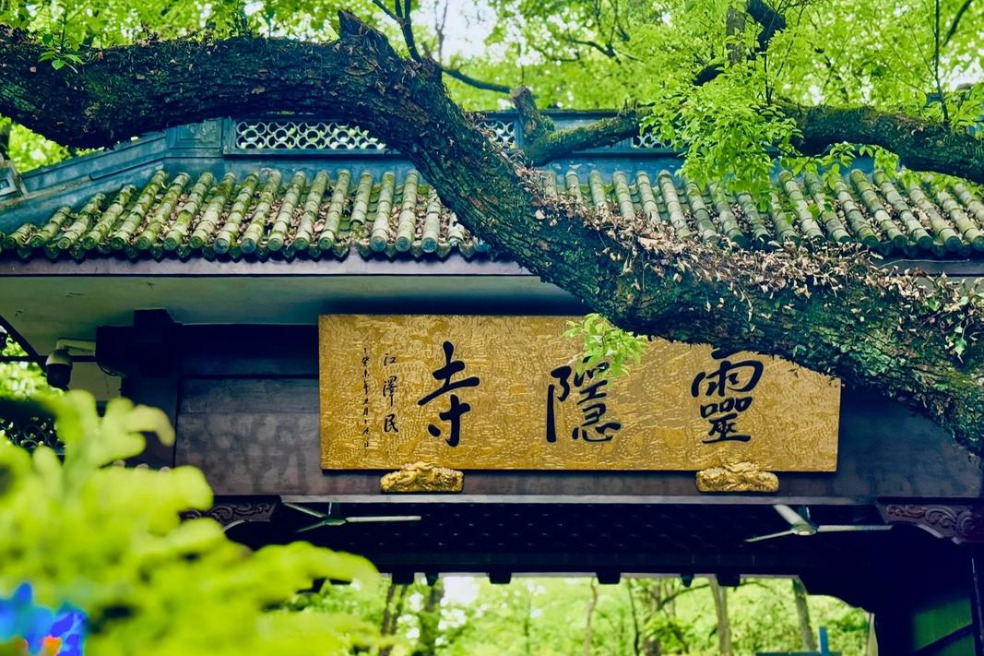
    Hangzhou’s iconic Lingyin Feilaifeng Scenic Area has eliminated its 45 yuan ($6.36) entry fee effective December 1, 2025, marking the most significant application of Zhejiang province’s pioneering ‘West Lake model’ in over two decades. This strategic move away from ticket revenue represents a fundamental shift in China’s tourism approach, prioritizing increased visitor numbers and broader economic stimulation over direct entrance fees.

    The policy expansion follows the proven success of Hangzhou’s West Lake, which removed entry charges in 2002 and subsequently witnessed remarkable tourism growth—from 29.4 billion yuan in annual revenue then to 345.03 billion yuan in 2024. The current initiative extends beyond mere entrance fee elimination; the previously separate 30-yuan incense voucher for Lingyin Temple has also become complimentary.

    This transformative trend is gaining momentum across Zhejiang province. Songyang county in Lishui city recently implemented free admission to cultural heritage sites including Huangjia Grand Courtyard and Yanqing Temple Pagoda starting November 21. The movement reflects a provincial strategy to reduce dependency on ticket sales while enhancing cultural accessibility.

    Economic experts champion this paradigm shift as a ‘multiwin’ scenario. Professor Li Daokui, Dean of Tsinghua University’s Academic Center for Chinese Economic Practice and Thinking, emphasizes that ‘waiving entrance fees might appear as a loss-leader initially, but actually generates multiple benefits in economic, reputational and cultural terms.’ He notes that scenic areas create substantial external benefits, with priority properly placed on maximizing their positive spillover effects for broader urban development.

    Industry analyst Cheng Chaogong, Chief Researcher at Tongcheng Research Institute, observes that free admission strengthens areas’ roles as consumption drivers, facilitating formation of integrated cultural tourism clusters like the ‘Greater West Lake’ concept. This evolution signals a strategic transition from ‘selling tickets’ to ‘selling services and experiences,’ where attracting substantial visitor flows delivers far greater value than traditional entrance fees.

    The transition necessitates enhanced management capabilities and operational innovation. Yang Shangqi, Director of the Lingyin Management Office’s Party and Administration Office, clarifies that ‘free admission does not translate into the absence of management.’ The scenic area has implemented real-name reservation systems and daily visitor limits to ensure safety and quality experiences.

    Professor Kong Xuhong of Fujian Business University notes that moving beyond the ticket economy requires improved operational capabilities, new business formats, and creative expansion in dining, accommodation, shopping and entertainment services. These developments aim to transform scenic sites from simple destinations into dynamic platforms for sustained engagement and value creation.

    The policy has garnered significant public appreciation. A first-time visitor from Huzhou expressed enthusiasm: ‘This is wonderful. It’s my first time at Lingyin, and I just happened to hear such good news,’ praising the improved accessibility and inclusiveness.

    This transformative approach is spreading nationwide. Gubei Water Town in Beijing’s Miyun district is offering free admission by reservation throughout December, while the Western Xia Mausoleum in Yinchuan has waived entrance fees until February 2026. Jiangsu province’s Lianyungang made all 16 A-level scenic spots free for December, and Yuntai Mountain in Henan alongside Dunhuang’s major attractions including the Mogao Caves are offering substantial off-peak discounts.

  • Trump and the return of hemispheric nationalism

    Trump and the return of hemispheric nationalism

    The Trump administration’s recently unveiled National Security Strategy marks a profound transformation in American foreign policy philosophy rather than merely another periodic adjustment. This document formally institutionalizes a worldview that fundamentally challenges the core principles guiding U.S. grand strategy for the past thirty years.

    While critics of America’s perpetual interventions and post-Cold War missionary zeal might find some appealing elements—such as the explicit rejection of permanent global domination and reduced emphasis on Middle Eastern conflicts—the strategy presents concerning contradictions. It distances itself from previous administrations’ approaches while embracing what analysts describe as ‘transactional nationalism’ combined with assertive hemispheric interventionism.

    The strategy’s treatment of Europe represents an extraordinary departure from traditional diplomacy. It warns of Europe’s ‘civilizational erasure’ due to migration patterns and explicitly supports right-wing nationalist movements within allied nations—a stark contrast to previous administrations’ relationships with European partners.

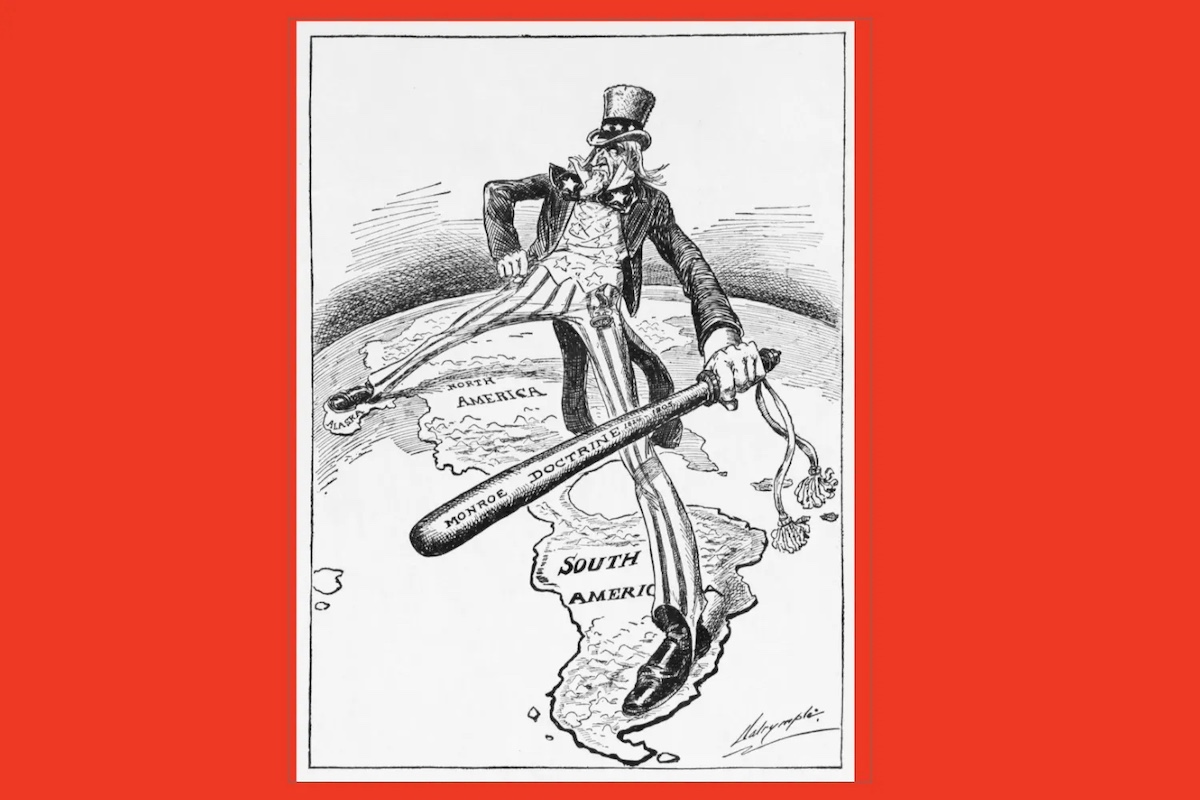
    Perhaps most revealing is the articulation of a ‘Trump Corollary’ to the Monroe Doctrine, advocating military reorientation toward the Western Hemisphere, including potential lethal operations against drug trafficking and military buildup around Venezuela. This creates a fundamental contradiction: while criticizing past interventions, the administration proposes expansive military involvement in Latin America.

    The document’s approach to China similarly breaks from recent bipartisan consensus, de-emphasizing strategic competition in favor of maintaining ‘mutually advantageous economic relationships.’ While potentially representing welcome realism, this shift appears driven more by immediate economic concerns than coherent long-term strategy.

    Analysts note the strategy’s fundamental weakness lies in its nature as a collection of grievances rather than a coherent vision. It clearly identifies what it opposes—post-Cold War consensus, European policies, immigration, and unfair trade practices—but offers limited positive framework for international order.

    The administration’s approach creates a dilemma for advocates of foreign policy restraint: while claiming to share skepticism about endless interventions, its execution contradicts non-intervention principles through military actions in the Caribbean and political interference in allied nations.

    What emerges is not strategic restraint but strategic incoherence masked by nationalist rhetoric. America requires recalibration—reduced Middle East focus, better burden-sharing with allies, and more balanced trade relationships—but not at the cost of abandoning alliances, embracing civilizational politics, or reasserting hemispheric hegemony through military force.

  • Washington’s quixotic quest for GDP supremacy over China

    Washington’s quixotic quest for GDP supremacy over China

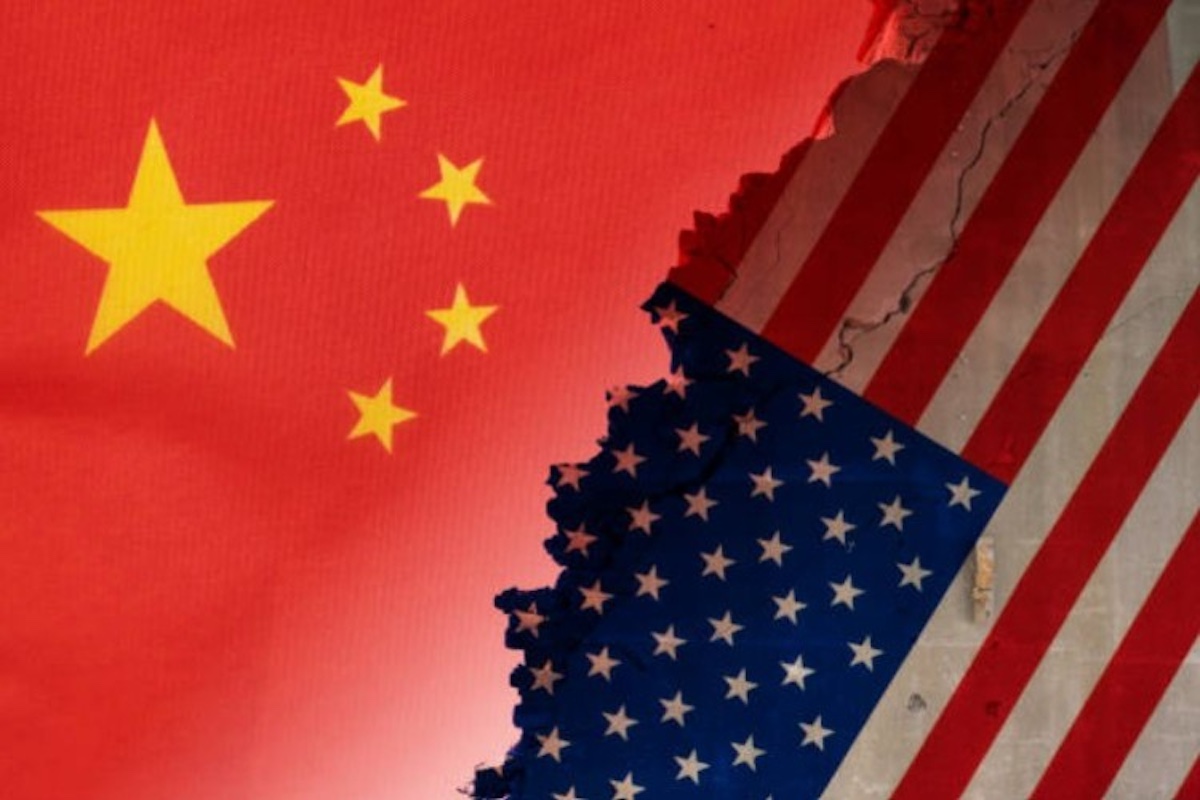
    A remarkable consensus emerges across American political leadership regarding China’s economic trajectory, despite apparent foreign policy divergences between administrations. The recently unveiled Trump administration National Defense Strategy (NDS) perpetuates a fundamental bipartisan objective: ensuring China never surpasses the United States as the world’s largest nominal economy.

    The document explicitly projects American economic expansion from $30 trillion in 2025 to $40 trillion by the 2030s, positioning the nation to maintain global economic leadership. This ambition echoes previous administration statements, notably President Biden’s 2021 declaration that China would not become the world’s wealthiest nation during his tenure.

    This persistent goal reflects Washington’s strategic calculation that nominal GDP supremacy translates directly into global influence. The United States has maintained this economic primacy since surpassing the British Empire in the early 20th century, benefiting from unparalleled industrial capacity, scientific innovation, and financial leverage.

    However, analysts identify a critical contradiction in this strategy. Given China’s demographic advantage and developmental momentum, maintaining American economic leadership cannot realistically depend solely on US growth. China’s current nominal GDP stands at approximately 62% of America’s despite having quadruple the population. Several Chinese provinces already demonstrate per capita GDP levels indicating nationwide economic potential.

    The practical implementation of this strategy has involved extensive technology controls and pressure campaigns on third countries to limit economic cooperation with Beijing. Senior officials have occasionally revealed the underlying objective, with one Biden administration cabinet member explicitly advocating collaboration with Europe to “slow down China’s rate of innovation.”

    This approach faces multiple challenges: nominal GDP represents an imperfect measure of economic power (China surpassed the US in purchasing power parity in 2014), it alienates third countries that depend on Chinese trade, and potentially provokes countermeasures from Beijing. China has already demonstrated willingness to leverage strategic resources like rare earth minerals in economic negotiations.

    Experts suggest Washington would benefit more from investing in domestic innovation rather than attempting to constrain China’s growth. Historical precedent indicates that economic leadership transitions need not produce catastrophic outcomes—the United States maintained generally productive relations with Britain after surpassing its economy.

  • Presidents of Venezuela and Turkiye discuss military deployment in Caribbean

    Presidents of Venezuela and Turkiye discuss military deployment in Caribbean

    In a significant diplomatic development, Venezuelan President Nicolas Maduro and Turkish President Recep Tayyip Erdogan held a strategic phone conversation on Saturday addressing escalating military tensions in the Caribbean region. The discussion centered on what both leaders characterized as aggressive military posturing by external powers threatening regional stability.

    Venezuelan Foreign Minister Yvan Gil disclosed that President Erdogan expressed profound concern regarding recent threats facing Venezuela, specifically referencing military deployments and actions purportedly designed to undermine peace and security in the Caribbean basin. The two leaders engaged in comprehensive dialogue about contemporary global geopolitics and international developments with implications for worldwide stability and humanity’s future.

    President Maduro condemned ongoing military maneuvers in the Caribbean as “illegal, disproportionate, unnecessary and even extravagant” acts of aggression. He reaffirmed Venezuela’s commitment to peaceful resolution despite mounting pressures. Concurrently with the diplomatic exchange, Venezuela conducted a swearing-in ceremony for 5,600 new soldiers at Fuerte Tiuna, the nation’s largest military complex in Caracas.

    The military expansion comes in response to the United States deploying a substantial naval contingent to the region, including the world’s largest aircraft carrier, under the justification of combating narcotics trafficking. Recent operations have resulted in US forces striking over 20 vessels with reported casualties exceeding 87 lives.

    Colonel Gabriel Rendon, during the military ceremony, emphatically stated: “Under no circumstances will we allow an invasion by an imperialist force.” Venezuela maintains approximately 200,000 active troops with an additional 200,000 police officers according to official statistics.

    Beyond security matters, the bilateral discussion encompassed enhanced economic cooperation. President Maduro expressed Venezuela’s determination to advance trade relations with Turkey toward a mutual goal of $3 billion in annual commerce. Both parties acknowledged the importance of reestablishing direct flight connectivity between Caracas and Istanbul to facilitate tourism and investment flows. This follows Turkish Airlines’ recent suspension of Venezuelan operations due to US Federal Aviation Administration safety advisories.

    President Maduro extended a formal invitation for President Erdogan to visit Venezuela in the upcoming year for the fifth Joint Cooperation Commission meeting, signaling continued alignment between the two nations.

  • Bookstore in sinkhole deepens readers’ interest

    Bookstore in sinkhole deepens readers’ interest

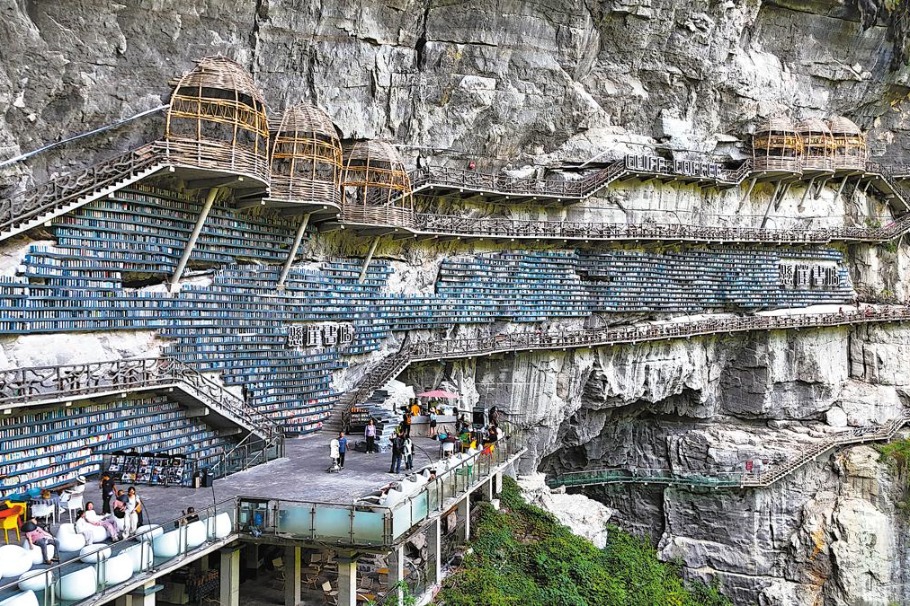
    Deep within the spectacular 326-meter Mianhua Sinkhole in China’s Guangxi Zhuang Autonomous Region, an architectural marvel has emerged that seamlessly blends literature with geological wonder. The cliffside bookstore, carved into the karst rock formations of Hechi city, has rapidly evolved into an international cultural destination since its inauguration in May 2025.

    Perched precariously along the sinkhole’s vertical walls, the open-air literary sanctuary boasts an impressive collection of over 10,000 volumes arranged across 150 meters of cliff face, creating what visitors describe as a ‘floating canyon of knowledge.’ Accessing this unique cultural space requires navigating an exhilarating 1,000-step plank pathway etched into the limestone cliffs—a journey that transforms into a metaphorical pilgrimage for literature enthusiasts.

    The bookstore’s creation presented extraordinary engineering challenges due to the unstable karst topography. He Zhijian, the visionary founder, revealed that specialized anchoring technology was essential for ensuring structural safety, comparing the construction process to ‘performing acrobatics on a cliff.’ His inspiration stemmed from innovative bookstore concepts in Japan and Hangzhou, though the sinkhole adaptation represents an entirely unprecedented approach to literary architecture.

    Remarkably, the natural geological formation provides perfect protection from the elements, allowing books to remain completely dry regardless of weather conditions. This natural sheltering effect enables visitors to enjoy reading experiences surrounded by breathtaking panoramic views of the sinkhole’s dramatic interior.

    Beyond its cultural significance, the project has catalyzed substantial regional economic development. Wu Taichang, General Manager of Guangxi Luocheng Mianhua Tiankeng Tourism Development Company, emphasized how the attraction encourages extended visitor engagement through additional facilities including a cliffside café, hotel accommodations, and pathways leading to the sinkhole’s base. The surrounding area now features a 600-square-meter sinkhole theater and recently hosted its inaugural Music Festival, further enhancing the site’s cultural offerings.

    The development has transformed the fortunes of previously isolated Mianhua village, where geographical constraints once limited agricultural possibilities. Today, the project has generated over 90 local employment opportunities from 108 total staff members, while attracting collective investments from seven neighboring villages. Dividend distributions have surpassed 4 million yuan ($570,000), significantly boosting regional economic prosperity while preserving local communities.

    This innovative fusion of cultural space and natural wonder demonstrates how strategic tourism development can simultaneously preserve geological heritage, promote literary culture, and generate sustainable economic benefits for remote communities.