博客

  • Conservative Kast’s victory in Chile suggests a hard-right, pro-Trump surge across Latin America

    Conservative Kast’s victory in Chile suggests a hard-right, pro-Trump surge across Latin America

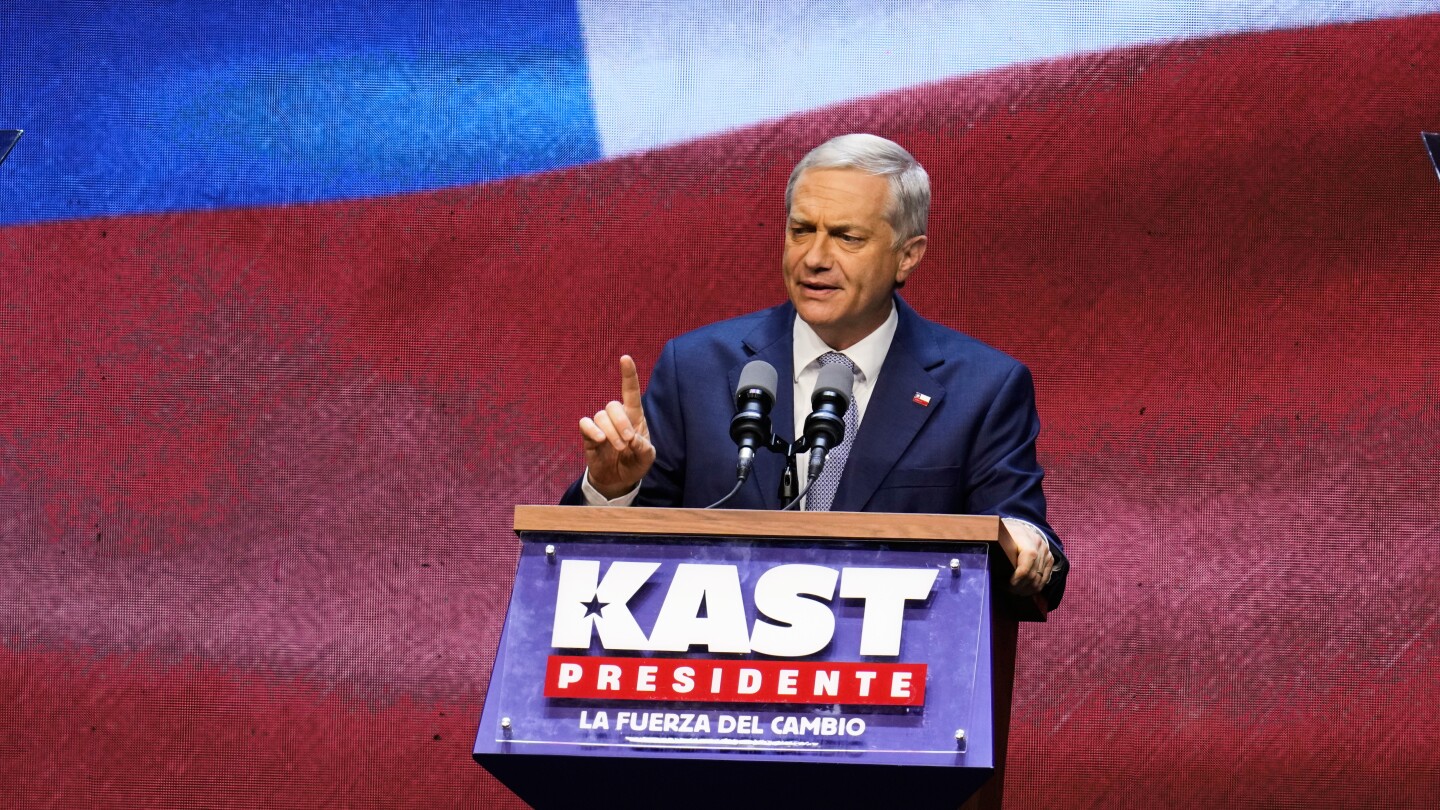
    SANTIAGO, Chile — Chile has dramatically pivoted toward conservative governance with the election of José Antonio Kast, a veteran politician whose hardline stance on crime, immigration, and social policy has drawn comparisons to Donald Trump. This outcome marks a significant departure from the country’s recent liberal trajectory and reflects a broader regional realignment toward right-wing leadership across South America.

    Kast, a 59-year-old conservative stalwart, secured a decisive electoral victory by capitalizing on widespread public discontent over rising organized crime, economic stagnation, and uncontrolled migration. His success represents a remarkable political comeback, given his previous failed presidential bids in an increasingly progressive nation. Kast has expressed admiration for Chile’s Pinochet-era military dictatorship, opposed same-sex marriage, and advocated for constitutional bans on abortion—positions that previously limited his appeal but now resonate with voters seeking strong leadership.

    This electoral shift occurs against a backdrop of regional transformation. Across South America, voters are rejecting left-wing incumbents and embracing conservative alternatives. Argentina’s anarcho-capitalist President Javier Milei, Ecuador’s iron-fisted leader Daniel Noboa, and Bolivia’s right-wing President Rodrigo Paz exemplify this trend, which has effectively ended nearly two decades of socialist dominance in several nations.

    Harvard political scientist Steven Levitsky observes, ‘The last decade has been rough. Those in power—predominantly left-wing governments—are being blamed for stagnant economies, rising crime perceptions, and not insignificant corruption.’

    The defeat of Kast’s communist rival, Jeannette Jara from the center-left governing coalition, underscores the depth of public frustration with President Gabriel Boric’s administration. Despite initial promise, Boric’s government faced legislative defeats, corruption scandals, and escalating crime that derailed his transformative agenda.

    Kast’s victory celebration featured symbolic displays of alignment with global conservatism, including American flags, ‘Make Chile Great Again’ caps, and banners supporting Milei’s ideological movement. Like Milei and Brazil’s former President Jair Bolsonaro, Kast has been a featured speaker at the Conservative Political Action Conference, where he has denounced socialism, criticized ‘gender ideology,’ and promised mass deportations.

    Despite his hardline reputation, Kast positioned himself as a moderate during the runoff election, promising to preserve social benefits and maintain Chile’s free-market institutions. His campaign focused primarily on crime and immigration, successfully appealing to middle-class voters who viewed him as the candidate most likely to deliver tangible results.

    In his first address as president-elect, Kast struck a conciliatory tone, promising to ‘be the president of all Chileans’ and surprising critics with his commitment to unity. This victory represents not just a political change but a fundamental reorientation of Chilean politics with potentially far-reaching implications for the region’s geopolitical landscape.

  • Japan business mood hits 4-year high, keeps alive BoJ rate-hike view

    Japan business mood hits 4-year high, keeps alive BoJ rate-hike view

    Japanese corporate sentiment reached its highest level in four years during the December quarter, according to the Bank of Japan’s closely monitored Tankan survey released Monday. The report revealed major manufacturers’ business confidence index climbed to +15, marking the third consecutive quarter of improvement and matching market forecasts.

    The survey’s findings reinforce widespread market anticipation that the central bank will proceed with interest rate increases this week. Large corporations projected substantial capital expenditure growth of 12.6% for the fiscal year ending March 2026, exceeding median market expectations of a 12% increase.

    Despite current optimism, companies expressed caution about the coming quarter, anticipating worsening business conditions due to concerns about higher U.S. tariffs and softening consumer spending. The non-manufacturers’ sentiment index remained robust at +34, nearly aligning with market projections of +35.

    Labor market conditions emerged as particularly significant, with companies reporting the tightest job market since 1991’s asset bubble era. This severe labor shortage, while potentially constraining growth in Japan’s aging economy, supports sustained wage growth—a critical factor for the BOJ’s rate hike considerations.

    Inflation expectations remained anchored around the central bank’s 2% target, with companies projecting 2.4% inflation across one, three, and five-year horizons. Separate BOJ research indicated regional branches expect 2026 wage increases to mirror those of 2025, supporting the bank’s assessment of continued price-wage momentum.

    Although Japan’s economy contracted in the third quarter due to export declines from U.S. tariffs, analysts anticipate recovery in the current quarter as exports and manufacturing output show signs of rebound. With inflation consistently above the 2% target for over three years, BOJ officials increasingly signal readiness to normalize monetary policy to avoid falling behind the curve on inflation management.

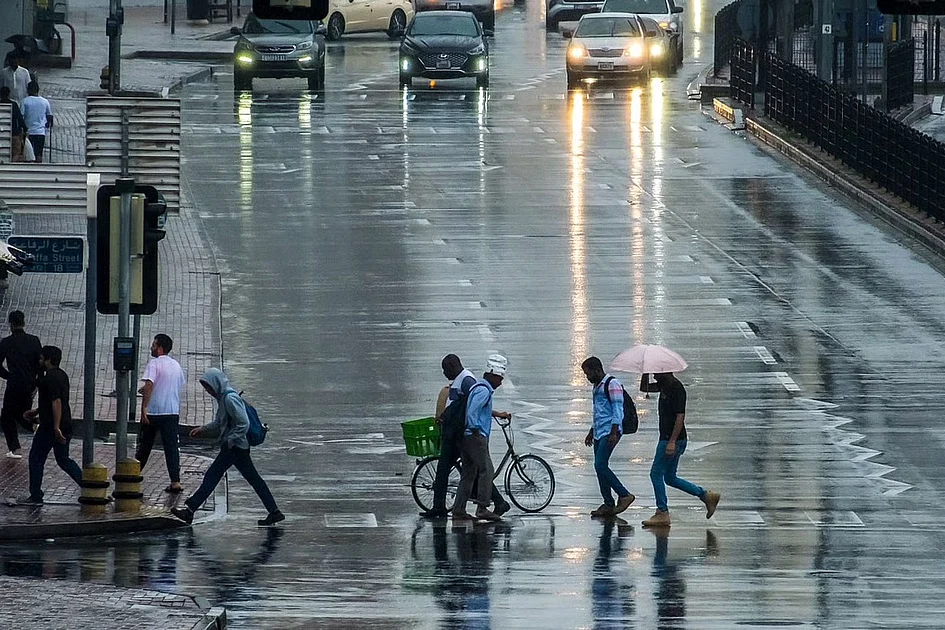
  • UAE weather tomorrow: Heavy rain, strong winds, temperatures to drop to 15ºC

    UAE weather tomorrow: Heavy rain, strong winds, temperatures to drop to 15ºC

    The United Arab Emirates is preparing for significant meteorological disruptions as the National Centre of Meteorology (NCM) forecasts unstable weather conditions across the region. According to the latest advisory issued on December 15, 2025, residents should anticipate partly to fully cloudy skies with convective cloud formations expected to deliver heavy rainfall particularly affecting eastern and northern coastal areas.

    Temperature fluctuations will present a notable contrast, with daytime highs reaching up to 31°C in some regions while overnight lows are predicted to drop dramatically to 15°C in internal territories. Urban centers will experience milder conditions, with Abu Dhabi ranging between 19-29°C and Dubai between 22-30°C.

    Wind patterns will intensify throughout the period, with moderate to fresh southeasterly to northeasterly winds occasionally strengthening significantly. These gusts, reaching speeds of 45 km/h, are expected to stir substantial dust and sand particles, resulting in reduced horizontal visibility across affected areas.

    Maritime conditions mirror the atmospheric instability, with the Arabian Gulf forecast to experience moderate to rough seas while the Oman Sea faces moderate conditions that may periodically intensify. Humidity levels will vary considerably, ranging from 25-65% in Abu Dhabi and 30-55% in Dubai.

    The NCM has emphasized precautionary measures for the public during this period of meteorological volatility, advising residents to stay informed through official channels and exercise caution particularly during reduced visibility conditions and rainfall events.

  • China’s economy stalls in November as calls grow for reform

    China’s economy stalls in November as calls grow for reform

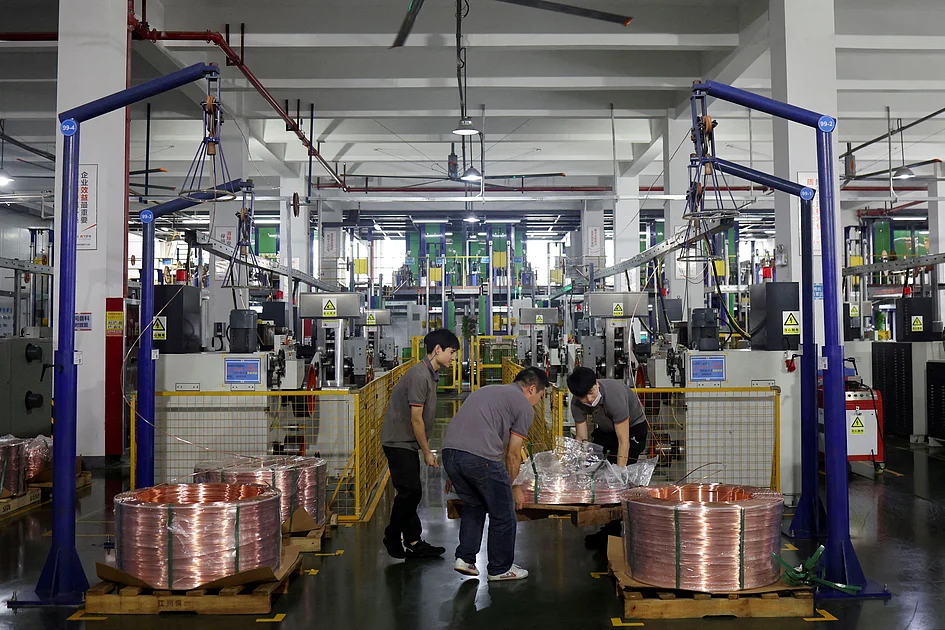
    China’s economic indicators revealed significant softening in November 2025, with both industrial production and retail sales expanding at their most sluggish rates in over a year. According to data released by the National Bureau of Statistics on December 15th, factory output increased by merely 4.8% year-on-year—the weakest performance since August 2024—while retail sales growth plummeted to 1.3%, representing the poorest showing since the abrupt termination of zero-COVID restrictions in December 2022.

    The disappointing figures underscore profound challenges within the world’s second-largest economy, including fading consumer trade-in subsidies, a protracted property crisis dampening household expenditure, and industrial investment confronting deflationary pressures. With domestic demand remaining persistently weak, authorities have increasingly relied on export-oriented strategies to sustain growth. However, this approach faces mounting sustainability concerns as China’s record $1 trillion trade surplus provokes international backlash, with trading partners implementing protective tariff measures.

    Property sector distress continues to weigh heavily on economic prospects. New home prices declined further in November, while property investment plummeted 15.9% during the January-November period. The situation has become particularly acute for developers like state-backed China Vanke, which is urgently negotiating with bondholders to avert default after investors rejected a proposed one-year repayment delay.

    Economists note that the economy may have surpassed the threshold where conventional stimulus measures yield effective results. The International Monetary Fund estimates that resolving property sector challenges within three years could cost approximately 5% of GDP. Despite policymakers pledging proactive fiscal measures to stimulate consumption and investment at recent economic planning meetings, analysts express concerns that Beijing remains hesitant to transition from production-driven economic models toward consumer-led growth frameworks.

    With both the IMF and World Bank projecting more conservative growth trajectories for China, economic observers anticipate sustained challenges throughout 2026 despite potential partial recovery in coming months.

  • Epstein’s UK flights had alleged British abuse victims on board – BBC investigation

    Epstein’s UK flights had alleged British abuse victims on board – BBC investigation

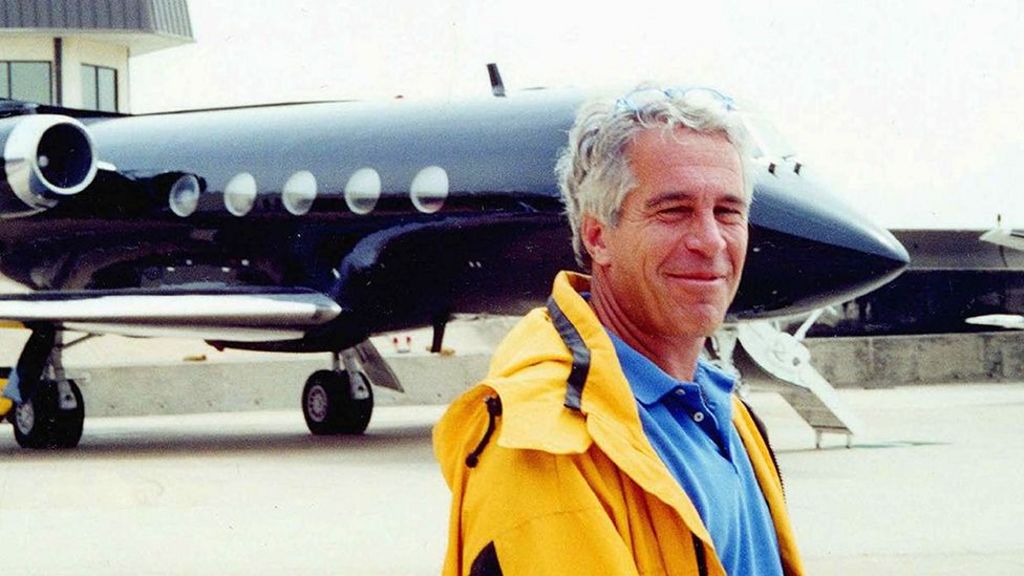
    A groundbreaking BBC investigation has uncovered nearly 90 UK airport arrivals and departures linked to Jeffrey Epstein—significantly more than previously documented—revealing systematic exploitation of British women and raising serious questions about border security failures. The comprehensive analysis of flight logs and court documents shows Epstein’s UK operations spanned from the early 1990s until 2018, with 15 flights occurring after his 2008 conviction for soliciting sex from a minor.

    Three British women identified as alleged trafficking victims appear in Epstein’s flight records and related documents. Shockingly, despite one victim’s testimony being instrumental in convicting Epstein’s accomplice Ghislaine Maxwell in the 2021 U.S. trial, UK authorities have never contacted her. The woman, identified pseudonymously as ‘Kate’ during proceedings, was documented on over 10 Epstein-funded UK flights between 1999 and 2006.

    Legal representatives for hundreds of Epstein victims expressed astonishment at the absence of a comprehensive UK investigation. ‘The UK was one of the centrepieces of Epstein’s operations,’ stated U.S. attorney Sigrid McCawley, criticizing British authorities for failing to examine flight patterns, passenger manifests, and local contacts.

    The investigation reveals Epstein utilized a combination of private jets (over 50 flights primarily through Luton Airport), chartered aircraft, and commercial flights (mainly via Heathrow) to transport alleged victims. Critical security loopholes allowed private aircraft to bypass passenger disclosure requirements until April 2023, enabling unchecked movement of trafficking victims.

    Particularly alarming is Epstein’s continued UK access after his 2008 conviction. Documents indicate he flew Virgin Atlantic to London Heathrow in September 2010, merely two months after completing probation. Immigration experts note that U.S. citizens typically faced no visa requirements for short stays, leaving admission decisions to individual border officers’ discretion.

    The Metropolitan Police, when presented with the BBC’s findings, declined to reopen investigations, stating they had ‘not received any additional evidence that would support reopening the investigation.’ This response drew sharp criticism from victim advocates who argue the message undermines confidence in pursuing powerful perpetrators.

    Human trafficking expert Professor Bridgette Carr emphasized that such operations require extensive networks: ‘It’s never just one bad person. You have to consider the accountants, lawyers, bankers—all those who implicitly or explicitly enabled this to continue.’

    The findings emerge as the Jeffrey Epstein Transparency Act deadline approaches for releasing all U.S. government files on the financier, though many documents including these flight records have already entered the public domain through court proceedings and estate disclosures.

  • Messi gets India jersey as fans brave toxic air to catch a glimpse of football icon

    Messi gets India jersey as fans brave toxic air to catch a glimpse of football icon

    Football legend Lionel Messi concluded his highly anticipated ‘GOAT Tour’ across India with a celebratory event at New Delhi’s Arun Jaitley Stadium on Monday, captivating thousands of devoted fans who braved severely hazardous air conditions to witness the iconic athlete. Despite the capital city’s air quality index reaching dangerous levels exceeding 300 micrograms of PM 2.5 particles—twenty times the WHO’s recommended maximum—the Argentine superstar maintained his characteristic enthusiasm throughout the 35-minute appearance.

    The 38-year-old Inter Miami forward, dressed in a distinctive pink jersey and black trousers, electrified the nearly-packed cricket stadium by kicking footballs into the ecstatic crowd and generously posing for selfies with star-struck attendees. In a heartfelt address delivered in Spanish, Messi expressed his profound appreciation, stating: ‘It was beautiful to receive all the love and support. I knew it was there, but to receive it first-hand was amazing.’ He emphatically promised to return to India, a nation of 1.4 billion people where cricket traditionally dominates sporting culture.

    The event proceeded smoothly under tight security arrangements, contrasting sharply with Saturday’s chaotic scene in Kolkata where frustrated fans vandalized the stadium after Messi’s abrupt departure. In New Delhi, organizers presented Messi with symbolic gifts including an Indian national team jersey and a T20 World Cup ticket from ICC chairman Jay Shah, highlighting the crossover appeal between football and cricket.

    The tour’s significance extended beyond sports, occurring against the backdrop of India’s severe air pollution crisis. A recent Lancet Planetary Health study indicated approximately 3.8 million pollution-related deaths occurred nationwide between 2009-2019. Despite these environmental challenges, Messi’s visit included meaningful interactions with Indian sporting icons including cricket legend Sachin Tendulkar and football star Sunil Chhetri, while former national team captain Bhaichung Bhutia shared the stage with the eight-time Ballon d’Or winner.

    This Asian excursion follows Messi’s second consecutive MLS MVP award after leading Inter Miami to the league championship. The football icon now prepares to captain Argentina’s World Cup defense in North America this summer, continuing his extraordinary career that has captivated fans across continents and cultures.

  • Anupam Kher’s IndiGo flight cancelled on trip to Khajuraho International Film Festival

    Anupam Kher’s IndiGo flight cancelled on trip to Khajuraho International Film Festival

    Prominent Indian actor Anupam Kher found himself among the thousands of travelers affected by IndiGo’s massive flight cancellation crisis in early December 2025. The veteran Bollywood star’s journey to the Khajuraho International Film Festival was abruptly interrupted when his connecting flight from Varanasi to Khajuraho was unexpectedly canceled.

    Kher took to Instagram to voice his frustration with the travel disruption, revealing that he might now need to resort to train travel to reach the festival venue. The actor is scheduled to present his film ‘Tanvi The Great’ at the prestigious week-long event running from December 16-22, 2025.

    The incident occurred amidst India’s largest airline’s operational meltdown that saw hundreds of flights canceled nationwide, creating chaos at airports and leaving passengers stranded. IndiGo subsequently issued multiple apologies, provided refunds, and offered travel vouchers to affected customers.

    The airline described December 5 as a “reboot” day with the highest number of cancellations, after which operations gradually stabilized. By December 13, the carrier had restored its network with over 2,000 scheduled flights and resumed its standard on-time performance levels according to official statements.

  • RSISX Index records solid 5.0% growth in November, outperforming regional markets

    RSISX Index records solid 5.0% growth in November, outperforming regional markets

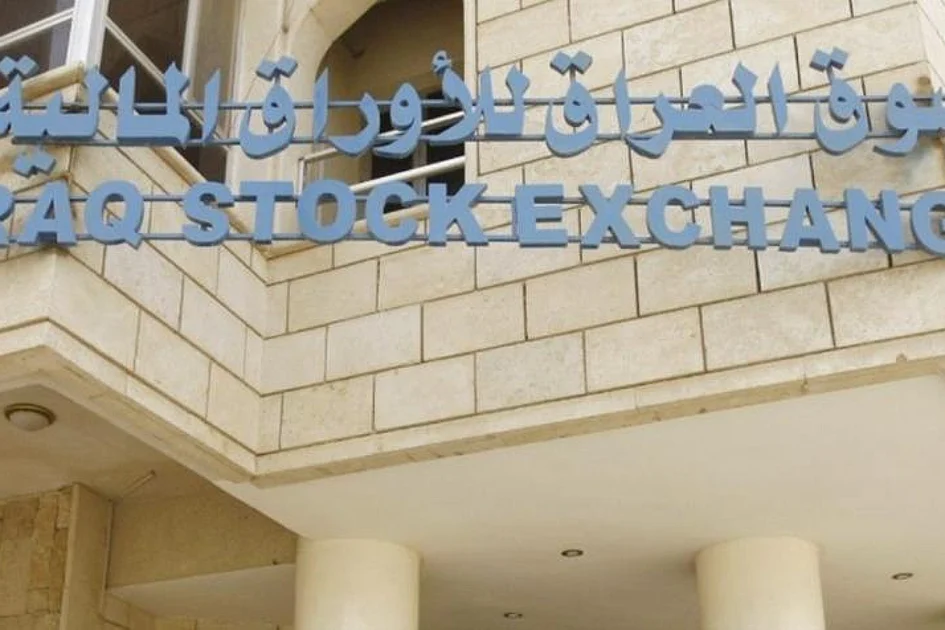
    Iraq’s capital markets demonstrated remarkable resilience in November 2025 as the Rabee Securities Iraq Stock Exchange Index (RSISX) posted a robust 5.0% gain, significantly outperforming regional counterparts that experienced declines during the same period. This market strength emerged following Iraq’s parliamentary elections on November 11, which recorded a 56.11% voter turnout and resulted in the Reconstruction and Change coalition securing approximately 370,000 more votes than its nearest competitor.

    The banking sector emerged as a primary driver of this growth, with National Bank of Iraq, Asiacell, Baghdad Soft Drinks, Bank of Baghdad, and Al-Mansour Bank leading the index’s advancement. According to Aysegul Ozge Ozgur, Head of Research at Rabee Securities, ‘November reflected stronger investor confidence in Iraq’s capital markets, supported by post-election stability and broad-based contributions from leading sectors. The RSISX Index’s outperformance relative to regional peers underscores the market’s resilience.’

    Despite the index’s strong performance, trading volumes presented a contrasting picture. Total trading volume on the Iraq Stock Exchange declined 34% month-on-month to $26.5 million, while non-cross trading volumes decreased 14% to $16.5 million. The banking sector maintained its dominance with 62.6% of total trading activity, followed by industry (20.5%), telecom (8.7%), and services (5.8%).

    Rabee Securities expanded its analytical capabilities with the launch of two specialized indices: the RS Iraq Halal Companies Index (RSIHX) and the RS Iraq Banking Index (RSIBX), which advanced 4.4% and 5.0% respectively during the month. Additionally, 37 companies recorded share-price increases, with Babil Animal & Vegetable Production and Tourist Village of Mosul Dam emerging as standout performers with gains of 161.7% and 146.6% respectively.

    The positive market sentiment was further bolstered by broader economic developments, including Fitch Ratings’ reaffirmation of Iraq’s Long-Term Foreign-Currency Issuer Default Rating at ‘B-‘ with a Stable Outlook, and regulatory cooperation efforts advanced through the Iraqi Securities Commission’s participation in the Market 2.0 Conference in Bahrain.

  • Watch: What to know about the growing US military presence in Puerto Rico

    Watch: What to know about the growing US military presence in Puerto Rico

    A significant strategic military enhancement is underway in the Caribbean as the United States substantially increases its defense assets in Puerto Rico. This buildup, analyzed by a retired U.S. vice admiral, involves the deployment of advanced military hardware and personnel to the island territory over recent months.

    The expansion includes sophisticated defense systems, surveillance technology, and logistical support units designed to bolster regional security. Military analysts interpret this move as a strategic response to multifaceted challenges, including transnational criminal operations, potential adversarial activities in the Western Hemisphere, and natural disaster response preparedness.

    Puerto Rico’s geographical position makes it a crucial hub for U.S. Southern Command operations, serving as a strategic vantage point for monitoring maritime routes and airspace. The military official elaborated that this reinforcement enhances rapid response capabilities while strengthening deterrence measures in the region.

    This development occurs amid evolving global security dynamics that have increased the Caribbean’s strategic importance. The infrastructure improvements and personnel deployments represent one of the most substantial military enhancements in the territory in recent decades, signaling a renewed focus on Caribbean security as part of broader national defense strategy.

  • How the India-Oman FTA will redefine a strategic partnership

    How the India-Oman FTA will redefine a strategic partnership

    The upcoming signing of the India-Oman Comprehensive Economic Partnership Agreement (CEPA) during Prime Minister Narendra Modi’s state visit to Muscat represents a transformative moment in bilateral relations that extends far beyond conventional trade diplomacy. This landmark free trade agreement culminates decades of deepening trust and shared economic aspirations between the two nations, positioning Oman as India’s strategic gateway between Eastern and Western markets.

    Historical ties between India and Oman, rooted in centuries of commercial and maritime engagement, have evolved into a robust modern economic relationship. Recent bilateral trade figures demonstrate remarkable growth, with total exchange reaching approximately $10.61 billion in fiscal year 2024-25—an impressive 18.6% year-on-year increase. India exported $4.07 billion in goods to Oman while importing $6.55 billion worth of Omani products, reflecting a balanced economic interdependence.

    The CEPA framework addresses longstanding trade barriers that previously hindered optimal commercial exchange. By eliminating varying duties and streamlining regulatory hurdles, the agreement creates enhanced market access across critical sectors including engineering goods, pharmaceuticals, chemicals, textiles, and value-added agricultural products. This comes as particularly timely support for India’s engineering goods sector, which has recently faced global economic headwinds despite being India’s second-largest export category to Oman.

    Oman’s significance extends beyond trade volumes, with India ranking among Oman’s top trading partners and serving as the fourth-largest source of imports. The relationship is further strengthened by more than 6,000 India-Oman joint ventures representing billions in capital commitments and a substantial Indian expatriate community that contributes significantly to Oman’s economic and cultural landscape.

    The agreement aligns strategically with Oman’s Vision 2040 national transformation program, which seeks to diversify the economy beyond hydrocarbon resources. The FTA facilitates foreign investment, technology transfer, and entrepreneurial development while leveraging Oman’s petrochemical resources, logistics infrastructure, and access to crucial maritime routes.

    This partnership emerges amid shifting global economic alignments, with nations increasingly pursuing regional agreements to enhance supply chain resilience and strategic autonomy. Building on the success of India’s 2022 UAE CEPA, the Oman agreement establishes a new model for deeper economic collaboration across the Gulf Cooperation Council region, potentially reshaping regional trade dynamics for years to come.