博客

  • France races to avoid US-style government shutdown after budget talks collapse

    France races to avoid US-style government shutdown after budget talks collapse

    The French parliament is engaged in urgent deliberations over emergency legislation designed to prevent a complete government shutdown, following the collapse of negotiations concerning the 2026 national budget. With merely days remaining before the new fiscal year commences, President Emmanuel Macron’s administration has proposed a stopgap measure to maintain essential public services and governmental operations.

    This provisional legislation, presented during a late Monday Cabinet meeting, seeks to guarantee the uninterrupted functioning of critical state services. Specifically, it would authorize continued tax collection and distribution of funds to local authorities based on 2025 budget allocations, thereby preventing administrative paralysis.

    The National Assembly, France’s dominant lower parliamentary chamber, has introduced several amendments to the draft law. Despite profound ideological divisions among the three primary political factions—Marine Le Pen’s far-right National Rally, left-wing opposition parties, and Macron’s centrist minority government—the bill is anticipated to secure passage in both legislative houses on Tuesday.

    Finance Minister Roland Lescure emphasized the urgency of the situation during a television interview, stating, “We require a definitive budget promptly to facilitate progress. The extended duration of temporary measures directly correlates with increased operational costs.”

    This emergency measure merely postpones the underlying budgetary confrontation. The Macron administration faces the formidable challenge of constructing a viable 2026 budget while addressing France’s substantial public deficit, which the government aims to reduce to 5% of GDP. This fiscal tightening occurs against a backdrop of political instability triggered by Macron’s contentious decision to call snap elections last year, which eroded investor confidence in the French economy.

    France’s characteristically high public expenditure—driven by comprehensive social welfare programs, healthcare systems, and education—combined with an insufficient tax revenue base, continues to present structural fiscal challenges. Prime Minister Sebastien Lecornu, who resigned and was subsequently reappointed this autumn, is scheduled to deliver a public address regarding the budgetary situation later Tuesday.

  • Croatian man sentenced to 50 years for killing 7-year-old student in school attack

    Croatian man sentenced to 50 years for killing 7-year-old student in school attack

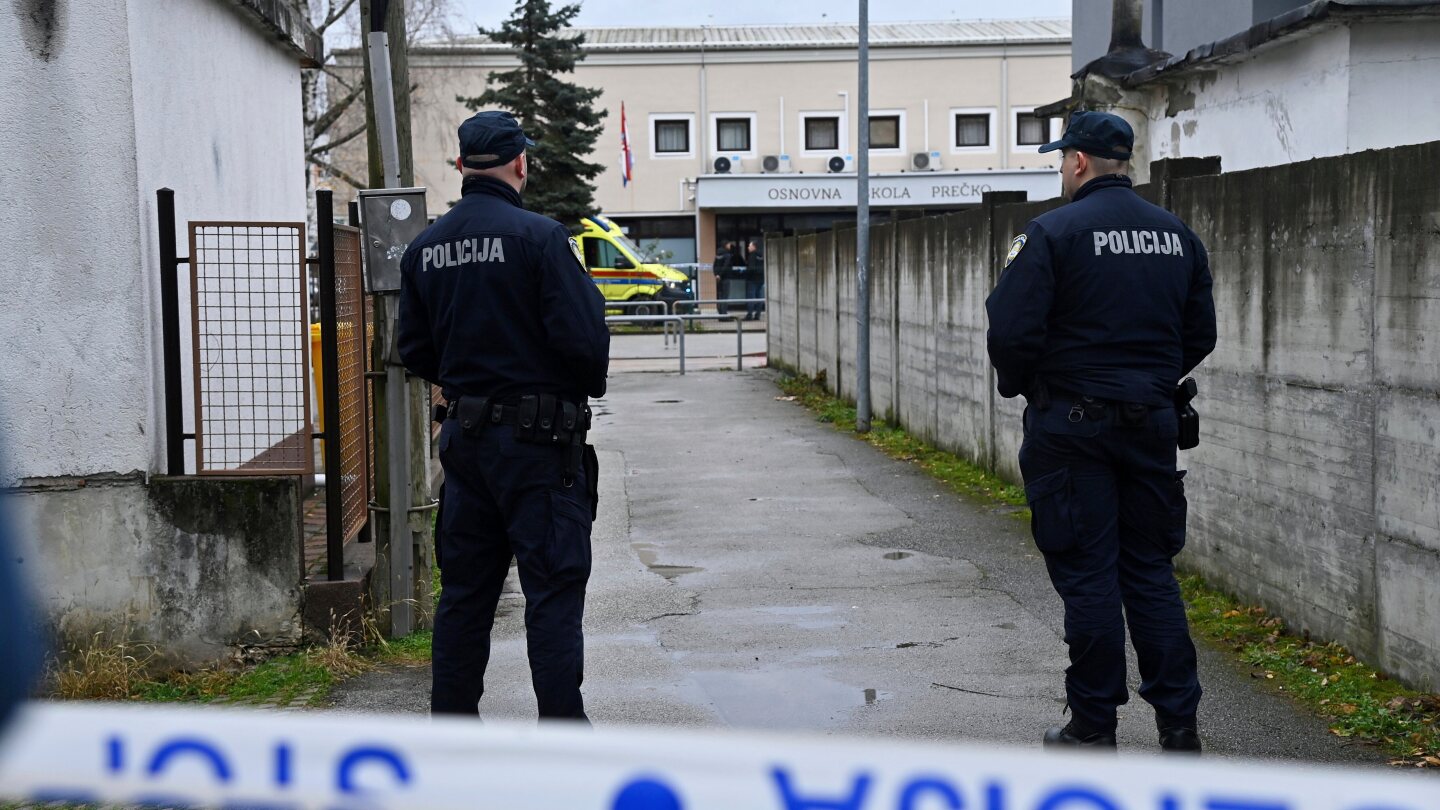
    A Croatian court has delivered a severe 50-year prison sentence to a 20-year-old man convicted of a fatal knife attack at an elementary school in Zagreb that resulted in the death of a 7-year-old student and injuries to three other children and a teacher.

    The County Court in Zagreb handed down the verdict on Tuesday against the assailant, identified only by his initials L.M., for the December 20, 2024 assault at Precko Elementary School. The attacker, who was 19 at the time of the incident, entered his former educational institution armed with a knife and targeted multiple victims before attempting to take his own life.

    According to investigative reports, the perpetrator had previously resided near the school premises. The institution serves children aged 7 to 15, typical of Croatia’s elementary education system.

    The judicial panel’s ruling remains subject to appeal procedures. Legal representative Kresimir Skarica, acting for the deceased victim’s family, characterized the verdict as anticipated while acknowledging the profound tragedy of the case. “There are no winners or losers in this case,” Skarica stated in comments reported by the Index news portal.

    This incident represents an exceptionally rare occurrence of school violence in Croatia, sending shockwaves throughout the European Union nation. The tragedy echoes similar regional trauma, notably the May 2023 school shooting in neighboring Serbia’s capital Belgrade where a teenage perpetrator killed nine students and a school security guard.

  • US regulatory approves first GLP-1 pill for weight loss

    US regulatory approves first GLP-1 pill for weight loss

    In a landmark decision for obesity treatment, U.S. regulators have granted approval for the first oral formulation of a GLP-1 medication specifically for weight loss. Danish pharmaceutical leader Novo Nordisk announced the Food and Drug Administration’s endorsement of its Wegovy pill on Monday, marking a significant advancement in accessible obesity care.

    The newly approved medication provides an alternative delivery method to existing injectable treatments, offering a once-daily oral option that demonstrates comparable efficacy in weight reduction. This development expands treatment possibilities for adults struggling with obesity or those overweight with accompanying health complications such as cardiovascular conditions.

    Mike Doustdar, Chief Executive Officer of Novo Nordisk, emphasized the breakthrough’s significance: ‘This approval delivers a convenient, daily pill that enables patients to achieve weight loss results equivalent to our injectable Wegovy formulation.’

    The U.S. Obesity Care Advocacy Network welcomed the regulatory milestone, noting that ‘this represents a crucial advancement for individuals living with obesity, providing an alternative for those reluctant to initiate injectable therapy while potentially offering a more cost-effective solution.’

    This medical innovation arrives amid America’s substantial obesity challenge, with approximately 40% of adults affected according to Centers for Disease Control and Prevention statistics. The new oral medication joins a class of GLP-1 agonist treatments that have gained remarkable popularity for their appetite-suppressing properties and effectiveness in weight management.

    The political dimension emerged through President Donald Trump’s recent announcement of pricing agreements with pharmaceutical manufacturers, including Novo Nordisk and Eli Lilly. These arrangements aim to reduce consumer costs for weight-loss medications, with oral formulations potentially starting at $150 monthly compared to over $1,000 for some injectable alternatives.

    While Novo Nordisk has not disclosed specific pricing details, the company confirmed plans for a January U.S. market introduction. The development occurs within a broader context of renewed governmental efforts to address pharmaceutical pricing through potential tariff incentives for domestic manufacturing.

  • UAE weather: Partly cloudy skies, lowest temperature 15°C in Dubai, Abu Dhabi

    UAE weather: Partly cloudy skies, lowest temperature 15°C in Dubai, Abu Dhabi

    The United Arab Emirates is experiencing characteristic winter weather patterns with fair to partly cloudy conditions forecasted for Tuesday, December 23rd. According to the National Centre of Meteorology (NCM), residents can expect low cloud formations particularly over western regions and islands across the country.

    Temperature readings indicate a typical winter range, with internal areas experiencing between 10°C to 26°C on Wednesday. Major urban centers will see slightly varied conditions: Abu Dhabi ranging from 15°C to 24°C, Dubai maintaining similar parameters of 15°C to 25°C, while Sharjah registers slightly cooler readings between 13°C and 24°C.

    Meteorological observations note increasing humidity levels during nighttime and early morning hours in western territories, with potential mist formation. Wind patterns remain generally light to moderate, blowing from northeasterly to southeasterly directions.

    Maritime conditions report slight to moderate waves in the Arabian Gulf, while the Oman Sea remains calm with slight wave activity. The highest temperature recorded on Monday reached 26.3°C in Al Arad (Al Ain) at 2:45 PM.

    The current weather follows recent unstable conditions that brought substantial rainfall to the region last week, though the winter season officially commenced on December 22nd. Residents have been experiencing gradually cooling temperatures over recent weeks, marking the seasonal transition.

  • Go ski in Xinjiang

    Go ski in Xinjiang

    China Daily Information Co (CDIC) has established comprehensive intellectual property safeguards for its digital publications, prohibiting unauthorized republication of any content across its platforms. The company’s stringent copyright policy explicitly covers all multimedia materials, including textual articles and photographic imagery, requiring formal written consent from CDIC prior to any reuse.

    The publication maintains technical specifications recommending 1024*768 pixel resolution or higher for optimal viewing experience. CDIC operates under formal regulatory compliance, holding multimedia online publishing license 0108263 and official registration number 130349.

    Beyond content protection measures, China Daily facilitates multiple stakeholder engagement channels through dedicated sections for corporate advertising, general inquiries, and career opportunities. The organization additionally maintains specialized recruitment portals for expatriate professionals seeking employment in China.

    The media group encourages audience connectivity through integrated social media follow options, reinforcing its position as a comprehensive digital news provider operating within established legal and technical frameworks.

  • Gunmen abduct 28 Muslim travellers in central Nigeria

    Gunmen abduct 28 Muslim travellers in central Nigeria

    In a troubling escalation of Nigeria’s security crisis, 28 individuals traveling to an annual Islamic gathering in central Plateau State were violently abducted by armed assailants on Sunday night, according to local sources reporting to the BBC. The victims, comprising women and children among other passengers, were ambushed while their bus traversed between rural villages.

    This latest incident occurs merely 24 hours after Nigerian authorities secured the release of 130 students and educators from a Catholic boarding school in Niger State, where they had been held captive since last month. A Plateau-based journalist confirmed that families of the newly kidnapped victims have already begun receiving ransom demands from the perpetrators, whose identities remain unknown. Official authorities have not yet issued any public statement regarding the abduction.

    Criminal factions referred to locally as ‘bandits’ have increasingly employed kidnapping-for-ransom as a primary revenue strategy throughout northern and central Nigeria. While official policy prohibits monetary payments to secure hostages’ freedom, such transactions have become the de facto resolution method in numerous cases, effectively bankrolling these criminal enterprises.

    Notably, security analysts emphasize that these bandit operations remain distinct from the protracted Islamist insurgency raging in Nigeria’s northeast, where jihadist organizations have engaged in armed conflict with government forces for over a decade.

    The persistent security challenges have drawn international scrutiny, particularly after controversial remarks from former US President Donald Trump in November threatened military intervention. Recent diplomatic engagements between Nigerian Information Minister Mohammed Idris and US officials have reportedly eased tensions, with Idris announcing that bilateral relations have been ‘largely resolved’ and strengthened.

    Concurrently, Nigeria’s federal government unveiled new security measures including the deployment of specially trained forest guards to secure remote areas and forest hideouts used by criminal organizations, augmenting existing military operations across affected regions.

  • Thousands turn out in Kabul to cheer on Afghanistan’s traditional buzkashi equestrian games

    Thousands turn out in Kabul to cheer on Afghanistan’s traditional buzkashi equestrian games

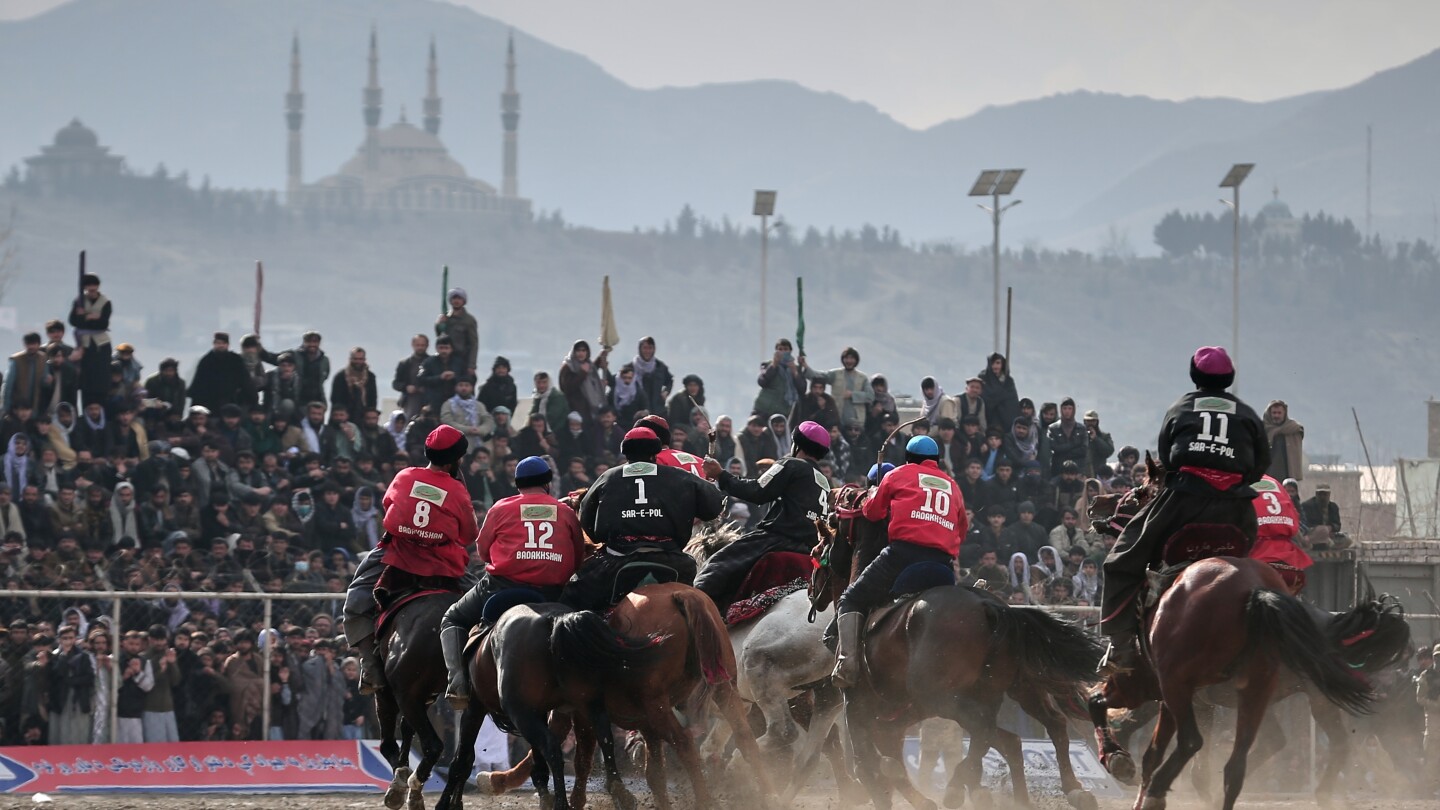
    KABUL, Afghanistan — Amid clouds of dust stirred by thundering hooves, Afghanistan’s ancient equestrian tradition of buzkashi reached its dramatic climax in a national championship final. The northern province of Sar-e-Pul emerged victorious with a decisive 7-0 triumph over Badakhshan province in a match that showcased both athletic prowess and cultural preservation.

    The brutal yet captivating sport, once banned during the Taliban’s previous regime, now operates with official sanction despite maintaining its characteristically violent scrums. Modern adaptations include replacing the traditional goat carcass with an artificial equivalent—crafted from leather and rope, then stuffed with straw and weights to mimic the original’s heft and dimensions.

    Twelve riders per team demonstrated extraordinary equestrian skill, leaning perilously from their saddles to seize the simulated carcass and break away toward scoring zones. The tournament’s organization reflects evolving support structures, with corporate sponsorship from a gasoline company providing funding for substantial prizes including vehicles for the top four teams alongside traditional cups and medals.

    Attendance revealed both the sport’s popularity and societal constraints: thousands of male spectators packed the Kabul arena, with some scaling trees and electricity pylons for better views. Notably absent were women, excluded under current Taliban restrictions that formalize previously informal social conventions regarding female attendance at such events.

    The international dimension expanded this year with eight professional players from Tajikistan and Kyrgyzstan participating, according to Atal Mashwani, spokesman for Afghanistan’s General Directorate of Physical Education and Sports. The 11-day national league tournament, now in its eleventh edition, represents both cultural continuity and changing political realities in contemporary Afghanistan.

  • Protest erupts in India’s capital city over lynching of Hindu man in Bangladesh

    Protest erupts in India’s capital city over lynching of Hindu man in Bangladesh

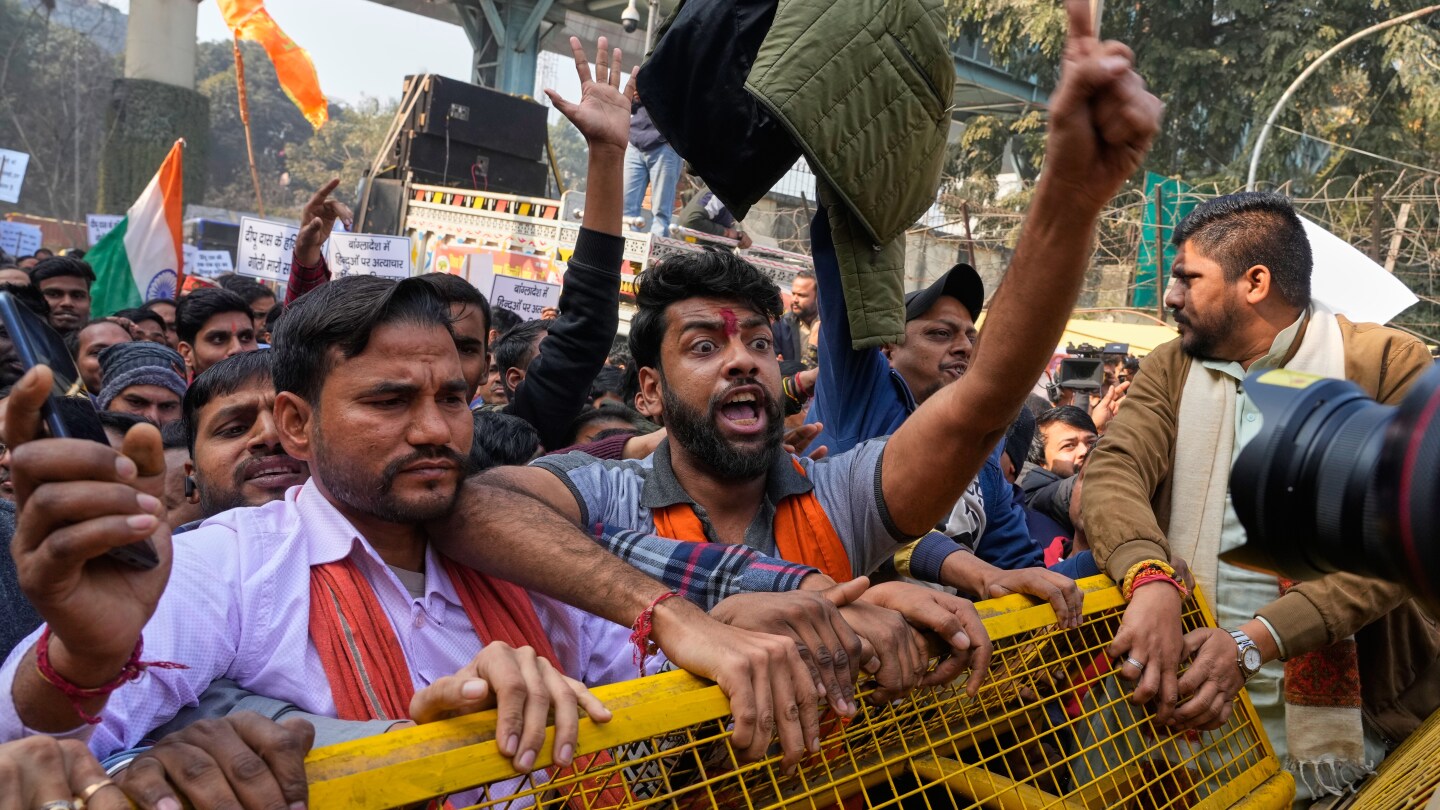
    New Delhi witnessed heightened tensions on Tuesday as Hindu nationalist groups staged vigorous protests near Bangladesh’s diplomatic mission, responding to the brutal lynching and immolation of a Hindu man in neighboring Bangladesh. This incident has exposed deepening fractures in a bilateral relationship traditionally regarded as a stabilizing force in South Asia.

    The demonstration, orchestrated primarily by the Vishva Hindu Parishad organization, saw hundreds of participants brandishing placards with messages such as “India will not tolerate torture of Hindus in Bangladesh” and “Our silence should not be mistaken as weakness.” Security forces responded with reinforced barricades and armored vehicles to contain the unrest.

    This diplomatic deterioration stems from two interconnected tragedies: the recent killing of 25-year-old Dipu Chandra Das over blasphemy allegations in Bangladesh’s Mymensingh district, and the earlier death of student leader Sharif Osman Hadi—a prominent critic of both India and former Prime Minister Sheikh Hasina. Hadi’s shooting death in December triggered retaliatory violence in Dhaka that included attacks on Indian diplomatic facilities and newspaper offices.

    The bilateral relationship has fundamentally shifted since the ouster of Hasina in August 2024, ending her 15-year administration that maintained strong ties with India. The current interim government under Nobel laureate Muhammad Yunus faces accusations from religious minorities alleging insufficient protection against growing violence.

    International affairs analyst Sreeram Sundar Chaulia warns this rupture threatens cooperation on trade, border management, and regional connectivity. “Opposing India and alleging Indian conspiracies of interference in Bangladesh are being done to harden a blatantly Islamist and non-inclusive path for the country,” Chaulia stated, noting potential economic repercussions including reduced development assistance and increased Chinese influence in Bangladesh.

    The diplomatic fallout has escalated through reciprocal summons of envoys, with Bangladesh expressing concerns about the security of its missions in New Delhi, Kolkata, and Agartala. This crisis marks a significant departure from the cooperative relationship that flourished under Hasina’s administration since 2009.

  • Launch of S. Korea’s 1st commercial space launch vehicle fails

    Launch of S. Korea’s 1st commercial space launch vehicle fails

    South Korea’s inaugural foray into the commercial space launch sector encountered a significant setback Tuesday when its Hanbit-Nano rocket failed shortly after liftoff from the Alcantara Space Center in Brazil. The launch vehicle, developed by private aerospace company Innospace, experienced an unspecified anomaly during its ascent that led to its presumed disintegration and explosion.

    The critical mission commenced at approximately 10:13 AM local time (0113 GMT) with the rocket lifting off successfully from the Brazilian launch facility. However, moments into the flight, telemetry data indicated abnormal performance, culminating in the complete loss of the vehicle. South Korean news agency Newsis reported the incident, noting that the spacecraft failed to achieve its intended trajectory.

    Innospace, which had positioned this launch as a milestone for South Korea’s commercial space capabilities, had not released an official statement regarding the failure at the time of initial reporting. The company’s silence following the incident has raised questions about the nature of the anomaly and potential implications for South Korea’s burgeoning private space industry.

    The unsuccessful debut represents more than just a technical failure—it marks a stumbling block for South Korea’s ambitions to compete in the rapidly expanding global commercial space market. The Hanbit-Nano project was envisioned as a demonstration of Korean technological prowess and a stepping stone toward more advanced launch capabilities.

    Space industry analysts are closely monitoring how Innospace will respond to this setback, particularly regarding investigation timelines, potential design modifications, and future launch schedules. The failure also highlights the inherent challenges and high-risk nature of space launch operations, even for established aerospace nations expanding into commercial ventures.

  • Crisis looms

    Crisis looms

    A comprehensive assessment by the Asian Development Bank reveals a severe water security crisis unfolding across Nepal, where excessive pumping operations are rapidly depleting groundwater reserves and causing traditional springs to vanish. The Asian Water Development Outlook 2025, published in December, documents how aquifers in the Kathmandu Valley have been critically diminished through overexploitation, while mountainous regions witness the complete disappearance of natural water sources.

    The study identifies multiple compounding threats: shallow aquifers face extreme stress resulting in seasonal shortages, while naturally occurring arsenic contaminants in alluvial sediments pose substantial public health hazards. Despite Nepal’s abundant natural water resources, merely 25% of citizens benefit from fully operational drinking water systems, creating a paradoxical situation of simultaneous abundance and scarcity.

    Infrastructure deficiencies, fragmented governance structures, and climate change impacts collectively hinder reliable and equitable water distribution. Although rural water accessibility has improved—with over 91% of households now utilizing piped or protected sources—approximately half still encounter contamination risks due to system failures and inadequate sanitation practices.

    Urban centers face escalating pressures with population growth exceeding 4.5% annually. Kathmandu residents receive water for only 3-4 hours every other day, with supply occasionally dropping to 30% of normal levels during flood-induced shutdowns of the Melamchi River system. This scarcity forces dependence on expensive alternatives including stored, filtered, and bottled water.

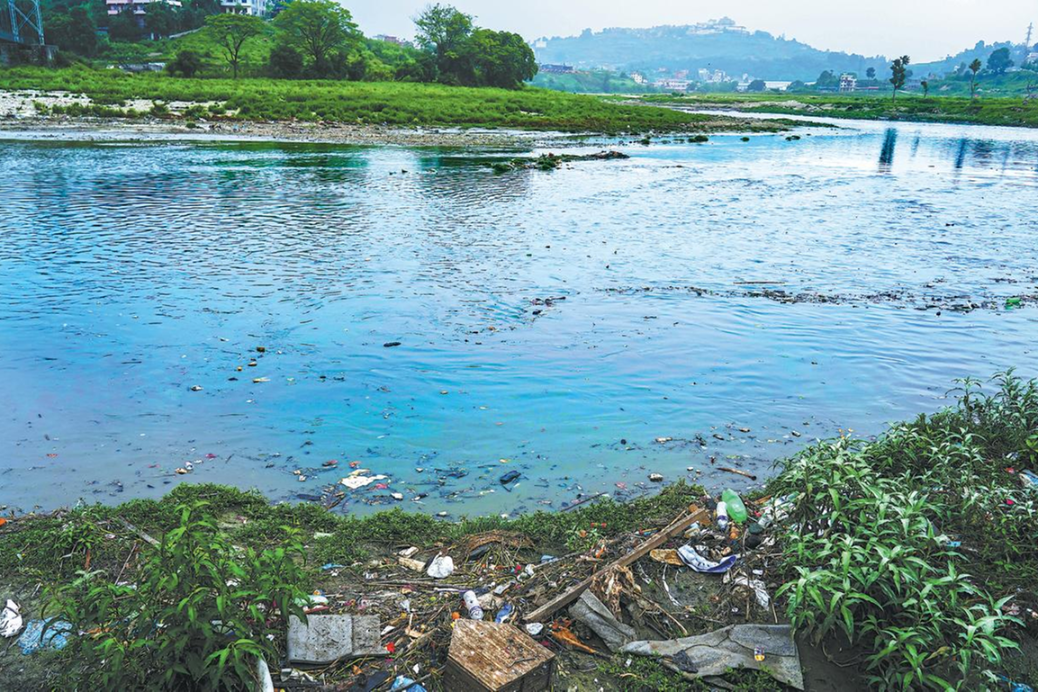
    Environmental degradation compounds the crisis: wastewater treatment remains virtually nonexistent (2.1% of wastewater and under 1% of fecal sludge receives treatment), while urban pollution, riverbed mining, and changing land-use patterns damage aquatic ecosystems. The Roshi River catchment in Kavre district exemplifies severe localized degradation following devastating 2024 floods.

    Governance challenges persist under Nepal’s federal structure, where seven provinces and 753 local governments share overlapping water mandates creating coordination gaps. The country scores merely 37 out of 100 on integrated water resource management indicators, significantly below regional averages and far from global targets.

    The report urgently calls for integrated watershed management, reforestation initiatives, and protection of groundwater recharge zones to counter this escalating national emergency.