博客

  • Ai, Japanese chimpanzee who counted and painted, dies at 49

    Ai, Japanese chimpanzee who counted and painted, dies at 49

    The scientific community mourns the passing of Ai, an extraordinary female chimpanzee whose groundbreaking contributions to primate cognition research revolutionized our understanding of animal intelligence. The celebrated chimpanzee, aged 49, died peacefully of natural causes and organ failure on January 9th at Kyoto University’s Center for the Evolutionary Origins of Human Behavior, surrounded by caretakers who had worked with her for decades.

    Arriving at the Japanese research facility in 1977 from her native West Africa, Ai became the cornerstone of the landmark Ai Project—an ambitious scientific initiative dedicated to mapping the cognitive capabilities of chimpanzees. Her remarkable journey began at just 18 months old when researchers introduced her to a specialized computer-linked keyboard system designed to study memory formation and learning patterns.

    Ai’s intellectual achievements were nothing short of extraordinary. By age five, she had mastered numerical recognition from one to six and could accurately identify colors and objects across 300 distinct samples, as documented in Dr. Tetsuro Matsuzawa’s seminal 1985 research paper. Her cognitive abilities extended beyond laboratory settings—she once demonstrated problem-solving skills by using a key to unlock her enclosure, subsequently escaping with another primate.

    Beyond her scientific contributions, Ai expressed artistic creativity through drawing and painting, often choosing to engage with markers and blank paper without food-based reinforcement. Her legacy continues through her son Ayumu, born in 2000, who has himself gained scientific recognition for his exceptional memory capabilities.

    The impact of Ai’s life extended to the highest echelons of primatology. In 2017, on the 40th anniversary of the Ai Project, a scarf featuring her artwork was presented to renowned anthropologist Dame Jane Goodall, symbolizing the profound intersection of scientific discovery and cross-species connection that defined Ai’s extraordinary life.

  • India and Germany sign deals to deepen economic and security ties

    India and Germany sign deals to deepen economic and security ties

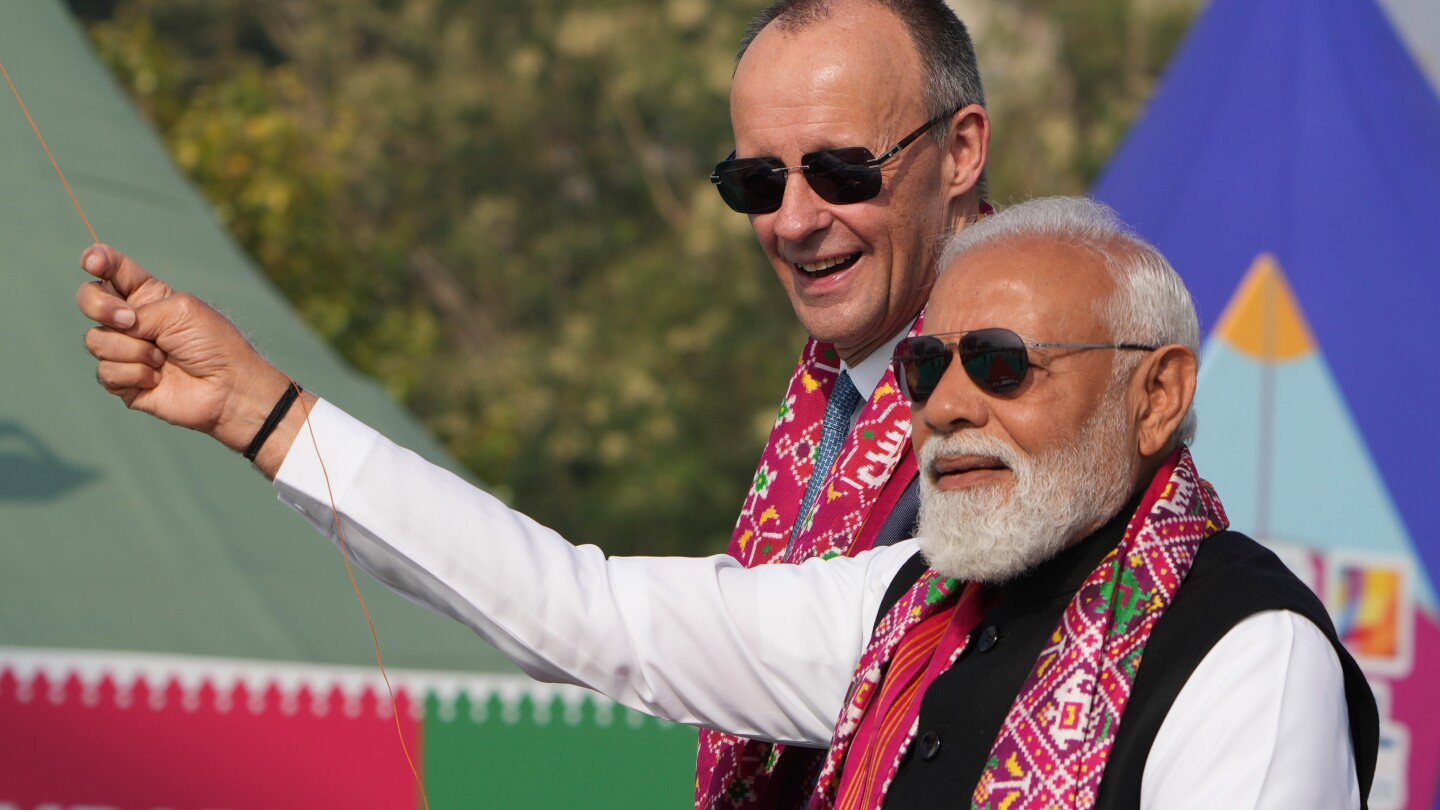
    In a significant diplomatic engagement, Indian Prime Minister Narendra Modi hosted German Chancellor Friedrich Merz in Gujarat’s Gandhinagar on Monday, marking a pivotal moment in bilateral relations between South Asia’s emerging power and Europe’s economic powerhouse. The high-level meeting resulted in multiple strategic agreements designed to strengthen economic and defense cooperation while reducing both nations’ dependence on Chinese markets and supply chains.

    The comprehensive partnership encompasses defense collaboration, with Germany’s Thyssenkrupp poised to partner with Indian firms in constructing six advanced conventional submarines—a critical component of India’s naval modernization program. Beyond military cooperation, the nations established frameworks for enhanced collaboration in rare earth element mining, climate action initiatives, and renewable energy projects.

    Prime Modi emphasized Germany’s position as India’s foremost trading partner within the European Union, noting the mutual desire to elevate relations to unprecedented levels. The leaders agreed on a detailed roadmap for defense industry cooperation involving joint development and production capabilities.

    Chancellor Merz characterized India as Germany’s ‘partner of choice’ and stressed the urgency of concluding the long-pending EU-India free trade agreement to fully realize the economic potential between the nations. The visit also produced a specialized agreement facilitating Indian professionals’ entry into Germany’s healthcare sector.

    The Chancellor’s itinerary included symbolic gestures such as visiting Mahatma Gandhi’s Sabarmati Ashram and participating in the International Kite Festival alongside Prime Minister Modi. Merz’s delegation, comprising business and industry leaders, will continue to Bengaluru for meetings with technology sector representatives, underscoring the comprehensive nature of this strategic partnership.

  • Yunnan Flower Research Institute crowdsources naming of new varieties

    Yunnan Flower Research Institute crowdsources naming of new varieties

    In an innovative approach to botanical nomenclature, Yunnan’s Flower Research Institute has initiated public participation campaigns to name newly developed rose varieties, creating a unique intersection between horticultural science and social values. The initiative gained national attention when netizens proposed naming a distinctive yellow rose ‘Wenxiu’ in honor of Huang Wenxiu, a village Party secretary who tragically died at age 30 during flood rescue operations in Guangxi in 2019. Huang was subsequently recognized as a national model for grassroots service.

    The color symbolism proved particularly meaningful as ‘Huang’ translates to ‘yellow’ in Chinese, creating a natural connection between the flower’s chromatic qualities and the commemorative purpose. Researchers at the Yunnan Academy of Agricultural Sciences expressed openness to the proposal, with researcher Cai Yanfei noting: ‘The suggestion resonated because it felt natural—it wasn’t just about remembering a person but about matching names, colors, and values.’

    This naming discussion follows another successful public engagement instance in December, when researchers adopted ‘Baohua’ for a pink-rimmed variety after a netizen humorously suggested naming it after his flower-resembling uncle. The name received preliminary approval from the National Forestry and Grassland Administration and is scheduled for market release in August.

    The naming initiatives form part of a substantial breeding program launched in late 2022, where the institute produces between 5,000-10,000 crossbreed combinations annually, generating over 100,000 seeds. From these, only a minute fraction survives rigorous testing for disease resistance, floral form, and adaptability. More than 2,000 plants have passed performance trials but remain unnamed, providing opportunities for future public engagement.

    Researchers are developing systematic naming frameworks including the ‘Heroines’ series (honoring exemplary women) and ‘Light of the Ordinary’ series (recognizing everyday individuals). The process demonstrates how scientific advancement and public participation can converge, transforming plant breeding into a shared cultural practice that celebrates both botanical achievement and social values.

  • Patrolling Xizang’s punishing peaks

    Patrolling Xizang’s punishing peaks

    At an elevation of 5,373 meters where water boils at just 60°C and oxygen remains perpetually scarce, the Pumaqangtang border station in China’s Xizang Autonomous Region stands as the nation’s highest and most formidable policing outpost. This remote Himalayan location, bordering Bhutan, has earned the ominous designation as a ‘forbidden zone for life’ due to its punishing environmental conditions characterized by perpetual ice sheets and severely thin air.

    Despite these extreme challenges, three pioneering female officers have not only survived but thrived at this austere post. Wu Hui, 27, first conceived the ambition to serve at this extreme elevation while graduating from police training academy. ‘Don’t you want to push your limits?’ she challenged her contemporaries. ‘Don’t you think it would be cool to work at the roof of the world?’

    Her persuasive enthusiasm proved contagious. In February 2024, Wu successfully recruited two fellow graduates—29-year-old Li Tianjiao and 25-year-old Li Hongyan—to volunteer for assignment at the remote station. Their deployment marked a historic milestone as the first female officers to serve at the outpost since its establishment in 2012.

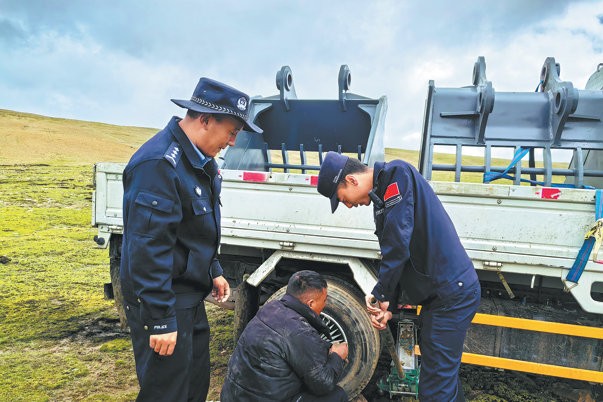
    The officers’ duties extend far beyond conventional policing, encompassing high-altitude patrols, community assistance, and emergency response in one of Earth’s most inhospitable environments. Photographic evidence from August depicts officers from the station performing tire changes for Tibetan herders during rescue operations, demonstrating their integral role in supporting local communities amid extreme climatic challenges.

    Their groundbreaking service at this altitude represents both a personal triumph over physical limitations and a symbolic advancement in gender equality within China’s border security forces, proving that determination and professionalism can overcome even the most daunting environmental barriers.

  • Myanmar begins 2nd phase of election

    Myanmar begins 2nd phase of election

    Myanmar commenced the second phase of its multiparty general election on Sunday, with citizens across 100 townships casting ballots in a carefully orchestrated electoral process. This phase represents a critical milestone in the country’s political transition following the conclusion of a four-year state of emergency in July.

    The electoral commission reported that over 24.26 million eligible voters participated across 21,517 polling stations nationwide. The voting mechanism incorporates Myanmar’s inaugural digital voting system, utilizing Electronic Voting Machines specifically designed to prevent electoral fraud and enhance procedural integrity.

    Acting President Min Aung Hlaing, who also chairs the State Security and Peace Commission, previously urged citizens to participate in the democratic process through state media channels. The electoral framework employs a dual voting methodology: a first-past-the-post system for the lower house (Pyithu Hluttaw) and a mixed-member proportional system for the upper house (Amyotha Hluttaw) and regional parliaments.

    This electoral sequence follows the first phase concluded on December 28 across 102 townships, which recorded a 52.13% voter turnout with preliminary results favoring the military-backed Union Solidarity and Development Party. The final phase is scheduled for January 25 covering 63 additional townships.

    The political landscape remains complex following the 2021 military intervention that overturned previous election results and dissolved Aung San Suu Kyi’s National League for Democracy government. Her party was subsequently excluded from the current electoral process after failing to complete registration requirements.

    International observation continues through ASEAN channels, with Philippine Foreign Secretary Theresa Lazaro recently conducting diplomatic engagements in Nay Pyi Daw. Discussions focused on geopolitical developments, electoral transparency, and implementation of the five-point consensus peace framework for Myanmar’s political resolution.

  • Africa’s megacity of Lagos reshapes its coast by dredging and puts environment at risk

    Africa’s megacity of Lagos reshapes its coast by dredging and puts environment at risk

    LAGOS, Nigeria — Along the bustling waterways of Lagos, Africa’s most populous metropolis, a stark economic dichotomy unfolds beneath the surface. Teams of Nigerian dredgers stand immersed in the Lagos Lagoon’s murky waters, harvesting sand bucket by bucket to feed the city’s insatiable construction appetite. This underwater gold rush is dramatically reshaping the coastline while simultaneously eroding traditional fishing grounds that have sustained communities for generations.

    The manual dredging process reveals the human cost of urban development. Artisanal sand miners like 34-year-old Akeem Sossu dive repeatedly for 15-second intervals, filling wooden boats over three-hour shifts that yield approximately $8 per worker. Formerly a tailor, Sossu now depends on this hazardous work to support his household, beginning his days as early as 5 a.m. based on tidal patterns.

    Market dynamics reflect Lagos’s construction explosion, with a standard 30-ton truckload of coarse ‘sharp sand’ now commanding roughly $202—a price surge driven by massive demand for concrete. Industry analysts estimate annual consumption reaches tens of millions of cubic meters, equivalent to approximately 16,000 Olympic-sized swimming pools.

    The environmental transformation is unmistakable. Previously open waterways now display fragmented sandy patches, narrowed channels, and altered currents. The changes are particularly evident near Makoko, one of Lagos’s oldest fishing communities where stilt homes face encroachment from dredging barges and upscale waterfront developments.

    ‘Dredgers have spoiled the entire waters,’ laments Baale Semede Emmanuel, a Makoko community leader. ‘Anywhere dredging is happening, there’s no fish. The noise drives them away and their reproduction grounds have disappeared.’

    Scientific research corroborates these observations. Nigerian studies along the Ajah–Addo-Badore dredging corridor document water turbidity levels exceeding national safety standards, disrupting fish feeding and migration patterns. Researchers also note unstable seabeds, erosion-prone zones, and bacterial contamination in groundwater samples.

    The ecological damage has forced fishermen to choose between dangerous extended voyages with prohibitive fuel costs or abandoning their livelihoods entirely. Joshua Monday, who transitioned from fishing to mechanics, encapsulates the community’s plight: ‘Big men are stressing us. When they come, you have no option. You pack your things and leave.’

    Despite government pledges to curb illegal dredging, enforcement remains inconsistent. Dredging operators describe making regular payments to authorities including the Marine Police and National Inland Waterways Authority to maintain operations. Environmental advocates argue these arrangements blur legal boundaries while exacerbating flooding risks and coastal degradation.

    Scientists warn that removing natural buffers like wetlands and shallow areas reduces the lagoon’s capacity to absorb floodwaters, increasing vulnerability for Lagos’s approximately 17 million residents. As the city continues building on reclaimed land, the tension between development ambitions and environmental sustainability creates an increasingly precarious future for both the coastline and its traditional communities.

  • India and US ‘actively engaged’ in trade negotiations, says new ambassador

    India and US ‘actively engaged’ in trade negotiations, says new ambassador

    Newly appointed US Ambassador to India Sergio Gor has confirmed that trade agreement discussions between the two nations remain actively ongoing, with the next round of negotiations scheduled for Tuesday. Speaking during his official welcome ceremony in Delhi—an event marked by ceremonial pomp and carefully curated American music—Gor emphasized the essential partnership between the countries while acknowledging existing disagreements.

    The ambassador’s comments arrive amidst recent tensions, including claims from US officials blaming India for delays in finalizing the trade deal—a characterization firmly rejected by Delhi. Trade relations have been particularly strained since August, when Washington imposed substantial 50% tariffs on Indian goods, the highest rate applied to any Asian nation. These measures included penalties connected to India’s continued purchase of Russian oil despite Western sanctions.

    A persistent obstacle in negotiations remains the US push for expanded access to India’s agricultural markets, a demand that Indian officials have consistently resisted. The diplomatic landscape has further complicated following recent remarks from US Commerce Secretary Howard Lutnick, who suggested the trade agreement stalled because Prime Minister Modi declined to place a crucial phone call to President Trump—an account promptly disputed by India’s foreign ministry as inaccurate.

    Adding to the complex dynamic, former President Trump has recently warned of potential tariff escalations should India continue purchasing Russian energy resources. Simultaneously, US Senator Lindsey Graham revealed that Trump has endorsed a stringent Russia sanctions bill that, if enacted, could impose even heavier secondary tariffs on nations conducting business with Moscow.

    Despite these challenges, both governments maintain they have been repeatedly close to reaching an agreement. India has responded to the tariff implementation by gradually reducing energy purchases from Russia, though officials continue to defend their initial position by citing the energy requirements of their substantial population.

    Ambassador Gor, who took his oath at the White House in November but has yet to formally present credentials to India’s president, characterized the US-India relationship as potentially the ‘most consequential’ partnership of the century, noting that ‘real friends can disagree but will always resolve their differences.’

  • Japan’s Takaichi may call early election

    Japan’s Takaichi may call early election

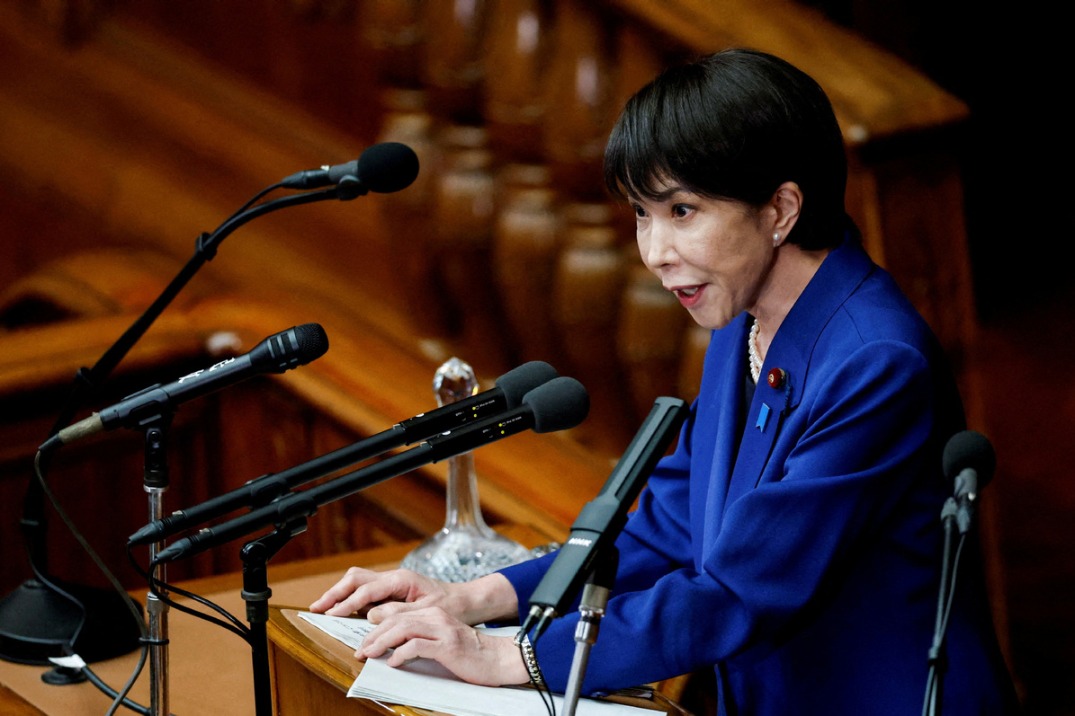
    TOKYO — Japanese Prime Minister Sanae Takaichi appears to be moving toward calling an unexpected general election, potentially as early as February 2026, according to statements from political allies and opposition leaders. The development follows a Friday meeting between Takaichi and Hirofumi Yoshimura, leader of the coalition partner Japan Innovation Party, who subsequently told NHK broadcaster that the Prime Minister’s perspective on election timing had advanced to a “new stage.” Media reports from Yomiuri Shimbun suggest February 8 or 15 as possible dates for the snap election, citing government sources.

    While Takaichi remained noncommittal during her Sunday NHK interview regarding specific election plans, she emphasized her current focus on implementing economic stimulus measures designed to counter inflation effects. Her administration has prioritized ensuring timely execution of the current fiscal year’s supplementary budget and parliamentary approval of next year’s $783 billion spending package, which includes her flagship economic programs.

    The potential February election timing has drawn sharp criticism from opposition leaders. Tetsuo Saito of Komeito party warned that such timing would jeopardize budget passage before fiscal year-end, stating he was “surprised” by reports suggesting Takaichi might dissolve parliament when it reconvenes on January 23.

    Separately, the city assemblies of Hiroshima and Nagasaki have unanimously adopted statements urging the national government to maintain Japan’s Three Non-Nuclear Principles, expressing concern over ruling party discussions about revising these longstanding security policies. The statements emphasize the particular significance of these principles to residents of atomic-bombed cities.

    Market reactions included yen depreciation following election speculation, while Japan’s Internal Affairs Ministry has instructed regional election committees to prepare for possible early voting, a move analysts interpret as signaling election preparations are effectively underway.

  • Elephant kills 20 in Indian state as rescue efforts continue

    Elephant kills 20 in Indian state as rescue efforts continue

    A devastating series of elephant attacks has left 20 people dead in India’s eastern Jharkhand state, creating unprecedented panic across the West Singhbhum district. The fatal incidents occurred between January 1-9 in the Chaibasa and Kolhan forest regions, areas known for containing some of Asia’s most significant Sal forest ecosystems.

    According to local authorities, the attacks have been attributed to a single male elephant exhibiting unusually aggressive behavior. Divisional Forest Officer Kuldeep Meena described the situation as extraordinary, noting this marks the first instance where such a consistent pattern of fatalities has been linked to one elephant in the region.

    The victims were predominantly attacked during nighttime hours while performing routine activities. Many were guarding harvested paddy crops stored in fields and barns—a common agricultural practice in rural India. Among the deceased was 34-year-old Mangal Singh Hembram, attacked near his Bodijari village home while returning from work. In a particularly tragic incident, Kundra Bahoda and his two children, aged six and eight, were killed simultaneously, with only his wife and injured two-year-old daughter surviving.

    Forest officials characterize the elephant as young, agile, and frequently changing locations, especially after dark, complicating tracking efforts. Over 100 forest personnel have been deployed in an extensive search operation, employing traditional drum alerts to warn residents and advising against outdoor activities during nighttime hours.

    Preliminary assessments suggest the elephant might be experiencing its mating phase, during which male elephants typically demonstrate heightened aggression due to elevated testosterone levels. Officials note this behavior usually subsides within 15-20 days. Another theory suggests the animal may have become separated from its herd, increasing its solitary aggressive tendencies.

    District Magistrate Chandan Kumar confirmed monetary compensation has been announced for victims’ families, while authorities maintain high alert status throughout the region to prevent further casualties. The immediate priority remains locating, capturing, and safely reintroducing the elephant into its natural habitat.

  • Consumer and energy stocks lead broad market rally on the Australian exchange

    Consumer and energy stocks lead broad market rally on the Australian exchange

    The Australian equities market commenced the trading week on a robust upward trajectory, propelled by vigorous consumer sector performance and escalating commodity valuations. Market analysts attributed this bullish sentiment to resilient household expenditure patterns and geopolitical developments affecting global energy markets.

    The benchmark S&P/ASX 200 index advanced 41.60 points (0.48%) to settle at 8759.40, while the comprehensive All Ordinaries index gained 46.80 points (0.52%) closing at 9082.70. Concurrently, the Australian dollar demonstrated strength, appreciating to 66.95 US cents in foreign exchange trading.

    Market breadth remained decidedly positive with nine out of eleven sector classifications finishing in positive territory. Consumer discretionary stocks emerged as particularly strong performers, followed closely by consumer staples and energy securities. Notable gainers included retail conglomerate Wesfarmers (+1.44% to $82.23), electronics retailer Harvey Norman (+1.95% to $6.78), and appliance manufacturer Breville Group (+1.96% to $30.73).

    The consumer discretionary segment witnessed extraordinary momentum from Light & Wonder, whose shares skyrocketed 17.97% to $182.50 following the successful resolution of intellectual property litigation with gaming competitor Aristocrat Leisure. The settlement arrangement involves Light & Wonder remitting $190 million (US$127.5 million) to Aristocrat regarding proprietary mathematical algorithms utilized in game development.

    Consumer staples similarly demonstrated vigor with Woolworths Group ascending 0.76% to $30.31, Coles Group climbing 2.38% to $21.53, and Endeavour Group advancing 1.06% to $3.81. This retail surge coincided with the release of November expenditure data indicating household spending increased 1.0% monthly and 6.3% annually, substantially exceeding market expectations of 0.6% and 5.5% respectively.

    Russell Chesler, Head of Investments at VanEck, noted the spending resilience was particularly remarkable given the earlier commencement of seasonal discounting in October. Energy equities benefited from Brent crude’s 5% surge to $63 per barrel, driven by escalating geopolitical tensions. ANZ’s Head of G3 Economics Brian Martin highlighted increased military activities in Venezuela and sustained civil unrest in Iran’s oil-producing regions as primary catalysts for supply disruption concerns.

    Critical minerals companies experienced additional momentum following Treasurer Jim Chalmers’ announcement of overseas promotion efforts for Australian commodities. Notwithstanding the broad market optimism, Super Retail Group declined 5.28% to $14.89 after revising profit guidance downward, while Domino’s Pizza Enterprises gained 3.10% to $23.25 following executive leadership appointments.