博客

  • Death toll from shopping mall fire in Pakistan’s Karachi rises to 60

    Death toll from shopping mall fire in Pakistan’s Karachi rises to 60

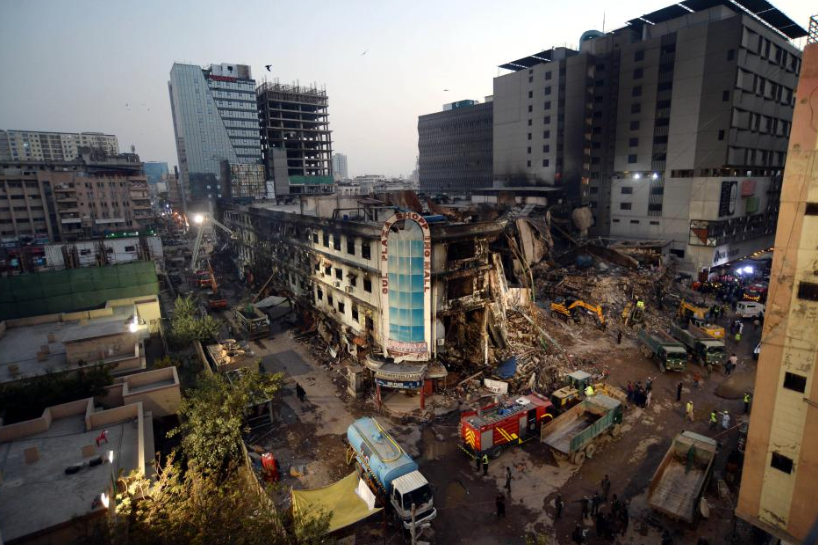
    A devastating fire at a multi-story shopping complex in Karachi, Pakistan’s largest port city, has resulted in a tragic death toll of 60 people, with rescue operations continuing into Wednesday. The catastrophic blaze, which engulfed the commercial building on January 21, 2026, represents one of the deadliest urban fire incidents in Pakistan’s recent history.

    Senior police official Syed Asad Raza confirmed to media that at least 30 victims were recovered from a single shop on the mezzanine floor of the devastated shopping mall. Rescue teams equipped with advanced machinery are working tirelessly to remove debris from collapsed sections of the structure, though operations have been hampered by persistent smoke and intense residual heat within the damaged building.

    Commissioner Syed Hassan Naqvi announced that authorities have initiated a comprehensive investigation into the disaster, examining multiple potential causes of the fire. The rescue operation has been complicated by the structural instability of the building, with officials reporting that one section has been cleared while two remaining portions continue to be searched for possible survivors and victims.

    The tragedy has highlighted ongoing concerns about fire safety regulations and emergency preparedness in Pakistan’s urban centers. As recovery efforts continue, officials acknowledge that several individuals remain unaccounted for, suggesting the final death toll may still rise as operations progress.
  • Trump threatens 200% tariff on French wine over backing for Gaza peace board

    Trump threatens 200% tariff on French wine over backing for Gaza peace board

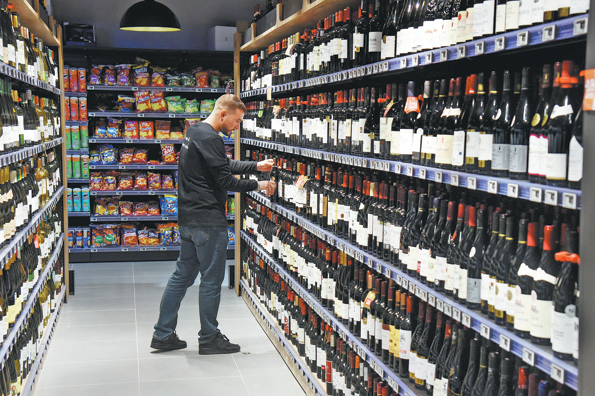
    In a dramatic escalation of diplomatic tensions, former US President Donald Trump has issued an ultimatum to France, threatening to impose staggering 200% tariffs on French wine and champagne exports. The economic threat comes in direct response to French President Emmanuel Macron’s refusal to participate in Trump’s proposed ‘Board of Peace’ initiative aimed at addressing global conflicts, including the ongoing situation in Gaza.

    The confrontation emerged when Trump, reacting to Macron’s decision to abstain from joining the international peacekeeping board, declared: ‘Nobody wants him because he will be out of office very soon. I’ll put a 200% tariff on his wines and champagnes, and he’ll join, but he doesn’t have to join.’ This statement underscores Trump’s unconventional approach to international diplomacy, using economic leverage to compel political cooperation.

    Trump’s Board of Peace concept, initially proposed in September as a mechanism to resolve the Gaza conflict, has since expanded into a broader global initiative. Approximately 60 nations have received draft charters outlining membership requirements, including a substantial $1 billion contribution for extended participation beyond three years. The former president aims to finalize the board’s structure during the upcoming World Economic Forum in Davos, Switzerland.

    The tariff threat represents the latest chapter in ongoing trade tensions between Trump and European allies. Just days earlier, Trump had warned of imposing 10-25% tariffs on European nations unless they supported his controversial plan to purchase Greenland. French officials have characterized these tactics as diplomatic blackmail, with Agriculture Minister Annie Genevard condemning the approach as ‘shocking because it’s brutal, it’s done to force compliance.’

    The United States stands as the world’s largest importer of sparkling wines, purchasing approximately $1.75 billion worth in 2023. Such aggressive tariffs would devastate France’s champagne industry, recalling similar threats made in March during previous EU trade disputes. While those tariffs were never implemented, the renewed warning has sent shockwaves through European diplomatic and trade circles, raising concerns about the future of transatlantic relations should Trump return to power.

  • Two dead and several missing as New Zealand reels from deadly landslides

    Two dead and several missing as New Zealand reels from deadly landslides

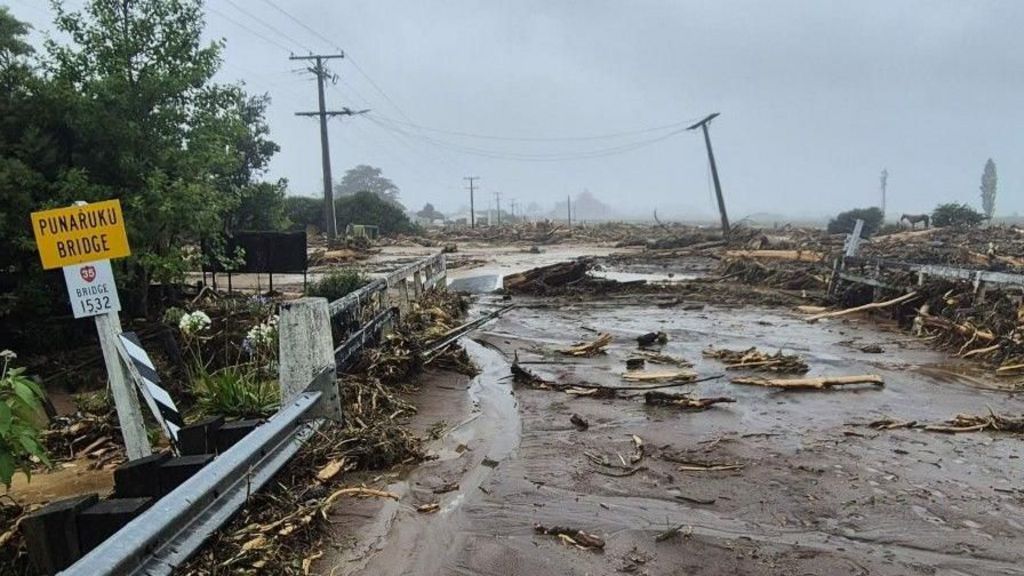
    New Zealand’s North Island confronts a devastating natural disaster as catastrophic landslides triggered by unprecedented rainfall have claimed multiple lives, with several individuals still unaccounted for. The tragedy unfolded at two primary locations: Welcome Bay, where two fatalities were confirmed, and the popular Mount Maunganui campground, where rescue teams continue searching through debris with specialized equipment and sniffer dogs.

    Authorities describe the campground search operation as occurring in a ‘complex and high-risk environment,’ with Urban Search and Rescue deputy commander Megan Stiffler emphasizing their commitment to achieving the ‘best possible outcome while keeping everyone safe.’ Despite continuous efforts through the night, officials report no signs of life detected in the rubble.

    The geological instability at Mount Maunganui—an extinct volcano considered sacred by Māori people and frequently described as a ‘slice of paradise’—has been exacerbated by extreme weather conditions. The region received approximately three months’ worth of precipitation within a single day, resulting in widespread flooding, power outages affecting thousands, and additional evacuations due to fears of further landslides.

    Eyewitness accounts paint a harrowing picture of the disaster’s immediate aftermath. Australian tourist Sonny Worrall recounted to TVNZ: ‘I heard this huge tree crack and all this dirt come off, and then I looked behind me and there’s this huge landslide coming down… I’m still shaking from it now.’ Local hiker Mark Tangney described hearing desperate screams from beneath the rubble that persisted for approximately thirty minutes before falling silent.

    Prime Minister Christopher Luxon characterized the event as a ‘profound tragedy’ that has left the nation ‘heavy with grief.’ Emergency Management Minister Mark Mitchell noted the event impacted ‘almost our entire eastern seaboard of the North Island,’ drawing comparisons to a ‘war zone’ in its devastation.

    The catastrophe occurs against a backdrop of increasing severe weather events in New Zealand, with scientists noting a pattern of intensifying storms during what are traditionally the sunnier months of December through February. The current disaster follows February 2023’s Cyclone Gabrielle, which remains the Southern Hemisphere’s costliest cyclone with damages exceeding NZ$13.5 billion.

    As recovery efforts continue, individual stories of tragedy and resilience emerge, including that of a Kiribati fisherman who sacrificed his own safety to ensure his nephew’s survival when their vehicle was swept into the Mahurangi River.

  • BRI activity hits record high in 2025

    BRI activity hits record high in 2025

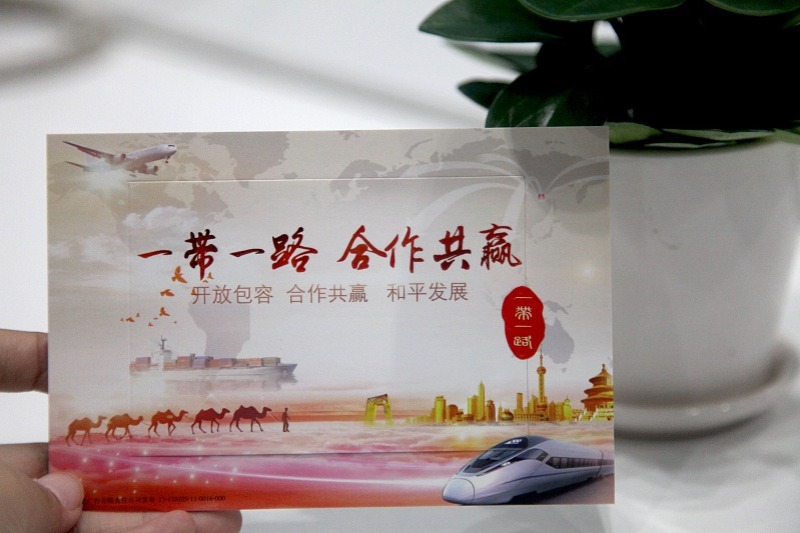
    The Belt and Road Initiative achieved unprecedented momentum in 2025, reaching a record $214 billion in global engagement according to a comprehensive study by Fudan University’s Green Finance & Development Center and Australia’s Griffith Asia Institute. This remarkable growth represents China’s most active year since the initiative’s 2013 launch, driven primarily by massive renewable energy investments and strategic infrastructure development.

    Construction contracts accounted for $128.4 billion while investments exceeded $85 billion, with energy sector engagement surging to $94 billion—more than double the 2024 figures and the highest in BRI history. The scale of individual projects expanded dramatically, with investment deals over $100 million reaching $939 million and average construction project sizes nearly doubling to $964 million.

    Africa emerged as the primary beneficiary of construction activities, with Nigeria leading at approximately $25 billion, followed by the Republic of Congo at $23 billion. Middle Eastern nations also received significant attention, while Central Asia became the top investment destination with Southeast Asia and Africa following at $21 billion and $19 billion respectively.

    The renewable energy transition proved particularly noteworthy, with green energy investments hitting their highest level since 2013. Wind, solar, and waste-to-energy projects attracted over $18 billion, complemented by $3 billion in hydropower investments, bringing total green energy engagement to more than $21 billion.

    Aly-Khan Satchu, a prominent Kenyan investment banker, emphasized Africa’s strategic importance to China, noting that “China has been the cheerleader for Africa’s infrastructure investments—whether railways, roads or digital infrastructure—without which no jobs will be created.”

    However, experts caution that future growth may face constraints. Frederick Otieno, a China-Africa relations scholar, noted that financial risks, geopolitical concerns, and stricter lending regulations are prompting Chinese lenders to adopt more selective approaches. “BRI engagement might remain considerable but is likely to level off into a selective, risk-aware pattern,” he observed.

    The report anticipates continued Chinese engagement in energy, mining, and emerging technologies throughout 2026, though potentially with fewer megadeals as global trade volatility and supply chain considerations shape more targeted investment strategies.

  • UN condemns Israeli demolition of office

    UN condemns Israeli demolition of office

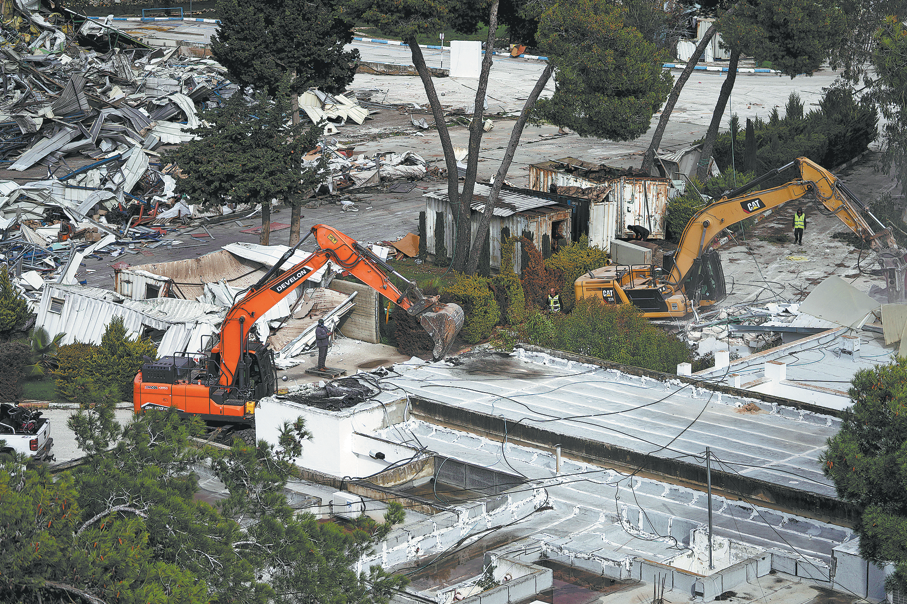
    United Nations Secretary-General Antonio Guterres has issued a forceful condemnation of Israel’s demolition of the United Nations Relief and Works Agency (UNRWA) headquarters in East Jerusalem’s Sheikh Jarrah neighborhood. The Tuesday operation, conducted by Israeli bulldozers, targeted the compound belonging to the UN agency responsible for Palestinian refugee assistance.

    Guterres characterized the demolition as “escalatory actions” that directly contravene Israel’s obligations under international law, including the UN Charter and the Convention on the Privileges and Immunities of the United Nations. The Secretary-General emphasized that UN premises remain “inviolable and immune from any form of interference” and demanded immediate restoration of the compound to UN control.

    UNRWA Commissioner-General Philippe Lazzarini clarified that contrary to Israeli claims, the government holds no legal rights to the property housing the agency’s East Jerusalem compound. The incident has drawn sharp international criticism, with Saudi Arabia, Qatar, and Jordan jointly denouncing the action as a “perilous escalation and brazen breach of international law.”

    The demolition occurs against the backdrop of ongoing tensions in Gaza, where Hamas has submitted a political memorandum to mediators highlighting continued violations of the ceasefire agreement enacted October 10. According to the document, 483 Palestinians have been killed since the truce began, including 169 children and 64 women.

    Analyst Arhama Siddiqa of Pakistan’s Institute of Strategic Studies Islamabad noted the concerning timing of these developments alongside Israeli Prime Minister Benjamin Netanyahu’s acceptance of a position on former US President Donald Trump’s Board of Peace. Siddiqa warned that “unilateral measures continue to reshape facts on the ground faster than diplomacy can respond,” potentially undermining prospects for a viable political solution to the Palestinian conflict.

  • ‘Fiber chip’ could be a boon for healthcare

    ‘Fiber chip’ could be a boon for healthcare

    Researchers at Shanghai’s Fudan University have achieved a groundbreaking advancement in electronic engineering by developing complex circuitry within ultra-thin, flexible fibers. This innovation, dubbed the “fiber chip” technology, represents a significant departure from conventional rigid silicon-based chips, enabling fabrics to possess computational capabilities while maintaining the softness and flexibility required for everyday clothing applications.

    The research team overcame longstanding technical challenges by implementing a novel “multilayered spiral architecture” that utilizes the internal three-dimensional space of fibers rather than relying solely on surface area. This architectural breakthrough allows for unprecedented transistor density within microscopic fibers. Experimental results demonstrate that a mere 1-millimeter fiber segment can accommodate approximately 10,000 transistors, equivalent to the processing power of modern cardiac pacemakers. When extended to one meter, these fibers can potentially contain millions of transistors, rivaling the computational capacity of standard desktop computer processors.

    This technological leap holds particular promise for healthcare applications, especially in brain-computer interface (BCI) systems. Current BCI technology relies on rigid electrodes connected to external computing devices through cumbersome wiring. The fiber chip enables the development of fully integrated “closed-loop” systems where sensing, data processing, and therapeutic stimulation occur within a single flexible fiber. Professor Peng Huisheng, co-author of the study published in Nature, emphasized that these fibers—measuring just 50 micrometers in diameter (thinner than human hair) and matching the flexibility of brain tissue—offer significantly improved safety and efficacy for neurological treatments.

    Beyond healthcare, the technology promises to revolutionize virtual reality experiences through the development of imperceptibly thin tactile gloves that can accurately simulate texture and pressure sensations. Research team member Chen Peining confirmed that the manufacturing process demonstrates strong compatibility with existing chip fabrication infrastructure, indicating that mass production feasibility has already been established. This development marks a critical step toward truly seamless integration of computational capabilities into everyday textiles and medical devices.

  • Australia passes tougher laws on guns, hate crime

    Australia passes tougher laws on guns, hate crime

    In a decisive legislative response to the December 14 terrorist shooting at Sydney’s Bondi Beach, the Australian Parliament has enacted comprehensive reforms strengthening gun control measures and hate crime legislation. The tragic incident during a Jewish festival resulted in 16 fatalities, including one perpetrator, and left dozens injured.

    The newly passed firearm regulations introduce a national buyback program, enhanced import restrictions, more rigorous background verifications for licensing, and limitations on permitted firearm categories. Concurrently, the hate crime legislation establishes mechanisms to designate organizations as ‘hate groups,’ targets individuals propagating extremist ideologies, and increases penalties for violence advocacy offenses.

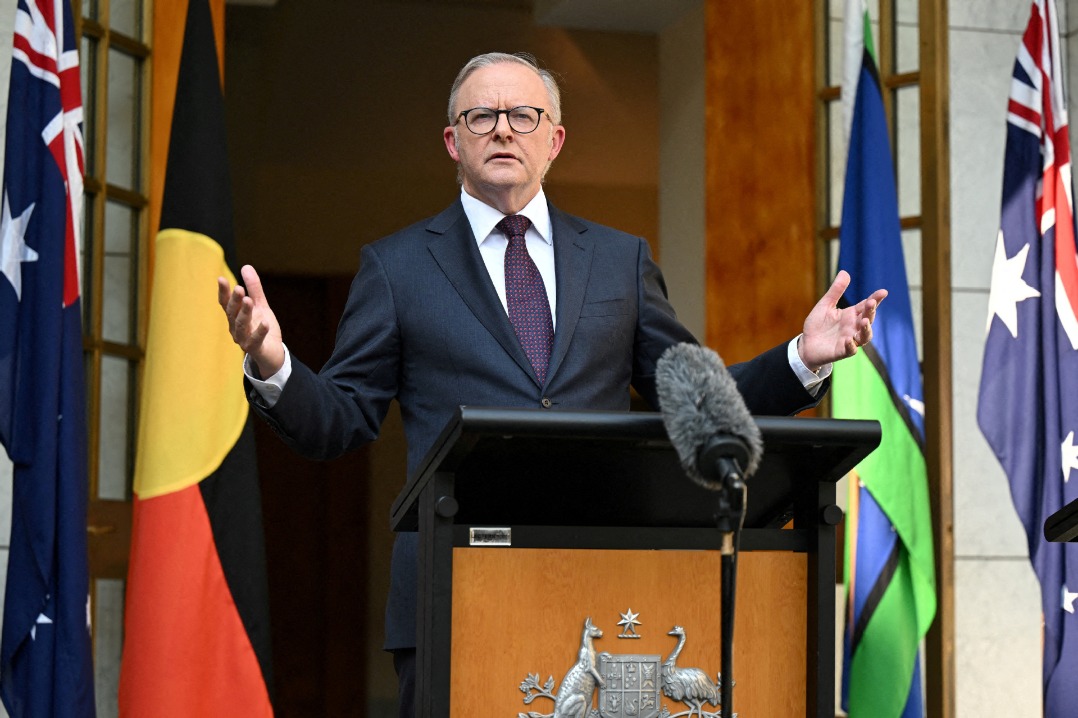
    Prime Minister Anthony Albanese emphasized the government’s urgency in addressing these issues, stating at a Canberra press conference: ‘At Bondi, the terrorists had hate in their hearts, but they had guns in their hands. We have acted with unity to confront both threats decisively.’

    The alleged attackers, 24-year-old Naveed Akram and his 50-year-old father Sajid, targeted a Hanukkah celebration. Police neutralized Sajid at the scene while Naveed sustained critical injuries. Subsequent investigations revealed six firearms used in the assault, with Naveed facing 59 charges including murder and terrorism.

    This represents Australia’s most significant security legislation since the 1996 Port Arthur massacre that claimed 35 lives and established the National Firearms Register. The government will additionally form a royal commission examining antisemitism and social cohesion, while declaring a national day of mourning with flags at half-mast to honor the victims.

    Sociologist Margaret Gibson of Griffith University noted the importance of national rituals following such tragedies, stating they ‘demonstrate government leadership toward collective solidarity and unity in the face of violence that ruptures the sense of safety of community and nation.’

  • Japan suspends world’s largest nuclear plant hours after restart

    Japan suspends world’s largest nuclear plant hours after restart

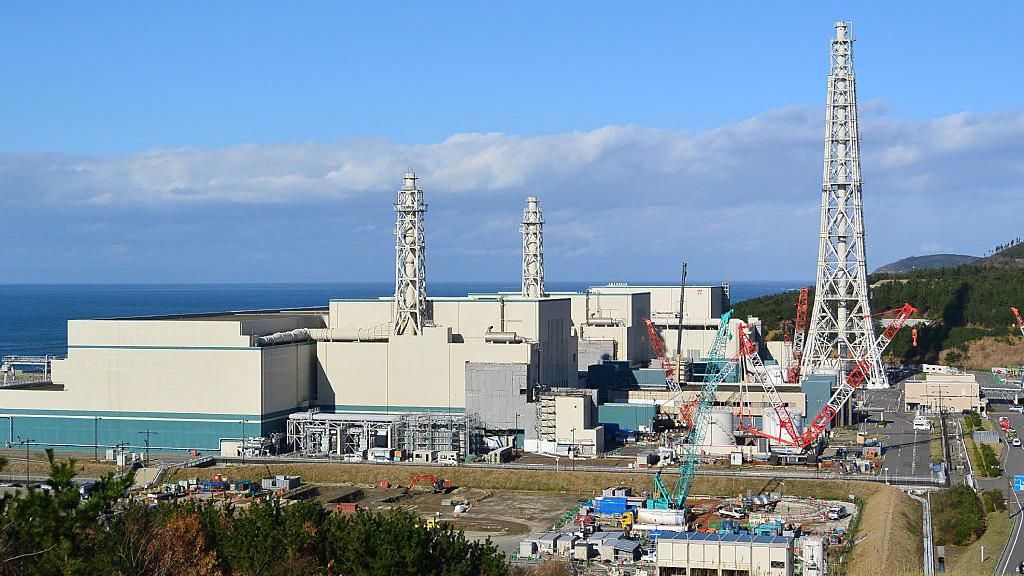
    Japan’s ambitious nuclear energy revival faced an immediate setback as the Kashiwazaki-Kariwa Nuclear Power Plant—the world’s largest by installed capacity—was abruptly shut down mere hours after restarting operations. The suspension occurred when an alarm triggered during reactor-start-up procedures at reactor number six, which had just resumed operation on Wednesday following a one-day delay caused by another technical malfunction.

    Tokyo Electric Power Company (Tepco) spokesperson Takashi Kobayashi confirmed the incident, stating that while the reactor remained stable with no radioactive impact detected outside the facility, the company is investigating the cause with no timeline provided for resuming operations. This restart marked a significant milestone as the first reactor activation at the plant since the catastrophic 2011 Fukushima disaster that led Japan to shutter all 54 of its nuclear reactors.

    The Kashiwazaki-Kariwa facility’s troubles highlight Japan’s ongoing challenges in balancing its nuclear energy ambitions with public safety concerns. The reactor had received regulatory approval to restart despite opposition from local residents, with protests occurring outside Tepco’s headquarters last week and hundreds gathering at the Niigata prefectural assembly in December.

    Japan’s nuclear landscape has dramatically transformed since Fukushima, where a 9.0 magnitude earthquake triggered meltdowns forcing over 150,000 evacuations. Before the disaster, nuclear power provided nearly 30% of Japan’s electricity, with plans to increase that to 50% by 2030. The current administration has been gradually restarting reactors as part of its strategy to achieve net-zero emissions by 2050, with 15 of 33 operable reactors resumed since 2015.

    The future of Kashiwazaki-Kariwa remains uncertain, with reactor seven not expected to restart until 2030 and the other five reactors potentially facing decommissioning. This would leave the massive facility operating at a fraction of its designed capacity, representing both a technical and symbolic challenge for Japan’s nuclear energy policy.

  • Camping carnival brings warmth to frigid NE China

    Camping carnival brings warmth to frigid NE China

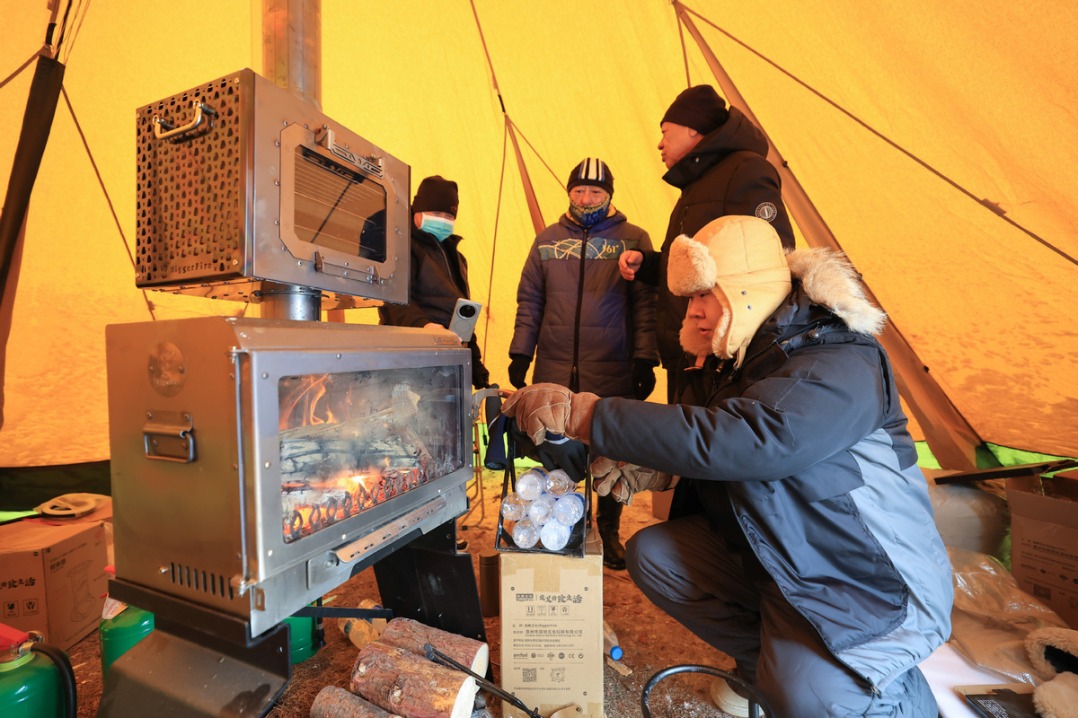
    In a remarkable display of outdoor enthusiasm overcoming extreme weather, thousands of camping devotees converged on the frozen landscapes of Northeast China for the fourth annual Northeast Camping Carnival. The event, held from January 12-18 in Hala village within Qiqihar’s Meilisi Daur ethnic district, transformed the typically dormant winter scene into a vibrant hub of activity.

    Among the participants was Zhu Yongyu, who embarked on an extraordinary 3,000-kilometer journey from Guangdong province in southern China. After six days of driving through dramatically changing climates, Zhu achieved his goal of experiencing sub-zero camping at -30°C—a stark contrast to the temperate conditions of his home region.

    “I’ve exhausted all camping scenarios in Guangdong, but snow camping represents an entirely new frontier of challenge,” Zhu explained while maintaining his tent’s interior warmth with a gas stove. “This unique experience justified the extensive travel.”

    The festival reached a milestone this year with over 1,000 tents pitched across the snow-blanketed grasslands, marking the first time the event has surpassed this threshold. The spectacle of colorful shelters dotting the silver plains symbolized a significant evolution in China’s winter tourism patterns.

    Local authorities note that the traditional concept of winter hibernation has been replaced by growing economic vitality driven by integrated ice-and-snow sports, cultural activities, and outdoor leisure pursuits. The camping carnival demonstrates how extreme weather conditions, once seen as a limitation, have been reimagined as a unique attraction drawing visitors from across China.

    The event’s success highlights how specialized tourism initiatives can stimulate regional economies during traditionally slow seasons while providing urban dwellers with unprecedented access to winter wilderness experiences.

  • US hard-line stance sowing divisions

    US hard-line stance sowing divisions

    As the Trump administration marked its first anniversary of the second term, its assertive “America First” doctrine has generated significant international friction and raised concerns about global stability. During a comprehensive White House briefing, President Trump showcased what he described as 365 accomplishments since his January 20 inauguration, while simultaneously advancing controversial policies that have strained traditional alliances.

    The administration’s approach has particularly manifested in two contentious areas: immigration enforcement and territorial ambitions. Trump devoted substantial attention to immigration issues, publicly displaying mugshots of undocumented immigrants arrested in Minnesota and praising ICE agents. More remarkably, the president reaffirmed his interest in acquiring Greenland from Denmark, suggesting potential negotiations that would satisfy both NATO and U.S. interests without elaborating on specifics.

    European leaders have responded with firm resistance. European Commission President Ursula von der Leyen condemned newly announced tariffs targeting eight European nations supporting Denmark’s position on Greenland as a “mistake” that questions Washington’s reliability. French President Emmanuel Macron threatened retaliatory measures using the EU’s powerful economic tools, colloquially termed a “trade bazooka.”

    International relations experts warn that these policies represent a fundamental shift in global dynamics. According to Chen Hong of East China Normal University, the administration appears to be constructing a new form of hegemonic politics that challenges post-World War II international norms and sovereignty principles. The Chicago Council on Global Affairs has identified the U.S. as potentially “the primary driver of global disruption” due to its unpredictable alliance management.

    The administration’s withdrawal from key international agreements—including the Paris Climate Accord and World Health Organization—combined with its use of tariffs as foreign policy instruments, threatens to undermine multilateral frameworks. Researchers like He Yun of Tsinghua University predict these actions will accelerate regionalization trends as nations seek to reduce dependence on Washington and strengthen alternative security arrangements.

    Analysts from Pakistan’s Global Silk Route Research Alliance note that the preference for coercion over diplomacy violates UN Charter principles and jeopardizes international stability. As nations increasingly consider bloc formation and regional cooperation mechanisms, the international order faces potential restructuring toward transactional power dynamics rather than collective multilateral governance.