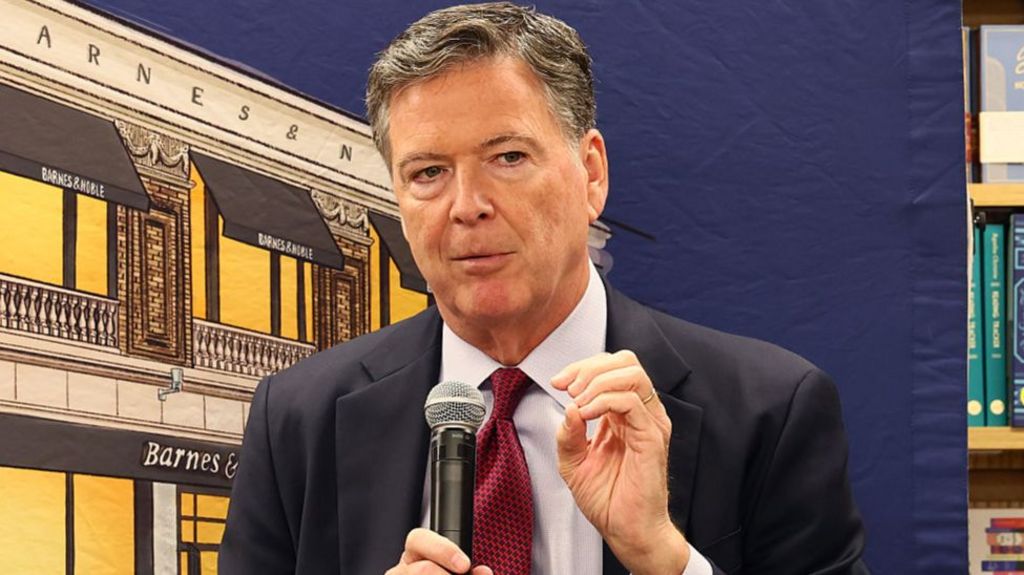
James Comey, the former FBI director, has been indicted by the US Department of Justice on charges of perjury and obstruction of justice. The charges stem from his 2020 testimony before the Senate Judiciary Committee, where he was questioned about his handling of investigations into Hillary Clinton’s private email server and Russian interference in the 2016 election. Comey, who has maintained his innocence, is set to appear in court on October 9 for arraignment. The indictment, though sparse in detail, alleges that Comey made false statements during his testimony, particularly regarding his authorization of leaks to the media. This development reignites a long-standing political feud, with critics accusing President Trump of weaponizing the Justice Department for partisan purposes. Trump, who fired Comey in 2017, has publicly celebrated the indictment, calling Comey ‘one of the worst human beings this Country has ever been exposed to.’ The case has further polarized the political landscape, with Democrats condemning the charges as an attack on the rule of law, while some Republicans argue that Comey’s past actions warrant scrutiny. The indictment comes just days after Trump urged his attorney general to aggressively pursue his political opponents, raising concerns about the independence of the Justice Department. As the legal battle unfolds, the case is likely to deepen the divisions in an already fractured political climate.
博客
-

Former peace process adviser Martin Mansergh dies aged 78
Martin Mansergh, a pivotal figure in the Northern Ireland peace process and former advisor to the Irish government, has died at the age of 78. His passing occurred during a trip to the Sahara with fellow retired parliamentarians. Mansergh, who served as an advisor to Fianna Fáil, was widely recognized for his instrumental role in securing peace in Northern Ireland, particularly through his early secret negotiations in Belfast and his decade-long efforts to overcome obstacles in the peace process. Irish Taoiseach Micheál Martin hailed him as a ‘true Irish republican’ who leaves behind a ‘proud legacy,’ emphasizing his critical contributions to the Good Friday Agreement. Mansergh also held various political roles, including Minister of State for the Office of Public Works, Senator from 2002 to 2007, and TD for Tipperary South from 2007 to 2011. Former Sinn Féin leader Gerry Adams praised him as a ‘key figure’ in building the peace process, while former Taoiseach Bertie Ahern described him as an ‘extraordinary person with a towering intellect.’ Tánaiste Simon Harris underscored Mansergh’s unparalleled influence in shaping Irish government policy on Northern Ireland, highlighting his dual role as an intermediary and a visionary in crafting a new political framework for peace.
-
Nationwide strike by Canada’s postal workers bring mail deliveries to a halt
Canada Post workers have initiated a nationwide strike following the federal government’s approval of sweeping reforms aimed at restructuring the postal service. The Canadian Union of Postal Workers (CUPW) has labeled these reforms as an ‘attack on our postal service and workers,’ prompting the industrial action. This strike, involving 55,000 union members, escalates an ongoing dispute over pay and benefits that previously led to a weeks-long walkout in late 2023. Canada Post has warned that operations will cease during the strike, leaving millions of mail and parcels undelivered and exacerbating the corporation’s already precarious financial situation. The proposed reforms include the closure of several post offices, particularly in rural areas, and granting the service greater flexibility to adjust pricing. Additionally, Canada Post plans to reduce air parcel deliveries in favor of ground transportation to cut costs. A contentious proposal involves ending home deliveries, redirecting parcels to community mailboxes instead of individual residences. This change would affect approximately four million addresses nationwide. Procurement Minister Joël Lightbound emphasized that the reforms are essential to save Canada Post, which reported a C$1 billion loss last year and is projected to lose C$1.5 billion in 2024. However, the CUPW argues that these measures will undermine public service and fail to address customer needs. The Canadian Association of Independent Business has expressed concerns over the strike’s timing, warning of a ‘massive’ impact on small businesses, particularly during the critical holiday retail shipping season. While government social security cheques will continue to be delivered, negotiations on the pay dispute remain unresolved, leaving the future of Canada Post and its workers in uncertainty.
-

Dubai sex-trade ring boss held by police after BBC investigation
Charles Mwesigwa, also known locally as Abbey, the alleged leader of a degrading sex-trade ring exploiting vulnerable women in Dubai’s upscale neighborhoods, has been detained in the United Arab Emirates (UAE). The arrest follows a BBC investigation that exposed Mwesigwa’s operations, including his admission to an undercover reporter that he could provide women for sex parties starting at $1,000 (£750). Mwesigwa, a former London bus driver, claimed the women could perform “pretty much everything” clients desired.
-
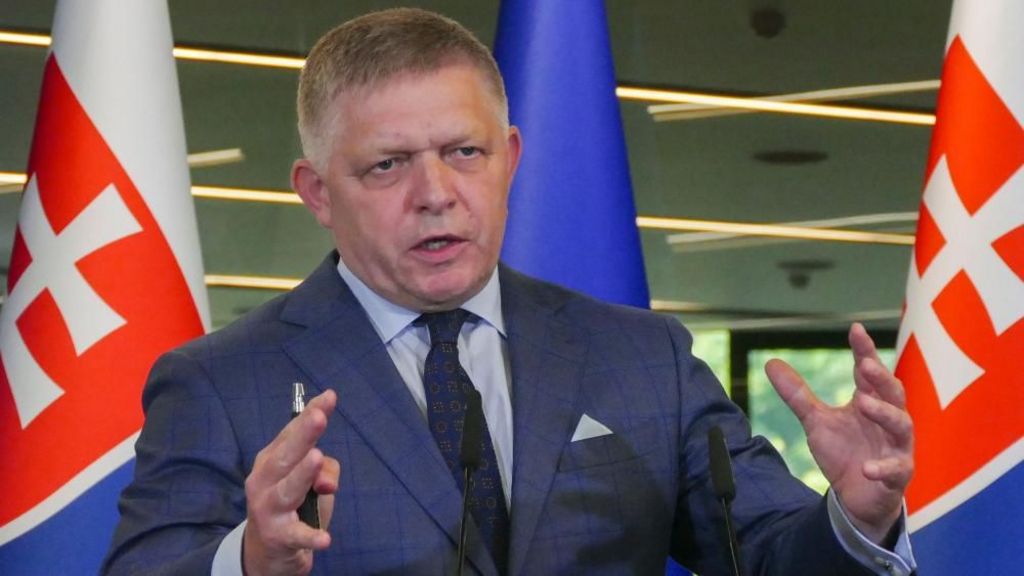
Slovakia passes law to recognise only two sexes and restrict adoption
Slovakia has enacted a significant constitutional amendment, legally recognizing only two sexes—male and female—and imposing restrictions on adoption and surrogate pregnancies. The amendment, which passed by a narrow margin in parliament, also asserts sovereignty in cultural and ethical matters. Prime Minister Robert Fico hailed the decision as a ‘great dam against progressivism,’ emphasizing his government’s commitment to traditional values. Critics, including Amnesty International, have condemned the move, warning it could marginalize the LGBT community and align Slovakia with illiberal regimes like Hungary and Russia. The amendment’s passage was unexpected, as Fico’s coalition initially lacked the necessary votes. However, last-minute support from opposition MPs secured the majority. Opposition leader Igor Matovic labeled the defectors as ‘traitors.’ Legal experts predict the amendment will provoke legal disputes with the European Union, potentially leading to sanctions. Critics argue the move is a political maneuver by Fico to divert attention from declining poll ratings and unpopular policies. President Peter Pellegrini has pledged to sign the amendment, calling it a unifying measure in a divided society. Meanwhile, Fico’s Smer-Social Democracy party faces expulsion from the Party of European Socialists (PES) for deviating from progressive values. The party’s alignment with far-right factions and Fico’s frequent meetings with Russian President Vladimir Putin have further strained relations with European allies.
-
Boxing in Ghana suspended after fighter dies aged 32
The Ghanaian government has imposed an immediate nationwide suspension on all boxing activities following the tragic death of super-middleweight boxer Ernest Akushey, popularly known as Bahubali. The 32-year-old fighter passed away on Tuesday, just 11 days after his bout against Jacob Dickson at the Bukom Boxing Arena in Accra on September 12. While the exact cause of death remains under investigation, preliminary reports suggest it may be linked to internal injuries sustained during the match. This incident marks the second fatality in Ghana’s boxing scene within six months, raising urgent concerns about safety standards in the sport. In March, Nigerian boxer Gabriel Oluwasegun Olanrewaju collapsed during a fight against Ghanaian opponent Jon Mbanugu in Accra and died shortly after being hospitalized. In response to these tragedies, the National Sports Authority has described the suspension as a ‘necessary step’ to ‘protect lives, uphold the integrity of the sport, and ensure its future.’ Authorities have also unveiled a five-year strategy aimed at implementing safer, more professional, and globally-aligned standards for boxing. Ghana has a rich boxing heritage, having produced world-renowned champions such as Azumah Nelson, and the sport enjoys widespread popularity across the nation. However, these recent deaths have reignited critical discussions about the need for enhanced safety measures and regulatory reforms.
-

Rolling back a rising tide of antisemitism
The global landscape is witnessing a concerning rise in antisemitism, which is significantly impacting Israel’s traditional alliances and support base. Countries such as Australia, Britain, Canada, and France are increasingly inclined to recognize a Palestinian state, while the United States, Israel’s long-standing ally, shows a notable decline in public support. According to The Economist, American favorability toward Israel has hit a 25-year low, with 53% of adults holding an unfavorable view. This shift is particularly pronounced among younger evangelicals and Democrats, signaling a broader change in public sentiment. Pro-Palestinian narratives, amplified by harrowing images of Gaza’s devastation, accuse Israel of committing genocide, further polarizing opinions. The absence of a clear Israeli vision for the future of Palestinians exacerbates the situation, allowing groups like Hamas to position themselves as the sole representatives of Palestinian interests. This dynamic is reshaping political discourse in the West, where antisemitism, once taboo, is increasingly normalized. The Vatican’s diplomatic efforts, led by Secretary of State Cardinal Pietro Parolin, aim to foster dialogue, but skepticism remains. As antisemitism resurfaces and Arab states gain influence, Israel faces a critical juncture. To counter this, Israel must address broader geopolitical challenges, articulate a vision for Palestinian self-determination, and strengthen its international alliances. The ongoing conflict in Gaza risks transforming military victories into political losses, echoing historical parallels with the Vietnam War. Ultimately, Israel’s ability to navigate these complexities will determine its future in the region and its relationship with the global Jewish diaspora.
-

Turkey abandons bid to force doner kebab rules on Europe
Turkey has abandoned its attempt to impose strict regulations on how doner kebabs are prepared across the European Union, a move that would have significantly impacted Germany’s thriving kebab industry. The proposal, which sought a ‘Traditional Speciality Guaranteed’ label, aimed to standardize ingredients and preparation methods, including meat types, slicing thickness, and marinades. However, the bid faced strong opposition, particularly from Germany, where the doner kebab has evolved into a distinct culinary tradition. German officials argued that the kebab has become an integral part of their national cuisine, diverging from its Turkish origins. The Turkish International Doner Federation (Udofed) had proposed that only specific meats, such as beef, lamb, or chicken, be used, while banning veal and turkey. The German version, often made with veal and served in flatbread with vegetables and sauces, would have been at odds with these rules. The bid’s withdrawal on September 23 followed widespread objections and failed compromise attempts. Germany’s kebab industry, which employs 60,000 people and generates €2.4 billion annually, celebrated the decision. Former German Agriculture Minister Cem Özdemir, of Turkish descent, emphasized that the doner kebab ‘belongs to Germany,’ reflecting its cultural integration.
-

China’s K-visa woos STEM talent put off by H-1B fee hikes
China is set to launch its new K-visa scheme on October 1, targeting young foreign professionals in science, technology, engineering, and mathematics (STEM) fields. This initiative comes at a time when global competition for skilled workers is intensifying, particularly as the United States imposes a hefty $100,000 fee on new H-1B visa applications, the primary route for skilled foreign workers to enter the U.S. job market. The K-visa, introduced as part of China’s revised visa rules on August 14, brings the total number of visa categories to 13. It is specifically designed for individuals aged 18 to 25 with a bachelor’s degree or higher from reputable universities or research institutions, particularly in STEM or related fields. The visa is expected to attract specialists in artificial intelligence, quantum communication, and life sciences. Unlike traditional visa schemes, the K-visa does not require applicants to secure a job offer or sponsorship from a Chinese employer. Additionally, it allows holders to bring their spouses and minor children to China and offers flexible terms regarding the number of entries, validity period, and length of stay. Once in China, K-visa holders can engage in various activities, including education, scientific research, entrepreneurship, and business. Liu Shaoshan, director of the Center for Embodied AI at the Shenzhen Institute of Artificial Intelligence and Robotics for Society, highlighted that the K-visa significantly lowers barriers for foreign talent to work and innovate in China. The move contrasts sharply with the U.S. H-1B visa program, which has faced criticism for its high costs and restrictive policies. China’s approach aims to foster global collaboration and innovation, positioning itself as a hub for technological advancement. However, concerns about national security and espionage may pose challenges for some foreign professionals considering the K-visa.
-

Eurovision body to hold vote on Israel’s participation
The European Broadcasting Union (EBU) has announced a pivotal vote to determine whether Israel will be allowed to participate in the 2026 Eurovision Song Contest. This decision follows mounting controversy over Israel’s inclusion due to the ongoing conflict in Gaza. The vote, set to take place at the EBU’s general assembly in early November, will involve all 68 member countries, including non-participating broadcasters from nations such as Tunisia, Egypt, Turkey, Algeria, Jordan, and Lebanon. A simple majority will decide the outcome, potentially excluding Israel if over 50% of members vote in favor.