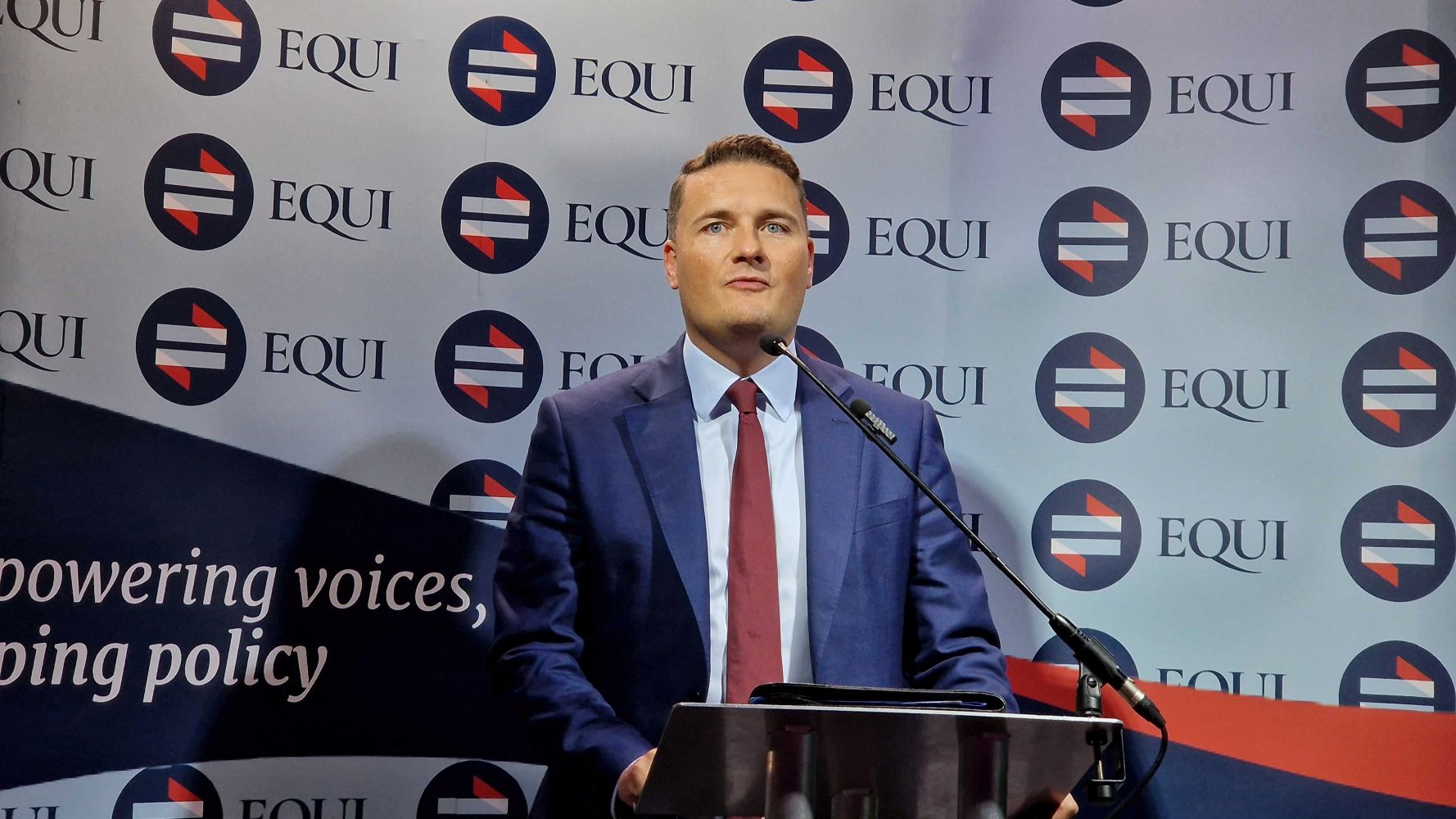
On Monday night, a vibrant gathering of Muslims formed a lengthy queue outside Liverpool’s Hilton hotel, an event that could easily have been mistaken for a nightclub. Inside, a room bathed in pink and purple fluorescent lights hosted conference attendees enjoying a buffet. Among the guests were several Labour backbenchers and imams, marking a significant moment for Equi, a Muslim think tank founded just a year ago. The event, held on the sidelines of the Labour conference, showcased Equi’s new report highlighting how Muslim-led youth initiatives save the UK £30 million annually. Despite the historical challenges Muslim civil society groups face in engaging with British governments, Equi has garnered substantial support from MPs and peers, including Afzal Khan and Baroness Sayeeda Warsi. The evening’s highlight was the rumored attendance of Wes Streeting, the Health Secretary, who arrived late but was warmly received by Equi’s director, Dr. Javed Khan. Streeting delivered a passionate speech addressing the marginalization of British Muslims and the threat from the far right, resonating deeply with the audience. The event also featured a surprise appearance by Shabana Mahmood, the newly appointed Home Secretary, who outlined her controversial immigration policy requiring migrants to demonstrate societal contributions and English proficiency for indefinite leave to remain. Mahmood’s vision for multiculturalism and controlled immigration aims to counter the insurgent right wing and restore national harmony. The gathering concluded with celebrations of Equi’s first anniversary, symbolizing a significant step forward for Muslim representation in British politics.
博客
-
Canada Post is on strike. What this means for your mail
Canada’s postal services have come to a standstill as thousands of postal workers initiated a nationwide strike on September 25, protesting sweeping reforms authorized by the federal government. The reforms, aimed at stabilizing the financially struggling Canada Post, include phasing out door-to-door delivery for approximately four million households, reducing delivery days, and closing rural post offices. These measures, expected to be implemented over nearly a decade, have sparked outrage from the Canadian Union of Postal Workers (CUPW), which labeled the changes as a ‘direct assault’ on public postal services and unionized jobs. The strike has left millions of Canadians without mail and parcel deliveries, with Canada Post suspending service guarantees and halting new item acceptance. However, essential services such as social security cheques and passport applications remain operational. This strike follows a similar walkout in November 2024 over unresolved pay and working conditions, which ended only after federal intervention. Canada Post, facing a financial crisis with a projected loss of C$1.5 billion this year, has warned that the strike will exacerbate its economic woes. The postal service, once a dominant player in parcel delivery, has seen its market share plummet from 62% in 2019 to 24% in 2023, driven by declining letter mail volumes and competition from private couriers. While CUPW advocates for diversifying revenue streams, such as offering banking and insurance services, Canada Post insists on focusing on core operations, including expanding parcel delivery. The ongoing dispute highlights the challenges of modernizing a traditional public service in an increasingly digital and competitive landscape.
-

‘Blueprint for permanent occupation’: Outrage online over Trump’s plan to end Gaza war
Donald Trump’s 20-point proposal to address the conflict in Gaza has ignited widespread criticism, with many accusing the former US president of masking a plan for Israel’s permanent occupation of the Palestinian enclave as a peace initiative. Announced alongside Israeli Prime Minister Benjamin Netanyahu at the White House, the plan conditions a halt to Israel’s military campaign on Hamas’s acceptance of its terms. Trump hailed the proposal as a historic achievement, claiming support from Arab, Muslim, and European leaders. However, reactions outside the White House were far from celebratory. Palestinian journalist Motasem Dalloul described the plan as a ‘dirty trick’ to reinforce Israeli occupation under international cover. Critics highlighted the plan’s lack of Palestinian self-determination, Israel’s continued control over borders, and the involvement of figures like Tony Blair, whom many view as emblematic of colonial overreach. Human rights scholars and activists condemned the proposal as an ultimatum rather than a genuine peace effort, emphasizing the exclusion of Palestinians from the decision-making process. Netanyahu’s subsequent announcement that Israel would not withdraw from Gaza further fueled accusations of bad faith. The plan’s deeper flaws, including its focus on ‘de-radicalization’ of victims rather than perpetrators and its failure to address accountability for alleged genocide, drew sharp criticism. Despite Qatar and Egypt forwarding the proposal to Hamas, many view it as a blueprint for permanent occupation rather than a pathway to peace.
-
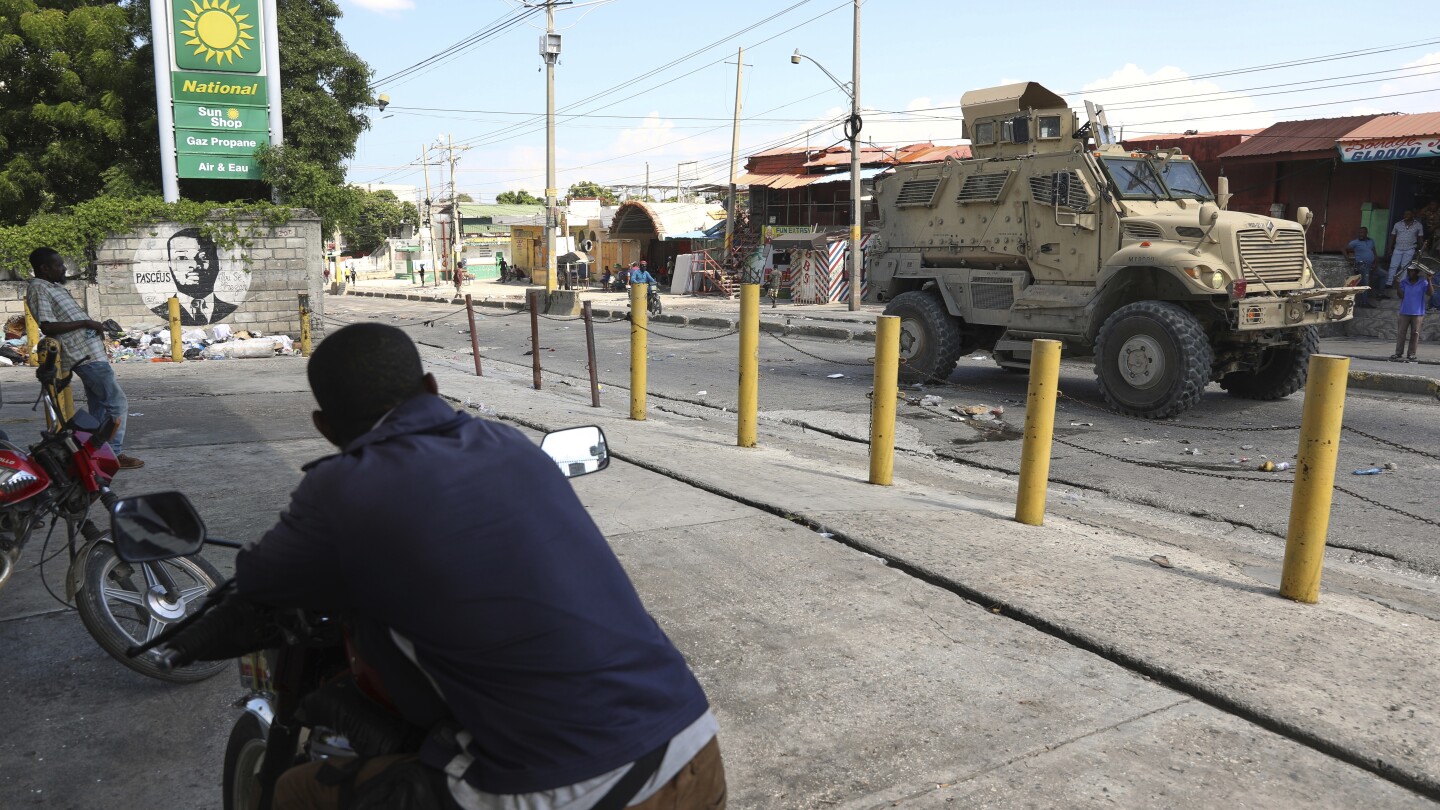
UN authorizes a much larger force to fight gangs in Haiti with new power to arrest gang members
In a decisive move to address Haiti’s escalating gang violence, the United Nations Security Council unanimously approved a resolution on Tuesday to authorize a significantly larger international force. The new 5,550-member ‘Gang Suppression Force,’ co-sponsored by the United States and Panama, will replace the current Kenya-led multinational mission, granting it enhanced powers to arrest suspected gang members—a capability the existing force lacks. The vote passed 12-0, with Russia, China, and Pakistan abstaining. U.S. Ambassador Mike Waltz hailed the resolution as a beacon of hope for Haiti, emphasizing the urgent need to curb the rampant violence that has destabilized the nation. Since the assassination of President Jovenel Moïse in 2021, gangs have seized control of 90% of the capital, Port-au-Prince, and expanded their criminal activities into rural areas, including looting, kidnappings, and sexual violence. Haiti has remained without a president since the assassination, further exacerbating its political and economic turmoil. The U.S. Embassy in Port-au-Prince underscored the resolution’s message, declaring an end to impunity for those destabilizing Haiti. Panama’s U.N. Ambassador Eloy Alfaro de Alba expressed optimism that the force would restore security, enabling political reconstruction, elections, and economic revival. However, China’s U.N. Ambassador Fu Cong criticized the resolution, warning it could worsen Haiti’s already dire situation. He also accused the U.S. of failing to fulfill its financial commitments, including $800 million owed to the U.N. peacekeeping budget. Russia’s Ambassador Vassily Nebenzia echoed concerns, labeling the mission as poorly conceived and unlikely to succeed. The resolution, adopted under Chapter 7 of the U.N. Charter, authorizes the force for an initial 12-month period. It mandates intelligence-led operations to neutralize gangs, protect critical infrastructure, and support Haitian efforts to combat arms trafficking. The force will consist of 5,500 uniformed personnel and 50 civilians, funded by voluntary contributions. U.S. envoy Waltz urged nations to contribute personnel and resources, while Secretary-General Antonio Guterres was tasked with establishing a U.N. office to provide logistical support. Laurent Saint-Cyr, leader of Haiti’s transitional presidential council, welcomed the resolution, calling it a pivotal step in combating the gangs that have devastated the nation.
-

Man charged with murder of parents and brother in Louth
A 31-year-old man, Robert O’Connor, has been formally charged with the murder of his parents and younger brother in a tragic incident that has shaken the rural community of Drumgowna, County Louth. The victims, identified as 56-year-old Louise O’Connor, her 54-year-old husband Mark O’Connor, and their 27-year-old son Evan O’Connor, were discovered dead at their family home on Monday morning. Irish police, known as Gardaí, described the deaths as “violent.”
Robert O’Connor appeared before a special sitting of Drogheda District Court on Tuesday evening, where he was formally charged with the triple homicide. The accused remained silent when the charges were read to him. Due to the severity of the case, no bail application was made, as the district court lacks the jurisdiction to grant such requests. Robert O’Connor’s solicitor, Paul James Moore, requested a psychiatric assessment for his client, which was approved by Judge Stephanie Coggans. The accused has been remanded in custody and is scheduled to appear again via video-link on Monday, 6 October.
The brief court hearing was attended by a family member, underscoring the emotional toll of the tragedy. Earlier, heartfelt tributes were paid to the deceased family members, who were well-regarded in their community. The case has drawn significant attention, with authorities continuing their investigation into the circumstances surrounding the deaths.
-
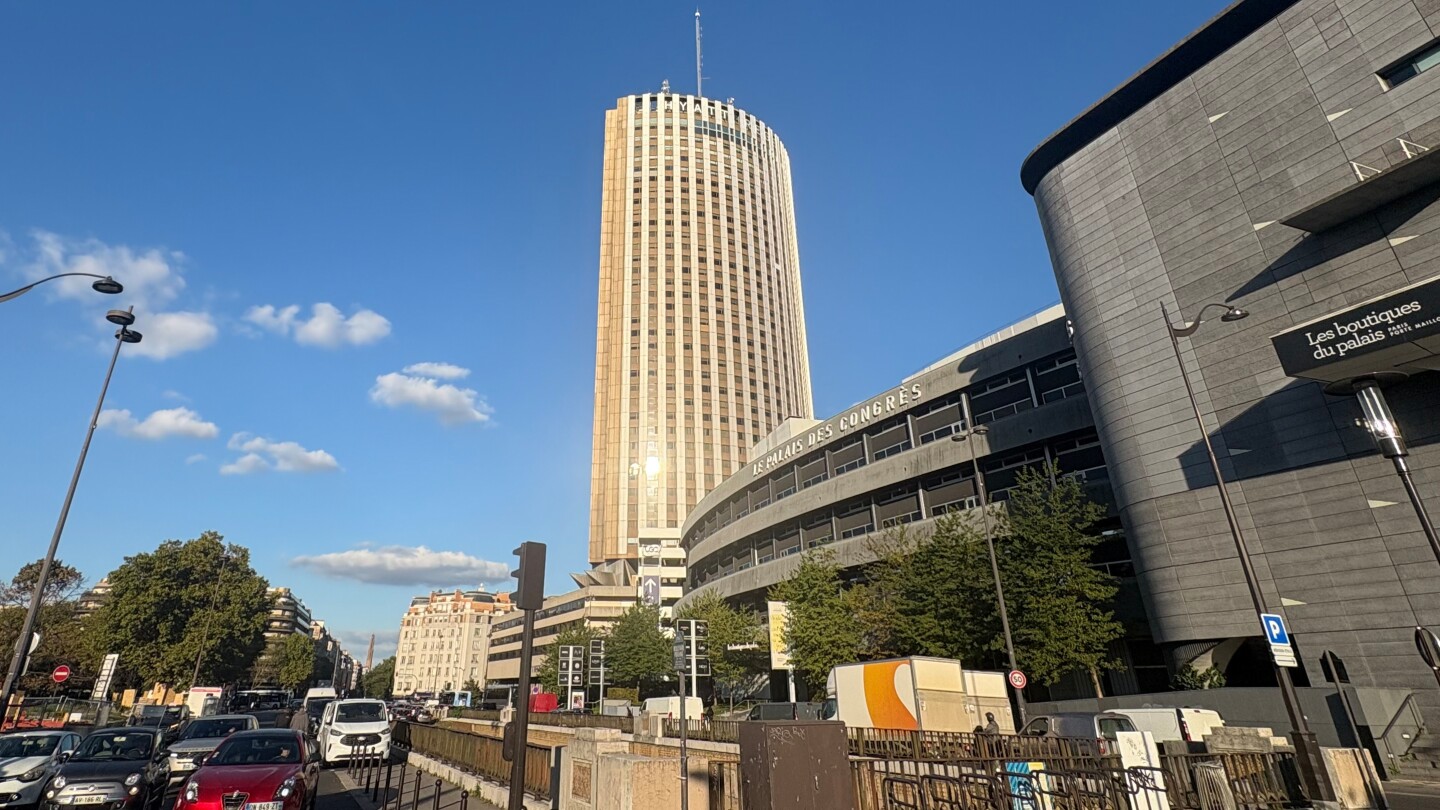
South Africa’s ambassador to France is found dead in Paris
In a shocking turn of events, South Africa’s ambassador to France, Emmanuel Nkosinathi Mthethwa, was discovered deceased on Tuesday morning at the base of a luxury hotel in western Paris. The 58-year-old diplomat, widely known as Nathi Mthethwa, had been reported missing the previous evening after his wife received a distressing message from him. In the message, Mthethwa reportedly apologized and hinted at his intention to end his own life, according to Paris prosecutor Laure Beccuau. A security guard at the Hyatt hotel found Mthethwa’s body in the inner courtyard early Tuesday, prompting an immediate investigation. Authorities revealed that Mthethwa had reserved a room on the 22nd floor, where the window’s safety mechanism appeared to have been forcibly opened. Investigators found no evidence of a struggle, medication, or illegal substances at the scene. South African President Cyril Ramaphosa expressed profound sorrow over the ambassador’s death, describing it as a tragic loss. In a statement, Ramaphosa extended his heartfelt condolences to Mthethwa’s wife and family. Mthethwa, who had been appointed ambassador to France in December 2023, was tasked with enhancing bilateral relations between South Africa and France. Prior to his diplomatic role, he served as South Africa’s minister of police and minister of sports, arts, and culture.
-
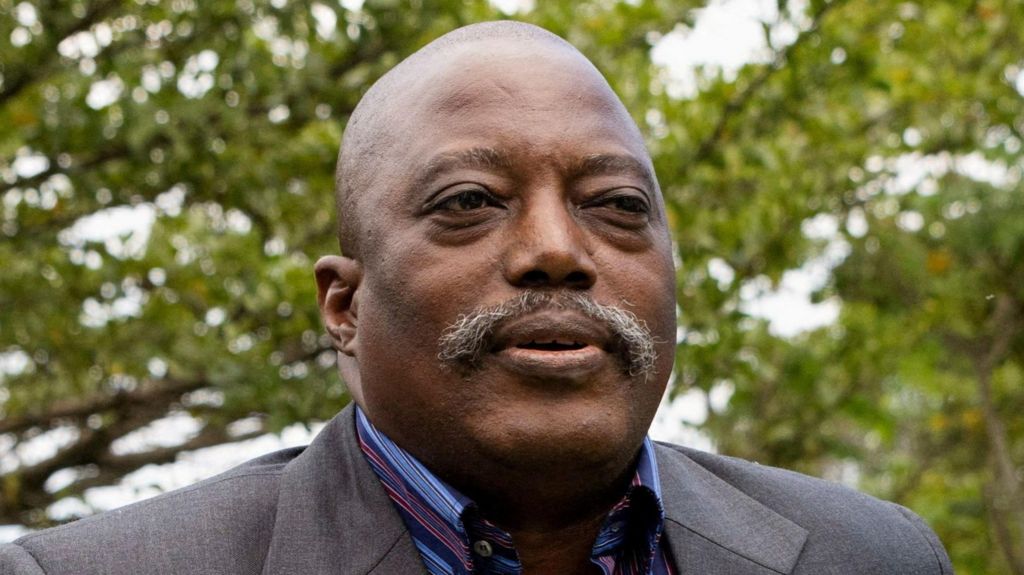
Former Congolese president sentenced to death for war crimes
In a landmark ruling, former Democratic Republic of Congo (DRC) President Joseph Kabila has been sentenced to death in absentia for war crimes, treason, and crimes against humanity. The charges stem from allegations that Kabila supported the M23 rebel group, which has caused widespread devastation in the country’s eastern region. The verdict, delivered on Friday, includes accusations of murder, sexual assault, torture, and insurrection. Kabila, who has dismissed the case as “arbitrary,” claims the judiciary is being used as an “instrument of oppression.” His current location remains unknown. Kabila, 54, led the DRC for 18 years after succeeding his father, Laurent Kabila, who was assassinated in 2001. He handed power to current President Félix Tshisekedi in 2019 but later fell out with him, leading to his self-imposed exile in 2023. In May 2024, Kabila returned to the M23-held city of Goma, stating his intention to help resolve the ongoing conflict in the east. However, Tshisekedi accused him of orchestrating the M23 rebellion, and senators revoked his legal immunity, enabling his prosecution. The conflict escalated earlier this year when M23 seized control of key areas in the mineral-rich east, including Goma and Bukavu. The UN and several Western nations have accused Rwanda of backing M23, a claim Kigali denies. Despite a July ceasefire agreement, violence persists in the region.
-

South Africa’s top diplomat in France found dead near Paris hotel
South Africa’s ambassador to France, Nathi Mthethwa, was discovered deceased near the Hyatt Regency Hotel in Paris, according to French authorities. The 58-year-old diplomat had been reported missing by his wife on Monday evening following a concerning message from him. Mthethwa had reserved a room on the 22nd floor of the hotel, where a security window was found forced open. The Paris prosecutor’s office has initiated an investigation into the unclear circumstances surrounding his death, with a duty magistrate dispatched to the scene. Mthethwa, a prominent member of the African National Congress (ANC), had been serving as ambassador since December 2023. He previously held significant roles in the South African government, including Minister of Police and Minister of Arts and Culture. A close ally of former President Jacob Zuma, Mthethwa was implicated in the state capture inquiry, which investigated allegations of high-level corruption during Zuma’s presidency. South Africa’s Foreign Minister Ronald Lamola praised Mthethwa as a ‘distinguished servant of the nation,’ emphasizing that his loss is deeply felt both nationally and within the international diplomatic community. Lamola confirmed that French authorities are actively investigating the incident.
-
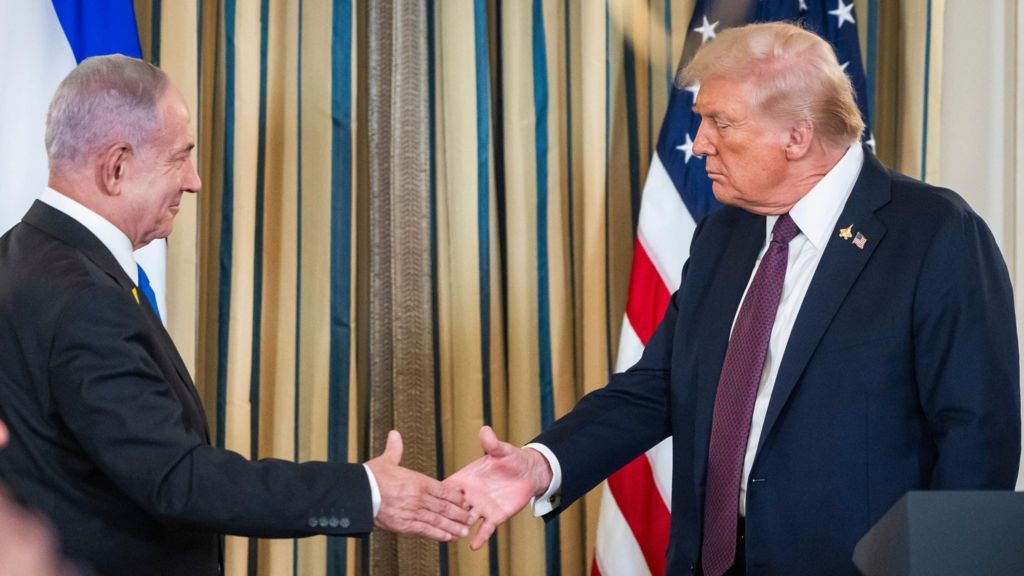
Bowen: Momentum is the strength of Trump’s Gaza plan, but lack of detail is its weakness
A framework agreement proposed by former U.S. President Donald Trump to end the Gaza war and reconstruct the devastated territory has garnered significant momentum, driven by Trump’s personal influence and support from key Arab and Islamic nations, including Jordan, Egypt, Qatar, Saudi Arabia, the UAE, Pakistan, Indonesia, and Turkey. Israeli Prime Minister Benjamin Netanyahu, standing alongside Trump, has also accepted the plan, despite its implicit nod to a potential pathway to Palestinian statehood—a concept he has vehemently opposed. Trump has set a tight deadline, giving Hamas ‘three to four days’ to decide on the proposal, warning that a rejection would result in the continuation of hostilities. The plan bears resemblance to an earlier initiative by President Joe Biden, which faltered due to Netanyahu’s shifting demands under pressure from his hard-right cabinet. However, Trump’s framework marks a pivotal moment, as it represents the first instance of him exerting pressure on Israel to cease the conflict. The document, endorsed by the UK and other European countries, outlines a rough roadmap for an IDF pullback but lacks detailed specifics, a hallmark of Trumpian diplomacy. While mainstream Israeli opposition parties have backed the plan, it has drawn condemnation from ultra-nationalist factions within Netanyahu’s coalition, who previously supported the controversial ‘Trump Riviera’ proposal advocating for the displacement of Gaza’s Palestinian population. The new plan explicitly states that no Palestinian will be forced to leave, a stance that has angered hardliners like Finance Minister Bezalel Smotrich, who likened it to the 1938 Munich Agreement. The agreement’s ambiguity allows for divergent interpretations, with Netanyahu viewing it as a step toward Israel’s victory over Hamas, while Arab and Islamic nations see it as a pathway to a two-state solution and the rebuilding of Gaza. The plan’s success hinges on intricate negotiations, with numerous opportunities for breakdowns, particularly given the structural flexibility it affords Israel to veto unfavorable moves. Ultimately, the framework’s lack of clarity and detail raises questions about its viability in resolving a century-old conflict.
-
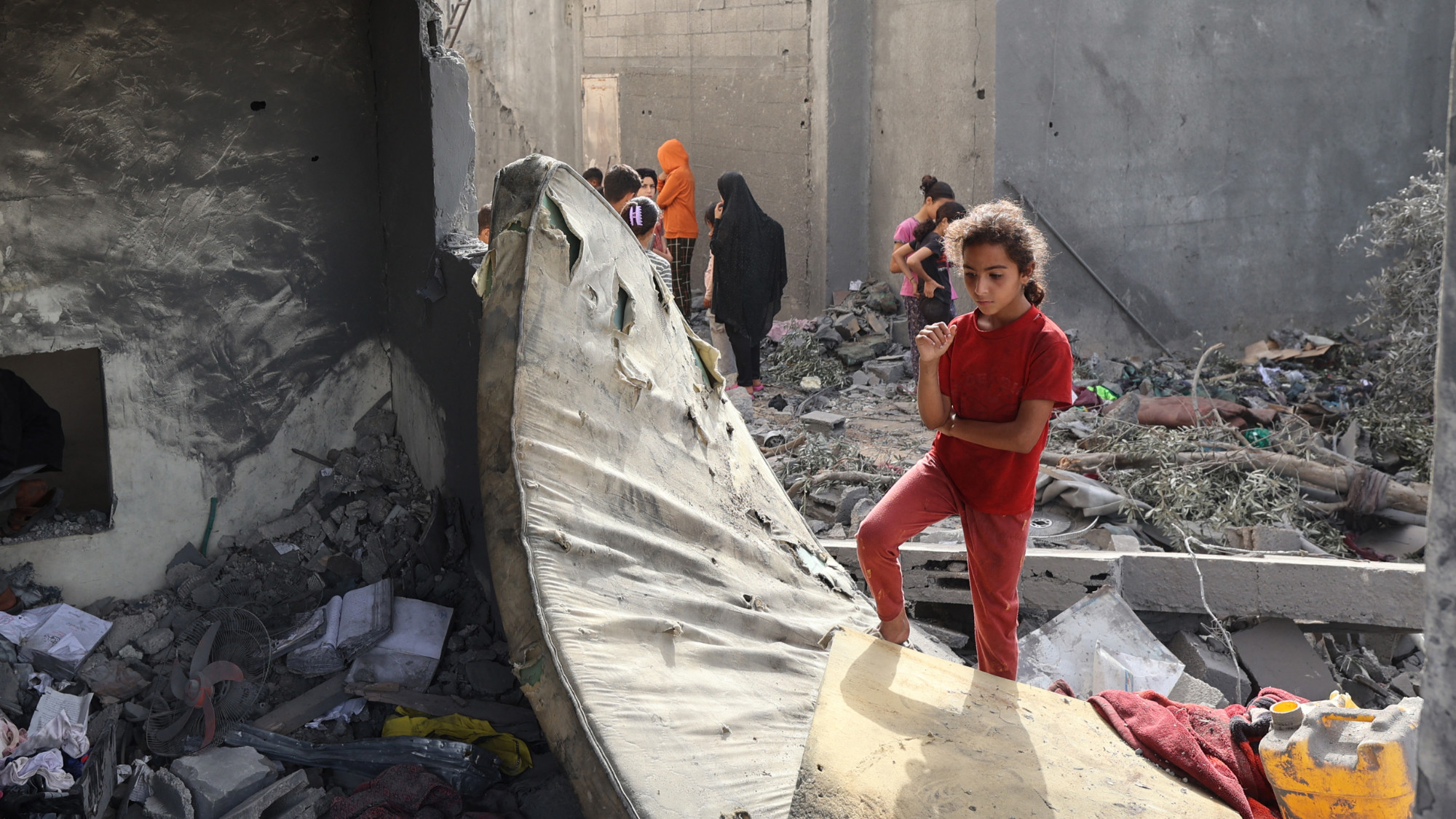
Gaza’s children face genetic harm ‘for generations to come’ from Israel’s genocide
In the war-torn Gaza Strip, 22-month-old Rewan Aldreini’s life is a stark illustration of the devastating impact of conflict and malnutrition. Born in November 2023, just a month after the Israeli siege began, Rewan has never tasted her mother’s milk. Her mother, grappling with depression and post-traumatic stress disorder (PTSD), stopped producing milk due to the trauma of relentless bombardment and displacement. The family fled their home in Beit Lahia, moving first to Gaza City and then to Khan Younis, where they now struggle to survive. Rewan’s father, Mohamed Aldreini, can only afford rice to feed his daughter, who suffers from severe malnutrition, a weak immune system, heart problems, and developmental delays. At just 7kg, her health continues to deteriorate under what her father describes as “engineered starvation.”
Rewan’s plight is not unique. Scientists warn that the ongoing crisis in Gaza is creating an epigenetic disaster, with long-term health consequences for future generations. Epigenetics, the study of how environmental factors like stress and malnutrition alter gene expression without changing the DNA sequence, has shown that such conditions can leave lasting genetic imprints. Research from historic famines, such as the Dutch Hunger Winter and the Rwandan genocide, reveals that trauma and starvation can lead to increased risks of chronic diseases, mental health disorders, and developmental issues in children and their descendants.
Professor Tessa Roseboom, a biologist at the University of Amsterdam, explains that stress hormones in mothers can affect babies’ bodies and brains. Similar findings were observed in Holocaust survivors and their children, where gene changes were directly linked to parental trauma. In Gaza, the combination of starvation, displacement, and ongoing violence is creating a perfect storm for epigenetic damage. Dr. Leon Mutesa of the University of Rwanda, who studied the epigenetic legacy of the 1994 genocide, warns that the symptoms in Gaza—fear, stress, and high cholesterol—are early indicators of epigenetic changes.
According to Palestinian health officials, at least 20,000 children have been killed since the war began, and over 50,000 have been injured or killed. In August alone, 12,800 children were identified as acutely malnourished, a condition the UN has confirmed as famine. Experts like Professor Hassan Khatib of the University of Wisconsin–Madison predict that the epigenetic damage in Gaza will be catastrophic, affecting not only current generations but also future ones. Khatib emphasizes that the crisis is particularly harmful to pregnant women and adolescent boys, whose developing bodies are more vulnerable to genetic alterations.
While the damage already inflicted may be irreversible, scientists agree that immediate action can mitigate further harm. Ending the war, providing access to food, healthcare, and safe living conditions, and offering psychological support are critical steps. “We need action from the international community to stop the suffering in Gaza,” says Roseboom. “This conflict isn’t just about the present moment; it’s creating life-long consequences for children like Rewan, and potentially for generations to come.”
For Mohamed Aldreini, the hope for a normal life remains. “I still dare to dream this genocide will end,” he says. “That we can return to a normal life—as human beings.”