博客

  • The last US-Russia nuclear pact expires, prompting fears of a new arms race

    The last US-Russia nuclear pact expires, prompting fears of a new arms race

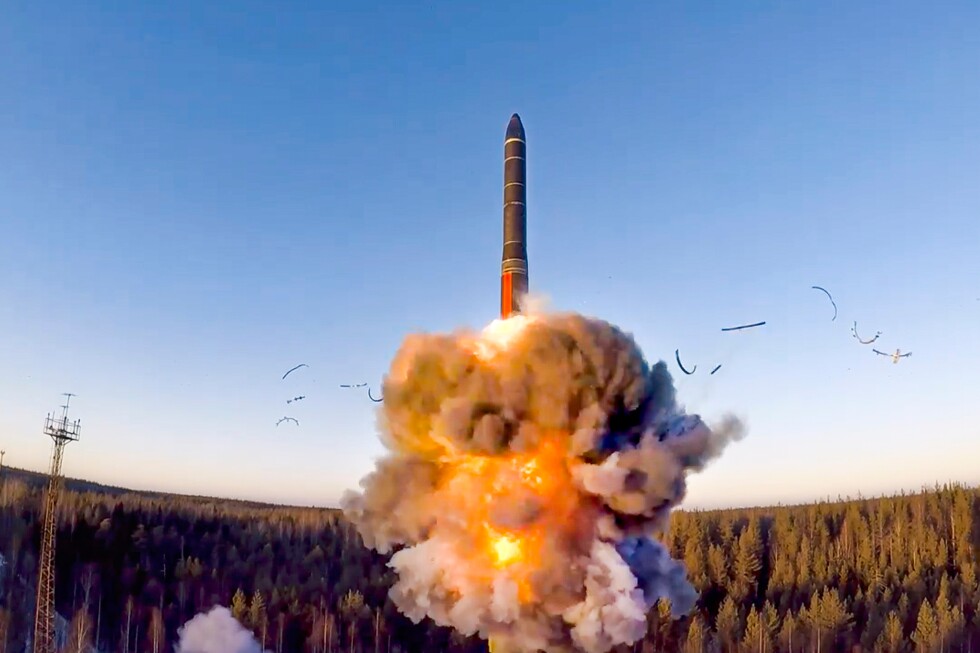
    MOSCOW — The New START Treaty, the final remaining nuclear arms control agreement between Russia and the United States, officially expired on Thursday, marking the first time in over half a century that the world’s two largest atomic arsenals operate without mutual limitations.

    The termination of this pivotal arms control framework has raised global concerns about the potential emergence of an unconstrained nuclear arms race. The treaty, originally signed in 2010 by former President Barack Obama and Russian leader Dmitry Medvedev, had established strict caps of 1,550 deployed nuclear warheads and 700 delivery systems for each nation.

    Russian President Vladimir Putin had previously expressed willingness to extend the treaty’s limitations for an additional year, contingent on reciprocal action from Washington. However, the Trump administration remained noncommittal regarding extension negotiations. Kremlin adviser Yuri Ushakov confirmed that Putin discussed the treaty’s expiration with Chinese President Xi Jinping on Wednesday, noting the absence of formal response from American officials to Moscow’s extension proposal.

    The Russian Foreign Ministry issued a definitive statement Wednesday night clarifying that “under the current circumstances, we assume that the parties to the New START Treaty are no longer bound by any obligations or symmetrical declarations within the context of the Treaty, including its core provisions.”

    Ushakov emphasized that Russia “will act in a balanced and responsible manner based on thorough analysis of the security situation,” suggesting measured rather than immediate escalation in nuclear arsenal expansion.

    The treaty’s verification mechanism, which included comprehensive on-site inspections, had been suspended since 2020 due to COVID-19 restrictions and never resumed. In February 2023, Putin formally suspended Moscow’s participation, citing incompatible security conditions amid NATO’s declared objectives in Ukraine, while simultaneously maintaining commitment to the pact’s nuclear caps.

    This development represents the culmination of a progressive dismantling of Cold War-era nuclear arms control architecture, with New START being the last in a series of bilateral agreements that have now全部 expired.

  • What to know about the attacks in Nigeria that killed over 160 people

    What to know about the attacks in Nigeria that killed over 160 people

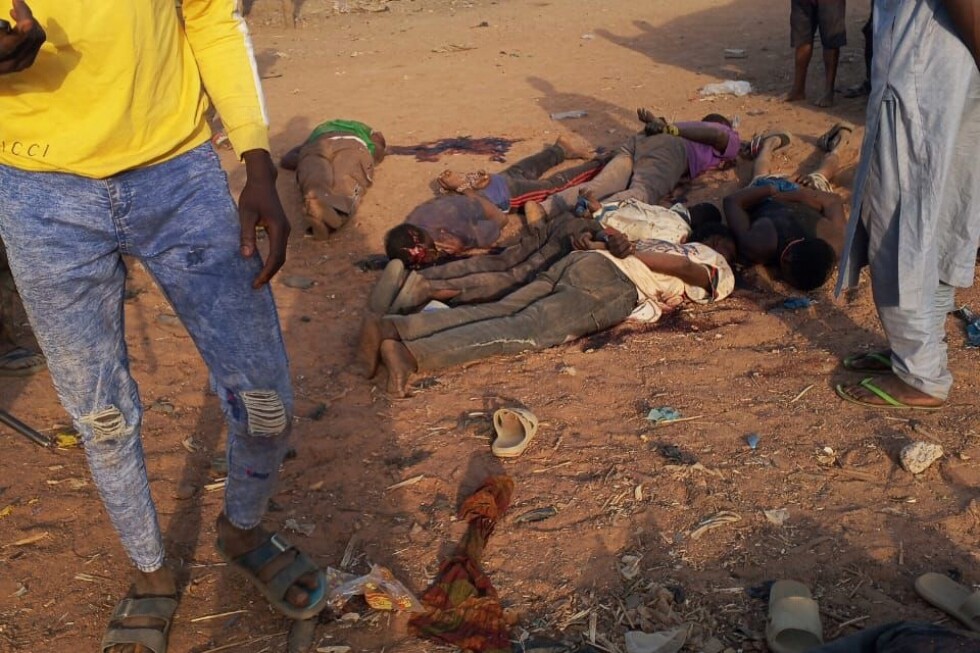
    ABUJA, Nigeria — In one of the most devastating attacks to hit Nigeria in recent months, coordinated assaults by armed militants on two neighboring villages in Kwara state have left staggering casualties, with estimates ranging from 162 to over 170 fatalities. The Tuesday evening raids on Woro and Nuku villages involved extensive burning of homes and systematic looting of local businesses, according to eyewitness accounts and humanitarian organizations.

    Amnesty International condemned what it described as “a stunning security failure” in the region, highlighting the government’s inability to protect vulnerable communities. The attack represents a dangerous expansion of extremist violence beyond Nigeria’s traditional conflict zones into previously less-affected areas.

    Nigeria currently confronts multiple overlapping security challenges, including a persistent Islamist insurgency and rampant kidnappings for ransom by criminal networks. While so-called “bandit” groups have historically operated primarily in northwestern territories, their recent migration into central regions like Kwara signals an alarming escalation of the crisis.

    Although no group has officially claimed responsibility for the massacres, preliminary investigations point to involvement by Islamic State-affiliated factions. Local parliament representative Mohammed Omar Bio attributed the attacks to the IS-linked Lakurawa group, while regional security experts suggest possible involvement by Jama’atu Ahlis Sunna Lidda’awati wal-Jihad, a Boko Haram splinter faction responsible for recent atrocities.

    Kwara State Governor AbdulRahman AbdulRazaq characterized the assault as likely retaliation against recent counter-terrorism successes, stating militants sought to divert security forces from their ongoing operations against terrorist and kidnapping networks.

    The tragedy coincides with intensified United States engagement in Nigeria’s security crisis. Days before the attack, U.S. Africa Command confirmed deployment of a specialized military team to provide intelligence support at Nigeria’s official request. This cooperation represents a significant diplomatic shift from earlier tensions, when the Trump administration threatened military action over perceived inadequate protection of Christian communities.

    Analysts note that while religious tensions have been exacerbated by the violence, most victims of armed groups across Nigeria’s Muslim-majority northern regions are actually Muslims. The U.S. has recently demonstrated commitment to the partnership through airstrikes against IS-affiliated militants and promises to deliver previously delayed military equipment, including drones and helicopters, despite ongoing concerns about human rights compliance by Nigerian security forces.

  • Bank of England set to keep UK interest rates on hold as inflation remains above target

    Bank of England set to keep UK interest rates on hold as inflation remains above target

    The Bank of England has maintained its benchmark interest rate at 3.75% during Thursday’s monetary policy meeting, marking a pause in its extended cycle of monetary easing. This decision comes as UK policymakers navigate competing economic pressures: persistently elevated inflation levels and unexpectedly robust economic indicators.

    Over the past eighteen months, Britain’s central banking authority has implemented a series of measured rate reductions, typically adjusting monetary policy every quarter. The most recent cut occurred in December 2023, when officials lowered the key rate by 25 basis points while signaling additional decreases potentially forthcoming in 2024.

    Recent economic assessments have revealed stronger-than-projected performance in the British economy during the early months of 2024, creating potential inflationary pressures that complicate monetary policy decisions. Although inflation has demonstrated a downward trajectory over approximately the past year, the current rate of 3.4% continues to exceed the central bank’s mandated 2% target.

    Andrew Wishart, Senior UK Economist at Berenberg Bank, noted: ‘Preliminary 2024 economic data suggests both stronger consumer demand and more persistent inflation dynamics than our previous projections anticipated.’

    Economists emphasize that forthcoming economic releases will prove crucial in determining the timing of future rate adjustments. The monetary policy committee faces the delicate balancing act of stimulating economic growth through reduced borrowing costs while simultaneously containing price stability risks.

    Lower interest rates typically stimulate economic activity by decreasing borrowing expenses for both consumers and businesses, potentially encouraging increased spending and capital investment. However, this stimulus may simultaneously exert upward pressure on prices, creating policy dilemmas for central bankers.

    The current Labour government, which has experienced declining popularity since its 2024 election victory partly due to economic concerns, maintains a vested interest in seeing inflation decline substantially this year, which would enable further reductions in borrowing costs.

  • Shanghai lights up Times Square with Chinese New Year greeting

    Shanghai lights up Times Square with Chinese New Year greeting

    The iconic Nasdaq screen in New York’s Times Square transformed into a vibrant portal to Shanghai this week, broadcasting a special Chinese New Year greeting that captivated pedestrians at the world’s busiest intersection. Produced by Shanghai International Services, the dynamic video presentation showcased the Chinese metropolis through stunning visuals of its bustling streets, cultural landmarks, and daily urban life.

    The digital showcase strategically highlighted Shanghai’s appeal as a premier destination for education, business opportunities, and tourism. As international travel to China gains momentum, Shanghai has emerged as a particularly attractive location for American visitors, further enhanced by its 240-hour visa-free transit policy that facilitates extended stays for foreign tourists.

    New York residents and visitors alike paused to engage with the display, expressing newfound interest in the Chinese city. Tori Cignarella, a local resident, remarked, ‘I’ve never been to Shanghai, but it looks amazing to see all the information here.’ The presentation ignited her curiosity about Chinese culture, specifically mentioning desires to experience traditional paper-cutting and tea ceremonies.

    Derek, a visitor from Kansas City, Missouri, also stopped to watch the display, noting that traveling to China has been on his consideration list. The Times Square installation represents a innovative approach to cultural diplomacy and destination marketing, leveraging one of the world’s most visible advertising spaces to foster international connections during the significant cultural period of Chinese New Year celebrations.

  • Children’s books a tale of new cultural confidence

    Children’s books a tale of new cultural confidence

    A new generation of Chinese authors and illustrators is revolutionizing children’s literature with culturally authentic narratives that are capturing international attention. Among these emerging talents is 28-year-old Hu Yifan, whose minimalist picture book series ‘Breathe In, Breathe Out’ has achieved remarkable success both domestically and abroad.

    The three-volume work features sparse text paired with evocative illustrations that guide readers through breathing exercises—showing activities like blowing out candles or watching fireworks that naturally encourage inhalation and exhalation. Originally published in June 2023 as children’s literature, the series has unexpectedly resonated with adult audiences, demonstrating the universal appeal of its thoughtful design.

    Hu’s work has garnered prestigious accolades including the Best Picture Book honor at the 35th Chen Bochui International Children’s Literature Award and recognition in The Beauty of Books in China design competition. International recognition followed with selection for the dPICTUS 100 Outstanding Picture Books 2023 & 2024 list. The global expansion continues with a Portuguese edition already released in Brazil and English and French versions forthcoming.

    Industry veteran Solene (Fengbei) Xie, with over 18 years in children’s publishing, observes that Chinese creators are producing exceptional original content that deserves broader global exposure. Having left a national publishing house to establish her own agency in Shanghai, Xie launched the Pictures and Words from the East project in 2021 to promote Chinese children’s literature internationally.

    ‘We have so many excellent original works in China, but they don’t get many opportunities to reach a wider audience globally,’ Xie noted. She now manages rights for numerous local titles, including Hu’s acclaimed series, leveraging her industry expertise and connections to bridge cultural divides through literature.

    This movement represents a significant shift in children’s publishing, where Chinese creators are developing distinctive visual and narrative styles that both reflect cultural heritage and appeal to universal human experiences. The success of these works signals growing international appreciation for Chinese creative voices in children’s literature.

  • Workers urge Target and US firms to speak up over ICE raids

    Workers urge Target and US firms to speak up over ICE raids

    Amid escalating tensions over immigration enforcement, major Minnesota corporations led by retail giant Target are confronting unprecedented employee unrest. The core conflict stems from workers’ demands for clearer corporate protocols when Immigration and Customs Enforcement (ICE) agents appear at workplaces, creating a complex intersection of legal compliance and employee protection.

    The situation reached a critical point following January’s detention of two Target employees at a Minneapolis-area store, where masked agents subdued workers in the store’s entryway. This incident triggered mass employee action, including an internal letter signed by over 300 staff members demanding executive intervention and stricter limits on ICE access to corporate properties.

    Seventy-one-year-old cashier Sandra Macmillan resigned in protest, citing Target’s initial silence as “the last straw” after witnessing viral videos of the arrests. Her departure symbolizes growing worker dissatisfaction across multiple industries, including hospitality and construction, where companies like Hilton, Home Depot, and DR Horton face similar pressures.

    The corporate response has been complicated by legal ambiguities regarding property access rights and the Trump administration’s aggressive “Operation Metro Surge” initiative in Minneapolis. While Target’s new CEO Michael Fiddelke addressed community violence in internal communications, the company has not publicly commented on the specific ICE incidents, reflecting the delicate balance businesses must maintain between employee safety and legal compliance.

    Legal experts characterize property access regulations as a “murky” area, particularly regarding quasi-public spaces like store parking lots. While judicial warrants are required for non-public areas, the rules remain ambiguous for other spaces, forcing employers into difficult risk assessments.

    The administration’s response has been unequivocal: when a Hilton franchisee refused to rent rooms to ICE agents, the Department of Homeland Security publicly condemned the action as law enforcement obstruction. Hilton subsequently severed ties with the franchisee, demonstrating the substantial business risks involved.

    Worker advocacy groups including Unidos Minnesota and the ICE Out Now Coalition have organized protests and strikes, arguing that major employers have both moral and economic responsibilities to protect their workforce. The United Food and Commercial Workers Local 663 reports widespread anxiety among members, including U.S. citizens concerned about racial profiling during enforcement actions.

    As the situation evolves, Minnesota businesses find themselves caught between employee safety concerns, legal obligations, and political pressures, creating one of the most challenging workplace dynamics of the current administration’s immigration enforcement era.

  • Women’s development set for high-quality growth in 15th FYP

    Women’s development set for high-quality growth in 15th FYP

    China’s forthcoming 15th Five-Year Plan (2026-2030) has positioned women’s advancement as a central policy priority, signaling a transformative approach to gender equality during the nation’s next development phase. According to exclusive insights from Professor Wang Xiangmei of China Women’s University, this strategic focus will catalyze a new era of women’s development characterized by enhanced quality, broader inclusivity, and improved social balance.

    The blueprint represents a significant evolution in China’s gender policy framework, moving beyond basic equality measures toward comprehensive empowerment strategies. Professor Wang emphasized that the plan will address structural barriers while creating unprecedented opportunities for women across economic, educational, and social domains.

    This policy alignment comes as China navigates complex demographic shifts and economic transformation. The integrated approach recognizes women’s critical role in national development and aims to leverage their potential through targeted interventions. The plan is expected to introduce innovative mechanisms for women’s participation in leadership, entrepreneurship, and technological innovation.

    Implementation will focus on creating enabling environments across urban and rural settings, with particular attention to closing regional development gaps. The initiative reflects China’s commitment to both domestic gender equality objectives and international development goals, potentially establishing new benchmarks for women’s advancement in developing economies.

  • Man charged with terrorism over attack targeting Aboriginal Australians at protest

    Man charged with terrorism over attack targeting Aboriginal Australians at protest

    Western Australian authorities have brought unprecedented terrorism charges against a 31-year-old man accused of deploying a homemade explosive device during an Aboriginal rights demonstration in Perth last month. The suspect, whose identity remains protected by court order, allegedly hurled the improvised bomb into a crowd of approximately 2,500 peaceful protesters gathered to oppose Australia Day celebrations.

    The potentially lethal device, packed with ball bearings and screws as shrapnel, failed to detonate despite having its fuse lit. Law enforcement officials confirmed the unexploded bomb could have triggered a mass casualty event with catastrophic injuries and potential fatalities.

    West Australian Premier Roger Cook characterized the attack as racially motivated, stating the assailant targeted “Aboriginal people and other peaceful protesters” driven by “hateful, racist ideology.” Police Commissioner Col Blanch revealed the suspect appeared to be “self-radicalized” through online exposure to pro-white extremist content, acting without known accomplices.

    The investigation prompted an immediate coordinated response between state and federal agencies. Australian Federal Police Commissioner Krissy Barrett confirmed that both AFP and ASIO, the nation’s domestic intelligence organization, joined the case within 36 minutes of the incident to assess potential ongoing threats.

    This marks the first terrorism charge ever filed in Western Australia, carrying a maximum penalty of life imprisonment. The accused remains in custody awaiting his next appearance at Perth Magistrates Court on February 17, while already facing previous charges related to unlawful harm intent and explosive possession under suspicious circumstances.

    The incident has reverberated across Australia, particularly within Indigenous communities for whom January 26 represents Invasion Day rather than a national celebration, commemorating the 1788 arrival of British colonizers that began centuries of oppression.

  • Supply chains and China’s Hormuz imperative

    Supply chains and China’s Hormuz imperative

    While maritime tensions in East Asia frequently dominate energy security discussions, a deeper structural examination reveals that Asia’s economic stability hinges thousands of miles westward in the Persian Gulf. As geopolitical alliances continue evolving through 2026, China’s industrial expansion remains fundamentally tethered to the stability and accessibility of this critical region.

    The emerging ‘Hormuz Imperative’—distinct from the more commonly referenced ‘Malacca Dilemma’—illustrates how the East Asian consumer-West Asian producer relationship has matured into an intricate security complex. Within this framework, external pressures on energy flows don’t merely target suppliers but expose strategic vulnerabilities of the world’s largest energy importer. Market data and energy flow analysis confirm that Strait of Hormuz stability represents not just a regional concern but a macroeconomic necessity for Beijing.

    China’s crude oil imports maintained historic peaks in late 2025, averaging over 13.18 million barrels daily. Despite substantial renewable energy investments, China’s industrial base—particularly petrochemical and heavy transport sectors—retains structural dependence on hydrocarbon imports. Approximately 50% of China’s crude originates from the Persian Gulf, making Hormuz a point of origin rather than merely a transit chokepoint like Malacca.

    This interdependence creates mutual vulnerability: Gulf producers require market access for revenue generation while Chinese consumers require supply security to maintain industrial output. The economic relationship’s critical component centers in Shandong province, where independent refineries (colloquially ‘teapots’) account for roughly one-quarter of China’s refining capacity.

    Western market intelligence firms estimate 1.3-1.4 million barrels daily flowed from Iran to China in 2025, trading at an $8-12 per barrel discount due to sanctions. For Shandong’s refiners, this ‘regulatory discount’ functions as a vital subsidy, lowering production costs for diesel and chemical derivatives while maintaining Chinese manufacturing exports’ global competitiveness.

    Industry analysts describe this trade as supported by a ‘resilient decentralized network’ of maritime logistics involving ship-to-ship transfers in international waters and diverse flagging strategies. This sophisticated parallel logistics system demonstrates how market demand frequently circumvents political barriers.

    Three primary strategic scenarios could disrupt this flow:

    1. Supply Chain Constriction: intensified sanctions enforcement targeting logistical nodes could force refiners to replace discounted barrels with market-rate crude, potentially eroding margins and driving domestic fuel prices higher.

    2. Market Normalization: diplomatic resolution lifting sanctions would eliminate China’s monopsony power, inviting European and Indian competitors back to the market and increasing China’s national energy bill.

    3. Kinetic Deterrence: high-intensity conflict disrupting Hormuz could spike oil prices above $150/barrel. Despite China’s Strategic Petroleum Reserve covering approximately 90 days of imports, prolonged disruption would bypass these buffers.

    Energy disruptions would disproportionately affect southern industrial zones (Guangdong, Fujian, Zhejiang), which rely heavily on imported liquid fuels. Sustained high energy prices could constrain industrial output and complicate China’s transition from property-led growth.

    Beijing’s dual-track mitigation strategy involves aggressive renewable energy expansion and investments in overland pipelines through Pakistan (CPEC) and Russia (ESPO). However, oil remains irreplaceable for heavy industry and maritime transport through the medium term (2025-2030), and pipeline capacity represents only a fraction of Hormuz’s volume.

    The ‘Hormuz Imperative’ reveals not simple dependency but complex interdependence. While external powers retain leverage through financial and maritime architecture control, parallel export networks demonstrate unilateral coercion’s limits. For Beijing, Persian Gulf stability isn’t a foreign policy luxury but a domestic economic necessity—the global supply chain remains secure only while its key nodes stay stable, creating a balance where disruption costs become prohibitively high for any single actor.

  • Fears flight route changes could affect cancer patients

    Fears flight route changes could affect cancer patients

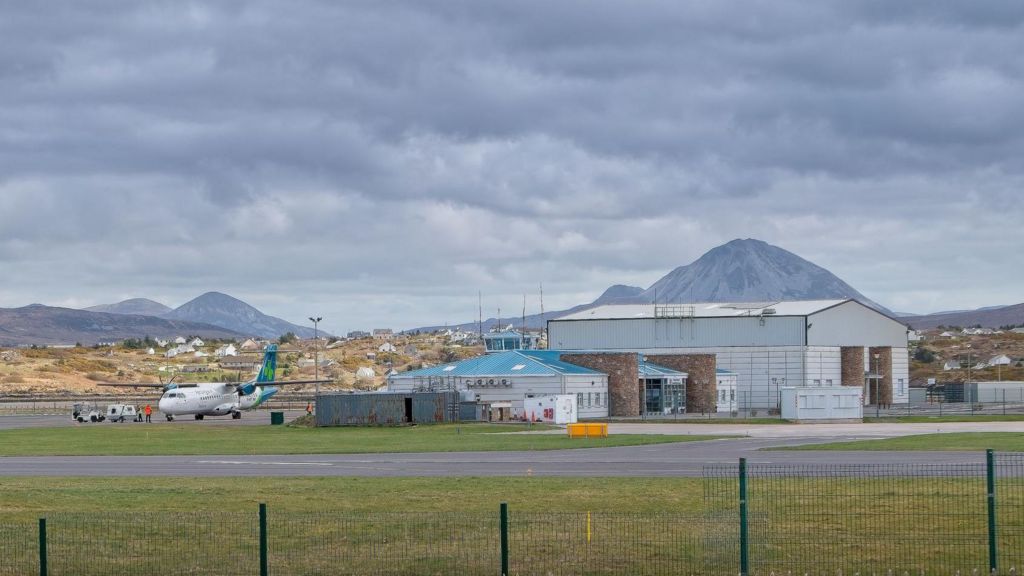
    A critical air service linking Ireland’s remote northwest with the capital faces potential disruption, raising alarms among cancer patients and medical advocates. The publicly subsidized Donegal-Dublin flight route, operating since 2004 under a Public Service Obligation (PSO), may undergo significant timetable alterations when its current contract expires on February 25.

    The existing schedule features an early morning departure from Donegal to Dublin with an afternoon return service, enabling same-day medical travel for patients requiring specialized treatment unavailable in their region. Emerging proposals suggest eliminating the afternoon return flight, potentially stranding patients in Dublin overnight.

    Kathleen Griffin, an ovarian cancer survivor who has utilized the service six times during her three-year treatment journey, emphasized the route’s necessity. “The flight transforms a potentially six-hour painful car journey into a manageable 90-minute trip,” she explained. “When you’re unwell, the last thing you want to contemplate is exhausting travel arrangements.”

    Mary Coyle of Donegal Cancer Flights & Services charity revealed the organization assists over 500 clients, including cancer patients, kidney transplant recipients, and children with life-limiting conditions. The charity has suspended flight bookings beyond February 25 due to the uncertainty surrounding the route’s future operation.

    “These flights constitute an absolute lifeline for patients already undergoing tremendous physical and financial strain,” Coyle stated. Without the afternoon return option, patients would face prohibitive accommodation costs or rely on already overstretched ground transportation services that currently serve multiple medical facilities across northwestern Ireland.

    The Department for Transport in the Republic of Ireland has been contacted for clarification regarding the route’s future operation under the new procurement process. Emerald Airlines, currently operating the route as a regional subsidiary of Aer Lingus, will continue service until the February contract expiration.