博客

  • White House planning leaders meeting for Gaza ‘Board of Peace’ on Feb 19, Axios reports

    White House planning leaders meeting for Gaza ‘Board of Peace’ on Feb 19, Axios reports

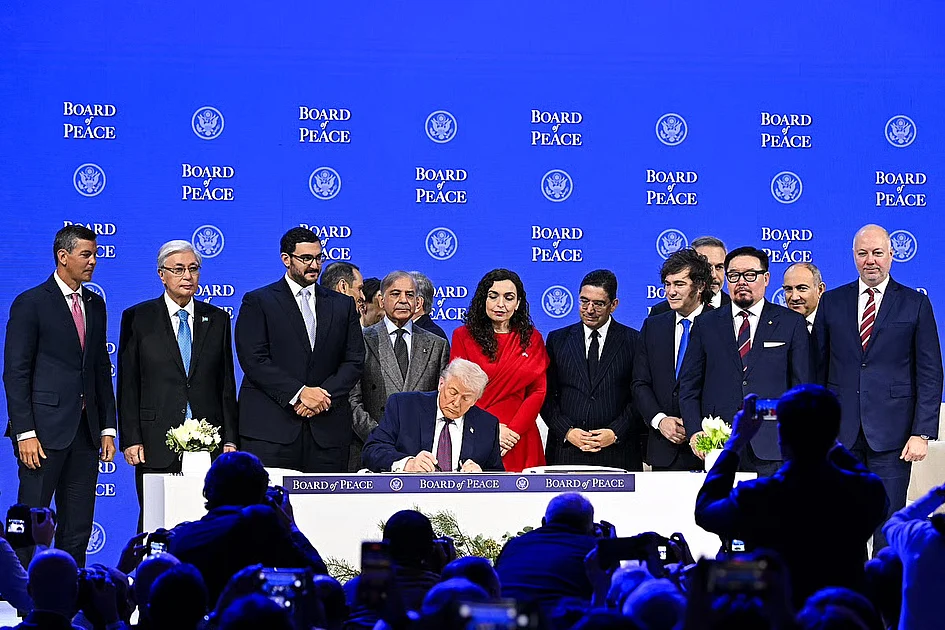
    The White House is orchestrating a landmark diplomatic initiative with the inaugural leadership assembly for the Gaza ‘Board of Peace’ set to convene on February 19, according to an exclusive Axios report published Friday. This high-level gathering, which simultaneously will function as a fundraising conference aimed at mobilizing resources for Gaza’s reconstruction efforts, remains in its preliminary planning phase, with potential adjustments to the agenda and participant list still anticipated.

    The report indicates that while the foundational framework for the summit has been established, specific details regarding attendee confirmation and program specifics are subject to modification. The dual-purpose nature of the event underscores the administration’s integrated approach to addressing both immediate humanitarian needs and long-term stability planning for the conflict-affected territory.

    Neither the White House press office nor the U.S. State Department issued immediate official statements regarding the proposed summit when contacted for commentary late Friday. The reported timing follows recent diplomatic movements, including the appointment of UAE Minister Reem Al Hashimy to the Gaza Executive Board and previous invitations extended to Arab officials that drew objections from Israeli representatives regarding participant composition.

    The developing story represents a significant escalation in international engagement with the Gaza situation, potentially marking a turning point in coordinated reconstruction and peace-building efforts following prolonged regional tensions.


  • Pressure is on freeski star Gu after she falls on first run in slopestyle qualifying at Olympics

    Pressure is on freeski star Gu after she falls on first run in slopestyle qualifying at Olympics

    LIVIGNO, Italy — Reigning Olympic silver medalist Eileen Gu faced an immediate setback during the women’s slopestyle qualifying at the Winter Olympics on Saturday when she fell on her initial run. The Chinese freeskiing sensation lost balance upon exiting the first rail feature, resulting in a tumble that compromised her score potential.

    Demonstrating characteristic resilience, the 22-year-old athlete promptly recovered and completed her routine despite the early error. This performance places significant pressure on Gu’s second and final qualifying attempt, where she must achieve a top-twelve score to advance to Monday’s championship final.

    The California-born skier, who represents China internationally, arrived at these Games with established superstar status following her remarkable performance at Beijing 2022. During those home-soil Olympics, Gu narrowly missed achieving an unprecedented triple gold accomplishment, securing victory in both halfpipe and big air events while earning silver in slopestyle.

    All eyes now turn to Gu’s crucial second run as she attempts to maintain her medal contention in the slopestyle discipline, an event that has previously showcased both her technical precision and creative flair on the Olympic stage.

  • Sydney park highlights Chinese culture with hi-tech

    Sydney park highlights Chinese culture with hi-tech

    Sydney’s city center has become the stage for a groundbreaking cultural fusion where ancient Chinese traditions meet advanced digital technology. The newly launched immersive exhibition at DigiPark transports visitors into the heart of Chinese cultural landscapes through a spectacular 180-degree curved high-definition screen and enveloping surround sound systems.

    At the core of the experience lies the Orbital Cinema, where audiences find themselves virtually immersed in traditional Chinese scenery. The digital journey begins with clouds parting to reveal majestic green mountains and flowing streams reminiscent of classical Chinese paintings. As the visual narrative progresses, viewers appear to drift through mist toward traditional architectural structures before witnessing the magical ascent of Kongming lanterns against a night sky, culminating with the majestic flight of a Chinese dragon across the digital canvas.

    This technological marvel represents the Southern Hemisphere debut of an immersive cultural concept that originated in China and has previously captivated audiences across Southeast Asia, including Malaysia, the Philippines, and Thailand.

    University of Technology Sydney quantum physicist Associate Professor Chris Ferrie expressed astonishment at the seamless integration of technology and cultural storytelling. ‘The technology becomes invisible, creating a truly immersive experience that’s both impressive and somewhat intimidating—we’re literally standing on screens, which challenges our conventional relationship with digital displays,’ he remarked.

    Professor Ferrie emphasized the significance of introducing Australian audiences to Chinese cultural traditions through such innovative mediums, noting that ‘Chinese culture’s extensive historical tradition presents exciting and fascinating learning opportunities, particularly in multicultural Australia.’

    The exhibition’s economic and cultural significance was highlighted by Sydney Councilor Adam Worling during the January 28 opening ceremony. He characterized the installation as ‘a unique addition to Sydney’s attractions that enhances the city’s cultural and entertainment offerings while supporting economic growth and creative employment opportunities.’

    Councilor Worling, who was born in the Year of the Horse, additionally expressed enthusiasm for participating in upcoming Chinese Spring Festival celebrations during the Fire Horse year.

    The launch coincides with promising market projections for Australia’s immersive technology sector. According to Grand View Research’s Australia Immersive Technology Market Size & Outlook report, the industry generated approximately $537 million in revenue during 2024, with projections indicating potential growth to over $2.65 billion by 2030, representing a compound annual growth rate of 31.6% from 2025 onward.

  • Will solar eclipse affect Ramadan crescent sighting? What Dubai expert says

    Will solar eclipse affect Ramadan crescent sighting? What Dubai expert says

    As Muslims worldwide anticipate the sighting of the crescent moon marking the commencement of Ramadan on February 17, 2026, astronomical experts in Dubai have addressed concerns regarding a coinciding solar eclipse. According to Khadijah Al Hariri of the Dubai Astronomy Group, the annular solar eclipse occurring that afternoon will have no effect on traditional moon-sighting practices for determining the holy month’s start.

    The celestial event, scheduled for approximately 4:00 PM UAE time, will feature the moon passing before the sun while leaving a distinctive ‘ring of fire’ visible. However, Ms. Al Hariri emphasized that eclipse phenomena will conclude before sunset, when lunar observation committees typically convene for official crescent verification.

    Islamic months alternate between 29 and 30 days based on visual confirmation of the new moon. Should the crescent be sighted on February 17, Ramadan will begin the following day. Otherwise, the current month of Shaban will complete its 30-day cycle, pushing Ramadan’s commencement to February 19.

    Engineer Muhammad Shawkat Odeh, Director of the Abu Dhabi-based International Astronomy Centre, provided technical analysis indicating challenging viewing conditions. The moon will set before the sun in eastern Islamic regions, simultaneously with sunset in central areas, and merely minutes after sunset in western territories—insufficient time for the crescent to become visibly distinct after the astronomical new moon.

    Despite astronomical predictions suggesting February 19 as the probable start date for Ramadan in the UAE and neighboring countries, the final determination rests with official moon-sighting committees who will make their announcement after sunset observation on February 17.

  • Paid parking improves safety, access for emergency vehicles in Dubai International City

    Paid parking improves safety, access for emergency vehicles in Dubai International City

    A strategic shift to paid parking regulations in Dubai’s International City has yielded an unexpected yet critical benefit: dramatically improved access for emergency response vehicles throughout the congested residential district. For years, residents endured severe safety concerns as narrow internal roads were perpetually clogged with indiscriminately parked commercial vans, buses, and private vehicles, often rendering passage for ambulances and fire trucks nearly impossible.

    Prior to the implementation of paid zones, the area’s clusters—themed after nations like France, Italy, and England—suffered from chronic misuse of their roadways. Large commercial vehicles, including car-lift transporters and delivery trucks, treated the residential streets as free long-term parking lots, creating hazardous, bumper-to-bumper conditions. This not only disrupted daily life but also sparked deep anxiety among inhabitants about potential emergency scenarios where every second counts.

    The introduction of paid parking has effectively displaced these non-residential vehicles. Residents now report visibly clearer lanes and a transformed urban environment. Abdul Rahman, a France Cluster resident, recalled the previous struggles, stating, ‘Earlier, if an ambulance or fire truck had to enter our cluster, it would struggle… We used to think, ‘What if something serious happens at night?’’

    The solution did not require expensive infrastructure projects like road widening. Instead, it leveraged economic disincentives to correct behavioral misuse of public space. Farah Malik, an Italy Cluster resident with elderly parents, confirmed the palpable change: ‘You can actually see open lanes now… Earlier, vehicles were parked so tightly that even pedestrians had to walk carefully. Now the roads feel wider.’

    This case in International City presents a compelling model for urban management, demonstrating how policy tools like parking fees can efficiently enhance public safety and accessibility without resorting to heavy-handed enforcement or capital-intensive construction, ultimately restoring residential areas to their intended function.

  • Dubai court sentences man to jail for impersonating judge in Dh3.15-million WhatsApp scam

    Dubai court sentences man to jail for impersonating judge in Dh3.15-million WhatsApp scam

    In a landmark ruling underscoring the seriousness of digital fraud, Dubai Criminal Court has handed down a five-year prison sentence to a 41-year-old African national convicted of orchestrating an elaborate Dh3.15 million scam through judicial impersonation and threats via messaging platforms.

    The court mandated full restitution of the embezzled Dh3,154,731 to the victim, alongside confiscation of all electronic devices employed in the criminal operation and deletion of associated digital evidence. The convicted individual will face deportation following completion of his prison term.

    Court documents reveal the sophisticated scheme originated on marriage-oriented social media platforms, where the perpetrator adopted a falsified identity as a UAE national working offshore. After establishing romantic rapport with the victim, the fraudster transitioned communications to WhatsApp where he masqueraded as a judicial authority.

    Prosecutors demonstrated how the defendant systematically issued threats of imminent arrest and legal retaliation unless substantial financial transfers were directed to specified bank accounts. Intimidated by these assertions of judicial authority, the victim progressively transferred funds exceeding Dh3.15 million.

    Forensic analysis of digital evidence—including WhatsApp message histories and banking transaction records—established a consistent pattern of deception and coercion. Prosecutors successfully argued that the interconnected offenses of official impersonation, threat dissemination, and financial fraud constituted a unified criminal enterprise under UAE jurisprudence.

    The judicial panel affirmed that electronic documentation and investigative findings provided unequivocal proof of guilt. This case exemplifies the severe consequences awaiting those who exploit digital platforms to impersonate government officials and manipulate victims through intimidation tactics.

    Authorities reiterate advisories against responding to financial demands received through messaging applications, particularly those invoking official authority, and emphasize the critical importance of independent verification before any fund transfers.

  • Zambian leader backs traditional Ghanaian outfit after online trolling

    Zambian leader backs traditional Ghanaian outfit after online trolling

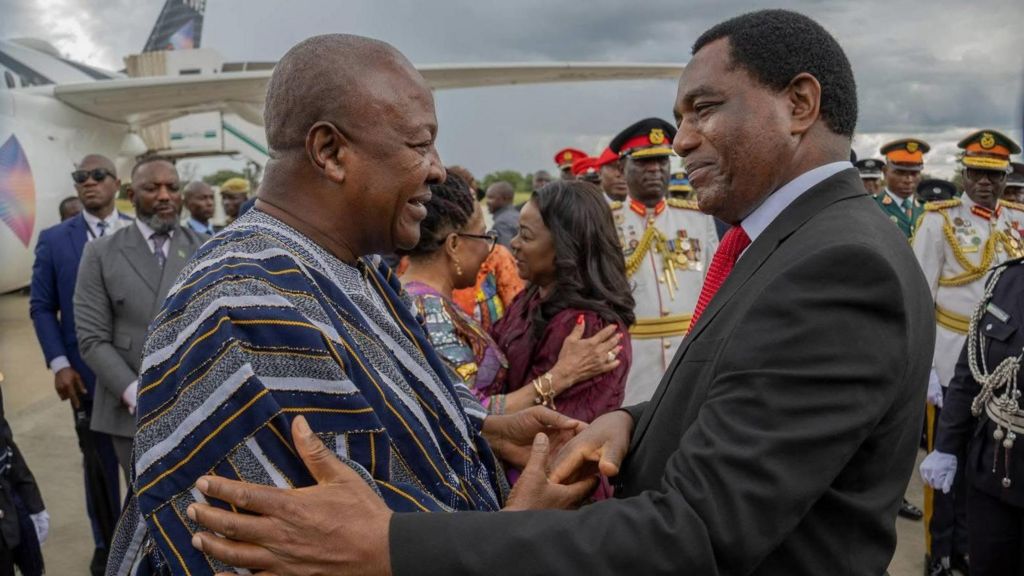
    A diplomatic visit between Ghana and Zambia has evolved into a continental conversation about cultural identity and heritage reclamation, sparked by sartorial choices at the highest levels of government. The discourse began when Ghana’s President John Dramani Mahama arrived in Lusaka for a three-day state visit adorned in a traditional northern Ghanaian fugu garment—a structured, poncho-style outfit crafted from hand-woven cotton strips. His Zambian counterpart, President Hakainde Hichilema, greeted him in conventional Western business attire, creating a visually striking contrast that immediately captured public attention. The sartorial juxtaposition ignited vigorous online debate, with some Zambian social media users initially mocking the Ghanaian president’s traditional garment as a ‘blouse’ or ‘maternity wear’ in various Facebook commentary threads. Rather than dismissing the criticism, President Hichilema strategically embraced the cultural significance of the fugu during the Ghana-Zambia Business Forum, announcing his intention to personally ‘order more of that stuff’ from Ghanaian artisans. This presidential endorsement transformed the conversation from mockery to meaningful dialogue about African cultural identity. Ghana’s Foreign Minister Samuel Okudzeto Ablakwa interpreted the viral discussion as evidence of a growing movement among young Africans to reconnect with their heritage, describing the phenomenon as a renaissance of the ‘African personality.’ The minister highlighted the historical significance of the fugu, noting that Ghana’s founding father Kwame Nkrumah wore similar traditional attire when declaring independence from British colonial rule in 1957. The conversation expanded beyond political circles when prominent Ghanaian YouTuber Wode Maya contributed to the discourse, defending the presidential fashion choice as a deliberate strategy to promote local garment industries and encourage cultural pride across Africa. This diplomatic sartorial incident has brought renewed attention to Ghana’s existing ‘Fugu Friday’ initiative, which encourages citizens to wear traditional African clothing at least once weekly. The exchange demonstrates how cultural diplomacy and social media engagement can combine to foster important conversations about post-colonial identity, economic development through cultural promotion, and pan-African solidarity in the digital age.

  • US, Iran talk in Oman amid fears of conflict

    US, Iran talk in Oman amid fears of conflict

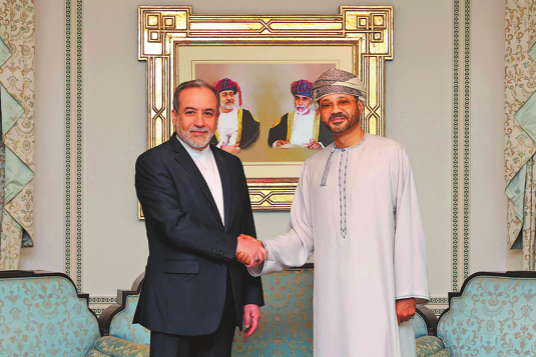
    Diplomatic channels between the United States and Iran reopened on Friday in Muscat, Oman, marking the first bilateral discussions on Tehran’s nuclear program since June. The talks, initially planned as a multilateral meeting in Istanbul, were reconfigured at Iran’s insistence into a direct dialogue within the neutral territory of the Gulf sultanate.

    The negotiations commenced under a cloud of mutual distrust and sharply divergent agendas. Iranian Foreign Minister Seyed Abbas Araghchi emphasized prerequisites for successful diplomacy through a social media statement, declaring that ‘equal standing, mutual respect and mutual interest are not rhetoric—they are a must and the pillars of a durable agreement.’

    Meanwhile, the United States maintained its pressure campaign alongside diplomatic efforts. President Donald Trump issued vague warnings about potential consequences should negotiations fail, while the State Department reiterated its advisory for American citizens to depart Iran immediately. The military dimension remained prominently visible with the USS Abraham Lincoln carrier strike group positioned in regional waters.

    Regional security concerns dominated the backdrop of discussions. Gulf Arab nations expressed apprehension that any military confrontation could escalate into a broader regional conflict. These fears gained credibility following recent incidents including the US downing of an Iranian drone and Tehran’s attempted interception of a US-flagged vessel in the strategically vital Strait of Hormuz.

    According to multiple reports, a proposal mediated by Egyptian, Qatari, and Turkish diplomats suggested Iran halt uranium enrichment for three years, export its highly enriched uranium stockpiles, and commit to non-initiation of ballistic missile attacks. However, Tehran maintained that discussions would exclusively address its nuclear activities, which it insists remain peaceful despite longstanding accusations from Washington and Tel Aviv.

    Analytical perspectives ranged from skeptical to pessimistic regarding the talks’ potential outcomes. Former Iranian diplomat Nosratollah Tajik cited ‘structural issues, the gap between goals and expectations’ as fundamental obstacles. Edmund Fitton-Brown of the Foundation for Defense of Democracies think tank suggested military conflict appeared more likely than diplomatic breakthrough given the significant concessions required from Iran.

  • Back to the Past brings time-travel stories to US screens

    Back to the Past brings time-travel stories to US screens

    A groundbreaking cinematic phenomenon has transcended cultural boundaries as the long-awaited film sequel ‘Back to the Past’ makes its remarkable debut in North American theaters. This cinematic event, originating from Hong Kong’s iconic television series ‘A Step Into the Past’ which itself adapted from a bestselling novel, represents a significant milestone in cross-cultural entertainment exchange.

    The film’s journey to international recognition began with record-shattering performances in Asian markets. Upon its December 31 release in China and Malaysia, the production immediately demonstrated extraordinary commercial appeal, with Hong Kong audiences experiencing unprecedented demand that made tickets exceptionally scarce. The opening day alone witnessed the film achieving the highest number of screenings in Hong Kong’s cinematic history, generating over HK$11 million (approximately $1.4 million) and securing its position as the territory’s highest-grossing opening day champion.

    Nearly a quarter-century after the original series first captivated audiences in 2001, the film reunites the original cast to continue the extraordinary narrative of Xiang Shaolong, a modern police officer accidentally transported to China’s Warring States Period (475-221 BC). The storyline masterfully intertwines historical drama with temporal displacement, exploring themes of identity preservation amidst ancient court intrigues and military conflicts.

    What distinguishes this production within the time-travel genre is its unique cultural approach to temporal displacement. Unlike Western interpretations that typically involve physical time travel, Chinese ‘chuan yue’ narratives emphasize consciousness transmigration—a concept that combines soul migration with temporal movement. This philosophical distinction, as noted by University of Hong Kong scholar Jia Tan in a University of Michigan publication, places the genre closer to fantasy than conventional science fiction, drawing heavily from established period drama and martial arts traditions.

    North American viewers are responding with profound engagement to this distinctive storytelling approach. May Yang, an international student from Guangdong province, expressed how the film evoked powerful nostalgic connections: ‘It brought back a sense of childhood because I grew up watching this series. It feels genuinely moving and nostalgic.’

    Meanwhile, Howard, a retired English teacher and frequent attendee of international film screenings, appreciated the production’s cultural dimensions: ‘I enjoy movies from abroad because they offer insight into different cultural values.’

    The film’s successful trans-Pacific journey underscores the growing appetite for diverse cultural narratives and represents a rare instance of Chinese-style time-travel storytelling reaching mainstream Western audiences, offering both spectacular entertainment and meaningful cultural exchange.

  • Report finds declining Chinese tourists in Japan

    Report finds declining Chinese tourists in Japan

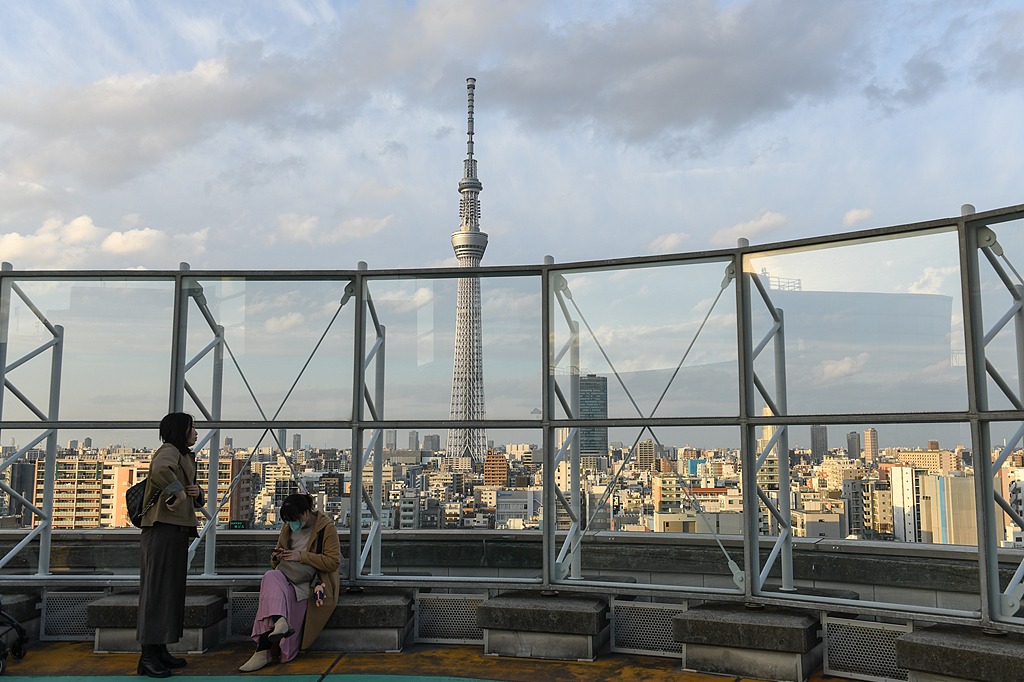
    Japan’s tourism-dependent retail sector faces mounting pressure as a significant decline in Chinese visitors threatens to reshape the country’s economic landscape. The downturn follows diplomatic tensions stemming from Japanese Prime Minister Sanae Takaichi’s controversial remarks on Taiwan in November 2025, which triggered a chain reaction affecting bilateral relations.

    Industry data reveals a stark picture: mainland Chinese arrivals plummeted 45.3% year-on-year in December 2025 to just 330,400 visitors, continuing a downward trajectory from 562,600 in November. The Japan National Tourism Organization’s January report indicates this trend may intensify during the crucial Spring Festival period (February 15-23, 2026), traditionally a peak season for Chinese tourism.

    The economic implications are substantial. Chinese tourists historically contributed 21% of Japan’s 8.12 trillion yen ($51.7 billion) in 2024 visitor spending, particularly favoring luxury goods, cosmetics, and high-end jewelry. The Japan Research Institute projects potential losses reaching 1.2 trillion yen ($7.64 billion) annually if relations continue deteriorating.

    Retail institutions are already feeling the impact. Yoshiharu Nishisaka, executive director of the Japan Department Stores Association, reports approximately 40% declines in both Chinese visitor numbers and sales. ‘The negative impact is so large that gains in other regions cannot fully offset it,’ he noted.

    Profit forecasts paint a concerning picture for luxury retailers. J. Front Retailing anticipates a 53% operating profit decline, while Matsuya Department Store projects an 81% drop. Overall, department stores face an estimated 24% profit reduction for the December-February period according to Nikkei Asia analysis.

    Beyond immediate financial consequences, industry experts warn of longer-term cultural and commercial ramifications. Kenta Maruyama of Mitsubishi UFJ Research notes that reduced tourism diminishes the ‘gateway effect’ through which Chinese visitors develop appreciation for Japanese cuisine and products, ultimately driving demand for Japanese brands within China.

    The situation has prompted official responses. China’s Foreign Ministry issued travel advisories on January 26, 2026, warning citizens to avoid Japan during Spring Festival. Major Chinese airlines concurrently offered flexible rebooking options for Japan-bound flights, facilitating the travel reduction.

    Industry leaders like Hiroyuki Takahashi, chairman of the Japan Association of Travel Agents, express hope for diplomatic resolution, recognizing that restored people-to-people exchanges are essential for both economic recovery and sustained cultural influence.