博客

  • Dawson’s Creek: The 90s teen drama that ‘wore its heart on its sleeve’

    Dawson’s Creek: The 90s teen drama that ‘wore its heart on its sleeve’

    Two decades after its finale, Dawson’s Creek remains a cultural touchstone of late 90s teen television, with James Van Der Beek’s portrayal of the emotionally vulnerable protagonist continuing to resonate globally. The series, created by horror maestro Kevin Williamson (Scream, I Know What You Did Last Summer), followed adolescents in fictional Capeside, Massachusetts through their complex journey into adulthood.

    Van Der Beek, who passed away at 48, transformed Dawson Leery from a potentially unlikable character into an emotionally accessible icon. Variety’s features director Emily Longeretta notes the actor’s unique ability to make sensitivity masculine at a time when television rarely portrayed young men expressing vulnerability. “His emotional connection and authenticity really came through the screen,” she told BBC News.

    The ensemble cast—including Katie Holmes, Joshua Jackson, and Michelle Williams—collectively navigated groundbreaking narratives about grief, sexuality, and mental health that distinguished the series from glossier contemporaries. While averaging six million US viewers during its original run, the show achieved cult status across 50 countries through its revolutionary approach to teenage representation.

    Television critic Scott Bryan emphasizes the program’s breakthrough status: “It was one of the first that talked to teens like adults… featuring performances more fleshed out than its rivals.” The series pioneered LGBTQ+ representation with television’s first teenage gay kiss in primetime, a narrative directly inspired by Williamson’s personal coming-out experience.

    Beyond its narrative innovations, Dawson’s Creek created enduring cultural moments—from Dawson’s iconic “ugly cry” meme to its realistic portrayal of fractured family dynamics. Van Der Beek himself acknowledged the personal resonance of his role, noting during initial production that he was “reliving all my adolescent nightmares” while simultaneously fulfilling his professional aspirations.


  • New face for France as center Brau-Boirie set for test debut vs. Wales in Six Nations

    New face for France as center Brau-Boirie set for test debut vs. Wales in Six Nations

    In a bold strategic move, French national rugby head coach Fabien Galthié has selected 20-year-old Fabien Brau-Boirie for his international test debut at center against Wales in this Sunday’s Six Nations matchup. The rising star from Pau club will form a dynamic midfield partnership with his clubmate Émilien Gailleton, who earns his 12th cap for Les Bleus.

    This unexpected selection comes as a direct response to France’s injury crisis following their commanding 36-14 victory over Ireland last Thursday. The defending champions lost three key centers—Nicolas Depoortère (calf), Kalvin Gourgues (ankle), and Yoram Moefana (knee)—forcing Galthié to tap into France’s deep talent pool.

    Galthié expressed confidence in his young prospect, stating: “Brau-Boirie has been integrated within our system for over a year. His exceptional performances with the under-20 squad, combined with consistent weekend appearances for his club, have truly earned him this opportunity. He was originally slated to join our tour to New Zealand last July but unfortunately sustained an ankle injury.”

    The selection marks a significant moment for Pau club, which currently sits second in the French Top 14 league, thanks in part to the contributions of both Brau-Boirie and Gailleton. Adding to the youthful injection, 21-year-old Stade Francais center Noah Nene has been named among the reserves, awaiting his potential debut.

    France faces a Welsh squad reeling from a devastating 48-7 defeat against England at Twickenham last weekend. Despite Wales facing the prospect of a record-extending 13th consecutive Six Nations defeat, Galthié remains wary of the challenge awaiting in Cardiff.

    The French coach acknowledged the unique atmosphere of the Welsh stadium, noting: “In my opinion, it represents the most magnificent stadium globally, with those relentless Welsh chants that create an extraordinary environment. This distinctive atmosphere effectively levels the competitive field and provides the Welsh team with additional motivation.”

    Wales hasn’t secured a victory against France on home turf since 2018, adding historical context to this highly anticipated Six Nations confrontation.

  • Swiss to vote on proposal by anti-immigration party to cap population at 10 million

    Swiss to vote on proposal by anti-immigration party to cap population at 10 million

    Switzerland will conduct a national referendum on June 14th to determine whether to implement a permanent population ceiling of 10 million residents, a controversial proposal spearheaded by the right-wing Swiss People’s Party (SVP). The initiative has gathered sufficient petition signatures to advance to the ballot, potentially setting the stage for renewed tensions with European neighbors.

    According to federal statistics, Switzerland’s current population stands at approximately 9.1 million people, with foreign-born residents constituting nearly 30% of the total demographic composition. Most immigrants originate from European Union nations, with many subsequently obtaining Swiss citizenship.

    The proposed legislation would constitutionally mandate that Switzerland’s permanent resident population—encompassing both citizens and foreign nationals holding residency permits—must not surpass 10 million before 2050. Should the population approach 9.5 million prior to this deadline, the government would be compelled to implement restrictive measures including asylum limitations, family reunification constraints, residency permit restrictions, and renegotiation of international agreements.

    Proponents argue that population containment is essential for environmental preservation, resource conservation, infrastructure maintenance, and social welfare system protection. The initiative emerges within Switzerland’s unique direct democracy framework, which enables citizens to directly influence policy through quarterly ballots.

    The SVP party, which holds the largest parliamentary representation, has historically advocated for immigration restrictions with varying success. This proposal reflects broader anti-immigration sentiments observed across numerous Western nations.

    Opposition critics contend that the measure oversimplifies complex demographic realities, noting Switzerland’s considerable economic dependence on foreign labor across critical sectors including healthcare, hospitality, construction, and academia. Additionally, such restrictions would potentially violate Switzerland’s international commitments, particularly within the Schengen zone—a 29-nation agreement facilitating visa-free movement among 450 million Europeans. While not an EU member, Switzerland participates alongside Norway, Iceland, and Liechtenstein in this border-free arrangement.

  • Bangladesh votes in landmark election after Gen Z uprising

    Bangladesh votes in landmark election after Gen Z uprising

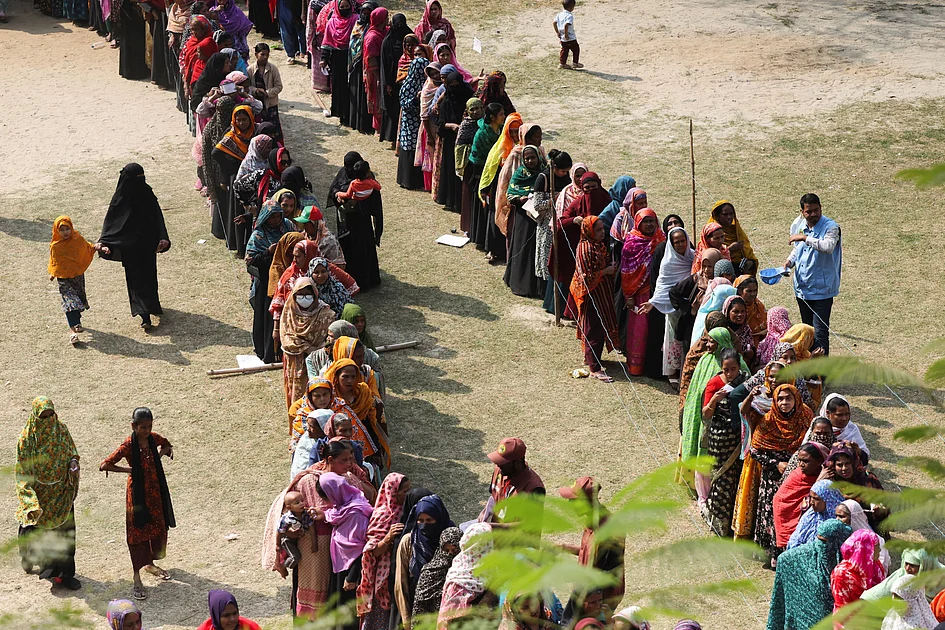
    Bangladesh commenced a historic national election on Thursday, marking its first electoral process since the 2024 Gen Z-led uprising that ousted long-serving Prime Minister Sheikh Hasina. This pivotal moment represents a critical test for democratic renewal in the South Asian nation of 175 million people.

    The electoral contest features two primary coalitions: the Bangladesh Nationalist Party (BNP) and the Islamist Jamaat-e-Islami, with opinion polls indicating a slight advantage for the BNP. Over 2,000 candidates from at least 50 political parties are competing for 300 parliamentary seats in the Jatiya Sangsad (House of the Nation), setting a national record for political participation.

    Voters expressed unprecedented enthusiasm, with Mohammed Jobair Hossain, 39, noting he hadn’t voted since 2008. “I am feeling excited because we are voting in a free manner after 17 years,” Hossain stated. “Our votes will matter and have meaning.”

    The election occurs alongside a constitutional referendum proposing significant reforms, including establishing a neutral interim government during election periods, creating a bicameral legislature, enhancing women’s representation, strengthening judicial independence, and implementing a two-term limit for prime ministers.

    Nobel laureate Muhammad Yunus, heading the interim government installed after Hasina’s ouster, emphasized the election’s significance: “The public awakening we witnessed against long-standing anger, inequality, deprivation and injustice finds its constitutional expression in this election.”

    Security measures were extensive with approximately 958,000 personnel from police, army, and paramilitary forces deployed nationwide. Despite the high stakes, the campaign period remained largely peaceful with minimal incidents.

    Thomas Kean of the International Crisis Group noted: “The crucial test for Bangladesh now will be to ensure the election is conducted fairly and impartially, and for all parties to then accept the result. If that happens, it will be the strongest evidence yet that Bangladesh has indeed embarked on a period of democratic renewal.”

    With nearly 128 million registered voters (49% women) and nearly half aged 18-35, this election represents a generational shift in Bangladeshi politics. Results are anticipated by Friday morning, potentially reshaping the nation’s political landscape and international alliances, particularly as China seeks expanded influence amid Dhaka’s deteriorating relations with New Delhi.

  • Vatican offers dialogue with breakaway Latin Mass traditionalist group, but with a catch

    Vatican offers dialogue with breakaway Latin Mass traditionalist group, but with a catch

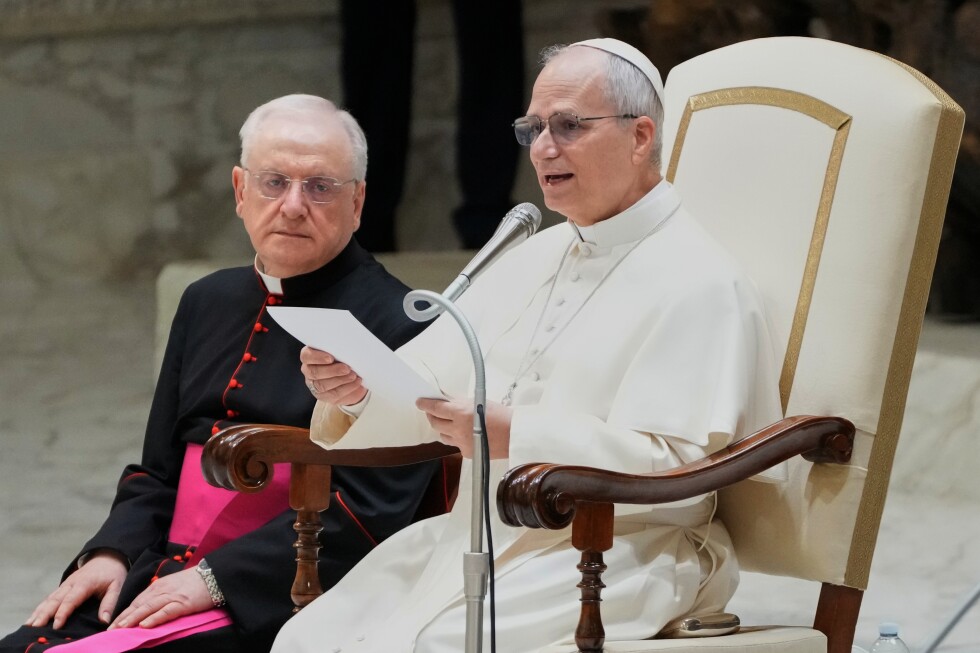
    The Vatican has delivered a stern warning to the breakaway Society of St. Pius X (SSPX), cautioning that its planned unauthorized bishop consecrations in July would constitute a “decisive break in ecclesial communion” and potentially trigger formal schism. Cardinal Víctor Manuel Fernández, prefect of the Dicastery for the Doctrine of the Faith, met Thursday with SSPX Superior General Rev. Davide Pagliarani in Rome following the traditionalist group’s announcement to ordain new bishops without papal approval.

    During the high-stakes meeting, Cardinal Fernández extended an olive branch alongside the warning, proposing renewed theological discussions to regularize the SSPX’s status within the Catholic Church—but only if the society immediately cancels its July 1 consecration ceremony. The Vatican emphasized that papal consent for bishop consecrations represents a fundamental doctrine ensuring apostolic succession from Christ’s original apostles.

    The Swiss-based SSPX, founded in opposition to the modernizing reforms of the Second Vatican Council (1962-1965), has maintained a contentious relationship with Rome for decades. The group first broke with the Vatican in 1988 when its founder, Archbishop Marcel Lefebvre, consecrated four bishops without papal mandate, resulting in automatic excommunication for all involved.

    Despite its irregular status, the traditionalist society has experienced significant growth, currently boasting 733 priests, 264 seminarians, and religious members across 50 nationalities. This expansion has raised concerns within the Vatican about the development of a parallel church structure that challenges Rome’s authority.

    Rev. Pagliarani has defended the planned consecrations as “realistic and reasonable” given the aging of the SSPX’s two remaining bishops and the pastoral needs of their global community. The group continues to attract Catholics drawn to the traditional Latin Mass, particularly following Pope Francis’s restrictions on the pre-Vatican II liturgy.

    The Vatican statement described Thursday’s encounter as “cordial and sincere” and noted that Pope Leo XIV had personally approved the dialogue initiative. This development represents the latest chapter in decades of attempted reconciliation between Rome and the traditionalist society, including Pope Benedict XVI’s 2009 lifting of excommunications against the surviving SSPX bishops.

  • Two US Navy ships collide near South America

    Two US Navy ships collide near South America

    Two United States Navy ships collided during a routine refueling operation in waters near South America, according to confirmation from the US military’s Southern Command to the BBC. The incident occurred on Wednesday during a replenishment-at-sea procedure involving the guided missile destroyer USS Truxtun and the fast combat support ship USNS Supply.

    While two personnel sustained minor injuries during the collision, both individuals were reported to be in stable condition following the incident. Despite the impact, both vessels maintained operational capability and continued sailing safely from the location of the accident.

    The exact circumstances surrounding the collision remain unclear as military officials have launched a formal investigation into the matter. Southern Command representatives declined to specify what factors might have contributed to the accident, noting only that the investigation remains ongoing.

    The Wall Street Journal reported that the USNS Supply had been operating in the Caribbean region, which falls within Southern Command’s area of responsibility along with portions of the South Atlantic and South Pacific.

    This naval incident occurs amid heightened US military presence in the Caribbean region. President Donald Trump has ordered a substantial military buildup in recent months as part of the administration’s intensified campaign against drug trafficking networks. The strategy has produced controversial results, including a recent lethal strike on an alleged drug vessel in the eastern Pacific that resulted in two fatalities on Thursday. This brings the total to at least 38 deadly engagements with suspected drug trafficking vessels since the administration renewed its offensive operations.

    Additionally, the US military presence in the region has facilitated the enforcement of sanctions against Venezuelan oil exports, following the dramatic arrest of President Nicolas Maduro during a nighttime raid in January.

  • Reactions to the banning of Vladyslav Heraskevych from the Olympics

    Reactions to the banning of Vladyslav Heraskevych from the Olympics

    The International Olympic Committee has ignited international controversy by excluding Ukrainian skeleton athlete Vladyslav Heraskevych from the Milan Cortina Games for wearing a helmet honoring athletes and coaches killed in Russia’s war against Ukraine.

    IOC President Kirsty Coventry, a former Olympic swimmer, acknowledged the power of Heraskevych’s message while defending the decision. “No one—especially me—is disagreeing with the messaging. The challenge we are facing is that we wanted to ask or come up with a solution for just the field of play,” stated Coventry.

    Ukrainian President Volodymyr Zelenskyy offered unequivocal support for the athlete, declaring: “I thank our athlete for his clear stance. His helmet, bearing the portraits of fallen Ukrainian athletes, is about honor and remembrance. It is a reminder to the whole world of what Russian aggression is and the cost of fighting for independence.”

    The banned athlete expressed cautious optimism about his meeting with Coventry, noting: “I want to believe that the reason is that she really felt sorry as an athlete, as a former athlete, and that she really wants me to compete.”

    Prominent voices across the sports and diplomatic world condemned the IOC’s decision. British skeleton Olympic champion Lizzy Yarnold conveyed her “real sense of sadness and real surprise” regarding the exclusion.

    European Union Ambassador to Ukraine Katarina Mathernova highlighted the stark contrast in the Committee’s approach, stating on Instagram: “He was excluded by the same Olympic Committee that allowed 20 Russian and Belarusian athletes to compete under a neutral flag.”

    Ukrainian Foreign Minister Andrii Sybiha delivered one of the strongest condemnations, asserting: “The IOC has banned not the Ukrainian athlete, but its own reputation. Future generations will recall this as a moment of shame.”

    The athlete’s father and coach, Mykhailo Heraskevych, expressed the personal devastation caused by the decision: “The International Olympic Committee destroyed our dreams. It’s not fair.”

  • China’s Tianguan satellite likely captures black hole devouring white dwarf: study

    China’s Tianguan satellite likely captures black hole devouring white dwarf: study

    China’s astronomical research has achieved a groundbreaking milestone with the Tianguan satellite, internationally known as the Einstein Probe, potentially recording the first-ever observation of an intermediate-mass black hole violently consuming a white dwarf star. The National Astronomical Observatories of the Chinese Academy of Sciences (NAOC) announced this extraordinary discovery, marking a significant advancement in cosmic phenomenon documentation.

    The pivotal detection occurred on July 2, 2025, when the satellite’s Wide-field X-ray Telescope (WXT) identified an exceptionally luminous and rapidly evolving X-ray source during standard sky surveillance. Designated EP250702a, this event prompted immediate international collaboration among astronomers worldwide, triggering multi-wavelength observations across the global scientific community.

    Research published in Science Bulletin’s cover article presents compelling evidence that the observed phenomenon represents a tidal disruption event of unprecedented nature. The scientific team notes that the burst’s distinctive characteristics—including its brightness evolution, radiation pattern, and spectral features—differ markedly from any previously documented cosmic explosion.

    Associate Researcher Zhang Wenda of NAOC explained that the event closely resembles theoretical predictions of jetted tidal disruption occurrences, where celestial bodies are torn apart by immense gravitational forces. White dwarfs, the ultra-dense remnants of deceased stars, possess densities approximately one million times greater than our Sun. Theoretical models indicate that only intermediate-mass black holes—ranging from hundreds to hundreds of thousands of solar masses—generate sufficient tidal forces to dismantle such compact objects rather than consuming them intact.

    Researcher Jin Chichuan emphasized that the observed ultra-short timescale, extreme peak luminosity, and subsequent emergence of a soft X-ray ‘afterglow’ provide strong evidence supporting the white dwarf disruption scenario. This process theoretically produces brief, intense energy bursts typically accompanied by luminous, high-velocity jets consistent with EP250702a’s observed properties.

    Principal Investigator Yuan Weimin highlighted that this discovery demonstrates Tianguan satellite’s unique capability to capture unpredictable transient cosmic events. The mission’s sophisticated monitoring technology has not only enabled the first documentation of this extreme astrophysical phenomenon but also signifies China’s substantial contribution to international astronomical exploration and understanding of the universe’s most violent processes.

  • India moves a step closer to buying Rafale fighter jets and maritime patrol aircraft

    India moves a step closer to buying Rafale fighter jets and maritime patrol aircraft

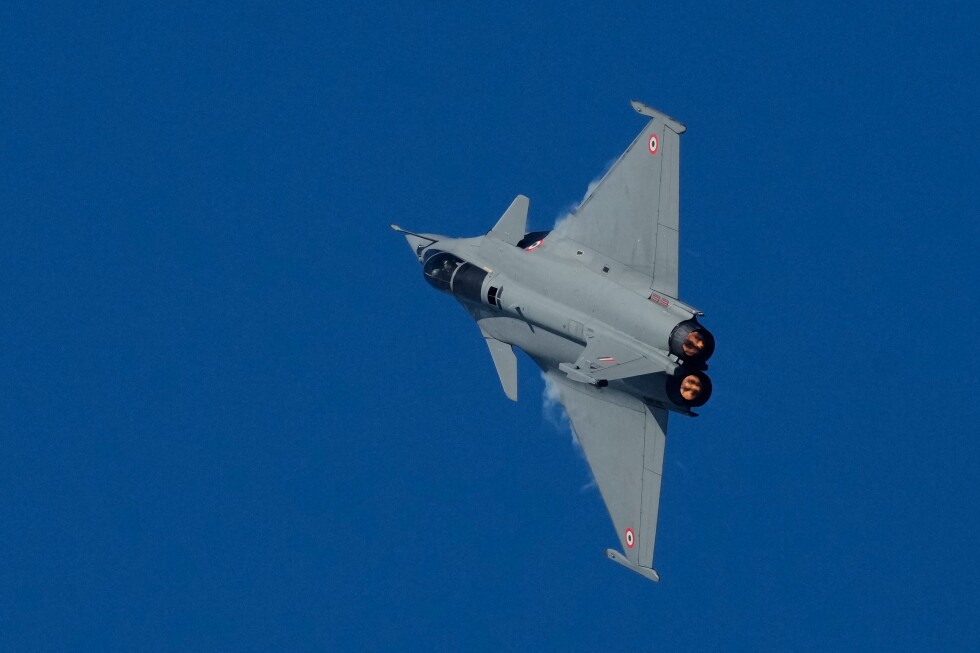
    NEW DELHI — In a significant move to bolster its national security infrastructure, India’s Defence Acquisition Council granted preliminary authorization on Thursday for substantial defense procurements totaling approximately $39.74 billion. The comprehensive package includes additional Rafale multi-role fighter jets from France and P-8I maritime patrol aircraft from the United States.

    Defense Ministry officials confirmed the approval without disclosing specific quantities or financial details. However, sources familiar with the deliberations revealed the council, chaired by Defense Minister Rajnath Singh, endorsed acquisition plans for 114 Rafale fighters and six Boeing P-8I surveillance platforms.

    This strategic enhancement addresses India’s pressing security requirements along its contentious borders with nuclear-capable neighbors China and Pakistan. The Indian Air Force currently maintains 29 fighter squadrons—substantially below the government’s recommended strength of 42 squadrons, each comprising 16-18 aircraft.

    The preliminary clearance represents the initial phase in India’s defense procurement process, with final approval required from the Cabinet Committee on Security headed by Prime Minister Narendra Modi. Timing suggests the Rafale agreement may be formally announced during French President Emmanuel Macron’s upcoming visit for an international artificial intelligence summit.

    Defense analysts note the Rafale acquisition will substantially strengthen India’s aerial deterrence capabilities, with most aircraft scheduled for domestic manufacturing. Concurrently, the P-8I aircraft will enhance maritime surveillance operations in the Indian Ocean region, where Chinese naval presence has been increasingly observed.

    India already operates two Rafale squadrons and recently procured 26 marine variants for naval operations. The nation also maintains an existing fleet of P-8I aircraft conducting reconnaissance missions across critical Indian Ocean waterways.

  • ‘Dawson’s Creek’ star James Van Der Beek dies at 48

    ‘Dawson’s Creek’ star James Van Der Beek dies at 48

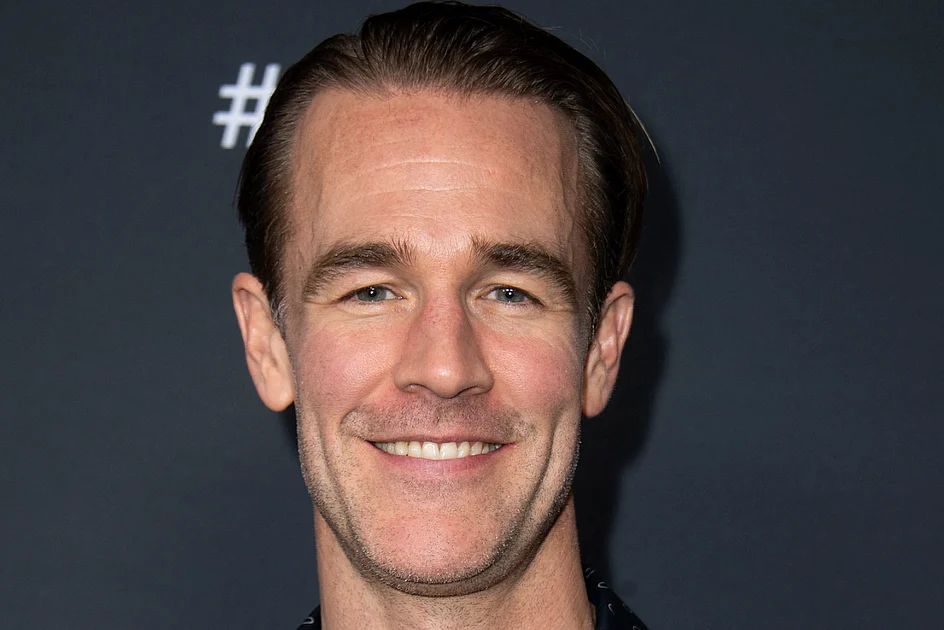
    The entertainment industry is grieving the loss of James Van Der Beek, the celebrated actor who rose to fame as the protagonist in the iconic 1990s television series ‘Dawson’s Creek,’ who passed away Wednesday at age 48 following a courageous battle with colorectal cancer. His wife, Kimberly Van Der Beek, confirmed the tragic news through an emotional Instagram post, describing how her husband faced his final days with remarkable courage, faith, and grace.

    Van Der Beek’s career spanned over six decades with appearances in more than 60 film and television productions, though he remained most recognized for his breakthrough role as Dawson Leery—the earnest, film-obsessed teenager navigating the complexities of adolescence in the seminal WB network drama. The series, which ran from 1998 to 2003, catapulted Van Der Beek into international stardom and established him as a definitive teen heartthrob of his generation.

    Beyond his iconic television role, Van Der Beek delivered memorable performances in films including ‘Varsity Blues’ (1999) as quarterback Jonathan ‘Mox’ Moxon and ‘The Rules of Attraction’ (2002) as the morally ambiguous Sean Bateman. His professional versatility allowed him to transition between genres and mediums throughout his career.

    The actor had been privately battling colorectal cancer since his diagnosis in 2024, which was discovered during a routine colonoscopy the previous year. He chose to document his health journey publicly through social media, sharing updates with fans and raising awareness about cancer prevention and early detection.

    In response to his passing, an outpouring of tributes flooded social media platforms from colleagues, admirers, and co-stars. Sarah Michelle Gellar notably expressed that while ‘James’ legacy will always live on, this is a huge loss to not just your family but the world.’ A GoFundMe campaign was rapidly established to support Van Der Beek’s widow and their six children, surpassing $200,000 within its first hour and demonstrating the profound impact he had on his community.