博客

  • DP World sells partial stake in Saudi Arabia’s Jeddah Islamic Port

    DP World sells partial stake in Saudi Arabia’s Jeddah Islamic Port

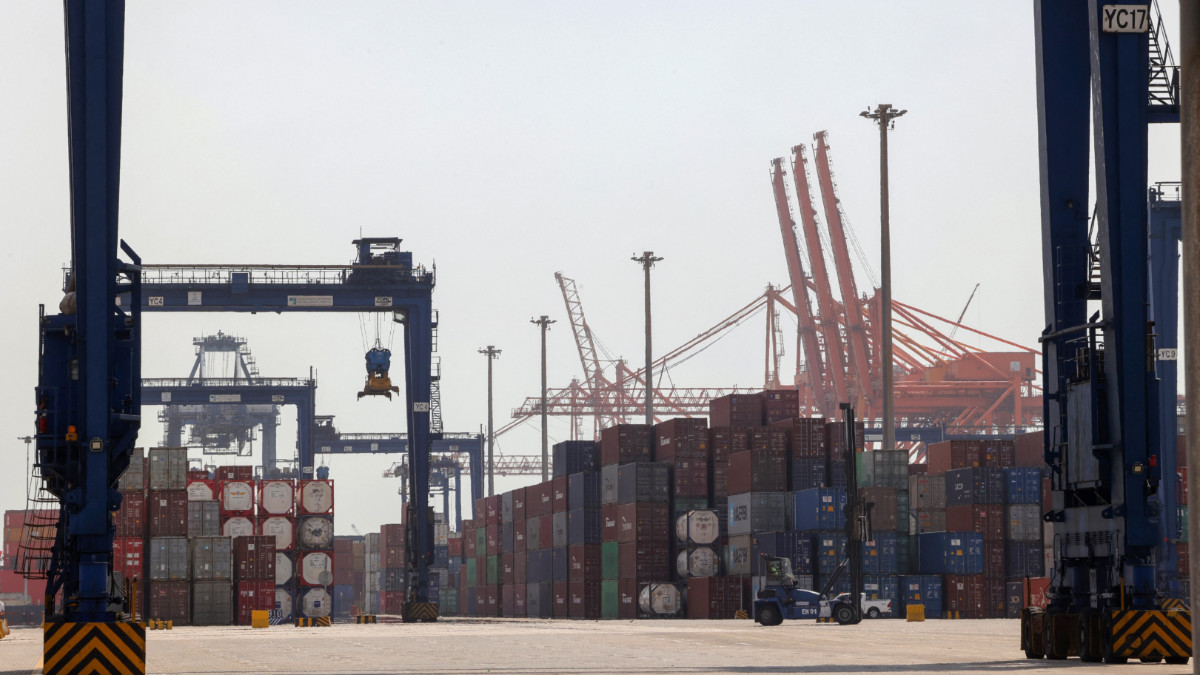
    In a significant development within global logistics, Dubai-based DP World has divested a 37.5% minority stake in the southern container terminal at Saudi Arabia’s Jeddah Islamic Port to Danish shipping conglomerate AP Moller-Maersk. The transaction, announced Wednesday, establishes a new strategic partnership between the maritime giants, with DP World retaining a 62.5% controlling interest and continuing to lead terminal operations.

    This commercial arrangement emerges against a backdrop of escalating geopolitical friction between the United Arab Emirates and Saudi Arabia. The two Gulf powers currently find themselves at odds across multiple Red Sea theaters, including opposing positions in Yemen’s conflict and Sudan’s civil war. The rivalry has extended into digital arenas through social media campaigns and diplomatic maneuvering, with Saudi influencers criticizing UAE-Israel relations while Emirati entities allegedly encouraged pro-Israel groups to accuse Saudi Arabia of antisemitism.

    Despite these tensions, the Jeddah terminal partnership underscores profound economic interdependence between the nations. The UAE remains Saudi Arabia’s primary source of foreign direct investment and a crucial export market, while DP World serves as a key instrument of Emirati commercial influence across Middle Eastern and African ports—including facilities in Somaliland, where conflicting positions on recognition have further highlighted regional divisions.

    The agreement also follows leadership changes at DP World after former chairman Sultan Ahmed bin Sulayem faced scrutiny over his documented associations with convicted sex offender Jeffrey Epstein. Current port operations contend with Red Sea overcapacity issues and disrupted shipping patterns due to Houthi attacks, which have marginally reduced traffic at Jeddah during Israel’s conflict in Gaza.
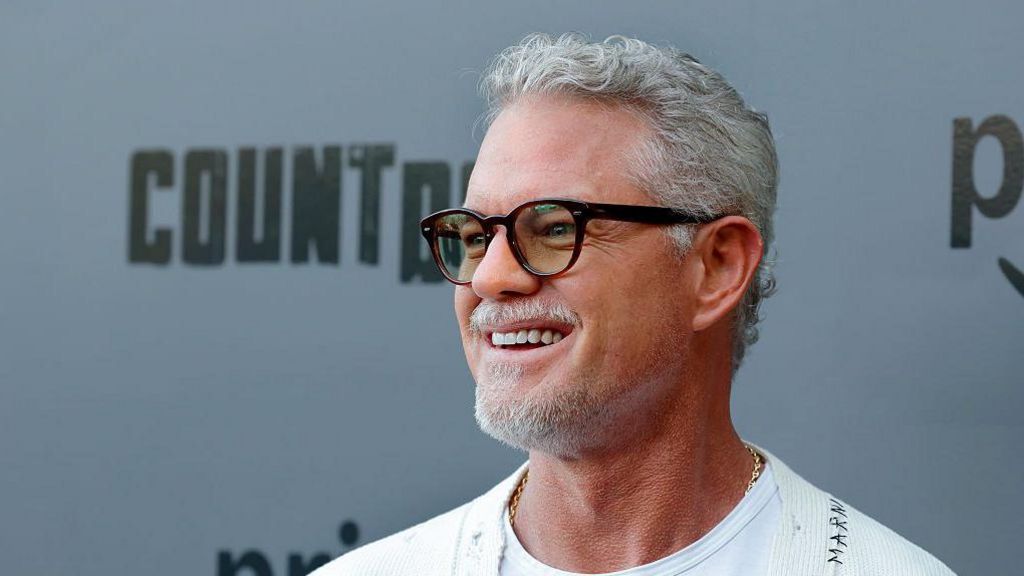

  • Grey’s Anatomy star Eric Dane dies at 53 after ALS diagnosis

    Grey’s Anatomy star Eric Dane dies at 53 after ALS diagnosis

    The entertainment industry mourns the passing of acclaimed actor Eric Dane, who succumbed to complications from amyotrophic lateral sclerosis (ALS) on Thursday afternoon at age 53. Best recognized for his iconic portrayal of Dr. Mark Sloan (affectionately dubbed ‘McSteamy’) on the long-running medical drama Grey’s Anatomy and his recent role as family patriarch Cal Jacobs in HBO’s groundbreaking series Euphoria, Dane’s career spanned over three decades of memorable performances.

    Dane’s family confirmed the tragic news through an official statement that highlighted his courageous fight against the progressive neurological condition. “With heavy hearts, we share that Eric Dane passed on Thursday afternoon following a courageous battle with ALS,” the statement read. “He spent his final days surrounded by friends, his devoted wife Rebecca Gayheart, and his two daughters, Billie and Georgia, who were the center of his world.”

    The California-born actor received his diagnosis last year and subsequently dedicated his remaining months to raising public awareness about ALS, the most common form of motor neurone disease. His advocacy work brought renewed attention to the rare degenerative condition that progressively paralyzes muscles by attacking nerve cells in the brain and spinal cord.

    In a poignant interview with ABC’s Good Morning America last summer, Dane expressed raw emotion about his diagnosis, stating it made him “angry” due to childhood trauma surrounding his father’s suicide when Dane was just seven years old. “There’s a very good chance I’m going to be taken from my girls while they’re very young,” he told the program, referencing his own two daughters.

    Beyond his most famous television roles, Dane’s extensive filmography included portrayals of Jason Dean in the fantasy series Charmed, Captain Tom Chandler in the action drama The Last Ship, and appearances in feature films including Marley & Me, Valentine’s Day, and Burlesque. His family’s statement concluded: “He will be deeply missed, and lovingly remembered always. Eric adored his fans and is forever grateful for the outpouring of love and support he’s received.”

  • Mystery donor gives Japanese city $3.6m in gold bars to fix water system

    Mystery donor gives Japanese city $3.6m in gold bars to fix water system

    In an extraordinary act of philanthropy, Osaka’s municipal government has received an anonymous donation of 21 kilograms of gold bullion valued at approximately 560 million yen ($3.6 million) to address the city’s deteriorating water infrastructure. Mayor Hideyuki Yokoyama revealed during a Thursday press conference that the substantial contribution—equivalent to 46 pounds of gold—was delivered last November by a benefactor who insisted on complete anonymity.

    The commercial hub of Osaka, Japan’s third-largest city with nearly three million residents, faces significant challenges with its aging water and sewage systems. According to official statistics from the Osaka City Waterworks Bureau, the municipality documented over 90 incidents of water pipe leaks beneath roadways during the 2024 fiscal year alone.

    Mayor Yokoyama expressed profound gratitude for the unexpected contribution, stating: ‘Tackling ageing water pipes requires a huge investment. So I have nothing but appreciation.’ He described the magnitude of the donation as ‘staggering’ and admitted being ‘lost for words.’ The mysterious donor had previously contributed 500,000 yen in cash for municipal waterworks, indicating a pattern of targeted philanthropy.

    This development highlights a growing infrastructure crisis across Japan, where more than 20% of water pipes have exceeded their legally designated 40-year service life. The problem extends beyond water systems to aging sewage infrastructure, with sinkholes becoming increasingly common in urban areas. A tragic incident in Saitama Prefecture last year saw a massive sinkhole—believed caused by a ruptured sewage pipe—swallow a truck cab and kill its driver, prompting nationwide calls for infrastructure renewal.

    Despite increased awareness, budget constraints have hampered pipe replacement initiatives across Japan. The Osaka Waterworks Bureau confirmed in an official statement that the gold donation would be put to practical use addressing pipe deterioration, offering a rare financial boost to the critically underfunded sector.

  • Trump administration gives ICE power to indefinitely detain legal refugees in US

    Trump administration gives ICE power to indefinitely detain legal refugees in US

    The Trump administration has significantly expanded the authority of Immigration and Customs Enforcement (ICE) officers through a newly revealed government memorandum, granting them sweeping powers to detain lawful refugees who haven’t yet obtained permanent residency status in the United States.

    Dated February 18 and filed in federal court, the directive empowers ICE agents to indefinitely detain legal refugees for what it terms ‘rescreening’ procedures. The policy mandates that refugees who entered the U.S. legally must submit to custody for “inspection and examination” exactly one year after their admission into the country, marking a dramatic shift from previous immigration enforcement protocols.

    The Department of Homeland Security memo instructs federal immigration officers to arrest any refugee who hasn’t secured permanent residence (a green card) and subject them to custodial interviews after their one-year anniversary in the United States. This represents a stark departure from Obama-era ICE policy, which explicitly stated that failure to obtain a green card was not grounds for removal or detention.

    Refugees face potentially severe consequences under the new guidelines, as they can be stripped of their legal status and processed for deportation if they raise “red flags” during examinations. This occurs despite the fact that green card processing for legal refugees typically takes between eight to 22 months according to immigration law experts.

    The policy emerged in connection with an ongoing case in Minnesota where the administration faced significant public backlash, including from some allies, over its immigration crackdown. In late January, U.S. District Judge John Tunheim issued a temporary restraining order preventing the administration from arresting lawfully resettled refugees in Minnesota and ordering the release of those already detained.

    Judge Tunheim sharply criticized ICE’s actions, noting that agents likely violated multiple federal statutes by arresting lawful refugees for additional interrogations. He emphasized that “refugees have a legal right to be in the United States, a right to work, a right to live peacefully – and importantly, a right not to be subjected to the terror of being arrested and detained without warrants or cause.”

    The Minnesota operations, mirroring ICE activities nationwide, have involved violent arrests with immigrants and refugees being forcibly removed from their homes and vehicles before being transferred to detention facilities in Texas, where conservative judges are more likely to align with administration policies.

    Despite temporarily pulling back ICE agents from Minnesota following public outrage and the deaths of two U.S. citizens during enforcement actions, the administration shows no signs of retreating from its hardline immigration stance. Recent reports indicate plans for a massive $45 billion expansion of ICE funding to construct additional detention facilities across the country.

  • At Board of Peace debut, Trump announces global commitments for Gaza reconstruction

    At Board of Peace debut, Trump announces global commitments for Gaza reconstruction

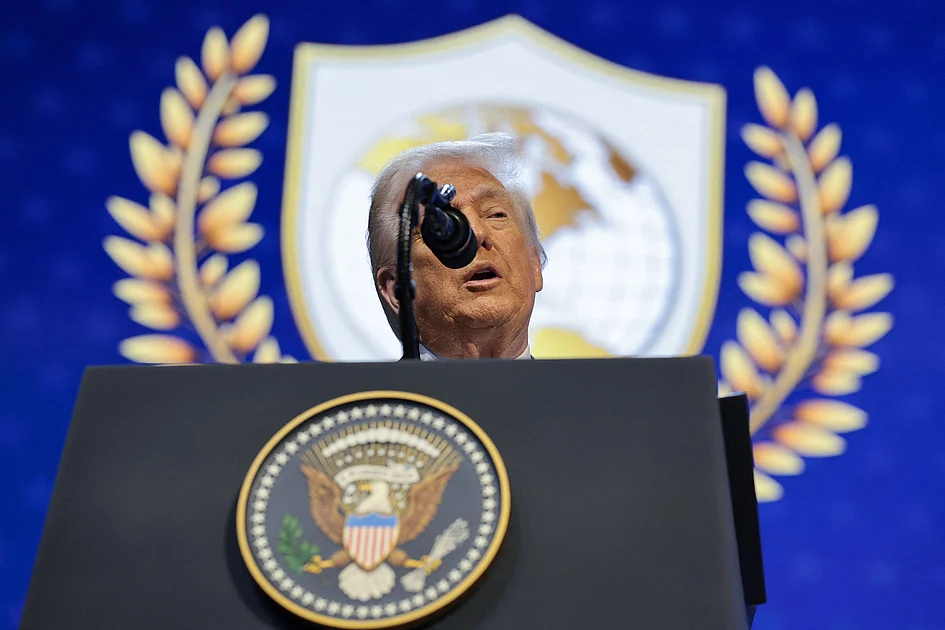
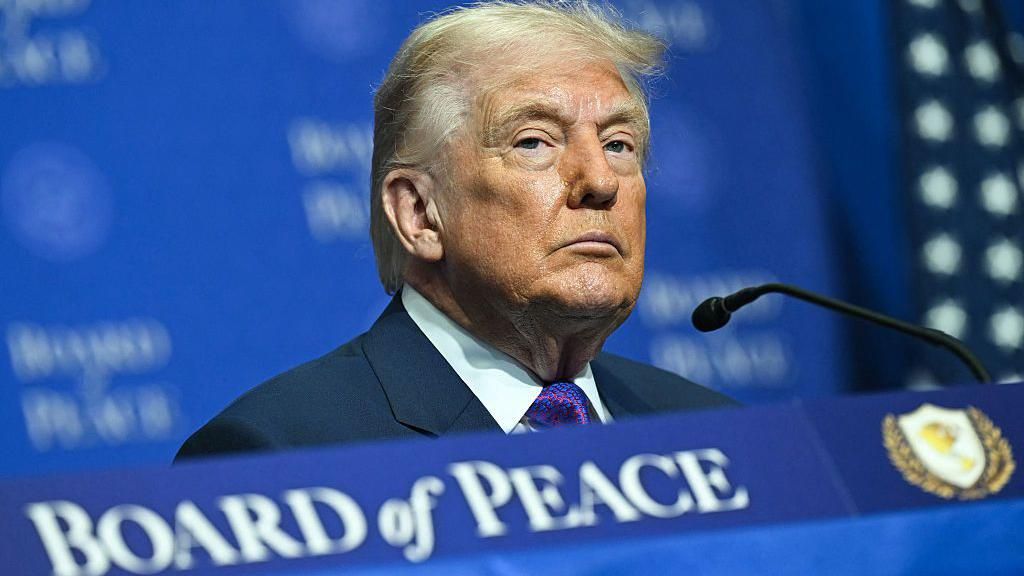
    In a landmark Washington gathering, former U.S. President Donald Trump inaugurated his Board of Peace initiative with significant financial commitments for Gaza’s reconstruction. The inaugural meeting, attended by representatives from 47 nations, secured $7 billion in initial pledges toward rebuilding the war-devastated territory, though estimates indicate a staggering $70 billion may ultimately be required to restore the enclave after two years of conflict.

    The Board’s composition notably features predominantly Middle Eastern nations including the United Arab Emirates, Saudi Arabia, Qatar, Kuwait, Bahrain, Morocco, Kazakhstan, Azerbaijan, and Uzbekistan. While Israel holds membership, Palestinian representatives remain excluded from the nascent diplomatic body. The United States pledged an additional $10 billion contribution, though funding mechanisms and congressional approval remain unspecified.

    Central to the reconstruction effort remains the unresolved issue of Hamas disarmament—a prerequisite condition that currently appears distant from implementation. Israeli Prime Minister Benjamin Netanyahu emphasized that Hamas would be disarmed “one way or the other,” while Hamas spokesperson Hazem Qassem suggested disarmament discussions could only occur alongside guarantees against Israeli aggression.

    The initiative also includes plans for an International Stabilization Force, with Indonesia committing up to 8,000 troops. This force, led by a U.S. general with an Indonesian deputy, would initially deploy in Israeli-controlled areas including Rafah to train a new Palestinian police force aiming eventually to reach 12,000 officers.

    The Board’s establishment occurs alongside heightened regional tensions, with Trump simultaneously issuing warnings to Iran regarding its nuclear program while positioning himself as a peacemaker. The initiative has raised concerns among some Western allies about its potential to undermine existing international institutions, despite Trump’s assurances to “strengthen the United Nations.” Norway notably clarified it would not join the Board despite hosting an upcoming event.

    The meeting blended diplomatic proceedings with campaign-style elements, complete with musical selections from Elvis Presley and the Beach Boys, and distribution of signature red Trump hats to participants.

  • US and Indonesia sign deal to cut tariffs to 19%

    US and Indonesia sign deal to cut tariffs to 19%

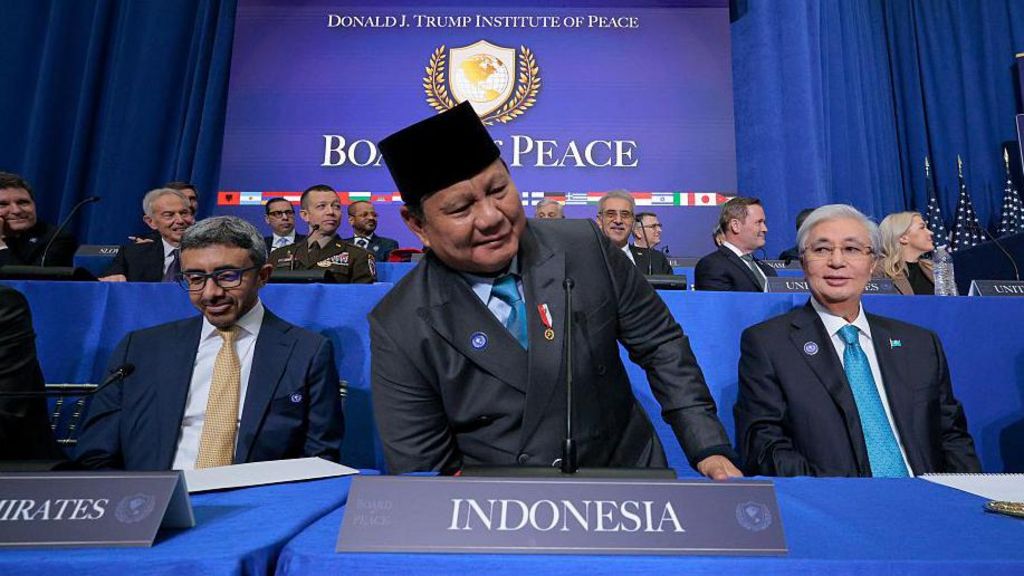
    In a significant development for international trade relations, the United States and Indonesia have concluded a major bilateral agreement that substantially reduces trade barriers between the two nations. The breakthrough came during Indonesian President Prabowo Subianto’s visit to Washington, where he met with President Donald Trump alongside attending the inaugural session of the Trump-led “Board of Peace” initiative.

    The comprehensive pact, finalized on Thursday, slashes U.S. tariffs on Indonesian imports from 32% to 19%, marking one of the most substantial tariff reductions between the two countries in recent history. In reciprocation, Indonesia has committed to eliminating trade restrictions on over 99% of American goods across multiple sectors including agricultural products, healthcare equipment, seafood, technology, and automotive-related merchandise.

    White House officials detailed that Washington will grant specific tariff exemptions on select Indonesian textiles and clothing items manufactured using U.S.-sourced cotton and synthetic materials. The agreement also includes provisions for Indonesia to align its regulatory standards with American guidelines, particularly in automotive safety and emissions protocols, as well as adopting U.S. food and pharmaceutical standards for medical devices and drugs.

    U.S. Trade Representative Jamieson Greer characterized the agreement as transformative, stating it effectively “breaks down trade barriers” while strategically advancing American economic interests. The arrangement additionally facilitates improved market access for American agricultural and technology products within Indonesia’s growing consumer market.

    The timing of the agreement coincides with broader diplomatic engagements, including discussions about Gaza reconstruction efforts through the newly established Board of Peace framework. This dual-track approach demonstrates how trade and geopolitical initiatives are increasingly interconnected in contemporary international relations.

  • Revealed: The billions given to charity by ordinary Indians every year

    Revealed: The billions given to charity by ordinary Indians every year

    A transformative study from Ashoka University’s Centre for Social Impact and Philanthropy (CSIP) has fundamentally reshaped our understanding of Indian philanthropy. Contrary to the prevailing narrative dominated by billionaire pledges and corporate social responsibility initiatives, the How India Gives 2025 report reveals that ordinary households constitute the true backbone of the nation’s generosity.

    This comprehensive research, drawing from over 7,000 interviews across 20 Indian states, documents an astonishing annual household giving total of approximately 540 billion rupees ($6 billion). The findings demonstrate that 68% of Indian households participate in some form of giving, with nearly half (48%) providing in-kind donations such as food, clothing, and household goods. Cash donations represent 44% of contributions, while volunteering accounts for 30% of household generosity.

    The study identifies religious duty as the primary motivator for more than 90% of givers, with approximately 40-45% of all donations flowing to religious organizations. A comparable portion is directed toward beggars and destitute individuals, particularly in urban settings. Rural India demonstrates a stronger preference for religious institution support.

    Professor Jinny Uppal, head of CSIP, emphasizes the cultural embeddedness of this phenomenon: “India is a profoundly generous country where ordinary households play a much larger role than commonly acknowledged. This generosity appears widespread and culturally embedded across all demographics.”

    The research methodology anchored responses to India’s National Sample Survey consumption data, enabling detailed analysis of giving patterns across income segments. Remarkably, even at low consumption levels (4,000–5,000 rupees monthly), approximately half of households report giving. This participation rate escalates to 70-80% among higher income brackets.

    The study also reveals subtle gender variations: male-headed households show slightly greater inclination toward religious giving, while female-headed households demonstrate marginally stronger support for destitute individuals.

    Despite smaller individual contributions, everyday giving constitutes approximately 15% of total Indian philanthropy while accounting for nearly one-third of private donations to the organized social sector. As India’s economy continues its rapid expansion, researchers anticipate corresponding growth in this grassroots philanthropic movement that represents not a trickle from the top, but a daily tide from below.

  • Trump’s foreign policy dilemma laid bare by Iran tensions

    Trump’s foreign policy dilemma laid bare by Iran tensions

    In a striking display of diplomatic duality, President Donald Trump simultaneously advocated for peace while threatening military action against Iran during Thursday’s Board of Peace summit in Washington. The address revealed the fundamental contradictions characterizing Trump’s second-term foreign policy approach, particularly regarding the escalating standoff with Tehran.

    The administration maintains it prefers a diplomatic resolution to halt Iran’s nuclear weapons program, with a White House official recently suggesting Iran would be ‘very wise’ to negotiate. Yet this rhetoric contrasts sharply with the largest U.S. military buildup in the Middle East since the 2003 Iraq War, according to defense analysts.

    This pattern of military escalation without congressional approval has become a hallmark of Trump’s second term. The administration followed through on similar threats against Venezuela in January, resulting in the capture of former President Nicolás Maduro. With Iran, however, the strategic objectives remain markedly unclear. While preventing nuclear proliferation remains a stated priority shared by U.S. allies, the administration has additionally demanded Tehran curb its ballistic missile program and cease support for regional proxy groups—conditions that have stalled indirect negotiations.

    The rationale for additional military action remains particularly puzzling given Trump’s assertion that last June’s strike already ‘obliterated’ Iran’s nuclear facilities. The administration has not clarified what new targets might justify another campaign or how it would achieve different outcomes. Broader strategic questions also remain unanswered: Does the administration seek regime change? Is it prepared for Iranian retaliation against U.S. bases? How would prolonged conflict affect Middle East stability and Gaza reconstruction efforts?

    Israel’s potential involvement adds another layer of complexity. Prime Minister Benjamin Netanyahu’s recent White House meeting suggests coordinated planning, though specifics remain undisclosed. Domestically, Trump faces political challenges as his actions contradict campaign promises to disengage from foreign conflicts—a position popular with his MAGA base and congressional Republicans. An extended Iranian campaign could alienate supporters ahead of midterm elections, particularly when voters express frustration over immigration and economic issues.

    The situation creates a peculiar paradox for Trump’s Nobel Peace Prize aspirations. While he claims credit for ending eight conflicts since beginning his second term, he simultaneously pursues military interventions that contradict the prize’s fundamental purpose. No previous U.S. president has actively campaigned for the peace prize while conducting military operations abroad.

    This strategic ambiguity appears intentional—a manifestation of Trump’s self-styled role as global dealmaker-in-chief. From tariff diplomacy to territorial disputes over Greenland, the president has consistently kept international counterparts guessing about his true intentions. Regarding Iran, Trump offered characteristically vague remarks: ‘We have to make a meaningful deal otherwise bad things happen.’ The world now watches to see whether those ‘bad things’ will involve diplomacy or destruction.

  • Nasa boss says Boeing Starliner failure one of worst in its history

    Nasa boss says Boeing Starliner failure one of worst in its history

    NASA has officially classified the troubled 2024 Starliner mission as its most severe ‘Type A’ mishap, placing it in the same category as the fatal Challenger and Columbia space shuttle disasters, according to a newly released comprehensive report.

    The designation, reserved for incidents resulting in vehicle loss, control failure, fatalities, or damage exceeding $2 million, follows an extensive independent investigation into the mission that left astronauts Suni Williams and Butch Wilmore stranded aboard the International Space Station for over nine months.

    NASA Administrator Jared Isaacman, who assumed leadership in late 2025 after nomination by President Donald Trump, publicly criticized both Boeing—the spacecraft’s manufacturer—and his own agency for critical leadership failures and poor decision-making that culminated in the botched mission. The spacecraft had exhibited concerning issues during prior missions yet was still approved for the crucial test flight.

    The 312-page investigative report identified multiple systemic failures including hardware malfunctions, engineering deficiencies at Boeing, inadequate oversight, and organizational cultural problems that collectively created conditions falling short of NASA’s rigorous safety standards. What was originally planned as an 8-14 day mission evolved into a months-long ordeal for the veteran astronauts, who eventually returned to Earth in March 2025 via a SpaceX rescue flight and have since retired from the agency.

    While acknowledging that no injuries occurred and mission control was ultimately regained before docking, NASA’s statement emphasized that the highest-level classification recognizes the significant potential for catastrophe that existed. The agency has committed to implementing all recommended corrective actions and ensuring leadership accountability to prevent similar incidents in future missions.

    Isaacman stated: ‘To undertake missions that change the world, we must be transparent about both our successes and our shortcomings. We are correcting those mistakes and ensuring situations like this never reoccur.’

  • New Mexico reopens criminal inquiry into Jeffrey Epstein’s Zorro Ranch

    New Mexico reopens criminal inquiry into Jeffrey Epstein’s Zorro Ranch

    New Mexico authorities have initiated a renewed criminal investigation into the Zorro Ranch, previously owned by convicted sex offender Jeffrey Epstein, following disturbing allegations contained within recently unsealed Department of Justice documents.

    State prosecutors announced they will pursue complete access to unredacted federal files concerning the property held by investigators in Washington DC. The investigation will collaborate with a newly established bipartisan ‘Epstein truth commission’ created by state legislators this week to examine allegations that the ranch served as a site for sexual abuse and trafficking activities.

    Attorney General Raúl Torrez stated on social media platform X that his office would conduct “a broad and comprehensive” examination of the Zorro Ranch operations. The original state investigation was suspended in 2019 at the request of federal prosecutors in New York, where Epstein faced charges before his death in a Manhattan jail that same year.

    The four-member legislative commission is investigating serious claims, including allegations from a 2019 anonymous email suggesting Epstein ordered the burial of two foreign girls on the property’s periphery. State legislator Andrea Romero, serving on the commission, revealed that there may have been prior reports to the FBI regarding “bodies being buried” and “folks being trafficked” at the ranch.

    Commission members are additionally seeking explanations regarding Epstein’s failure to register as a sex offender in New Mexico despite his 2008 guilty plea for soliciting prostitution from a minor. Although Epstein never faced formal charges in the state, prosecutors confirmed in 2019 that they had interviewed potential victims who had visited the property.

    Multiple women have previously alleged they were recruited and abused by Epstein at Zorro Ranch, describing the remote property as integral to his trafficking operations. Congresswoman Teresa Leger Fernandez characterized the ranch as “very isolated” with “very beautiful landscape” but noted “very disturbing reports of some of the activity going on there.”

    The property, located south of Santa Fe, features prominently in the millions of documents released by the Justice Department in late January, with thousands of references to the ranch. The estate includes a 21,000-square-foot mansion situated on a hilltop overlooking nearly 10,000 acres of desert terrain, complemented by a private airstrip and helipad.

    Epstein originally acquired the property in 1993 from former New Mexico Governor Bruce King and subsequently leased approximately 1,250 acres of surrounding state lands. These leases were terminated in September 2019 when authorities determined Epstein used the land primarily as a privacy buffer rather than for legitimate agricultural purposes.

    The property now belongs to former Texas state Senator Don Huffines, who purchased it from the Epstein estate in 2023, with proceeds reportedly directed toward compensating Epstein’s victims.