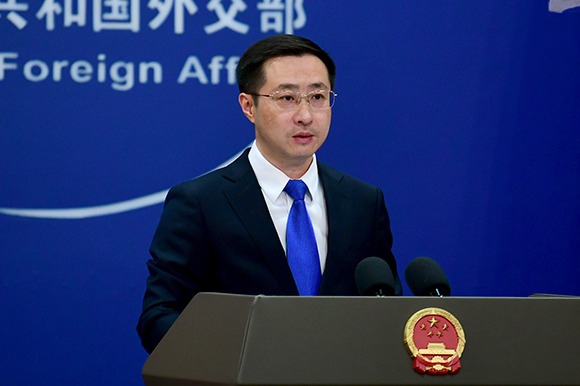
In a recent statement, China has called on Japan to deeply reflect on its historical crimes, learn from the past, and steadfastly adhere to the path of peaceful development. This appeal was made by Chinese Foreign Ministry spokesperson Lin Jian during a routine press briefing on Wednesday. Lin’s remarks were in response to a recent statement by Japanese Prime Minister Shigeru Ishiba, who emphasized the importance of historical reflection and the avoidance of past war mistakes. Lin noted that China places significant importance on Ishiba’s position, recalling that during a meeting between Chinese and Japanese leaders in Lima, Peru, in November 2024, Ishiba had expressed Japan’s commitment to facing history squarely and looking toward a peaceful future. Lin stressed that adopting a correct historical stance, showing remorse, and apologizing for past aggressions are crucial for Japan’s reintegration into the international community. These actions not only affect the political foundation of China-Japan relations but also Japan’s relationships with its neighbors and its global image. Lin urged Japan to completely sever ties with any attempts to whitewash or obscure its history of aggression, take a responsible stance toward history, and commit to peaceful development through concrete actions to regain the trust of its Asian neighbors and the international community.
博客
-
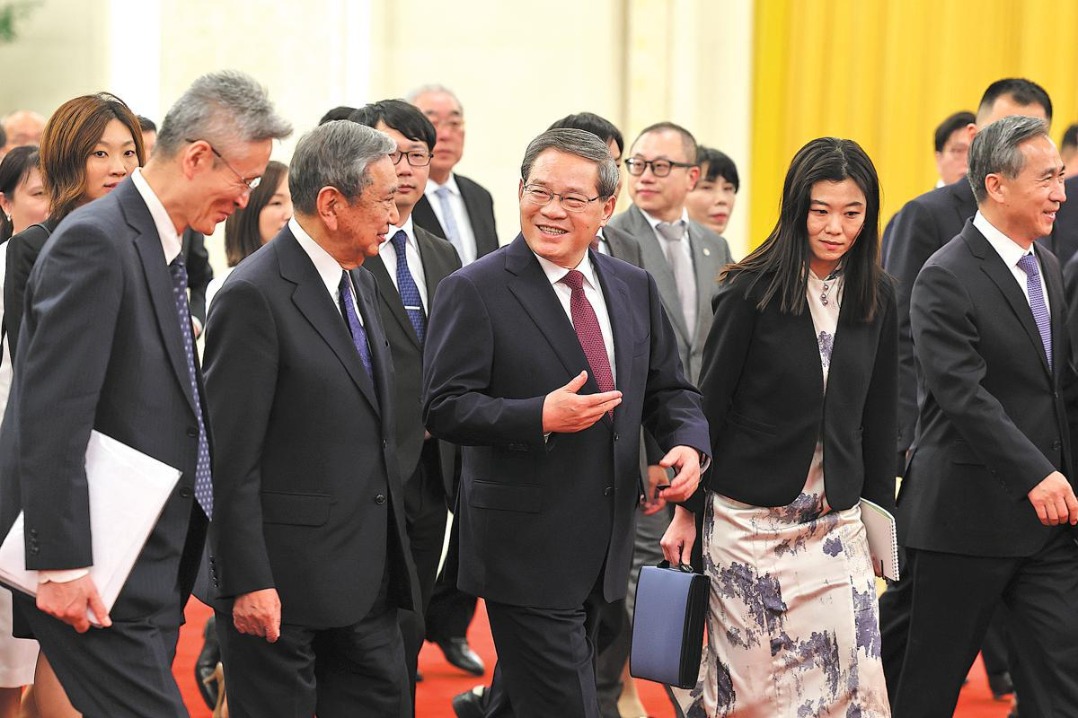
Li: Expand trade ties with Japan
Premier Li Qiang emphasized the importance of expanding trade and investment between China and Japan during a meeting with a Japanese business delegation in Beijing. The meeting, held at the Great Hall of the People, was led by Yohei Kono, president of the Japanese Association for the Promotion of International Trade. Premier Li highlighted the strategic and mutually beneficial relationship between the two nations, recalling the recent agreement between President Xi Jinping and Japanese Prime Minister Shigeru Ishiba to advance bilateral ties. He stressed the need for proactive actions to strengthen political mutual trust and people-to-people connections, urging both countries to manage differences constructively and promote stable bilateral relations. Premier Li also pointed out the challenges posed by the evolving international landscape and called for leveraging the industrial complementarity and technological expertise of both nations to explore new areas of cooperation, such as the digital economy, green economy, and biopharmaceuticals. He reaffirmed China’s commitment to high-standard opening-up and welcomed Japanese enterprises to expand their presence in China. The meeting followed the sixth China-Japan High-Level Economic Dialogue in Tokyo, where both sides reached a 20-point consensus to deepen economic cooperation. Kono acknowledged China as Japan’s most important economic partner and emphasized the need for enhanced communication to safeguard multilateralism and the free trade system. Since the normalization of diplomatic relations in 1972, bilateral trade has grown over 300-fold, with accumulated investment nearing $140 billion.
-

Ancient DNA reveals a new group of people who lived near land bridge between the Americas
In a groundbreaking discovery, scientists have uncovered evidence of a previously unknown pod of ancient hunter-gatherers who thrived approximately 6,000 years ago near the land bridge connecting North and South America. This revelation, published in the journal *Science Advances*, sheds new light on the complex migration patterns of early humans across the Americas. The group, identified through ancient DNA analysis, inhabited the high plateaus of present-day Bogotá, Colombia—a strategic location where the two continents converge. Intriguingly, this ancient population does not share close genetic ties with either ancient Native Americans in North America or ancient or modern South Americans, leaving their exact place in the human family tree a mystery. Archaeologist Andre Luiz Campelo dos Santos of Florida Atlantic University, who was not involved in the study, remarked, ‘Up to this point, we didn’t believe there was any other lineage that would appear in South America. This is unexpected.’ By 4,000 years ago, this group had vanished, replaced by a genetically distinct population. The reasons for their disappearance remain unclear, with possibilities ranging from assimilation into a larger group to complete displacement. Further genetic analysis in South America could help determine whether traces of this ancient lineage persist in modern populations. Study author Andrea Casas-Vargas of the National University of Colombia emphasized the significance of the region, calling it ‘the gateway to the South American continent.’ This discovery underscores the importance of the land bridge in the migration and settlement of ancient peoples across the Americas.
-
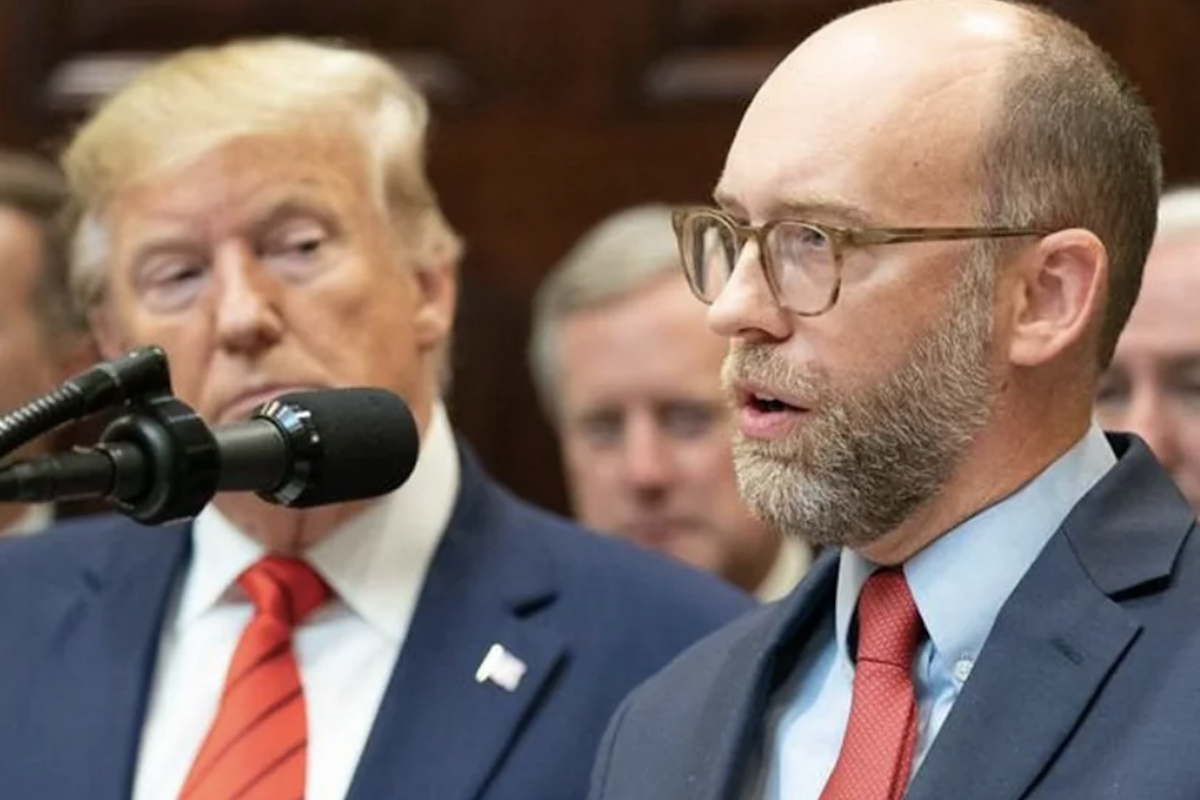
Forget Musk. Russ Vought is the real power behind Trump
While Elon Musk has been a prominent figure in the Trump administration, Russell Vought, the Director of the Office of Management and Budget (OMB), has emerged as a more influential yet less visible force. Vought is rumored to soon take over the Department of Government Efficiency (DOGE) from Musk, further solidifying his role in shaping the administration’s policies. Unlike Musk, Vought operates largely out of the media spotlight, driven by a deep commitment to radically transforming the U.S. presidency and embedding Christian values into government and public life. Vought has vowed to ‘crush the Deep State,’ a mission he began during Trump’s first term, where he served as OMB deputy director and briefly as director. He played a key role in Executive Order 13957, which aimed to reclassify thousands of federal policy jobs, allowing the White House to swiftly alter employment in these roles. Although this order was revoked by the Biden administration, Trump issued a similar order (14171) in January, potentially affecting 50,000 federal positions. Vought argues that such measures are essential for the White House to retain control over federal agencies, preventing ideological opponents from undermining its initiatives. During the Biden presidency, Vought was the key architect of the Heritage Foundation’s Project 2025, a 900-page blueprint widely seen as the foundation for Trump’s potential second term. Many of its recommendations, including high trade tariffs and DOGE’s cost-cutting initiatives, have already been implemented. Vought’s influence extends to his close relationship with Musk, with whom he has coordinated efforts to streamline government spending. Despite facing opposition from Democrats, who view him as a radical threat to constitutional norms, Vought remains steadfast in his belief in the unitary executive theory, which asserts the president’s authority over all executive branch operations. His continued push for reform could lead to significant legal battles, potentially reshaping the balance of power in the federal government.
-
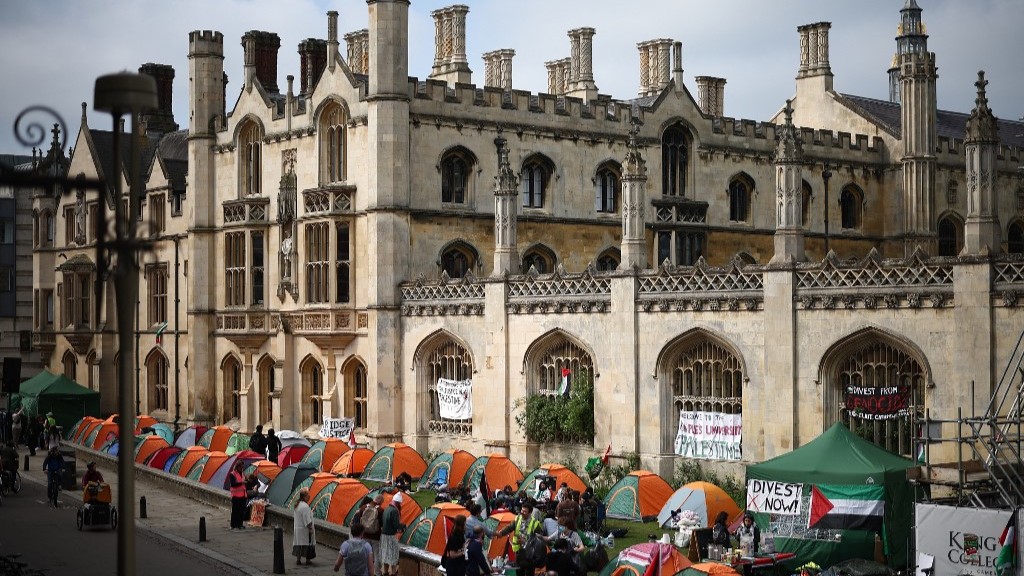
King’s College Cambridge to divest millions from ‘occupation’ and arms industry
In a landmark decision driven by sustained student activism, King’s College at the University of Cambridge has committed to divesting from the arms industry and companies implicated in occupations. The historic institution, established by Henry VI in 1441, announced this week that its governing body has approved adopting a comprehensive responsible investment policy by year’s end.
The college currently maintains £2.2 million ($2.94 million) in arms manufacturers including Lockheed Martin, Korea Aerospace, and BAE Systems as of March 2023. Under the new ethical framework, King’s will exclude companies engaged in activities ‘generally recognized as illegal or contravening global norms, such as occupation,’ specifically referencing Ukraine and Palestinian territories. The policy further prohibits investments in producers of military and nuclear weapons, internationally restricted weapons, and manufacturers of dedicated components for such weapons.
This decision makes King’s the first Oxford or Cambridge college to implement such measures, culminating months of organized protests by student groups. The college acknowledged the policy emerged from ‘wide-ranging discussions within the college about its investments and its values.’
Student organization King’s Cambridge 4 Palestine welcomed the move while criticizing its timing: ‘KC4P implore the university and other colleges to follow the example set by King’s, although the decision comes far too late for the thousands of Palestinians who have been starved, tortured and killed.’
The development occurs within a broader context of investment-related protests across Cambridge’s 31 autonomous colleges. Last May, student group Cambridge for Palestine established protest encampments demanding transparency and divestment from companies complicit in Israel’s Gaza operations. While the university committed in July to establishing Palestinian academic opportunities and an investment review working group, students resumed protests in November accusing the institution of ‘stalling.’
The controversy escalated in February when the university obtained a High Court order restricting Israel-Palestine protests on key sites until July’s end, prompting hundreds of students and staff to condemn the move as an ‘assault on freedom of expression.’
Separately, Middle East Eye revealed Trinity College, Cambridge’s wealthiest institution, maintained $78,089 in Elbit Systems, Israel’s largest arms company providing most drones and land equipment to the Israeli military. Despite student reports of intended divestment following months of protests, the college’s master insisted in November that Trinity had ‘no interest in divesting from arms companies,’ with recent freedom of information requests confirming continued weapons investments.
-
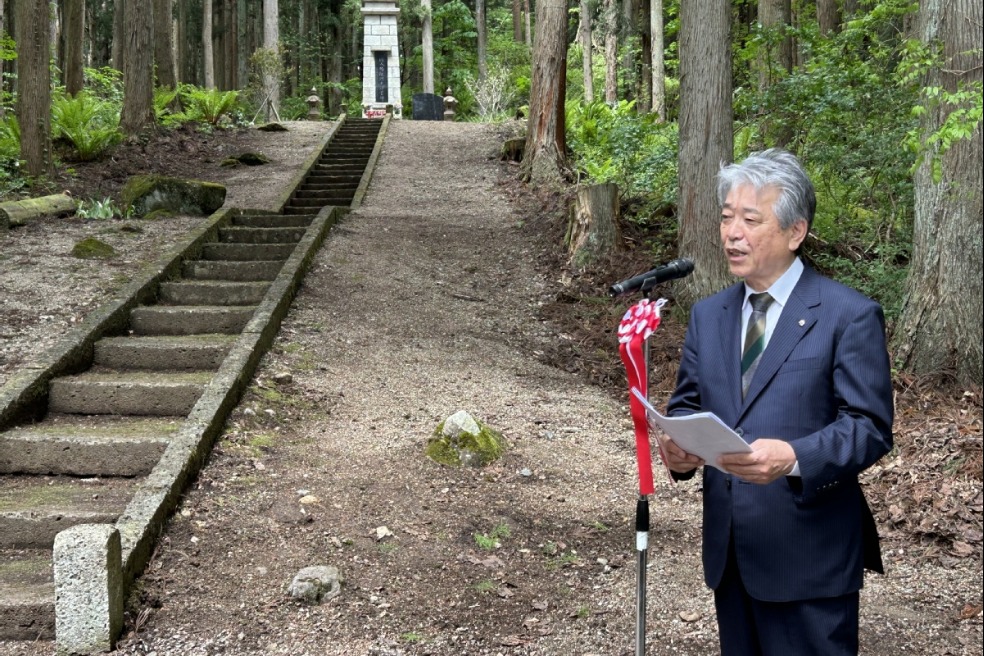
Fallen WWII Chinese laborers honored in Japan
In a poignant ceremony held in Inawashiro, Fukushima Prefecture, Japan, diplomats and advocates for Japan-China friendship gathered to honor the memory of Chinese laborers who perished during World War II. The event, which took place on May 18, marked the completion of the renovation of a monument dedicated to these fallen workers and included a commemorative tree-planting ceremony. Historical records reveal that near the end of WWII, approximately 40,000 Chinese individuals were forcibly brought to Japan, enduring brutal labor conditions and inhumane treatment, leading to the deaths of nearly 7,000 people. Among them, about 1,000 were sent to Fukushima, where 25 lost their lives due to persecution. The monument, initially unveiled in 1971 and expanded in 1988, underwent a significant renovation in 2023, supported by Japan-China friendship organizations. Cui Weilei, Chinese consul general in Niigata, emphasized the importance of remembering history not to perpetuate hatred but to learn from the past and foster a peaceful future. He urged Japan to reflect on its historical responsibilities and reject the revival of militarism. Hisashi Endou, president of the Fukushima Prefectural Japan-China Friendship Association, highlighted the spirit of gratitude and reconciliation, noting that the monument was built with the support of a repatriated Japanese POW. The ceremony also saw the participation of Shinji Oguma, a member of Japan’s House of Representatives, who stressed the significance of a strong Japan-China relationship for regional and global peace. Wang Jiangkun, a PhD graduate from the University of Aizu, expressed hope that younger generations would continue to build a future of understanding and cooperation between the two nations.
-
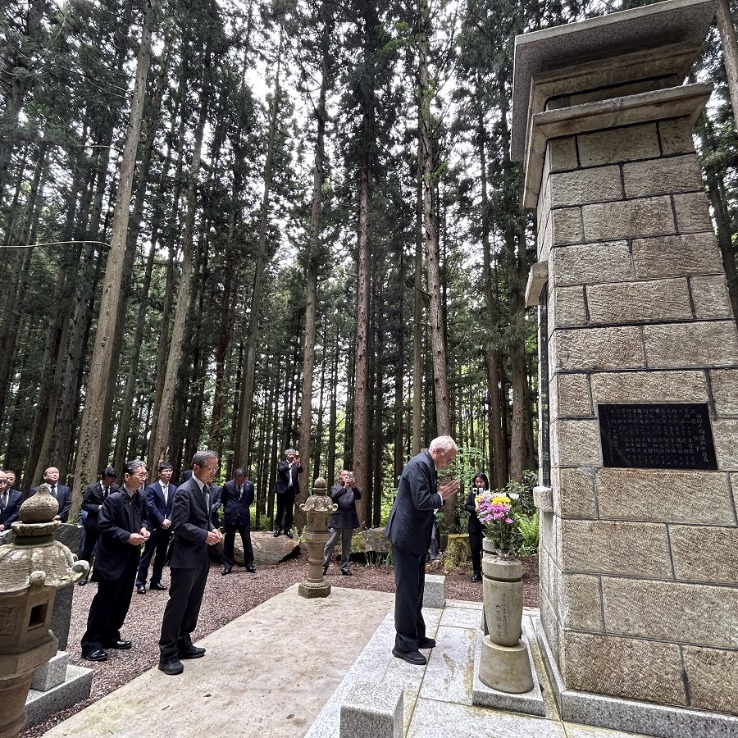
Japan-China friendship advocates mark renovation of monument honoring WWII Chinese laborers
In a poignant ceremony held on May 18 in Inawashiro, Fukushima Prefecture, diplomats and advocates for Japan-China friendship gathered to honor the completion of the renovation of a monument dedicated to Chinese laborers who perished during World War II. The event, which included a commemorative tree-planting ceremony, served as a reminder of the shared history and a renewed commitment to fostering peace between the two nations.
Historical records reveal that towards the end of World War II, approximately 40,000 Chinese individuals were forcibly taken to Japan and subjected to harsh forced labor, resulting in the deaths of 6,830 people. Among these, about 1,000 were sent to Fukushima, where 25 died under inhumane conditions. In 1971, a 17-foot-tall monument was erected in Inawashiro to mourn these souls and stand against militarism. The monument underwent its first expansion in 1988 and recently completed a second major renovation in 2023, supported by Japan-China friendship organizations.
Participants at the ceremony emphasized the importance of learning from history, looking towards the future, and working together to safeguard peace. They also expressed their support for the continued improvement of China-Japan relations. The event was attended by notable figures, including Hisashi Endou, president of the Fukushima Prefectural Japan-China Friendship Association, who delivered a speech during the ceremony.
The renovation of the monument and the commemorative ceremony underscore the ongoing efforts to acknowledge past injustices and build a foundation for a peaceful and cooperative future between Japan and China.
-

The statistical truth about American stagnation
The narrative that globalization hollowed out the American middle class has been a topic of intense debate. A recent analysis challenges this notion, arguing that the timing of wage stagnation in the U.S. does not align with the era of globalization. John Lettieri of the Economic Innovation Group highlights that wage stagnation occurred primarily between 1973 and 1994, predating the North American Free Trade Agreement (NAFTA) in 1994. In fact, wages began to grow again shortly after NAFTA’s implementation. However, the story is more nuanced. While NAFTA had minimal negative effects on specific industries, the ‘China Shock’ following China’s entry into the World Trade Organization (WTO) in 2001 had a more significant impact on American wages, particularly for the working class. Between 2003 and 2015, median wages flattened, coinciding with increased competition from China. The Great Recession further exacerbated wage stagnation post-2007. Despite these factors, the most prolonged period of wage stagnation occurred before globalization, from 1973 to 1994. This era was marked by multiple economic shocks, including oil crises, inflation, and shifts in global monetary policies. Theories explaining this stagnation include productivity slowdowns, financialization, the decline of unions, and inflation. However, none of these factors alone fully account for the 20-year stagnation. The productivity slowdown, which aligns closely with the stagnation period, remains a leading explanation, though its exact causes are still debated. Other factors, such as de-unionization and financialization, played partial roles but do not fully explain the phenomenon. Ultimately, the wage stagnation of 1973-1994 may have resulted from a combination of these factors, rather than a single cause. This complex interplay underscores the challenges of isolating economic trends and highlights the need for further research to understand this pivotal period in American economic history.
-
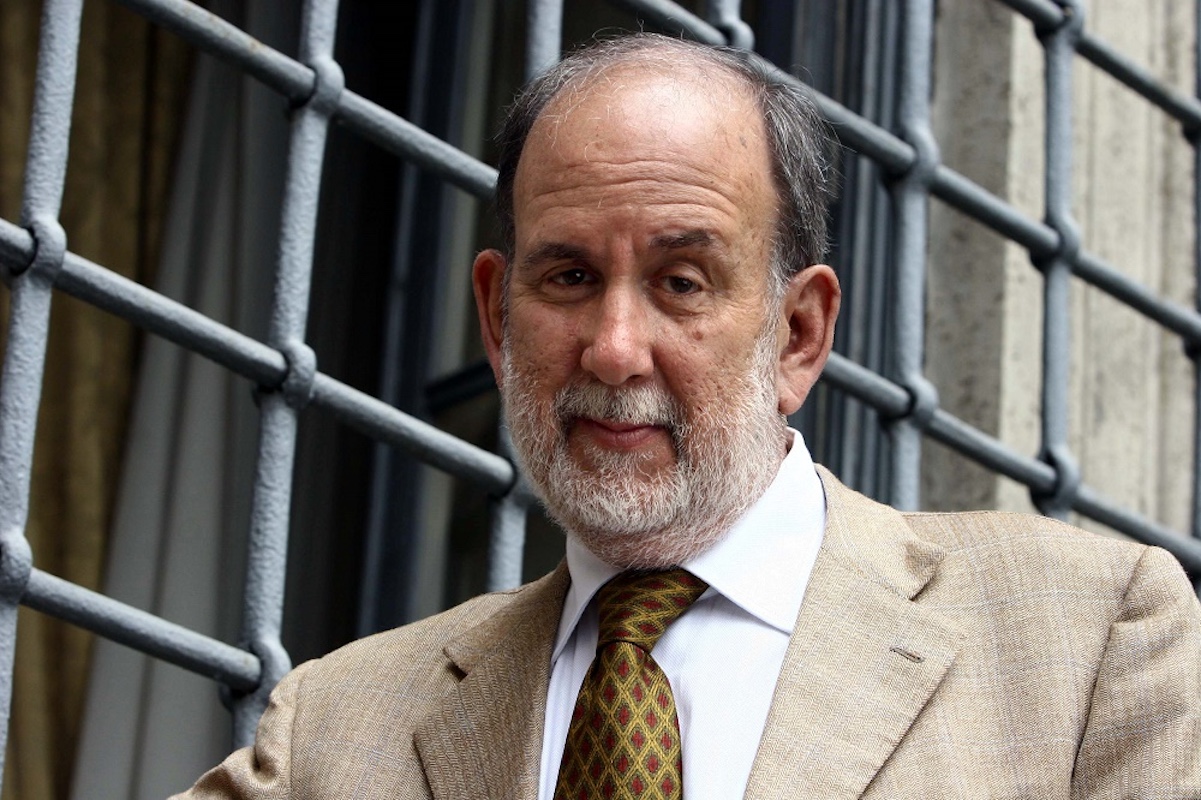
Michael Ledeen, a Reagan revolutionary, passes at 83
Michael Ledeen, a distinguished historian, cultural expert, and key figure in U.S. intelligence, passed away on May 17 at the age of 83 after a prolonged illness. His death marks the loss of one of the last Americans who approached intelligence with a profound understanding of history and culture, a trait increasingly rare in modern academia. Ledeen’s contributions to America’s Cold War victory were monumental, though often understated in public records. His unique blend of historical insight, cultural acumen, and decisive action set him apart as a pivotal figure in shaping America’s global dominance during the 20th century. A mentor and friend, Ledeen was celebrated for his generosity and wisdom. One of his lesser-known yet significant achievements was his role in persuading Italian Prime Minister Bettino Craxi to deploy Pershing II missiles in Western Europe during the Reagan administration, a move that countered Soviet military strategies. Ledeen’s deep understanding of Italian politics and culture, exemplified in his writings on Naples and Italian fascism, made him an invaluable asset in diplomatic and intelligence circles. Post-Reagan, he held the Freedom Chair at the American Enterprise Institute for two decades and later joined the Foundation for Defense of Democracy. Often mislabeled as a neoconservative, Ledeen’s revolutionary conservatism was rooted in a transformative vision of America, deeply influenced by his Jewish heritage. He is survived by his wife Barbara, a prominent Senate staffer, and his children Simone, Gabriel, and Daniel, who have all served in significant public roles. Ledeen’s legacy endures as a testament to the power of intellectual rigor and cultural understanding in shaping global politics.
-
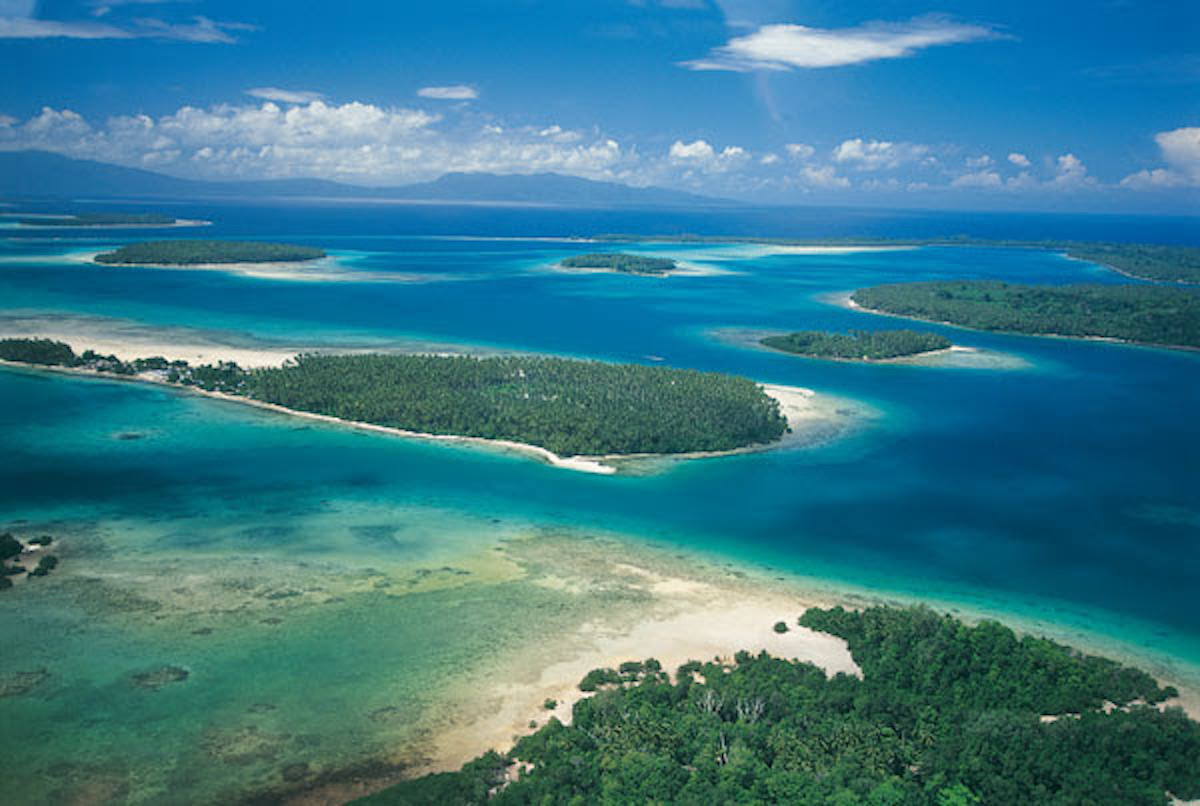
A Trump administration playbook for the Pacific
As Secretary of State, Marco Rubio has outlined a robust framework for US foreign policy, emphasizing initiatives that strengthen America, secure its future, and enhance its prosperity. In the Pacific Islands, the US faces a strategic challenge: aligning the Trump administration’s priorities with the region’s unique circumstances and aspirations. By examining four key areas of statecraft—diplomatic, intelligence, military, and economic—a strategic playbook emerges that addresses both US interests and regional needs. The Trump administration’s foreign policy, often seen as unpredictable, reveals clear patterns: China is viewed as the primary global threat, hard power is prioritized over soft power, cost-cutting is emphasized, and allies are expected to share more of the burden. Diplomatically, the administration has focused on recalibrating trade relationships to address deficits and create favorable environments for American businesses. This shift has elevated the role of economic and financial agencies like the Department of Commerce. However, the US has struggled to establish a strong diplomatic presence in the Pacific, a region where personal relationships are crucial. Sending Commerce Department officials to key Pacific nations could enhance trade and reinforce US influence. Additionally, expediting the nomination and confirmation of US ambassadors to the Pacific Islands is essential. For instance, the US Embassy in Honiara reopened in January 2023, but the ambassador position remains vacant, leaving a gap that China has readily filled. The Quadrilateral Security Dialogue (Quad) remains a cornerstone of the US Indo-Pacific Strategy, fostering partnerships with Australia, India, and Japan to expand Pacific engagement and meet burden-sharing goals. In 2023, the Quad announced initiatives addressing climate change, maritime security, and economic development. Intelligence-sharing is also critical, particularly with the Freely Associated States (FAS)—Marshall Islands, Palau, and Micronesia—to counter China’s influence. Enhanced US support for local law enforcement and disaster preparedness can strengthen regional resilience. Maritime security is another priority, with illegal fishing and transnational crimes posing significant threats. The US has shiprider agreements with 12 Pacific Island countries, but limited capacity hinders their effectiveness. Cost-effective solutions, such as reallocating assets or prepositioning cutters, could improve outcomes. Militarily, the US maintains extensive defense rights in the FAS through the Compacts of Free Association. Recent security arrangements with Papua New Guinea and Fiji counter China’s presence while supporting regional development and disaster relief. Australia and New Zealand are also increasing their roles in the Pacific, necessitating close coordination to avoid overlap. Economically, the US faces challenges due to the freeze on foreign aid and the dismantling of USAID, which has damaged its credibility and allowed China to expand its influence. Restarting disaster relief and unexploded ordnance programs in the FAS and Papua New Guinea is a positive step, but a more mutually beneficial economic engagement strategy is needed. By prioritizing areas like economic development, environmental resilience, and small-scale infrastructure, the US can deepen relationships with Pacific Island Countries (PICs) while advancing its strategic interests. Leveraging diplomatic channels, enhancing intelligence sharing, and fostering economic partnerships will be crucial in countering Chinese expansion and ensuring a prosperous future for both the US and the Pacific Islands.