博客

  • Which Premier League players are going to Afcon?

    Which Premier League players are going to Afcon?

    The upcoming 2025 Africa Cup of Nations (AFCON) in Morocco presents substantial challenges for Premier League clubs, with up to 43 players potentially departing for international duty during the critical winter fixture period. Scheduled from December 21, 2025, to January 18, 2026, the tournament coincides with six Premier League matchdays, the FA Cup third round, and EFL Cup semi-final first legs—potentially causing key players to miss up to eight crucial matches.

    Liverpool’s Mohamed Salah and Manchester United’s new signing Bryan Mbuemo headline the list of prominent players expected to participate. While 50 African players currently feature in England’s top flight, several nations including Ghana, Gambia, and Guinea-Bissau failed to qualify, sparing players like Tottenham’s Mohammed Kudus and Bournemouth’s Antoine Semenyo from international call-ups.

    Club impact varies significantly across the league: Sunderland faces the most substantial disruption with eight potential absentees, while Wolves, Nottingham Forest, and Crystal Palace each anticipate losing four players. Newcastle’s Yoane Wissa has already been excluded from DR Congo’s squad due to injury concerns. Notably, Arsenal, Chelsea, and Leeds United maintain squads without African players, insulating them from tournament-related disruptions.

    Nigeria leads Premier League representation with nine players, followed by Ivory Coast and Senegal with six each. Brighton emerges as uniquely affected—though possessing multiple African players, their representatives hail from nations that didn’t qualify for the tournament.

    The tournament’s scheduling continues a longstanding tension between international commitments and club obligations, forcing managers to devise contingency plans for approximately one month of depleted squads during the demanding winter period.

  • Coca-Cola confirms a cane-sugar version of its trademark cola is coming to the US

    Coca-Cola confirms a cane-sugar version of its trademark cola is coming to the US

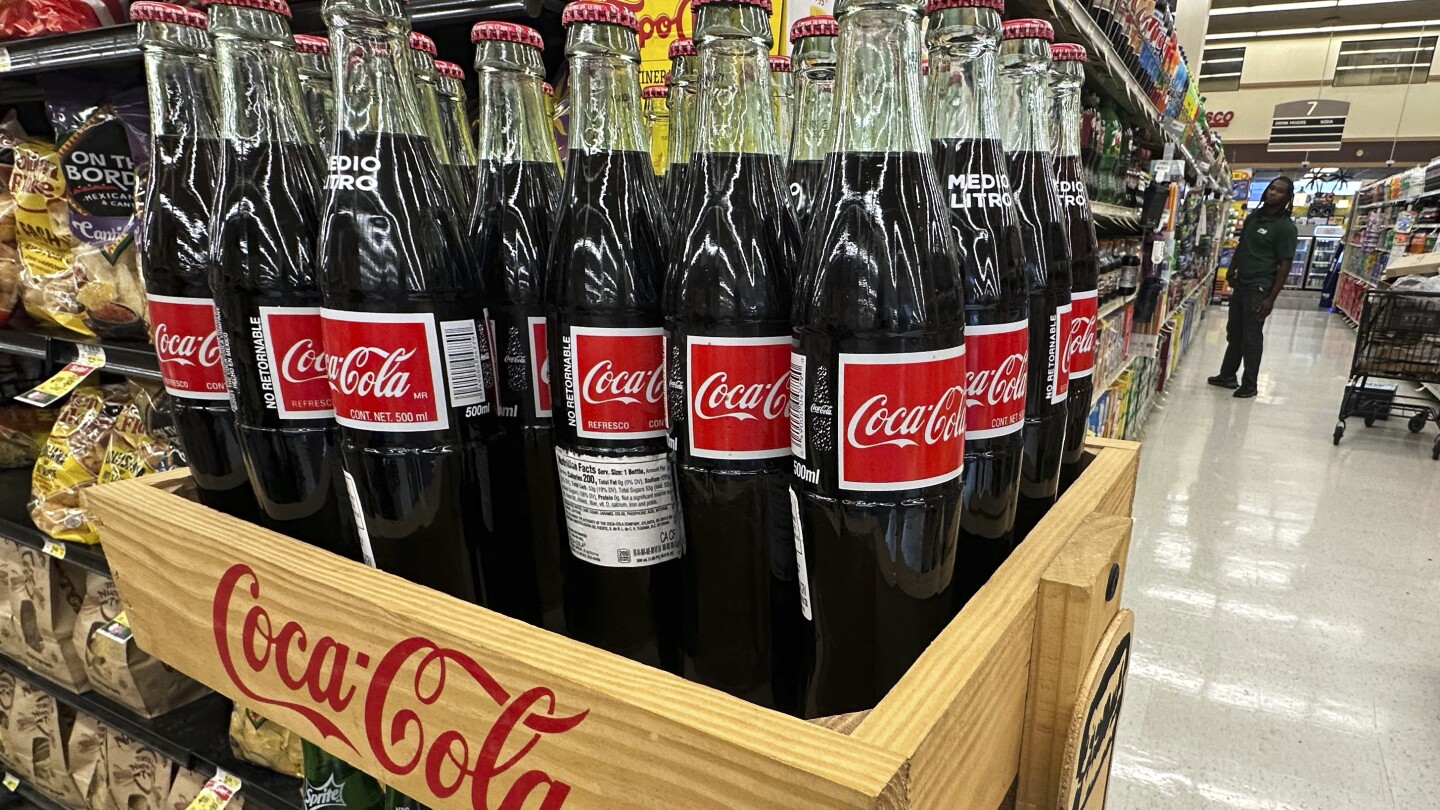
    Coca-Cola announced on Tuesday that it will launch a cane-sugar version of its iconic cola in the U.S. this fall, aligning with recent remarks by former President Donald Trump. Trump had previously highlighted the company’s shift to real cane sugar in a social media post last week. This move marks a significant change for the brand, which has relied on high fructose corn syrup as its primary sweetener since the 1980s. While Coca-Cola initially remained silent on the matter, CEO James Quincey confirmed the decision during a conference call with investors, emphasizing the company’s commitment to diversifying its product offerings to meet evolving consumer demands. Quincey expressed gratitude for Trump’s enthusiasm for the brand and stated that Coca-Cola is exploring a wide range of sweetening options to cater to varied tastes. The company has already been using cane sugar in other U.S. products, such as its Simply lemonade and Honest Tea, and has sold Mexican Coca-Cola, which contains cane sugar, in the U.S. since 2005. Quincey highlighted the importance of innovation in aligning with consumer preferences, noting that the industry is experimenting with new ideas. This announcement comes as Coca-Cola faces competition from rivals like PepsiCo and Dr Pepper, which have offered cane-sugar versions of their colas since 2009. Despite challenges in certain markets, including India and Southeast Asia, Coca-Cola reported a 14% growth in case volumes for Coca-Cola Zero Sugar, reflecting a rising demand for healthier alternatives. The company also saw improved sales in North America, with Hispanic consumers returning to normal purchasing levels after a temporary decline earlier this year. Coca-Cola’s second-quarter earnings exceeded expectations, driven by a 6% global price increase, with revenue reaching $12.5 billion and net income surging 58% to $3.8 billion. The company now anticipates full-year adjusted earnings to grow by 8%, slightly below its initial forecast.

  • Massive Attack, Kneecap and others form musician alliance against ‘silencing’ by pro-Israel groups

    Massive Attack, Kneecap and others form musician alliance against ‘silencing’ by pro-Israel groups

    British band Massive Attack has spearheaded a coalition of musicians to combat what they describe as intimidation by pro-Israel groups within the music industry. The alliance, named ‘Ethical Syndicate Palestine,’ includes prominent acts such as Kneecap, Brian Eno, and Garbage. This initiative follows the release of a documentary by campaign group Led By Donkeys, which exposes the activities of UK Lawyers for Israel Ltd (UKLFI), accused of silencing pro-Palestine advocacy. According to Led By Donkeys, UKLFI has publicly rejected international law and targeted artists supporting Palestine. In a statement on Instagram, Massive Attack condemned the intimidation of pro-Palestine artists, emphasizing the need to protect emerging musicians from such pressures. They urged those affected by UKLFI’s actions to join the alliance. The documentary also highlights concerns about the weaponization of antisemitism, arguing that it undermines genuine efforts to combat anti-Jewish racism. Recent months have seen several controversies involving pro-Palestine artists in the UK, including cancellations of performances and legal actions. Kneecap, for instance, faces charges under the Terrorism Act for allegedly displaying a Hezbollah flag during a concert. The band denies the allegations, calling it ‘political policing.’ Meanwhile, artists like Imagine Dragons’ Dan Reynolds have publicly shown support for Palestine, signaling a growing trend of musicians taking a stand against Israeli actions in Gaza.

  • The corporate takeover of American housing

    The corporate takeover of American housing

    The 2025 US housing market presents a perplexing scenario: home sales are declining, and the number of sellers far exceeds buyers, yet prices continue to soar to unprecedented levels. Over the past decade, home values have surged nationwide, even in once-affordable Sunbelt cities. Policymakers, however, seem unprepared to address this crisis. In a July 2025 interview with the New York Times, 16 US mayors identified housing as a top concern. During her 2024 presidential campaign, former Vice President Kamala Harris proposed tax credits for first-time buyers, while President Donald Trump has renewed calls for interest rate cuts to reduce mortgage rates.

    Homeownership remains a cornerstone of the American dream, with rates historically hovering around 65% from 1965 to 2025, according to Trading Economics. However, the peak was in 2004 at 69%, and despite a temporary spike during the Covid-19 pandemic, the rate has been steadily declining. Alarmingly, even among homeowners, equity is shrinking, with many owning less than half of their property’s value due to debt.

    Structural issues exacerbate the crisis. Construction costs have skyrocketed, labor is scarce, and tariffs have increased material prices. Zoning laws, tax regimes, and anti-density regulations have stifled urban growth, while sprawling development faces geographic and environmental limits. Mortgage rates remain high, and the national housing shortfall, now estimated at over 4.5 million, continues to worsen.

    The crisis has attracted new investors. Corporate actors are increasingly entering residential real estate, drawn by stable returns in a tightening market. Though they still own a minority of US housing, these firms are concentrated in key regions, threatening the post-World War II surge in widespread homeownership.

    Large-scale corporate ownership of homes and influence over rent prices is a recent development. Before 2008, institutional investors focused on apartment buildings and urban areas, as single-family homes were seen as too dispersed and costly to manage. The housing crash changed this, with foreclosures making suburban homes available at deep discounts. Since then, major institutional financial actors have invested heavily in US single-family housing, acquiring up to 300,000 houses and renting them out.

    Government-backed mortgage giant Fannie Mae began selling foreclosed homes in bulk to investors in 2012, demonstrating that single-family housing could be profitable at scale. Fannie Mae and Freddie Mac expanded support for institutional buyers through favorable financing terms and lower rates. Meanwhile, homebuilding collapsed, leading to a supply shortage.

    The Covid-19 pandemic accelerated this trend. Remote work drove people from cities to suburbs, and eviction moratoriums pushed small landlords to sell, opening the door for larger buyers. Digital platforms made it easier to browse, purchase, and manage properties remotely.

    Blackstone, one of the world’s largest private equity firms, became a pioneer in large-scale housing acquisitions after 2008. In 2012, it helped launch Invitation Homes, now the largest owner of single-family rentals in the US. Other major firms, like Progress Residential and Amherst Holdings, have followed suit, using advanced algorithms and AI to identify and acquire homes efficiently.

    Real Estate Investment Trusts (REITs), originally designed to give everyday investors access to real estate profits, are now dominated by major institutional firms like BlackRock and Vanguard. These firms have been criticized for excessive fees, maintenance failures, and improper eviction tactics.

    Corporate homebuying continues to climb. Institutional investors bought 15% of US homes for sale in the first quarter of 2021, increasing to nearly 27% by early 2025. In some markets, investors accounted for 44% of all home flips in the third quarter of 2024.

    Big Tech has also become essential to the expansion of corporate housing. Tools like YieldStar, a rent pricing software developed by RealPage, use algorithms to recommend optimal prices, influencing rent markets significantly. Short-term rental platforms like Airbnb have reshaped housing, contributing to higher rents in many cities.

    Addressing the issue requires public involvement and policy changes. The city of Austin is a rare success story, with median home prices falling due to increased affordable housing construction. However, without effective measures, the concentration of land in private hands will only grow, threatening affordability and public access to housing.

  • Union Pacific, Norfolk Southern discuss merger to create transcontinental railroad, AP source says

    Union Pacific, Norfolk Southern discuss merger to create transcontinental railroad, AP source says

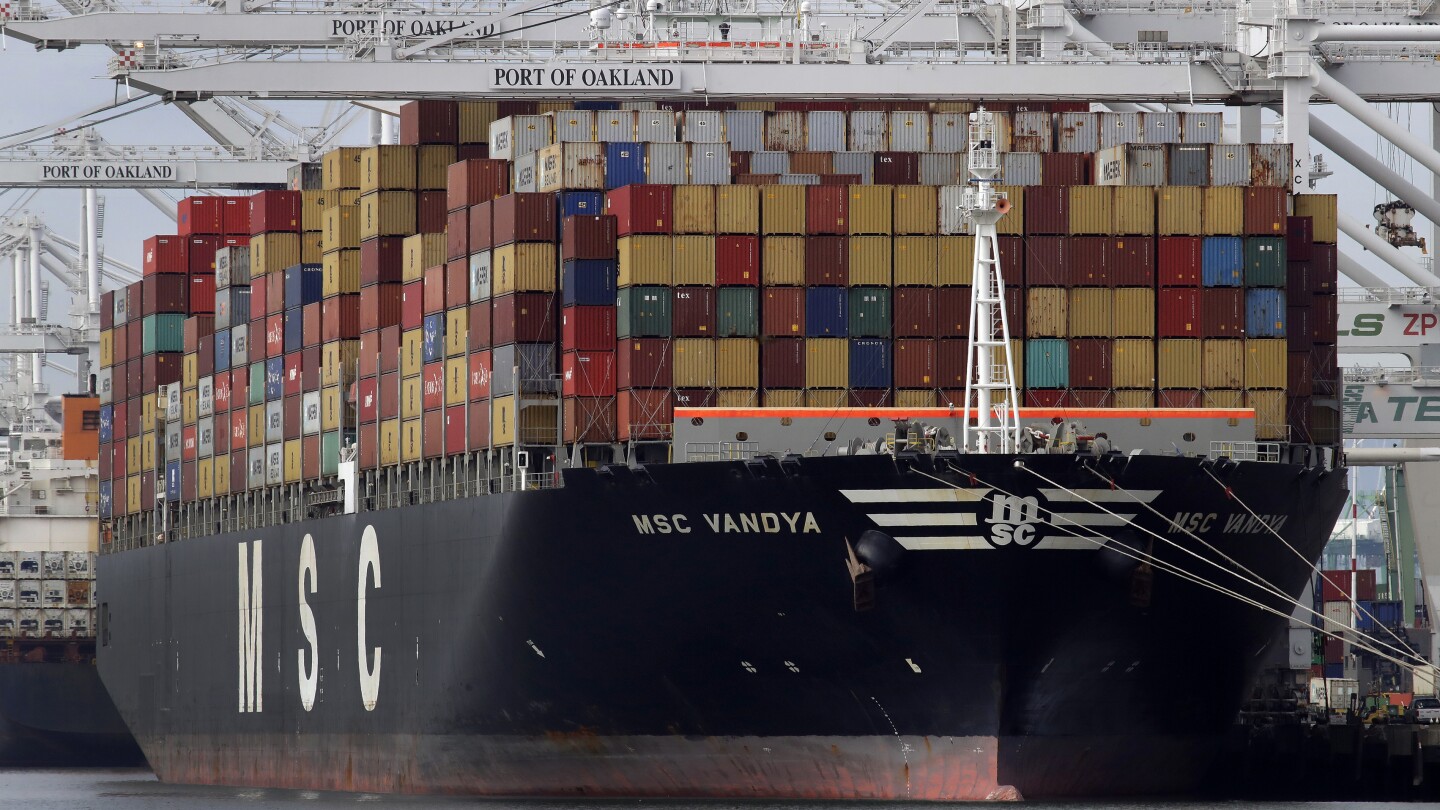
    Union Pacific and Norfolk Southern are engaged in preliminary discussions to merge, potentially creating the largest railroad network in North America, spanning from the East Coast to the West Coast. These talks, which began in the first quarter of this year, involve two of the country’s six major freight railroads—Union Pacific, the largest, and Norfolk Southern, the smallest. Both companies have declined to comment on the matter. The proposed merger has sparked intense debate within the industry, particularly regarding its likelihood of approval by the Surface Transportation Board (STB). While the STB greenlit the creation of CPKC two years ago through Canadian Pacific’s $31 billion acquisition of Kansas City Southern, this would mark the first major rail merger in over two decades. The bar for such mergers was significantly raised after the problematic Union Pacific-Southern Pacific merger in 1996 and the 1999 split of Conrail, which caused widespread disruptions. Under current regulations, any major rail merger must demonstrate enhanced competition and public benefit. Union Pacific CEO Jim Vena has highlighted potential advantages, including streamlined deliveries and simplified shipping for businesses reliant on rail transport. However, concerns have been raised about reduced shipping options and the industry’s consolidation. Analysts, including Citi Research’s Ariel Rosa, warn that such a merger would face significant regulatory, political, and stakeholder pushback, making it a costly and time-intensive process. Union Pacific, headquartered in Omaha, Nebraska, reported $24.3 billion in revenue last year, while Norfolk Southern, based in Atlanta, generated $12.1 billion. Following the news, Norfolk Southern’s stock surged, reflecting investor optimism.

  • Thucydides trap averted: China speed, dodgy data and the Houthis

    Thucydides trap averted: China speed, dodgy data and the Houthis

    The 21st century has witnessed a seismic shift in global power dynamics, with China’s rapid ascent challenging traditional notions of military and economic dominance. The Thucydides Trap, a theory predicting inevitable conflict between a rising power and an established one, may have been averted due to China’s strategic maneuvers and the obsolescence of expeditionary navies. Recent events in the South China Sea, the Black Sea, and the Red Sea have demonstrated that traditional naval power is no longer the ultimate arbiter of global influence. China’s focus on building airstrips, missile sites, and naval bases in the South China Sea has extended its maritime security perimeter, while its anti-ship ballistic missiles (ASBMs) have rendered US carrier strike groups (CSGs) ineffective. The US Navy’s inability to respond decisively to challenges in the Red Sea and the South China Sea has exposed its limitations, leading to a reevaluation of alliances and strategies. Japan, South Korea, and other nations are increasingly realigning with China, recognizing its economic and technological prowess. China’s manufacturing sector, scientific output, and human capital pipeline have surpassed those of the US, solidifying its position as the established power. As nations adapt to this new reality, the speed of realignment will be astonishing, potentially benefiting all involved and allowing the US to focus on domestic recovery after decades of global hegemony.

  • Europe a non-player as US, Israel set the tone on Iran

    Europe a non-player as US, Israel set the tone on Iran

    The United States’ decision to bomb three Iranian nuclear facilities on June 22, 2025, sent shockwaves across the globe, marking a stark departure from the Trump administration’s earlier diplomatic efforts to negotiate with Tehran over its nuclear program. This unprecedented military action, taken amidst the ongoing Israeli-Iranian conflict, has raised significant questions about the future of international diplomacy and nuclear nonproliferation. European governments, which have long advocated for a diplomatic resolution to Iran’s nuclear ambitions, responded with surprising restraint. European Commission President Ursula von der Leyen and German Chancellor Friedrich Merz both expressed support for Israel’s right to self-defense, while a joint statement from the E3 nations—France, the UK, and Germany—tacitly justified the US strikes as necessary to prevent Iran from developing nuclear weapons. However, the muted European reaction highlighted the continent’s diminished role in global diplomacy, particularly in contrast to its past leadership in negotiating the 2015 Iran nuclear deal. The deal, which included the US, Russia, China, and the European Union, aimed to curb Iran’s nuclear program in exchange for sanctions relief. The US withdrawal from the agreement in 2018 under President Trump, followed by the reimposition of heavy sanctions, severely undermined European efforts to maintain the deal and eroded Tehran’s trust in Europe as a reliable partner. Recent tensions, including Iran’s support for Russia’s invasion of Ukraine and Europe’s backing of Israel in the Gaza conflict, have further strained relations. Europe’s internal divisions over Middle East policy and its reliance on US leadership have compounded its challenges in reasserting a meaningful role in nuclear negotiations. As transatlantic relations remain fraught under the Trump administration, Europe faces an uphill battle to restore its influence in addressing Iran’s nuclear ambitions.

  • US producer prices unchanged with wholesale inflation remaining under control

    US producer prices unchanged with wholesale inflation remaining under control

    In a surprising turn of events, U.S. wholesale inflation showed signs of cooling in June, despite widespread concerns that President Donald Trump’s tariffs would drive up prices for goods before they reached consumers. The Labor Department reported on Wednesday that the producer price index (PPI) remained unchanged from May, following a 0.3% increase the previous month. Year-over-year, wholesale prices rose by 2.3%, marking the smallest annual gain since September. Both figures fell short of economists’ expectations. Excluding volatile food and energy prices, core producer prices also remained flat compared to May and increased by 2.6% from June 2024. This report came a day after the Labor Department revealed that consumer prices had risen by 2.7% year-over-year in June, the largest increase since February, driven by Trump’s sweeping tariffs on goods ranging from groceries to appliances. However, consumer and producer prices do not always move in sync. Bradley Saunders, North America economist at Capital Economics, noted a 0.3% rise in core wholesale goods prices, attributing it to the impact of Trump’s tariffs. Furniture prices surged by 1% from May, while home electronics rose by 0.8%, both categories heavily reliant on imports. Interestingly, steel mill producer prices dropped by 5.5% despite Trump’s 50% tariff on imported steel. Some companies had stockpiled goods before the tariffs took effect, helping to keep prices stable, but Saunders warned that these inventories are dwindling. With new tariffs on Japanese and South Korean imports set to take effect on August 1, the situation remains precarious. Auto retailers’ profit margins also fell by 5.4%, suggesting that car dealers are absorbing the costs of Trump’s 25% tariff on imported vehicles and parts. Economists are closely monitoring wholesale prices as they provide early insights into potential consumer inflation trends. The Federal Reserve, which has been cautious this year, is also watching the inflationary impact of Trump’s trade policies. Trump’s aggressive push for rate cuts has raised concerns about the central bank’s independence.

  • ‘Come meet us in Dubai’: the new offshoring of grand corruption

    ‘Come meet us in Dubai’: the new offshoring of grand corruption

    In a revealing 2017 interview, an African high-net-worth individual recounted being advised by a London-based executive to relocate their business dealings to Dubai. This anecdote underscores a significant yet underappreciated global trend: the migration of sensitive financial activities from traditional Western hubs to more lenient jurisdictions. This shift, driven by stricter regulations on dubious foreign funds in established financial centers, has breathed new life into corrupt practices while complicating efforts to combat them.

  • S&P 500 and Nasdaq composite pull back from their all-time highs

    S&P 500 and Nasdaq composite pull back from their all-time highs

    Wall Street experienced a modest pullback on Friday, with major U.S. stock indexes closing in the red for the week. The S&P 500 fell 0.3%, retreating from its all-time high set the previous day, while the Dow Jones Industrial Average dropped 0.6% and the Nasdaq Composite slipped 0.2%. This decline followed a week of market volatility, driven by escalating trade tensions and anticipation of the upcoming corporate earnings season. President Donald Trump’s announcement of increased tariffs on Canadian imports to 35% further strained relations with the longstanding North American ally. This move is part of the administration’s broader strategy to leverage tariff threats to secure new trade agreements globally. Despite the initial market turmoil caused by Trump’s tariff policies earlier this year, Wall Street has shown relative stability recently, with stocks reaching record highs. However, some analysts remain cautious, noting that the market’s muted response to the latest tariff escalation may not reflect underlying risks. As earnings season gains momentum, companies like Levi Strauss and PriceSmart reported strong results, boosting their shares. Meanwhile, financial and healthcare stocks weighed heavily on the market, with Visa and Gilead Sciences among the notable decliners. In other developments, T-Mobile’s shares dipped slightly after the Justice Department cleared its $4.4 billion acquisition of U.S. Cellular, and Red Cat Holdings surged following Defense Secretary Pete Hegseth’s orders to accelerate drone production. Bond yields rose, with the 10-year Treasury yield climbing to 4.42%. European and Asian markets also closed lower, while Bitcoin briefly surpassed $118,000, driven by bullish momentum and anticipation of regulatory developments during the U.S. Congress’ Crypto Week.