博客

  • Hormuz doesn’t need to close to cripple Asia’s economies

    Hormuz doesn’t need to close to cripple Asia’s economies

    Asia confronts its most severe energy security challenge since the 1973 oil embargo as military tensions transform the Strait of Hormuz into an active theater of geopolitical conflict. The crisis escalated dramatically on February 28, 2026, when a joint US-Israel military operation eliminated Iran’s Supreme Leader Ayatollah Ali Khamenei, creating unprecedented disruption within Iran’s command structure and triggering uncompromising retaliation threats from Tehran.

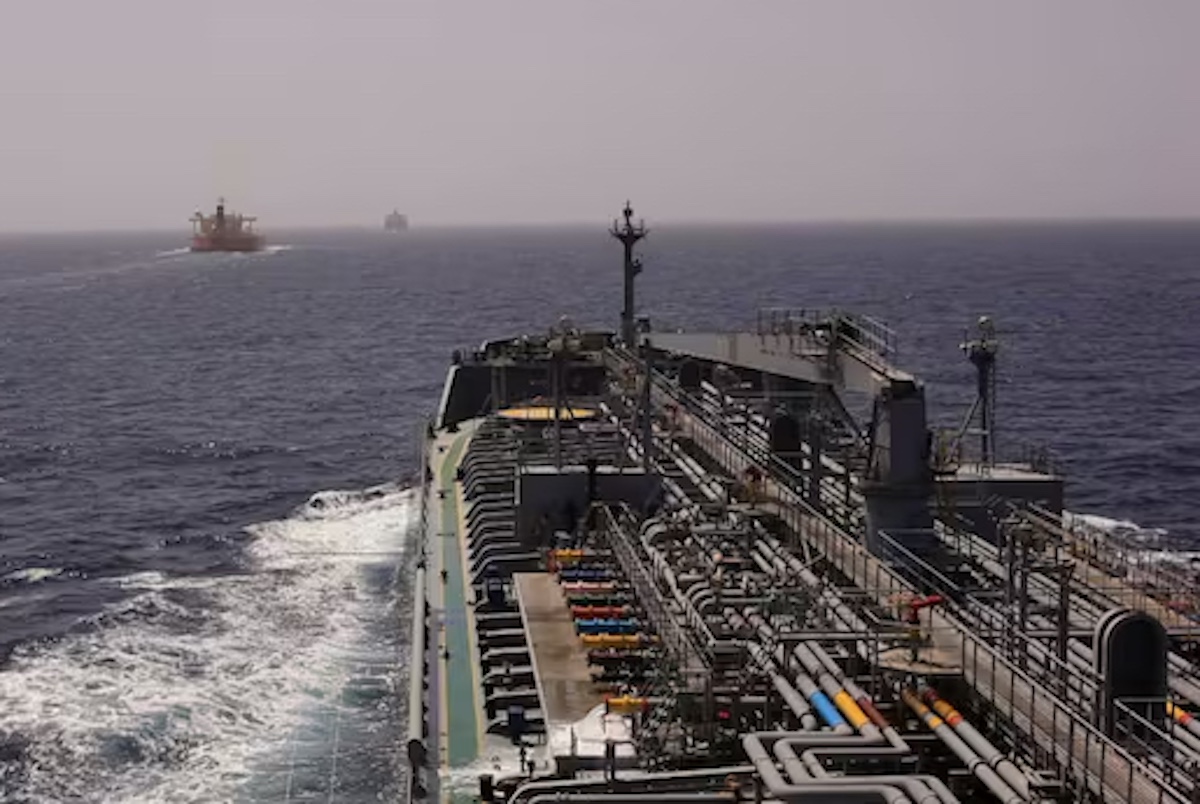
    Iran’s explicit warning that it will ‘set fire’ to vessels attempting passage through the strategic waterway has shifted theoretical risk into operational reality. The strait serves as the world’s most critical energy corridor, facilitating approximately 20% of global oil shipments and comparable liquefied natural gas volumes. In 2025, nearly 20 million barrels per day—representing $600 billion in annual energy trade—transited through the narrow 33-kilometer passage between Iran and Oman.

    The geographical configuration grants Tehran asymmetric influence capabilities. Even without formal blockade implementation, drone strikes, missile threats, and naval harassment can render commercial transit prohibitively expensive. Insurance markets have responded with dramatically escalated premiums, effectively closing the strait through economic mechanisms rather than physical obstruction.

    Asia bears disproportionate vulnerability, with four-fifths of Hormuz-bound crude destined for Eastern markets. China, India, Japan, and South Korea account for the majority of these imports, with Japan and South Korea importing over 80% of their energy requirements through this corridor. While China has developed strategic petroleum reserves and increased Russian crude imports as hedging measures, neither approach fully offsets dependence on Gulf suppliers.

    The crisis exposes fundamental limitations in Asia’s energy security architecture. LNG markets face particularly severe constraints due to fixed liquefaction capacity, destination-bound contracts, and limited spare volumes. Any disruption to Qatari shipments would trigger direct competition between Asian and European buyers for alternative supplies, with price spikes permeating entire economic systems through electricity costs, industrial production, and agricultural inputs.

    Emerging Asian economies operating fuel subsidy regimes face additional fiscal pressure, while central banks confront renewed inflation-growth tradeoffs. The situation revives concerns about energy-driven economic reshaping reminiscent of the 1970s, testing whether Asia’s technologically advanced economies can overcome structural energy dependencies.

    While sustained total shutdown remains operationally challenging for Iran—particularly given Tehran’s own $67 billion annual oil export dependence—episodic disruption may sufficiently destabilize markets. Alternative pipelines developed by Saudi Arabia and UAE provide partial relief but cannot fully compensate for Hormuz capacity. The crisis ultimately reveals the geopolitical risks embedded within Asia’s hydrocarbon-dependent growth model and questions the region’s strategic autonomy in an era of intensifying US-China rivalry.


  • Beijing to give juniper trees ‘invisible masks’ in fight against pollen

    Beijing to give juniper trees ‘invisible masks’ in fight against pollen

    Beijing is pioneering an innovative approach to combat its annual spring pollen crisis through the strategic application of an organic polymer spray that creates protective barriers on juniper trees. This scientific breakthrough, developed by Beijing University of Agriculture, represents a significant shift from traditional defensive measures to proactive pollen suppression strategies.

    The Beijing Municipal Forestry and Parks Bureau has identified approximately 337,000 juniper trees within the Fifth Ring Road, with nearly half (168,000) being pollen-producing male specimens. According to meteorological projections, the pollination period is scheduled to commence between March 7-11, reaching peak intensity from March 15-20.

    Professor Xing Yu from the College of Plant Science and Technology explains the technological advantage: ‘A single application of this pollen fixative demonstrates over twenty times greater effectiveness in settling pollen compared to conventional water spraying methods. While standard watering requires three to five daily applications, our organic compound achieves superior results with just one daily treatment.’

    The transparent coating, successfully trialed over three years, effectively captures pollen at the source before it becomes airborne. This year marks the first city-wide deployment across Beijing’s six core districts, with the solution now entering mass production phases.

    Complementing the technological intervention, new regulatory frameworks effective since January 1 have formally incorporated pollen management into municipal legislation, establishing clear governmental responsibilities. Additionally, meteorological and forestry departments are collaborating to provide real-time pollen concentration forecasts, enabling citizens to make informed decisions regarding personal protection measures during high-pollen periods.

  • China achieves breakthrough in high-orbit satellite-ground laser communication

    China achieves breakthrough in high-orbit satellite-ground laser communication

    Chinese scientists have established a groundbreaking milestone in space communication technology by successfully demonstrating high-speed laser data transmission between Earth and a satellite in high orbit. The unprecedented achievement, accomplished across a staggering distance of 40,740 kilometers, represents a quantum leap in satellite-ground communication capabilities.

    The pioneering experiment, a collaborative effort between the Chinese Academy of Sciences’ Institute of Optics and Electronics, Beijing University of Posts and Telecommunications, and the China Academy of Space Technology, utilized a specialized observatory facility in Yunnan province to establish a stable optical link with a geosynchronous satellite. This technological marvel achieved simultaneous two-way communication at remarkable speeds of 1 gigabit per second – comparable to terrestrial fiber-optic performance but accomplished across interplanetary distances.

    What distinguishes this breakthrough is its exceptional operational performance: the system established a laser connection in merely four seconds and maintained uninterrupted transmission for over three hours. This represents a monumental improvement from previous minute-level durations to sustained hour-level operation, marking the first time such stability has been achieved in the challenging high-orbit environment.

    The technological implications extend far beyond raw data transmission speeds. This advancement effectively transforms high-orbit satellites from simple data relay stations into potential intelligent processing hubs capable of receiving complex commands and executing sophisticated operations in real-time. The demonstrated capability addresses two critical challenges in space communication: achieving peak transmission rates for data-intensive applications and ensuring prolonged operational stability for advanced interactive systems.

    Researchers emphasize that this breakthrough establishes a mature engineering model for future space infrastructure. The validated technology paves the way for establishing high-speed laser communication networks with lunar bases, Mars missions, and deep space probes, effectively laying the foundation for an integrated Earth-space network that could revolutionize humanity’s approach to space exploration and satellite operations.

  • Runners to be given prize money after being led off course

    Runners to be given prize money after being led off course

    Three elite athletes who were mistakenly directed off course while leading the US Half Marathon Championships in Atlanta will receive financial compensation following a dramatic navigational error that cost them podium positions. Event organizers confirmed Tuesday that police officers assigned to route marking had to abruptly respond to an emergency call, creating confusion that ultimately altered the race outcome.

    Jess McClain, who had established a commanding lead in the women’s race, along with her closest competitors Ednah Kurgat and Emma Hurley, were incorrectly redirected by the lead vehicle during the critical final stages. The navigational deviation occurred when race-assigned police personnel responded to an ‘officer down’ emergency call. Replacement officers, unfamiliar with the course’s unusual route that included a footbridge not normally accessible to vehicles, inadvertently created confusion for the lead vehicle driver.

    The Atlanta Track Club announced it will award first-place prize money to McClain, while Hurley and Kurgat will split the combined winnings for second and third place. Race organizers stated the compensation decision reflects their commitment to competitive integrity, acknowledging the athletes’ performances warranted top-three recognition despite their official finishing positions of ninth, twelfth, and thirteenth respectively.

    The race ultimately concluded with Molly Born claiming victory after trailing the leaders by more than a minute prior to the incident. USA Track & Field (USATF) had previously denied a formal appeal despite acknowledging inadequate course markings. The championship served as a qualifier for the World Road Running Championships in September, with USATF confirming selection remains open following the unprecedented circumstances.

  • Canadian prime minister calls Iran war an extreme example of a rupturing world order

    Canadian prime minister calls Iran war an extreme example of a rupturing world order

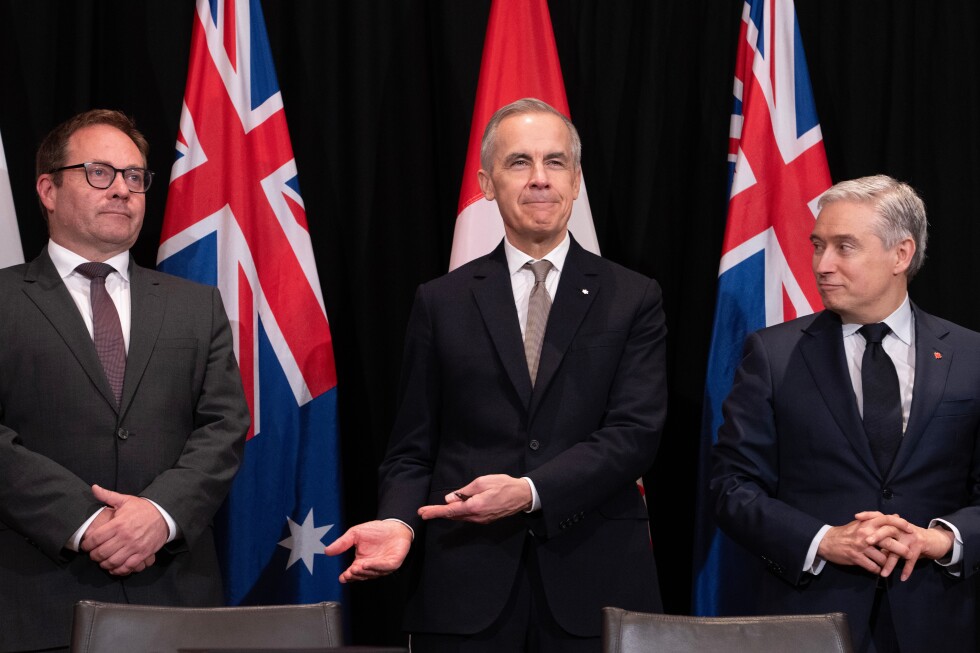
    MELBOURNE, Australia — Canadian Prime Minister Mark Carney delivered a stark warning about the deteriorating global order during his address at Sydney’s Lowy Institute on Wednesday, identifying the Iran conflict as a concerning manifestation of nations increasingly disregarding international norms and legal frameworks.

    Speaking during the Australian segment of his three-nation trade mission that commenced in India, Carney articulated his grave concerns about hegemonic powers operating without constraints while other nations shoulder the consequences. “The extremes of this disruption are being played out in real time in the Middle East,” Carney stated, building upon themes he initially presented at the World Economic Forum in Davos last January.

    The Prime Minister emphasized Canada’s continued support for preventing nuclear proliferation and maintaining international security, though he expressed profound regret about the current Middle East situation representing another failure of the international order. Carney specifically noted that recent U.S. and Israeli military actions against Iran occurred without United Nations engagement or consultation with allied nations, including Canada.

    While acknowledging Canada’s proactive stance in addressing global realities, Carney maintained that determining whether the airstrikes violated international law would require judgment from appropriate legal bodies. The Prime Minister’s visit also focused on strengthening bilateral cooperation, with Canada and Australia aiming to enhance partnerships in critical minerals, artificial intelligence, and defense technologies. Carney is scheduled to address the Australian Parliament on Thursday before concluding his tour in Japan.

  • Funding for Africa clean energy financing surges despite fewer project approvals

    Funding for Africa clean energy financing surges despite fewer project approvals

    NAIROBI, Kenya — Africa’s premier clean energy financing mechanism is poised for substantial growth, with plans to escalate its funding capacity to $2.5 billion within the next two years. This ambitious expansion signals accelerating momentum behind the continent’s transition to sustainable energy solutions.

    The African Development Bank’s Sustainable Energy Fund for Africa (SEFA) has demonstrated remarkable progress, with contributions surging to $88 million in 2025—a significant increase from $54.3 million the previous year. This upward trajectory reflects renewed investor confidence in Africa’s renewable energy sector, predominantly fueled by support from European Union member nations.

    Joao Duarte Cunha, overseeing the bank’s Renewable Energy Funds Division, revealed the fund’s strategic projections: “Based on our extensive projects pipeline, we anticipate capital mobilization reaching $2.5 billion. By 2030, we expect our portfolio to yield over $10 billion in commercial capital mobilization.”

    The fund’s operational performance has been particularly strong recently, with 27 projects approved over the past two years. In 2024 alone, SEFA sanctioned 14 renewable energy initiatives across Kenya, Nigeria, Burkina Faso, Ethiopia, and Chad. These projects will contribute approximately 840 megawatts of generating capacity and establish 1.5 million new electricity connections.

    Notably, eight of these initiatives were classified as green baseload projects—essential for meeting minimum national energy demands—while two involved green mini-grids and four focused on energy efficiency improvements.

    International support continues to strengthen SEFA’s mission. Germany committed $40.1 million during last year’s COP 30 climate summit in Brazil, while Italy announced a $5.9 million contribution. These investments will advance SEFA’s universal energy access objectives and support its green hydrogen program.

    Kevin Kariuki, Vice President for Power, Energy, Climate and Green Growth at the African Development Bank Group, emphasized SEFA’s growing impact: “SEFA is demonstrating its catalytic value through accelerated approvals, disbursements, and expanding influence across the continent.”

    The fund’s innovative approach extends beyond traditional utility-scale projects. SEFA is actively investing in decentralized energy platforms, including mini-grid developers and private equity funds specializing in distributed energy solutions. Additionally, the organization is piloting new financing mechanisms for clean cooking technologies and commercial bank partnerships.

    Cunha highlighted the fund’s evolving strategy: “Demand for catalytic financing continues to grow exponentially. We remain deeply committed to driving Africa’s energy transition and achieving universal energy access by 2030 through meaningful innovation in the clean energy space.”

  • A first repatriation flight brings stranded French citizens home as war in Iran disrupts travel

    A first repatriation flight brings stranded French citizens home as war in Iran disrupts travel

    PARIS — The French government has launched emergency evacuation operations for its citizens trapped in the Middle East amid escalating regional hostilities. The initial repatriation flight arrived at Paris Charles de Gaulle Airport early Wednesday, carrying vulnerable French nationals from conflict-affected areas.

    According to Eleonore Caroit, Minister for French Nationals Abroad, the government secured approximately 100 priority seats on the aircraft for families with children, elderly citizens, and individuals with medical conditions. The flight originated from Muscat, Oman, with an intermediate stop in Cairo, Egypt, before concluding its journey in Paris. A subsequent evacuation flight transporting French citizens who had crossed from Israel into Egypt is scheduled to arrive later today.

    President Emmanuel Macron revealed that approximately 400,000 French citizens are currently situated within the conflict zone, either as permanent residents or temporary visitors. Widespread airspace closures and severe flight restrictions across the Gulf region have created unprecedented travel disruptions, leaving thousands stranded both within immediate conflict areas and in distant transit hubs.

    The global response has intensified as multiple nations initiate emergency repatriation efforts. The United States has issued urgent advisories for American citizens to immediately depart from over fifteen Middle Eastern countries using available commercial options. Similarly, the British government has arranged charter flights from Oman, prioritizing vulnerable individuals among the thousands of registered UK nationals in the region.

    Commercial aviation shows tentative signs of recovery with Etihad, Emirates, and Virgin Atlantic resuming select flights from the UAE to London. Norway has deployed emergency diplomatic teams to Dubai to assist approximately 1,500 registered Norwegian citizens, reflecting the international scale of the evacuation challenge.

  • Iran regime change a fantasy without US boots on the ground

    Iran regime change a fantasy without US boots on the ground

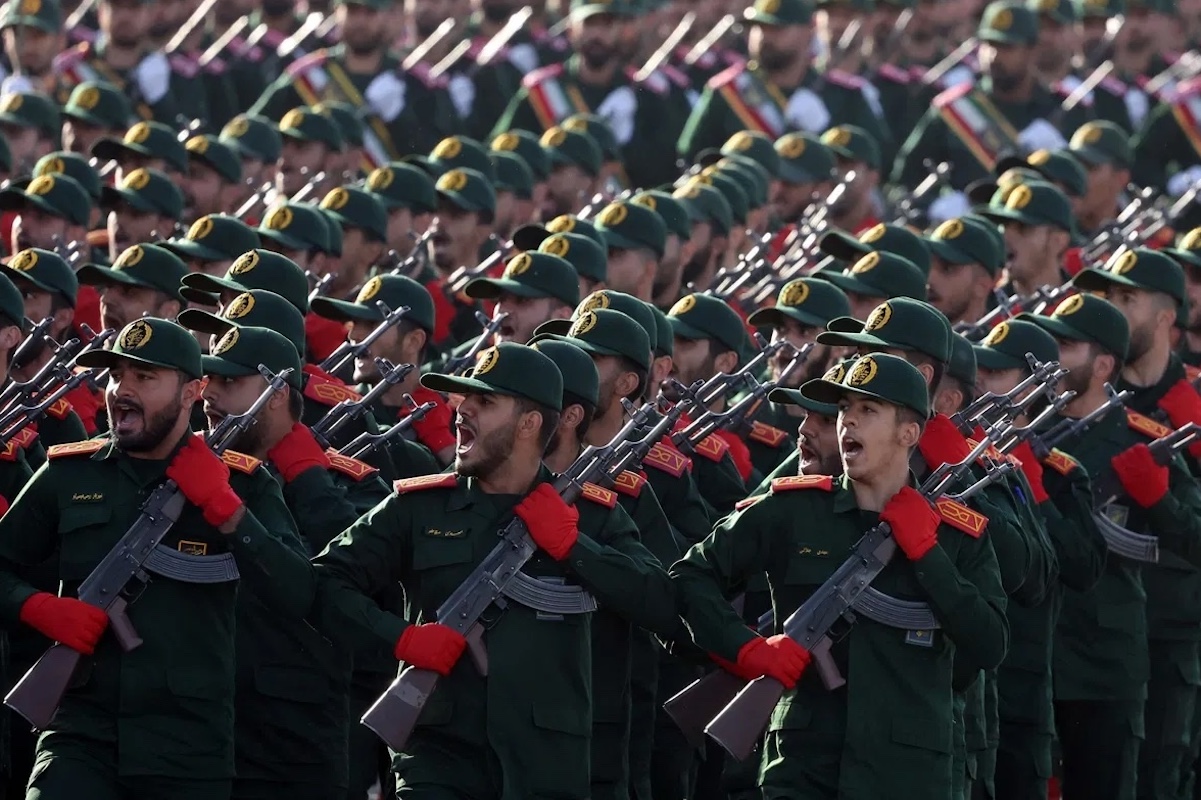
    In an unprecedented call to action, US President Donald Trump and Israeli Prime Minister Benjamin Netanyahu have publicly urged Iranian citizens to overthrow their government following extensive aerial bombardment campaigns. Both leaders characterized this moment as a “once-in-a-lifetime opportunity” for regime change, despite Iranian civilians facing the Islamic Revolutionary Guard Corps—a 150,000-strong security apparatus with demonstrated lethal capabilities against dissent.

    The parallel appeals, delivered via video messages from Trump’s Florida estate and Netanyahu’s office, emphasized temporal urgency. “When we are finished, take over your government. It will be yours to take,” Trump declared, adding this might be “your only chance for generations.” Netanyahu, having consistently identified Iran as regional antagonist to Israel throughout his three-decade career, echoed similar sentiments about the historical window.

    This strategy faces substantial practical obstacles according to security analysts. Daniel Block, Foreign Affairs senior editor, noted that “armed bombing campaigns have never in history incited successful uprisings” and that eliminating state repressive capacity through aerial attacks remains “incredibly difficult.” The absence of organized opposition movements with weaponry further complicates prospects for successful civilian mobilization.

    Historical parallels raise additional concerns. The 1991 Iraqi uprising following President George H.W. Bush’s encouragement resulted in approximately 80,000 Kurdish and Shiite casualties after Saddam Hussein’s forces crushed rebellions—a scenario that current leadership appears to disregard. Instead, the administration seems focused on avoiding extended military engagements labeled as “forever wars,” preferring Venezuelan-style regime change without ground troop commitment.

    Critical differences emerge in comparing Iran to Venezuela. The Revolutionary Guard represents a comprehensive security entity overseeing political control, border defense, ballistic missile operations, and strategic choke points like the Strait of Hormuz—through which 31% of global oil shipments transit. Unlike Venezuela, Iran possesses significant asymmetric warfare capabilities including drones, naval mines, and cyber operations that provide substantial regional leverage.

    Secretary of State Marco Rubio clarified that primary objectives involve preventing nuclear weapons development and eliminating long-range missile capabilities, while Trump simultaneously expressed openness to negotiations—creating ambiguity regarding ultimate regime change intentions.

  • Visiting cruise ship arrives in Tianjin

    Visiting cruise ship arrives in Tianjin

    TIANJIN, CHINA – March 3, 2026, witnessed a significant milestone in northern China’s tourism revival as the luxury cruise vessel MS Regatta made its inaugural call at Tianjin International Cruise Home Port. Operated by Oceania Cruises, the ship completed its journey from South Korea, signaling the official commencement of the 2026 cruise season for the region.

    The arrival ceremony showcased the strategic importance of Tianjin as a growing hub for international maritime tourism. Nearly 600 international travelers from diverse backgrounds, including the United States, Canada, and Australia, disembarked to explore Tianjin’s rich cultural heritage and historical landmarks during their two-day stay.

    Port authorities implemented streamlined clearance procedures to ensure efficient processing of passengers, reflecting China’s ongoing efforts to enhance its tourism infrastructure and welcome international visitors. The event demonstrated the successful coordination between multiple government agencies and the cruise industry to facilitate seamless travel experiences.

    This visit represents a positive development for China’s coastal tourism economy, particularly for northern regions seeking to capitalize on the growing Asian cruise market. Industry analysts view this as an indicator of strengthening regional tourism connections and China’s continuing appeal as a destination for luxury travel experiences.

    The MS Regatta’s itinerary continues to generate economic benefits for local businesses, with passengers expected to visit major cultural sites, sample local cuisine, and contribute to the retail economy during their shore excursion.

  • Symposium held on second volume of book on Xi’s visits to people’s homes

    Symposium held on second volume of book on Xi’s visits to people’s homes

    Beijing hosted a significant symposium on March 4, 2026, focusing on the second volume of publications documenting General Secretary Xi Jinping’s interactions with citizens during domestic inspection tours. The event brought together government officials, women’s federation representatives, and family delegates to examine the content and implications of these documented engagements.

    State Councilor Shen Yiqin, who also serves as President of the All-China Women’s Federation, delivered a keynote address emphasizing the importance of thoroughly studying the publication’s content. She urged women’s federations across all administrative levels to strengthen family values and traditions appropriate for the contemporary era. Shen specifically called for aligning these efforts with China’s 15th Five-Year Plan period (2026-2030), encouraging women and families to contribute meaningfully to national development goals.

    The symposium featured participation from officials representing central government bodies and the All-China Women’s Federation, alongside grassroots women’s federation cadres and family representatives. This diverse attendance underscored the publication’s relevance across different levels of society and governance.

    The book series chronicles Xi’s visits to ordinary households across China, capturing his dialogues with citizens and demonstrating leadership engagement at the community level. This second volume continues the narrative established in the first publication, providing additional insights into the governance approach of personal connection with the populace.