博客

  • US security policy in Asia shows some continuity in sea of change

    US security policy in Asia shows some continuity in sea of change

    The first 100 days of Donald Trump’s second administration have been marked by significant upheaval, yet one policy remains steadfast: the construction of a regional defense architecture aimed at deterring Chinese aggression. However, this strategy faces challenges due to collateral damage from the administration’s foreign policy shifts, particularly its embrace of tariffs and skepticism toward traditional alliances.

    During Trump’s first term (2017-2021), US policy toward China hardened as Washington concluded that deep economic engagement had failed to liberalize or pacify Beijing. Instead, China under Xi Jinping grew more authoritarian domestically and assertive internationally. The pandemic further highlighted America’s reliance on Chinese supply chains, prompting Trump to label China as an adversary rather than a partner. Tariffs were imposed on Chinese imports, and efforts began to reroute global supply chains away from China. Simultaneously, Trump criticized US alliances, arguing that allies benefited disproportionately from American protection.

    Trump’s foreign policy diverged sharply from post-war norms, rejecting American exceptionalism and liberal values while expressing admiration for authoritarian leaders like Xi Jinping, Vladimir Putin, and Kim Jong Un. He prioritized tariffs over free trade and questioned the value of US global commitments, particularly in Europe and Asia.

    President Joe Biden (2021-2025) extended some of Trump’s tariffs on China and restricted Chinese access to advanced technology. However, Biden reversed Trump’s alliance skepticism, reaffirming the strategic value of US partnerships. In contrast, Trump’s second administration has doubled down on tariffs and disdain for alliances, implementing these policies with unprecedented intensity.

    The global impact of Trump’s tariffs is significant, with most countries now facing a 10% tariff on US imports, up from an average of 2.5% in 2024. The threat of higher ‘reciprocal tariffs’ looms, potentially taking effect as early as May. Additionally, the US has effectively abandoned NATO, antagonizing Western Europe and Canada while accommodating Russia despite its aggression in Ukraine.

    In the Asia-Pacific region, the Pentagon’s agenda to counter China has continued largely uninterrupted. US Secretary of Defense Pete Hegseth’s March trip to Japan and the Philippines underscored efforts to strengthen military cooperation. In Japan, the US plans to enhance joint training and weapon development, while upgrading its military headquarters to a command post. In the Philippines, Hegseth reaffirmed the US-Philippine defense treaty’s coverage of the South China Sea, where Chinese harassment of Philippine vessels has escalated. The US also announced plans to co-produce military systems and deploy advanced sea drones and anti-ship missiles in the Philippines.

    The AUKUS agreement, which aims to provide Australia with nuclear-powered submarines, remains on track despite uncertainty over Trump’s support. While Australia has committed $3 billion to the initiative, Trump’s apparent unfamiliarity with the agreement raises doubts about its future.

    Meanwhile, Trump’s tariffs have strained relations with key allies like Japan and South Korea, both of which face additional tariffs and pressure to increase defense spending. Despite their contributions to US military bases, Trump has criticized these countries as ‘free-riders,’ further complicating alliances.

    In Australia, Trump’s policies have eroded confidence in US reliability. Tariffs on Australian exports, despite a US trade surplus with the country, have fueled disillusionment. While Australian leaders have resisted Chinese overtures to align against the US, the damage to the US-Australia relationship is evident.

    In summary, Trump’s second administration has intensified its focus on tariffs and alliance skepticism, creating friction with traditional partners while pursuing a counter-China strategy. The challenge lies in reconciling ‘America First’ policies with the need for a cohesive Asian security architecture. Until this balance is achieved, these conflicting priorities will continue to undermine US foreign policy objectives.

  • Measles jumps borders in North America with outbreaks in Canada, Mexico and US

    Measles jumps borders in North America with outbreaks in Canada, Mexico and US

    The measles outbreak sweeping across North America has become a pressing public health crisis, with over 2,500 confirmed cases and four fatalities reported in the U.S. and Mexico. The epidemic, which began in Ontario, Canada, last fall, has since escalated in Texas, New Mexico, and Chihuahua, Mexico, with significant clusters in Mennonite communities. Dr. Hector Ocaranza, El Paso’s top public health official, warned that the highly contagious virus knows no borders, as evidenced by the 38 cases in El Paso and 14 in neighboring Ciudad Juarez. The outbreak’s rapid spread is fueled by cross-border travel and low vaccination rates in certain regions. Health officials in both countries are racing to contain the virus, with vaccination clinics set up in public spaces and free vaccines offered regardless of residency. The Pan American Health Organization and the World Health Organization have raised alarms, noting an elevenfold increase in measles activity in the Americas compared to last year. The economic burden is also significant, with each U.S. case costing between $30,000 and $50,000 to manage. Despite efforts, health experts warn that the outbreak is far from contained, with new cases emerging in Michigan and Alberta, Canada. The crisis underscores the urgent need for coordinated cross-border health strategies and improved vaccination coverage to prevent future epidemics.

  • High-level exchanges seen as positive

    High-level exchanges seen as positive

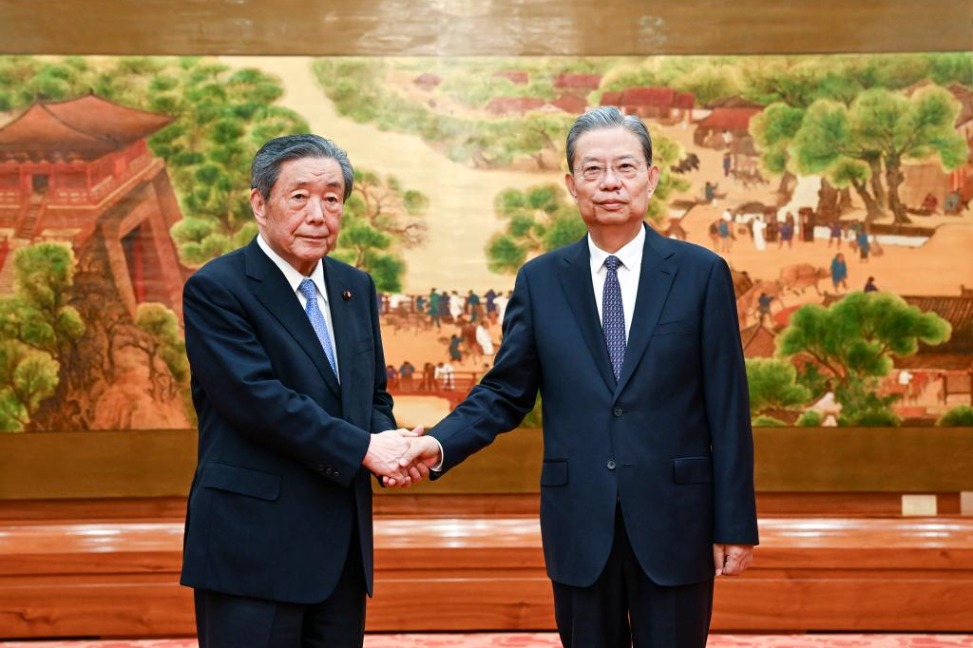
    Recent high-level visits by Japanese political figures to China have been interpreted as a strategic move to bolster economic cooperation and mitigate risks posed by Washington’s unilateral and protectionist policies, according to analysts. These visits, led by prominent figures such as Hiroshi Moriyama, chairman of the Japan-China Friendship Parliamentarians’ Union and secretary-general of Japan’s Liberal Democratic Party, underscore a shared commitment to enhancing bilateral relations. Moriyama, accompanied by a bipartisan delegation, met with Zhao Leji, chairman of China’s National People’s Congress Standing Committee, on April 29, 2025. During the meeting, Zhao emphasized the importance of win-win cooperation and long-term bilateral development. Moriyama echoed this sentiment, expressing a willingness to strengthen trade and cultural exchanges while addressing differences constructively. The visits follow a trip by Komeito party leader Tetsuo Saito and his delegation earlier in April, further highlighting Japan’s bipartisan consensus on fostering ties with China. Analysts, including Da Zhigang of the Heilongjiang Provincial Academy of Social Sciences, noted that these interactions aim to counterbalance the disruptive effects of US tariff policies and promote regional stability. Xiang Haoyu of the China Institute of International Studies added that while these visits signal a positive shift, underlying issues such as political mistrust and fragile public sentiment remain challenges. Both sides have pledged to uphold multilateralism and strengthen regional collaboration, particularly in Southeast Asia, to address global economic uncertainties.

  • Japan urged to expedite removal of chemical weapons from Chinese territory

    Japan urged to expedite removal of chemical weapons from Chinese territory

    China has issued a renewed call to Japan, urging the nation to expedite the removal of chemical weapons abandoned on Chinese soil during World War II. This appeal comes as the world commemorates the 80th anniversary of the victory in the Chinese People’s War of Resistance Against Japanese Aggression and the 28th anniversary of the enforcement of the Chemical Weapons Convention. Foreign Ministry spokesman Guo Jiakun emphasized that Japan bears an inescapable historical, political, and legal responsibility to address this issue, which is also an international obligation under the Chemical Weapons Convention. The disposal of these weapons is critical to ensuring the safety and environmental well-being of affected Chinese communities. Despite China’s significant support in excavating and destroying approximately 120,000 of the 150,000 recovered chemical weapons, progress remains slow. Guo highlighted that lingering remnants of these weapons continue to pose severe threats to local lives, property, and ecological security. China insists that Japan must fully implement its post-2022 plan to eliminate these hazardous remnants comprehensively and efficiently.

  • Ex Japanese PM: Japan should properly handle the Taiwan question as an internal affair of China

    Ex Japanese PM: Japan should properly handle the Taiwan question as an internal affair of China

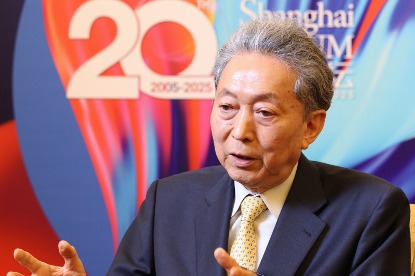
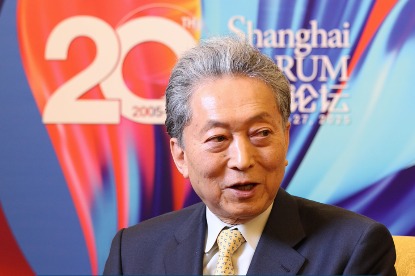
    In a recent exclusive interview with China Daily, former Japanese Prime Minister Yukio Hatoyama underscored the necessity of maintaining the foundational principles of China-Japan relations, particularly referencing agreements established in the 1970s. Hatoyama highlighted that the Chinese government’s stance on Taiwan, viewing it as an inseparable part of China, was acknowledged and respected by Japan at that time. He emphasized that Japan should continue to honor this consensus and manage the Taiwan issue appropriately, treating it as an internal matter of China. This approach, according to Hatoyama, is crucial for sustaining the stability and progress of bilateral relations between the two nations.

  • Former Japanese PM wowed by China’s tech development, calling for Sino-Japan collaboration

    Former Japanese PM wowed by China’s tech development, calling for Sino-Japan collaboration

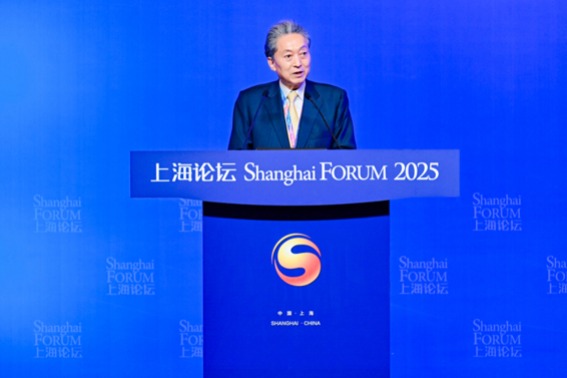
    Former Japanese Prime Minister Yukio Hatoyama has expressed admiration for China’s rapid technological advancements, emphasizing the potential for a synergistic partnership between Japan and China, particularly in artificial intelligence (AI) and robotics. Speaking at the Shanghai Forum 2025 on Friday, Hatoyama highlighted the complementary strengths of the two nations, suggesting that Japan’s meticulous attention to detail and expertise in basic materials could be effectively paired with China’s robust organizational capabilities and recent industrial achievements to foster mutual benefits. In an exclusive interview with China Daily, Hatoyama underscored the importance of collaboration in these cutting-edge fields, envisioning a macro-micro partnership that could drive innovation and economic growth for both countries. The former prime minister’s remarks come at a time when global technological competition is intensifying, and strategic alliances are increasingly seen as vital for maintaining a competitive edge. The Shanghai Forum 2025, which attracted over 500 guests and representatives, served as a platform for discussing key issues in global development, with Hatoyama’s call for Sino-Japan collaboration resonating strongly among attendees. As both nations continue to invest heavily in AI and robotics, the potential for joint ventures and knowledge exchange could pave the way for groundbreaking advancements in these critical sectors.

  • Ex-Japan PM urges tech collaboration with China

    Ex-Japan PM urges tech collaboration with China

    Former Japanese Prime Minister Yukio Hatoyama has called for enhanced technological collaboration between Japan and China, particularly in artificial intelligence (AI) and robotics. Speaking at the Shanghai Forum 2025, Hatoyama emphasized the complementary strengths of the two nations, with Japan excelling in precision and fundamental materials, and China demonstrating robust organizational capabilities and industrial achievements. He highlighted China’s rapid advancements in AI and robotics, noting that the country has achieved a world-leading position in these fields. Hatoyama also pointed out the potential for mutual benefits through a macro-micro partnership, leveraging each country’s unique advantages. He stressed the importance of adhering to historical agreements in Sino-Japanese relations and called for a reconsideration of Japan’s strategic alignment with the United States. Hatoyama proposed the establishment of a mechanism to regulate competition between China and the U.S. in technology fields, advocating for collaborative efforts involving Japan, South Korea, and European countries. The forum, themed ‘Age of innovation: Technology, development and governance,’ brought together over 500 participants from more than 50 countries and regions, fostering discussions on global technological advancements and governance.

  • World Trade Organization says global trade could slide this year because of Trump’s tariff policies

    World Trade Organization says global trade could slide this year because of Trump’s tariff policies

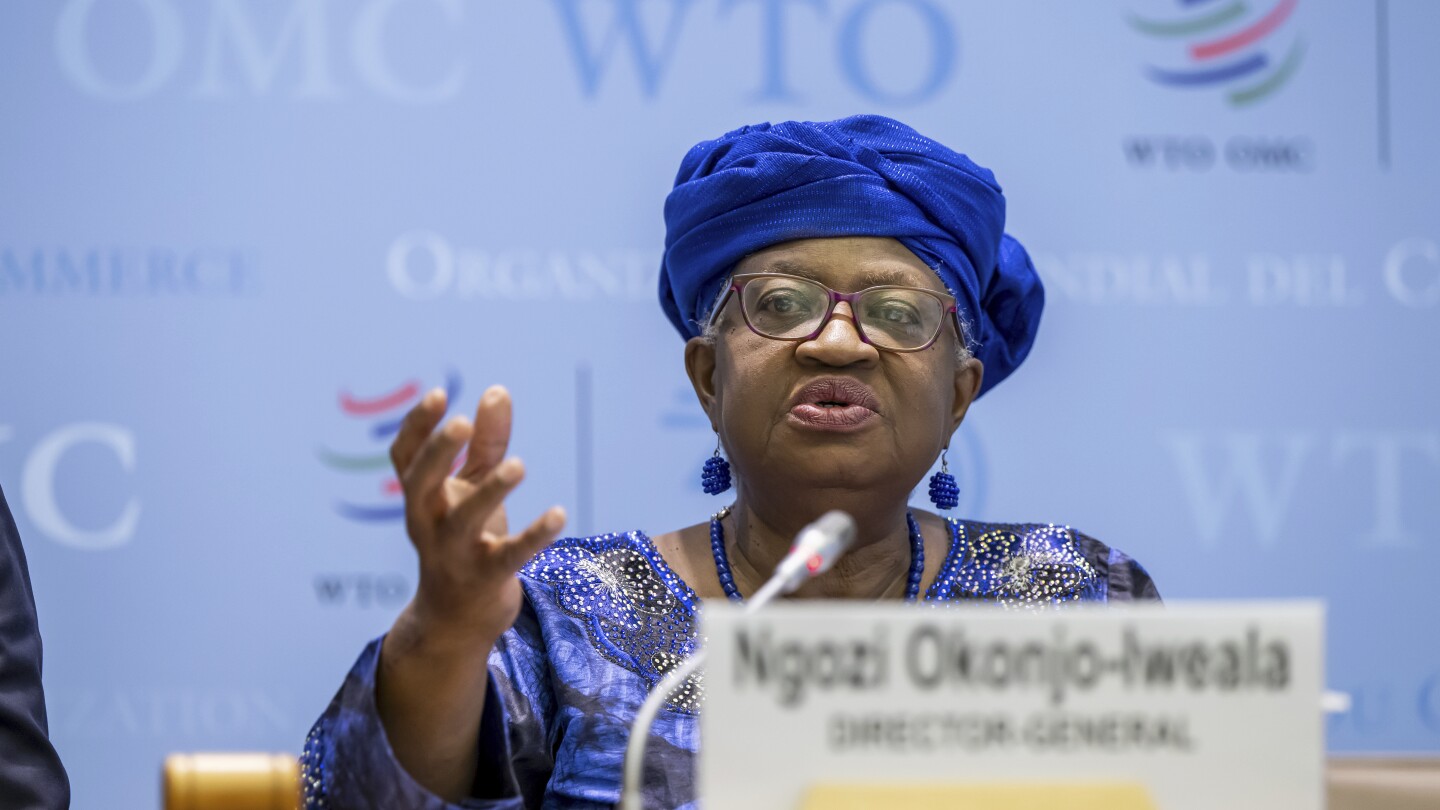
    The World Trade Organization (WTO) has projected a 0.2% decline in global goods trade for this year, attributing the downturn to U.S. President Donald Trump’s fluctuating tariff policies and the ongoing trade tensions with China. The WTO cautioned that the situation could worsen significantly if Trump implements his most stringent reciprocal tariffs. The global trade forum highlighted that North America would experience the sharpest decline, with exports expected to plummet by 12.6% and imports by 9.6% this year, even without the harshest tariffs. The WTO’s report, based on the tariff landscape as of Monday, initially anticipated continued trade expansion in 2025 and 2026. However, Trump’s trade war has compelled WTO economists to drastically revise their forecasts. If Trump enacts the toughest tariffs on most nations, global trade in goods could slump by 1.5%, primarily due to the uncertainty unsettling businesses. Earlier this month, Trump temporarily suspended the most severe tariffs for 90 days, allowing over 70 countries to address U.S. trade concerns. Concurrently, he has escalated taxes on Chinese imports to 145% and is embroiled in protracted tariff negotiations with Canada and Mexico. WTO Director-General Ngozi Okonjo-Iweala emphasized that the persistent uncertainty threatens to hinder global growth, with particularly adverse effects on the most vulnerable economies. WTO Chief Economist Ralph Ossa noted that trade policy uncertainty significantly dampens trade flows, reducing exports and weakening economic activity. He stressed the importance of understanding the wide-ranging and often unintended consequences of tariffs in an increasingly tense global trade environment.

  • PepsiCo agrees to meet with Al Sharpton over DEI cuts, potential boycott

    PepsiCo agrees to meet with Al Sharpton over DEI cuts, potential boycott

    PepsiCo, a leading North American food and beverage conglomerate, is under fire for its decision to scale back diversity, equity, and inclusion (DEI) initiatives. Reverend Al Sharpton, a prominent civil rights leader, announced on Monday that he will meet with PepsiCo CEO Ramon Laguarta this week to address the company’s controversial move. In a letter dated April 4, Sharpton warned of a potential boycott if PepsiCo fails to uphold its commitments to minority representation in managerial roles and supplier diversity. The company, which owns iconic brands like Gatorade, Lay’s, Doritos, and Mountain Dew, informed employees in February that it would no longer set specific goals for minority representation. Sharpton plans to press Laguarta on the rationale behind this decision and seek assurances regarding equal opportunities in employment and contracts. PepsiCo has yet to publicly comment on the matter. This development comes amid a broader trend of corporations, including Walmart and Target, rolling back DEI policies following President Donald Trump’s return to the White House earlier this year. Trump has also dismantled DEI programs within the federal government and threatened schools with funding cuts if they maintain such initiatives. In January, Sharpton led a “buy-cott” at Costco, encouraging consumers to support businesses committed to DEI policies. He emphasized the importance of economic pressure as a tool for social change, stating, ‘That is the only viable tool that I see at this time, which is why we’ve rewarded those that stood with us.’

  • Community, mentors and skill-building: Experts weigh the role of employee resource groups

    Community, mentors and skill-building: Experts weigh the role of employee resource groups

    Jenny Jang, who moved to the United States from South Korea at the age of six, faced significant challenges navigating her educational and professional environments as a minority. Unable to seek guidance from her parents, Jang turned to mentorship from external sources. Now based in Atlanta and employed at an international elevator company, Jang spearheaded the establishment of business resource groups in North America. These groups, designed to foster diversity and inclusion, provide employees with a platform to connect and share experiences around shared identities or themes. The first group, focused on women employees, attracted 500 members within three years, offering discussions on balancing family and career in a male-dominated industry. Subsequent groups catered to veterans and military families, creating safe spaces for employees to share their experiences. Employee resource groups (ERGs), which originated in corporate America in the 1970s to address racial, gender, and sexual orientation tensions, have since expanded to include other affiliations such as caregiving, mental health, neurodiversity, and generational divides. Critics argue that ERGs may create divisions and provide unfair advantages, prompting some companies to revise their purpose and scope. The future of ERGs faces additional uncertainty due to executive orders aimed at curtailing diversity, equity, and inclusion programs. Legal guidance from the Equal Employment Opportunities Commission emphasizes that ERGs must be open to all employees to avoid unlawful segregation. Proponents highlight the benefits of ERGs, including community building, leadership development, and enhanced employee engagement. Experts recommend starting ERGs by identifying a shared experience, securing senior leadership sponsorship, and demonstrating the group’s impact on employee retention and organizational goals. Despite challenges, ERGs remain vital for underrepresented communities, offering support, connectivity, and advocacy.