
The ongoing 22-month conflict between Israel and Hamas has left European nations feeling powerless and divided. Despite their vocal support, European efforts have largely been irrelevant in shaping the outcome of the crisis. However, a recent move by French President Emmanuel Macron to join 11 other EU countries in recognizing a Palestinian state has sparked a glimmer of hope. This initiative, though fraught with challenges, aims to leverage partnerships with Arab states, particularly Saudi Arabia, to pressure Israel and the United States into reconsidering their stance on Palestinian statehood. The timing of Macron’s announcement is strategic, coinciding with a UN ministerial conference co-chaired by France and Saudi Arabia in July, followed by a heads-of-state meeting in September. While the odds of success remain slim, the French-led effort seeks to inject diplomatic momentum into a process that has long been stagnant. The key to its potential success lies in convincing Saudi Crown Prince Mohammed bin Salman to take a bold stance in pushing the U.S. to support the two-state solution. However, the deep-rooted divisions over the viability of a Palestinian state, coupled with the lack of serious commitment from major powers, continue to cast a shadow over any prospects for peace. The Arab world’s financial and political intervention will be crucial, but without U.S. backing, diplomatic recognition alone is unlikely to alter the reality on the ground. This high-stakes diplomatic gamble, though uncertain, represents a rare opportunity to reignite the quest for a sustainable resolution to the Israeli-Palestinian conflict.
博客
-

Mutual respect urged for Sino-Japanese ties
In a bid to fortify Sino-Japanese relations, experts have underscored the imperative of mutual respect and robust people-to-people exchanges. This call comes as both nations, pivotal players in the Asia-Pacific region, grapple with escalating global challenges. Xie Fuzhan, President of the China Foundation for Human Rights Development, emphasized the extensive common interests and cooperative potential between China and Japan during the Second Forum on Sino-Japanese Friendship and People-to-People Exchanges in Beijing. He highlighted that the bilateral relationship not only impacts the two nations but also significantly influences regional and global stability. Xie urged both countries to adopt a long-term, strategic perspective, addressing historical issues with prudence and respect to foster a forward-looking relationship. Japanese Ambassador to China Kenji Kanasugi echoed this sentiment, stressing the critical role of candid dialogue in deepening mutual understanding and trust. Yuji Miyamoto, President of the Japan-China Friendship Center, lamented the decline in academic exchanges due to recent political turbulence, advocating for a deeper awareness of each other’s societies and cultures to bridge the understanding gap. Jiang Yuechun, a senior research fellow at the China Institute of International Studies, pointed out the erosion of the rules-based international order by certain countries, leading to global instability. He called for enhanced cooperation through multilateral frameworks like the Regional Comprehensive Economic Partnership and the Comprehensive and Progressive Agreement for Trans-Pacific Partnership to uphold free trade and multilateralism. Despite the shifting public perceptions, both countries share vast potential for cooperation in areas such as climate change, green growth, and digital trade. Ryuji Hattori, a professor at Chuo University in Japan, highlighted the strain on China-Japan relations due to Tokyo’s evolving security policies. He emphasized the necessity of building trust through solid institutional foundations and societal-level mutual understanding. As the 80th anniversary of the Chinese People’s War of Resistance Against Japanese Aggression approaches, Miyamoto urged Japan to reflect on its past militarism and recognize that lasting peace and friendly cooperation are the only viable paths forward.
-

Gaza ceasefire talks collapse as starvation crisis mounts
The latest efforts to broker peace in Gaza have hit a significant roadblock as negotiations in Qatar abruptly ended, with both the United States and Israel withdrawing their delegations. The U.S. special envoy, Steve Witkoff, accused Hamas of lacking genuine intent to reach a ceasefire, stating that the group appeared uncoordinated and unwilling to act in good faith. This development has dashed hopes for an immediate resolution to the 21-month-long siege of Gaza, which has left the territory in a state of humanitarian crisis. The collapse of talks coincides with France’s historic decision to formally recognize a Palestinian state, a move French President Emmanuel Macron described as essential for Middle Eastern security. Meanwhile, the humanitarian situation in Gaza continues to deteriorate, with the United Nations and aid agencies warning of widespread famine. UNRWA Commissioner-General Philippe Lazzarini reported that over 100 people, mostly children, have died of hunger, with one in five children in Gaza City malnourished. Despite having 6,000 trucks of emergency supplies ready in Jordan and Egypt, aid remains blocked due to Israel’s ongoing restrictions. The proposed ceasefire deal, which included a 60-day truce and the release of hostages and prisoners, failed to materialize due to disagreements over the terms of a lasting peace. Israel insists on maintaining a military presence in Gaza, while Hamas demands a complete end to hostilities. The lack of mutual trust has further complicated negotiations. France’s recognition of a Palestinian state adds diplomatic pressure on Israel, but Israeli Prime Minister Benjamin Netanyahu condemned the move, claiming it rewards terrorism. With no clear path forward, the prospects for a new ceasefire appear bleak, leaving Gaza’s population in dire straits.
-

Inside the drugs factory: How captagon is fuelling the war in Sudan
Deep within an industrial wasteland on the eastern bank of the Nile, three inconspicuous, half-finished buildings stand surrounded by a minefield. For months, residents were warned by Rapid Support Forces (RSF) fighters to avoid this walled compound. Inside, authorities discovered machinery and chemical products allegedly used to produce approximately 1,000 captagon pills per hour. This cheap, addictive amphetamine, popular among fighters and partygoers in the Middle East, has become a significant concern for Arab governments. The RSF reportedly distributes the drug to its fighters to enhance alertness and suppress hunger, while also selling it to civilians for profit. Until recently, Syria was the primary hub for captagon production. However, the fall of Bashar al-Assad’s government disrupted the industry, leading to the shutdown of numerous laboratories and smuggling routes. Despite this, Sudan’s ongoing conflict has provided fresh opportunities for captagon production. Earlier this year, the Sudanese Armed Forces (SAF) forced the RSF out of Khartoum and its surrounding areas, uncovering a captagon factory near the al-Jaili oil refinery in February. The facility contained five machines, two of which were operational at the time of discovery. Authorities also found pills bearing the double crescent symbol, a hallmark of illegal captagon production. The other machines were still in their packaging, suggesting the facility was in its early stages of operation. Shipping labels on the equipment indicated it was imported via a Dubai-based company, Amass Middle East Shipping Services, though the company did not respond to inquiries. The UAE has been accused of supplying arms to the RSF, though it denies these allegations. Experts noted the equipment’s similarity to that found in Syrian laboratories, raising concerns about a potential connection between Sudanese and Syrian criminal networks. The compound also contained hundreds of packets of white powder, labeled as veterinary supplements and electrolytes, though their contents remain under investigation. Sudanese police suspect the powder could be precursor materials for captagon production. The discovery of this factory follows earlier findings of captagon labs in Sudan, indicating a growing trend. Authorities are investigating whether the drug was being manufactured for export, given the lucrative Gulf market just across the Red Sea. The collapse of the Syrian captagon market has left a void, and Sudan appears to be filling it. Experts warn that the technical knowledge to produce captagon remains intact and could be redeployed elsewhere, posing a continued threat to regional security.
-

Post-Assad Syria reeling in waves of ethnic violence
In July 2025, the southern Syrian province of Sweida became the epicenter of a deadly sectarian conflict between the Druze religious minority and Sunni Arabs, backed by government-affiliated forces. The clashes resulted in hundreds of casualties, prompting Israel to launch airstrikes in support of the Druze. This violence echoed the March 2025 massacres, where supporters of the former Assad regime targeted security units, leading to retaliatory killings of Alawites by militias aligned with the new Damascus government. Over 1,300 individuals, predominantly Alawites, were killed, with reports of entire families being executed. Despite government promises of investigations, extrajudicial killings, kidnappings, and home invasions persist, particularly against Alawites. The conflict underscores the deep-seated sectarian divisions in post-Assad Syria, where religious minorities like the Alawites and Druze face systemic marginalization and violence. While the new government seeks to project unity, its fractured control and the historical stigmatization of these groups continue to fuel instability. International efforts, including U.S.-brokered ceasefires and Israeli military support for the Druze, add further complexity to the region’s fragile political landscape.
-

Which Premier League players are going to Afcon?
The upcoming 2025 Africa Cup of Nations (AFCON) in Morocco presents substantial challenges for Premier League clubs, with up to 43 players potentially departing for international duty during the critical winter fixture period. Scheduled from December 21, 2025, to January 18, 2026, the tournament coincides with six Premier League matchdays, the FA Cup third round, and EFL Cup semi-final first legs—potentially causing key players to miss up to eight crucial matches.
Liverpool’s Mohamed Salah and Manchester United’s new signing Bryan Mbuemo headline the list of prominent players expected to participate. While 50 African players currently feature in England’s top flight, several nations including Ghana, Gambia, and Guinea-Bissau failed to qualify, sparing players like Tottenham’s Mohammed Kudus and Bournemouth’s Antoine Semenyo from international call-ups.
Club impact varies significantly across the league: Sunderland faces the most substantial disruption with eight potential absentees, while Wolves, Nottingham Forest, and Crystal Palace each anticipate losing four players. Newcastle’s Yoane Wissa has already been excluded from DR Congo’s squad due to injury concerns. Notably, Arsenal, Chelsea, and Leeds United maintain squads without African players, insulating them from tournament-related disruptions.
Nigeria leads Premier League representation with nine players, followed by Ivory Coast and Senegal with six each. Brighton emerges as uniquely affected—though possessing multiple African players, their representatives hail from nations that didn’t qualify for the tournament.
The tournament’s scheduling continues a longstanding tension between international commitments and club obligations, forcing managers to devise contingency plans for approximately one month of depleted squads during the demanding winter period.
-
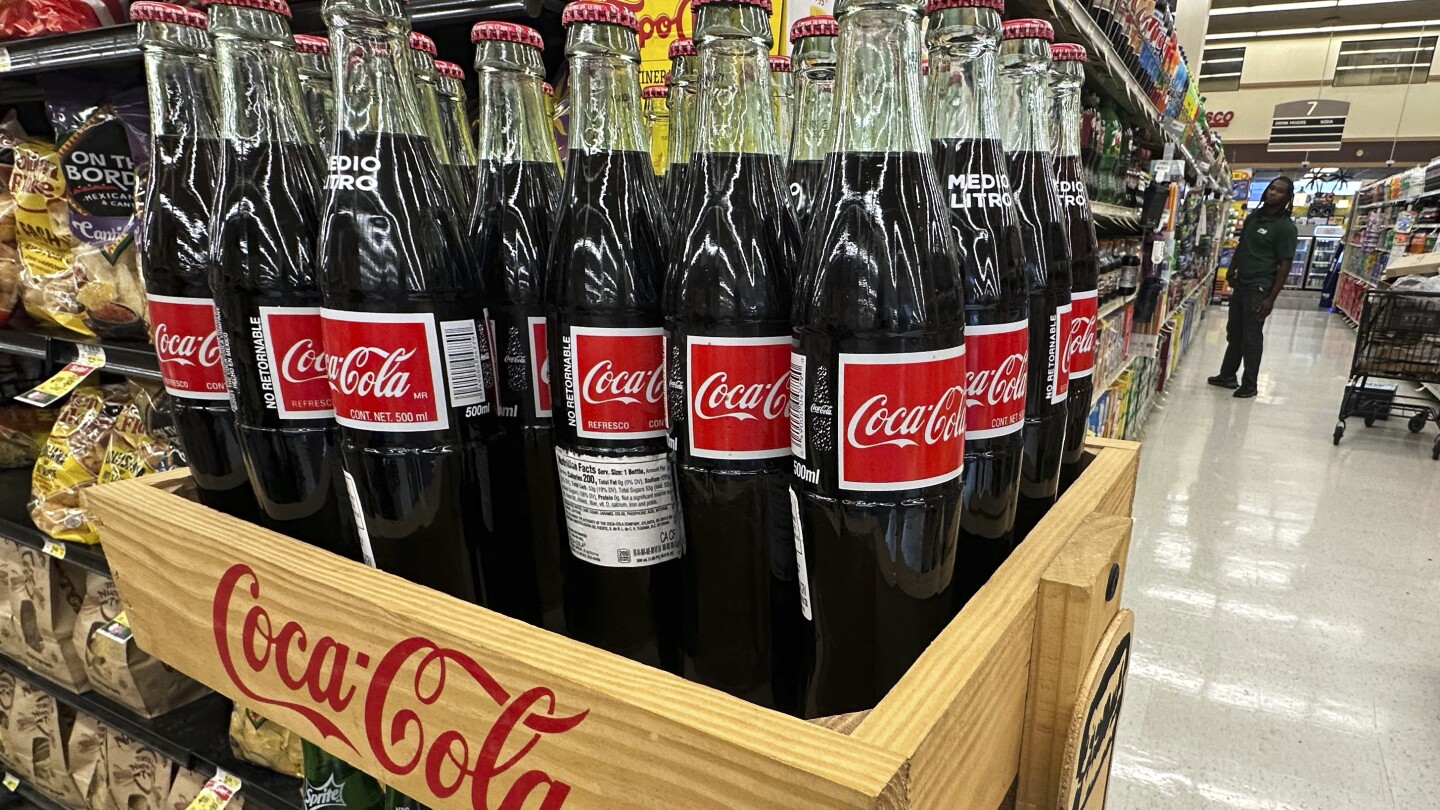
Coca-Cola confirms a cane-sugar version of its trademark cola is coming to the US
Coca-Cola announced on Tuesday that it will launch a cane-sugar version of its iconic cola in the U.S. this fall, aligning with recent remarks by former President Donald Trump. Trump had previously highlighted the company’s shift to real cane sugar in a social media post last week. This move marks a significant change for the brand, which has relied on high fructose corn syrup as its primary sweetener since the 1980s. While Coca-Cola initially remained silent on the matter, CEO James Quincey confirmed the decision during a conference call with investors, emphasizing the company’s commitment to diversifying its product offerings to meet evolving consumer demands. Quincey expressed gratitude for Trump’s enthusiasm for the brand and stated that Coca-Cola is exploring a wide range of sweetening options to cater to varied tastes. The company has already been using cane sugar in other U.S. products, such as its Simply lemonade and Honest Tea, and has sold Mexican Coca-Cola, which contains cane sugar, in the U.S. since 2005. Quincey highlighted the importance of innovation in aligning with consumer preferences, noting that the industry is experimenting with new ideas. This announcement comes as Coca-Cola faces competition from rivals like PepsiCo and Dr Pepper, which have offered cane-sugar versions of their colas since 2009. Despite challenges in certain markets, including India and Southeast Asia, Coca-Cola reported a 14% growth in case volumes for Coca-Cola Zero Sugar, reflecting a rising demand for healthier alternatives. The company also saw improved sales in North America, with Hispanic consumers returning to normal purchasing levels after a temporary decline earlier this year. Coca-Cola’s second-quarter earnings exceeded expectations, driven by a 6% global price increase, with revenue reaching $12.5 billion and net income surging 58% to $3.8 billion. The company now anticipates full-year adjusted earnings to grow by 8%, slightly below its initial forecast.
-

Massive Attack, Kneecap and others form musician alliance against ‘silencing’ by pro-Israel groups
British band Massive Attack has spearheaded a coalition of musicians to combat what they describe as intimidation by pro-Israel groups within the music industry. The alliance, named ‘Ethical Syndicate Palestine,’ includes prominent acts such as Kneecap, Brian Eno, and Garbage. This initiative follows the release of a documentary by campaign group Led By Donkeys, which exposes the activities of UK Lawyers for Israel Ltd (UKLFI), accused of silencing pro-Palestine advocacy. According to Led By Donkeys, UKLFI has publicly rejected international law and targeted artists supporting Palestine. In a statement on Instagram, Massive Attack condemned the intimidation of pro-Palestine artists, emphasizing the need to protect emerging musicians from such pressures. They urged those affected by UKLFI’s actions to join the alliance. The documentary also highlights concerns about the weaponization of antisemitism, arguing that it undermines genuine efforts to combat anti-Jewish racism. Recent months have seen several controversies involving pro-Palestine artists in the UK, including cancellations of performances and legal actions. Kneecap, for instance, faces charges under the Terrorism Act for allegedly displaying a Hezbollah flag during a concert. The band denies the allegations, calling it ‘political policing.’ Meanwhile, artists like Imagine Dragons’ Dan Reynolds have publicly shown support for Palestine, signaling a growing trend of musicians taking a stand against Israeli actions in Gaza.
-

The corporate takeover of American housing
The 2025 US housing market presents a perplexing scenario: home sales are declining, and the number of sellers far exceeds buyers, yet prices continue to soar to unprecedented levels. Over the past decade, home values have surged nationwide, even in once-affordable Sunbelt cities. Policymakers, however, seem unprepared to address this crisis. In a July 2025 interview with the New York Times, 16 US mayors identified housing as a top concern. During her 2024 presidential campaign, former Vice President Kamala Harris proposed tax credits for first-time buyers, while President Donald Trump has renewed calls for interest rate cuts to reduce mortgage rates.
Homeownership remains a cornerstone of the American dream, with rates historically hovering around 65% from 1965 to 2025, according to Trading Economics. However, the peak was in 2004 at 69%, and despite a temporary spike during the Covid-19 pandemic, the rate has been steadily declining. Alarmingly, even among homeowners, equity is shrinking, with many owning less than half of their property’s value due to debt.
Structural issues exacerbate the crisis. Construction costs have skyrocketed, labor is scarce, and tariffs have increased material prices. Zoning laws, tax regimes, and anti-density regulations have stifled urban growth, while sprawling development faces geographic and environmental limits. Mortgage rates remain high, and the national housing shortfall, now estimated at over 4.5 million, continues to worsen.
The crisis has attracted new investors. Corporate actors are increasingly entering residential real estate, drawn by stable returns in a tightening market. Though they still own a minority of US housing, these firms are concentrated in key regions, threatening the post-World War II surge in widespread homeownership.
Large-scale corporate ownership of homes and influence over rent prices is a recent development. Before 2008, institutional investors focused on apartment buildings and urban areas, as single-family homes were seen as too dispersed and costly to manage. The housing crash changed this, with foreclosures making suburban homes available at deep discounts. Since then, major institutional financial actors have invested heavily in US single-family housing, acquiring up to 300,000 houses and renting them out.
Government-backed mortgage giant Fannie Mae began selling foreclosed homes in bulk to investors in 2012, demonstrating that single-family housing could be profitable at scale. Fannie Mae and Freddie Mac expanded support for institutional buyers through favorable financing terms and lower rates. Meanwhile, homebuilding collapsed, leading to a supply shortage.
The Covid-19 pandemic accelerated this trend. Remote work drove people from cities to suburbs, and eviction moratoriums pushed small landlords to sell, opening the door for larger buyers. Digital platforms made it easier to browse, purchase, and manage properties remotely.
Blackstone, one of the world’s largest private equity firms, became a pioneer in large-scale housing acquisitions after 2008. In 2012, it helped launch Invitation Homes, now the largest owner of single-family rentals in the US. Other major firms, like Progress Residential and Amherst Holdings, have followed suit, using advanced algorithms and AI to identify and acquire homes efficiently.
Real Estate Investment Trusts (REITs), originally designed to give everyday investors access to real estate profits, are now dominated by major institutional firms like BlackRock and Vanguard. These firms have been criticized for excessive fees, maintenance failures, and improper eviction tactics.
Corporate homebuying continues to climb. Institutional investors bought 15% of US homes for sale in the first quarter of 2021, increasing to nearly 27% by early 2025. In some markets, investors accounted for 44% of all home flips in the third quarter of 2024.
Big Tech has also become essential to the expansion of corporate housing. Tools like YieldStar, a rent pricing software developed by RealPage, use algorithms to recommend optimal prices, influencing rent markets significantly. Short-term rental platforms like Airbnb have reshaped housing, contributing to higher rents in many cities.
Addressing the issue requires public involvement and policy changes. The city of Austin is a rare success story, with median home prices falling due to increased affordable housing construction. However, without effective measures, the concentration of land in private hands will only grow, threatening affordability and public access to housing.
-

Union Pacific, Norfolk Southern discuss merger to create transcontinental railroad, AP source says
Union Pacific and Norfolk Southern are engaged in preliminary discussions to merge, potentially creating the largest railroad network in North America, spanning from the East Coast to the West Coast. These talks, which began in the first quarter of this year, involve two of the country’s six major freight railroads—Union Pacific, the largest, and Norfolk Southern, the smallest. Both companies have declined to comment on the matter. The proposed merger has sparked intense debate within the industry, particularly regarding its likelihood of approval by the Surface Transportation Board (STB). While the STB greenlit the creation of CPKC two years ago through Canadian Pacific’s $31 billion acquisition of Kansas City Southern, this would mark the first major rail merger in over two decades. The bar for such mergers was significantly raised after the problematic Union Pacific-Southern Pacific merger in 1996 and the 1999 split of Conrail, which caused widespread disruptions. Under current regulations, any major rail merger must demonstrate enhanced competition and public benefit. Union Pacific CEO Jim Vena has highlighted potential advantages, including streamlined deliveries and simplified shipping for businesses reliant on rail transport. However, concerns have been raised about reduced shipping options and the industry’s consolidation. Analysts, including Citi Research’s Ariel Rosa, warn that such a merger would face significant regulatory, political, and stakeholder pushback, making it a costly and time-intensive process. Union Pacific, headquartered in Omaha, Nebraska, reported $24.3 billion in revenue last year, while Norfolk Southern, based in Atlanta, generated $12.1 billion. Following the news, Norfolk Southern’s stock surged, reflecting investor optimism.