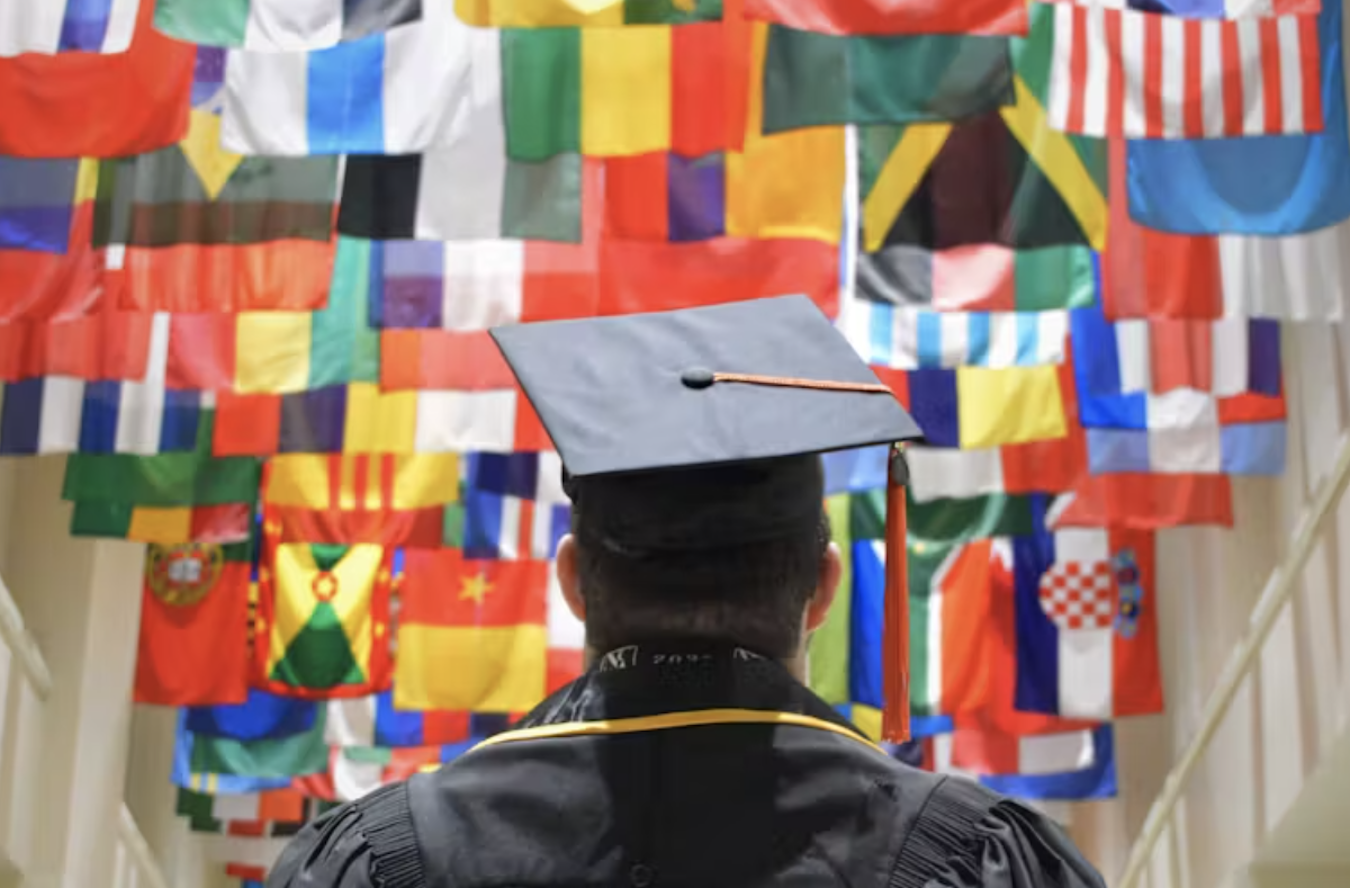
American college campuses, from Tucson to Tallahassee, are witnessing a significant shift in their student demographics. While the fall semester typically sees students settling into classes and dorms, a concerning trend is emerging: a sharp decline in international student enrollment. According to NAFSA: Association of International Educators and JB International, an estimated 30% to 40% fewer international students are expected on US campuses in the fall of 2025 compared to the 2024-2025 academic year. This translates to approximately 150,000 fewer students, primarily due to stringent visa restrictions and canceled visa appointments at US embassies and consulates in countries like India, China, Nigeria, and Japan. The Institute for International Education reports that over 1.1 million international students, more than half from China and India, were enrolled in US institutions during the 2023-2024 academic year. The projected decline could cost the US economy $7 billion in the 2025-26 school year, as international students contribute significantly to local economies through housing, food, transportation, and other expenses. For every three international students, one American job is created or supported. Historically, international student enrollment in the US has grown steadily since the early 20th century, driven by philanthropic efforts and government-funded programs like the Fulbright Scholarship. However, recent policy changes under the Trump administration, including visa revocations and travel bans, have created an unwelcoming environment for foreign students. High-profile arrests of international students, such as Rumeysa Ozturk of Tufts University, have further deterred prospective applicants. The administration’s plans to cap the duration of student visas to four years and restrict entry from 19 countries have exacerbated the situation. Universities like New York University, Northeastern University, and Columbia University, which host the largest numbers of international students, are expected to face significant financial repercussions. This decline not only threatens the diversity and global engagement of US higher education but also undermines the economic benefits these students bring to local communities.
博客
-
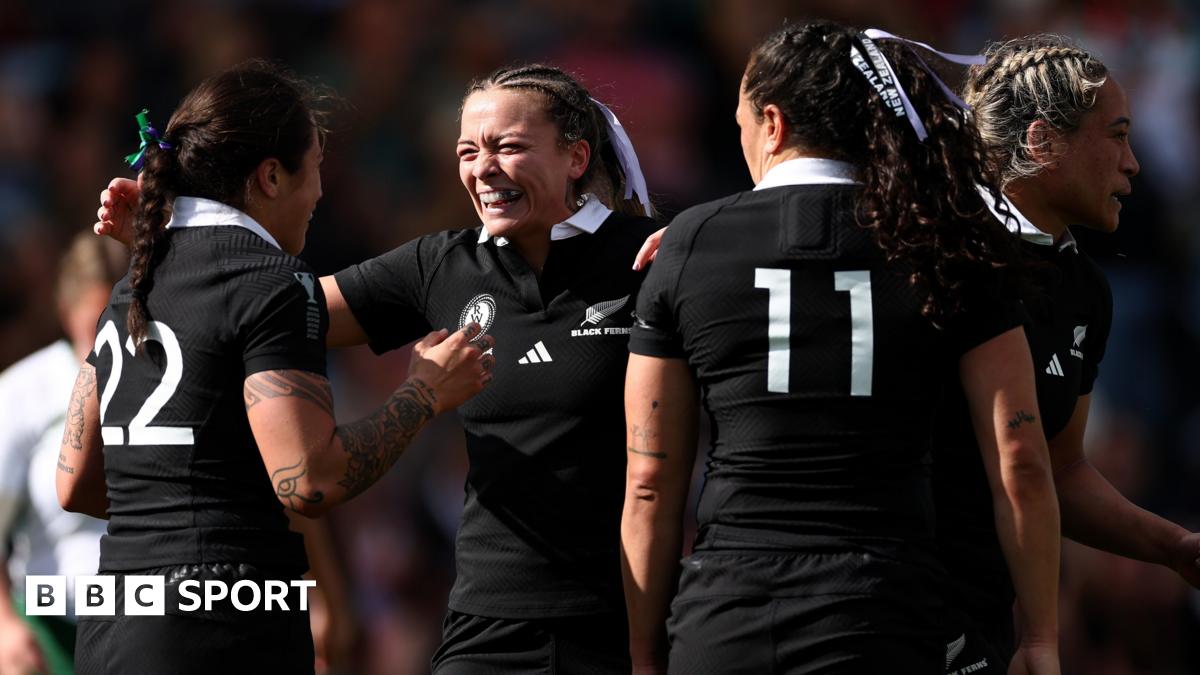
Black Ferns beat South Africa to reach semis
In a thrilling Women’s Rugby World Cup quarter-final clash, reigning champions New Zealand showcased their resilience and skill to defeat a determined South African side 46-17. The match, held at Sandy Park in Exeter, saw the Black Ferns recover from a slow start to dominate the second half and secure their place in the semi-finals against Canada. South Africa, making their first-ever quarter-final appearance, opened the scoring through prop Babalwa Latsha, but New Zealand responded with tries from Theresa Setefano and Braxton Sorensen-McGee. Aphiwe Ngwevu’s try leveled the scores at halftime, but the Black Ferns unleashed a second-half onslaught with five tries, including doubles from Renee Holmes, Sorensen-McGee, and Kaipo Olsen-Baker. South Africa’s Lerato Makua scored a late consolation try, capping off a historic campaign for the Springbok Women. New Zealand’s clinical performance highlighted their title credentials, though their slow start and scrum penalties could be areas of concern ahead of the semi-finals. South Africa’s head coach, Swys de Bruin, praised his team’s legacy-building efforts, emphasizing the growth of women’s rugby in the country. The Black Ferns, unbeaten in World Cup matches since 2014, now turn their focus to Friday’s semi-final in Bristol.
-
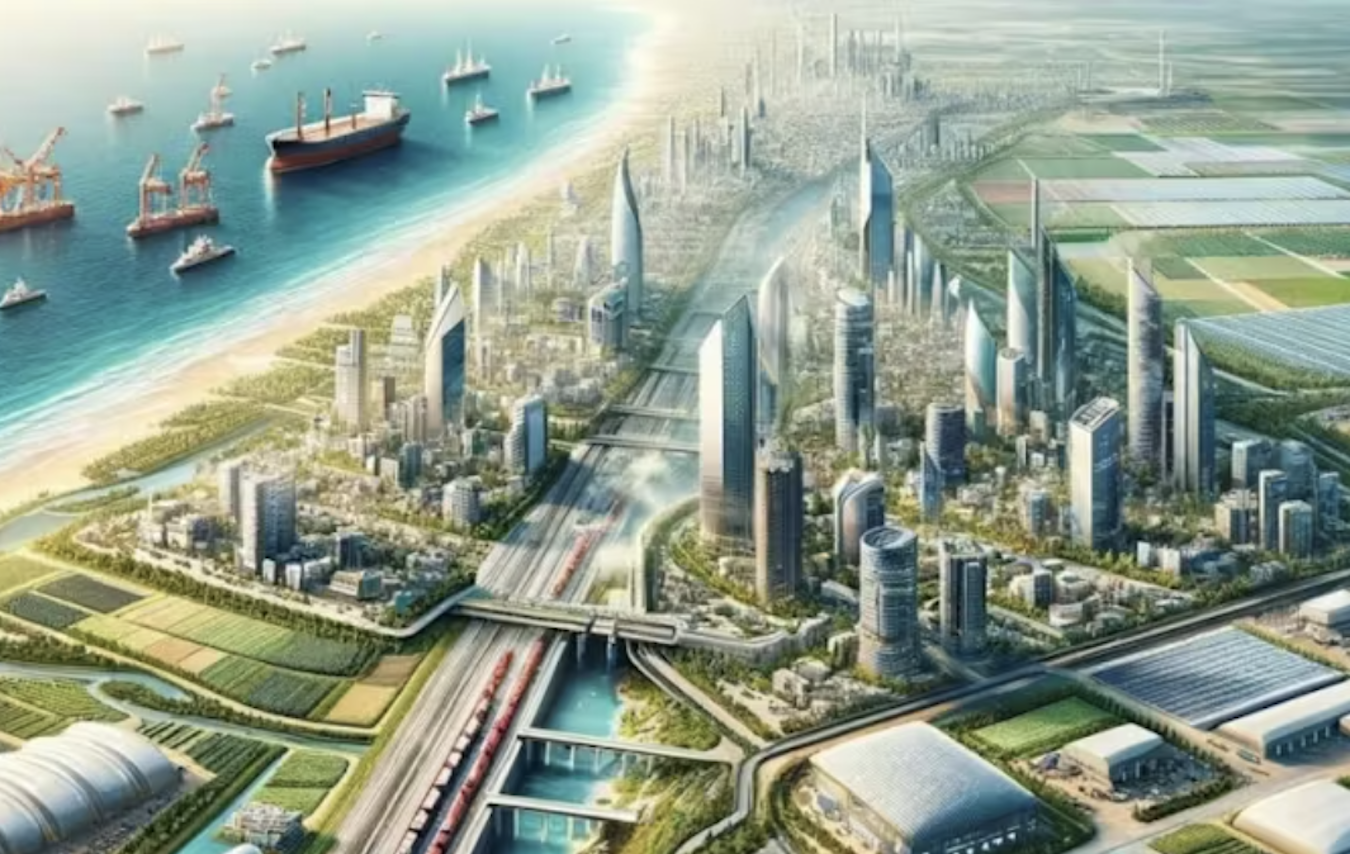
If Donald Trump gets his disaster capitalism way in Gaza
Gaza, a region devastated by conflict, lies in ruins with entire neighborhoods destroyed and hundreds of thousands of residents crammed into tents, struggling for basic necessities like food, water, and power. Amid this humanitarian crisis, a leaked 38-page document from the Trump administration, titled the Gaza Reconstitution, Economic Acceleration and Transformation (Great) Trust, proposes a radical plan to “fundamentally transform Gaza” by integrating it into the India–Middle East–Europe Economic Corridor (Imec).
The plan, framed as a reconstruction effort, emphasizes “massive US gains” and the acceleration of Imec, while consolidating an “Abrahamic regional architecture”—a reference to the 2020 Abraham Accords that normalized relations between Israel, the UAE, and Bahrain. This vision aligns closely with Israeli Prime Minister Benjamin Netanyahu’s “Gaza 2035” proposal, which envisions Gaza as a sanitized logistics hub linked to Saudi Arabia’s Neom mega-project, devoid of meaningful Palestinian presence.
Imec, launched at the 2023 G20 summit in New Delhi, is a transformative infrastructure project signed by the US, EU, India, Saudi Arabia, and the UAE. It includes railways, ports, pipelines, and digital cables connecting South Asia to Europe via the Arabian Peninsula. While Israel is not a formal signatory, its role is implicit, with the corridor running through Haifa Port.
The plan casts Gaza as both an obstacle and a gateway, presenting it as a historic crossroads of trade routes. It proposes extending Gaza’s port, integrating its industries into regional supply chains, and reorganizing its land into “planned cities” and digital economies. However, the vision is not one of recovery for Gaza’s residents but rather its conversion into a logistics center serving Imec.
The Great Trust’s most radical element is its model of direct trusteeship, envisioning a US-led custodianship that would govern Gaza, oversee security, manage aid, and control redevelopment. Even after establishing a “Palestinian polity,” the trust would retain powers through a Compact of Free Association. The plan also includes provisions for “voluntary relocation,” offering financial incentives for Palestinians to leave Gaza, a move critics argue sanctions ethnic cleansing.
The document is laden with “Abrahamic” branding, from logistics hubs to infrastructure corridors, and envisions a techno-futurist Gaza with smart manufacturing zones, AI-regulated data centers, and luxury resorts. It aims to channel Gulf capital into Gaza’s redevelopment, forecasting $70–100 billion in public investment and $35–65 billion from private investors.
While Saudi Arabia has not formally joined the Abraham Accords, its backing of Imec signals acceptance of the framework. For Washington, Gaza’s reconstruction is seen as a final step in persuading Riyadh to normalize relations with Israel. However, the plan’s focus on Gaza as a distressed asset to be flipped raises ethical concerns, with critics labeling it disaster capitalism at its sharpest.
Despite the grand visions of free-trade zones and futuristic cities, Palestinians have consistently rejected such schemes. The leaked document underscores that Gaza’s future is being framed within a broader US effort to reshape the region, raising questions about whose interests are truly being served.
-
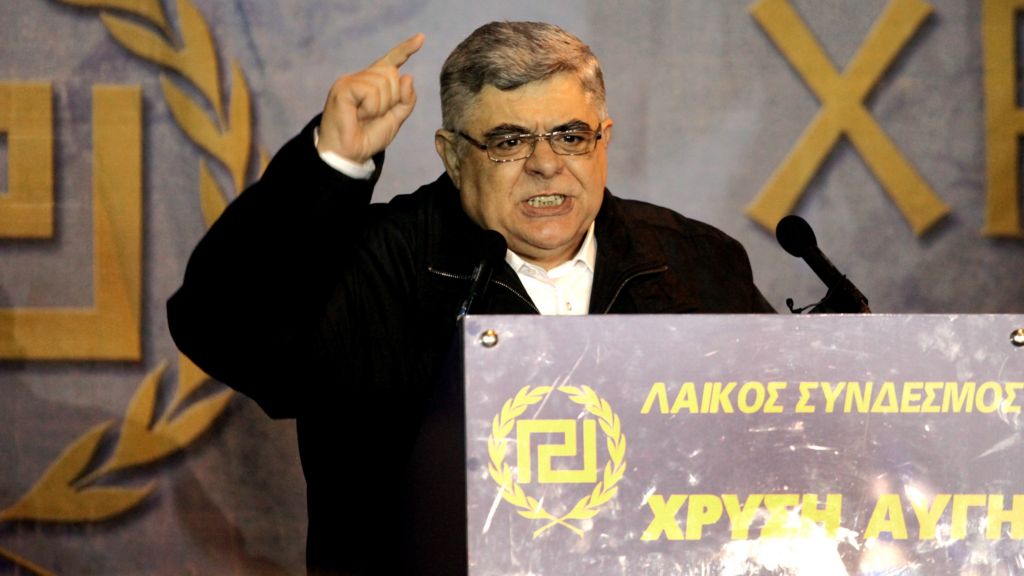
Neo-Nazi Golden Dawn leader released from prison early
Nikos Michaloliakos, the notorious leader of the Greek neo-Nazi party Golden Dawn, has been granted early release from prison, igniting widespread condemnation. The 67-year-old far-right politician, known for his admiration of Nazism and Holocaust denial, was permitted to serve the remainder of his 13-year sentence under house arrest due to health concerns, as reported by state media on Friday. Michaloliakos had been convicted in 2020 for orchestrating a series of violent attacks on immigrants and political opponents carried out by Golden Dawn supporters. This marks the second time he has been released early; a previous attempt in May 2024 was revoked after he failed to demonstrate satisfactory behavior. Golden Dawn, which Michaloliakos founded and led, was declared a criminal organization linked to the murder of an anti-fascist musician and attempted murders of Egyptian fishermen and communist activists. The party gained significant traction during Greece’s financial crisis, securing third place in the 2012 elections with its anti-immigrant and nationalist rhetoric. Despite officially denying its neo-Nazi identity, Golden Dawn adopted Nazi-inspired symbols and ideologies. Michaloliakos and former party MPs were convicted of leading or participating in the criminal group. The decision to release him has drawn sharp criticism from left-wing parties, with Greece’s New Left party calling it a ‘serious blow to the collective memory and the struggle for democracy and justice.’ The communist party KKE has demanded the decision be overturned, emphasizing that Golden Dawn’s crimes remain unforgotten by the public and younger generations.
-

Colombian court rules Meta was wrong to bar porn star’s Instagram account
Colombia’s Constitutional Court has ruled that Meta, the parent company of Instagram, violated the freedom of expression of adult content actress Esperanza Gómez by deleting her Instagram account without clear justification. The court found that Meta’s action lacked transparency and was inconsistent in applying its policies on nudity and sexual content, as other similar accounts remained active. Gómez, a prominent figure in Colombia’s adult entertainment industry with over five million followers, argued that the account closure hindered her professional activities and was influenced by her work outside the platform. The court emphasized that social media posts are protected under Colombia’s constitution and should only be restricted proportionately. It ordered Meta to revise Instagram’s terms of use and privacy policy to ensure users are informed about moderation decision challenges and to clarify rules on implicit sexual content. The court also highlighted that if offline activities are used for content moderation, they must be explicitly stated. While the court did not specify sanctions or redress for Gómez, this ruling follows similar legal actions in South America, such as Brazil’s Supreme Court holding social media platforms directly accountable for illegal content. Meta has not yet responded to the ruling.
-

South Africa inflict record defeat on New Zealand
In a historic showdown at the Wellington Regional Stadium, South Africa delivered a commanding performance, defeating New Zealand 43-10 in the Rugby Championship. This marked New Zealand’s heaviest defeat in history, surpassing their previous 35-7 loss to the Springboks in 2023. The world champions showcased their prowess with six tries and an impressive 36 unanswered points in the second half, bouncing back from their loss to the All Blacks just a week prior. Key players like Cheslin Kolbe, who scored two tries, and Manie Libbok, who contributed 16 points through conversions and a penalty, were instrumental in the victory. South Africa’s captain, Siya Kolisi, praised his team’s fearless approach and self-belief, crediting their success to a united effort and strategic execution. New Zealand’s captain, Scott Barrett, acknowledged the Springboks’ dominance and admitted his team’s shortcomings, emphasizing the need for improvement. Meanwhile, in another Rugby Championship clash, Argentina edged out Australia 28-26 in a tense match in Sydney, with Santiago Carreras’ accurate kicking proving decisive. As the championship progresses, South Africa and New Zealand remain in close contention, with Australia currently leading the standings.
-
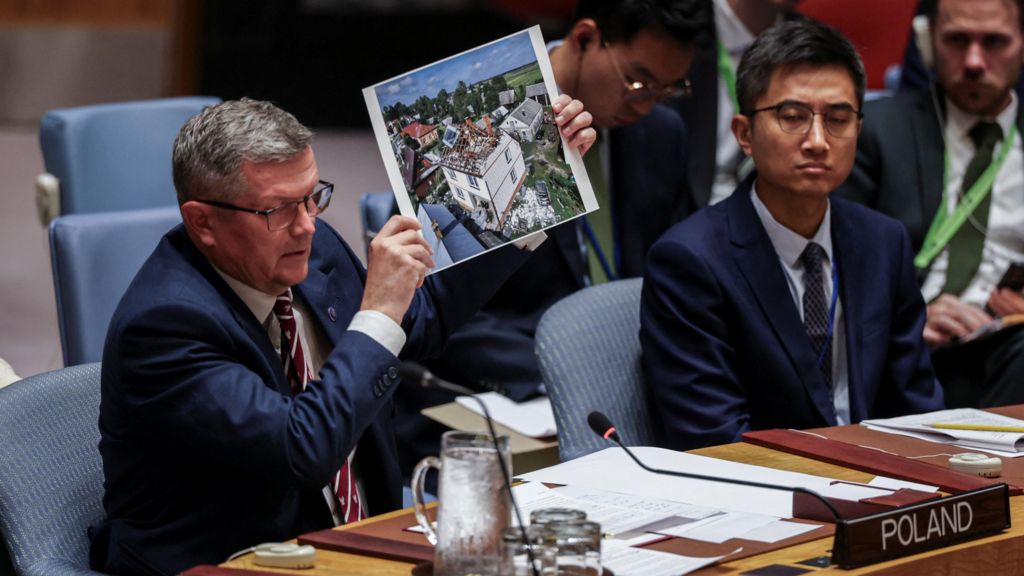
New Nato mission to bolster eastern flank after Russia drone incursion
In a dramatic escalation of tensions, Poland has accused Russia of a deliberate incursion after more than a dozen drones breached Polish airspace on Wednesday. The incident, described as the most serious of its kind since Russia’s full-scale invasion of Ukraine began in February 2022, has prompted a swift response from Nato allies. Denmark, France, and Germany have pledged military support, including fighter jets and warships, to strengthen the alliance’s eastern flank. Other Nato members are expected to follow suit in the coming days.
-

Mystery of British woman who disappeared from a luxury Caribbean yacht
The disappearance of British woman Sarm Heslop from a luxury yacht in the US Virgin Islands in March 2021 remains shrouded in mystery, with newly released CCTV footage offering the last recorded sighting of her. The footage, exclusively obtained by the BBC, shows Heslop and her then-boyfriend, Ryan Bane, boarding a dinghy after an evening at a bar on St. John island. Six hours later, Heslop was reported missing, and despite extensive search efforts, her body has never been found. Bane, who has never been formally questioned by police, claims she likely fell overboard or drowned while he was sleeping. However, inconsistencies in his timeline and his failure to alert nearby boats or the coastguard promptly have raised suspicions. A BBC Three documentary, ‘Missing in Paradise: Searching for Sarm,’ delves into the case, highlighting the lack of closure for Heslop’s family and friends, who believe the investigation should be reclassified as a no-body murder case. Bane, who has invoked his constitutional rights to avoid questioning and forensic searches of his yacht, remains the only person of interest in the case. Heslop’s family continues to seek answers, determined to uncover the truth behind her disappearance.
-
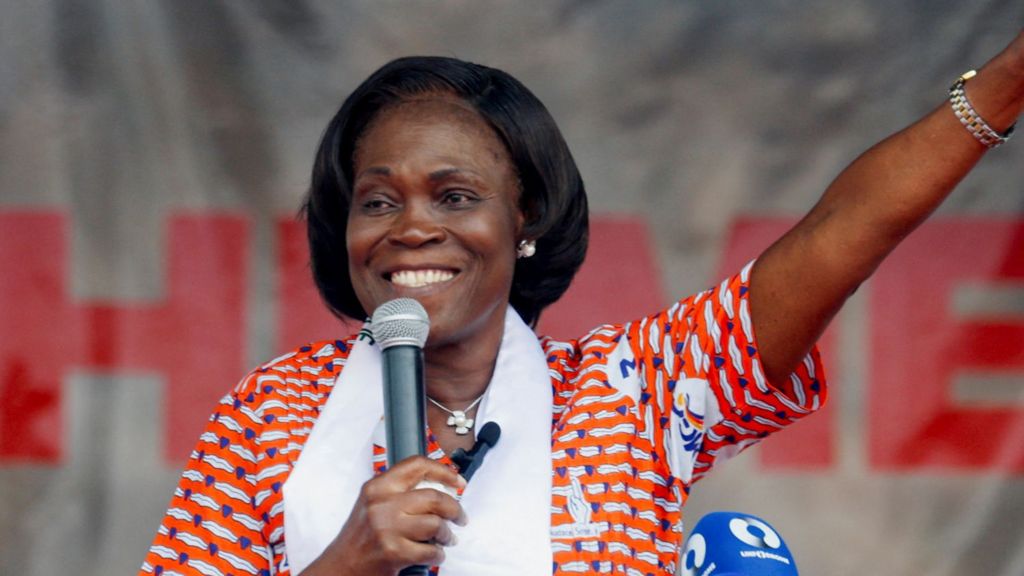
Ivory Coast’s ‘iron lady’ – from hiding in a bunker to presidential hopeful
In a dramatic political resurgence, former Ivory Coast First Lady Simone Gbagbo has announced her candidacy for the upcoming presidential election, marking a significant turn in her tumultuous career. Once a fugitive hiding in a bunker to evade arrest, Gbagbo, now 76, has emerged as a defiant contender, promising to modernize and revitalize the nation. Her journey from the shadows of her ex-husband Laurent Gbagbo’s presidency to the forefront of Ivorian politics is a testament to her resilience and ambition. Known as the ‘Iron Lady’ for her steely demeanor, Gbagbo has long been a polarizing figure in Ivory Coast’s political landscape. Her tenure as first lady from 2000 to 2011 was marked by her influential role in her husband’s administration, where she was both revered and feared. Despite a criminal conviction and a highly publicized divorce, Gbagbo has methodically rebuilt her political base, founding the leftist Movement of Capable Generations (MGC) and positioning herself as a formidable challenger to incumbent President Alassane Ouattara. Her candidacy is not only a political milestone but also a symbolic one, as she seeks to become Ivory Coast’s first female president. Gbagbo’s campaign, fueled by her powerful rhetoric and extensive political experience, has garnered significant attention, particularly among her ex-husband’s supporters, who have been barred from backing Laurent due to his ineligibility. As the election approaches, all eyes are on Simone Gbagbo, whose potential victory would mark a historic chapter in Ivory Coast’s turbulent political history.
-
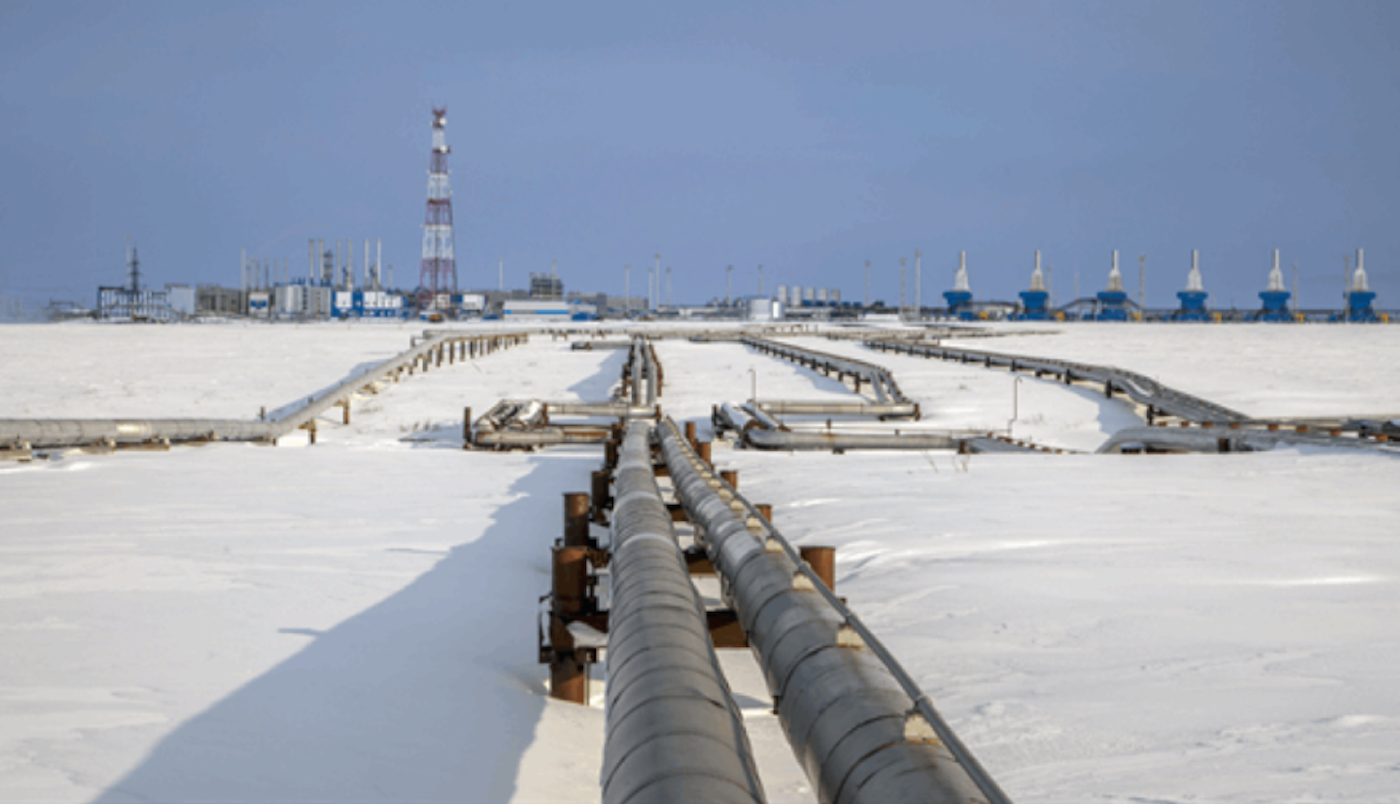
China-Russia gas pact heightens Western sanctions risks
The recent agreement to construct the Power of Siberia 2 pipeline, set to transport 50 billion cubic meters of Russian natural gas to China annually via Mongolia, marks a pivotal shift in global geopolitics and energy markets. Analysts from both China and the West highlight the deal’s potential to redefine energy dynamics in Eurasia. On September 2, China, Russia, and Mongolia signed a legally binding memorandum of understanding (MOU) to advance the project, with Russia offering China a discounted gas price and China accepting the Mongolian route—a compromise that had previously been a sticking point due to concerns over energy security. The pipeline, expected to be operational by 2031–2032, will elevate Russia-China gas trade to 106 billion cubic meters annually, meeting approximately one-fifth of China’s current gas demand. The deal also promises economic benefits for Mongolia, including transit fees, job creation, and reduced air pollution, while bolstering its geopolitical standing. However, risks remain, including potential Western influence and Mongolia’s “Third Neighbor” policy, which seeks to diversify its international partnerships beyond China and Russia. The project underscores Russia’s strategic pivot to Asia amid strained relations with Europe, particularly following the Ukraine conflict, which has drastically reduced Russian gas exports to the EU. While China welcomes the economic and strategic advantages of the deal, it remains cautious about upsetting its relations with Europe. Western analysts warn that the pipeline could undermine efforts to contain Russia’s war in Ukraine, prompting calls for targeted sanctions against Russian energy companies and their Chinese partners.