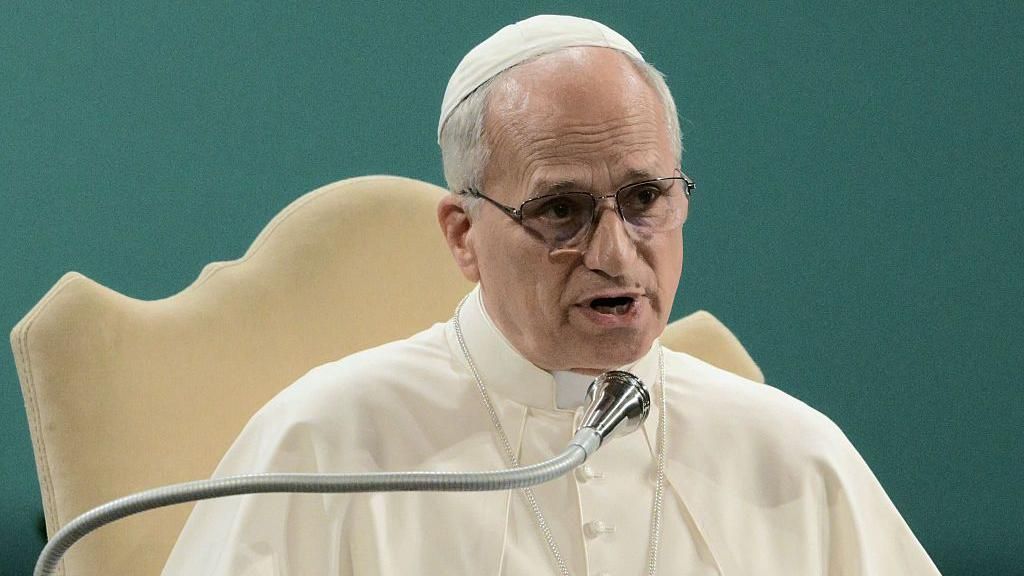
In a powerful address at the Raising Hope climate conference near Rome, Pope Leo XIV delivered his first major statement on climate change, condemning those who downplay the ‘increasingly evident’ impacts of global warming. Echoing the sentiments of his predecessor, Pope Francis, the new Pontiff criticized individuals who ‘ridicule those who speak of global warming,’ a remark widely interpreted as a veiled critique of U.S. President Donald Trump. The President recently dismissed climate change as a ‘con’ and labeled renewable energy efforts as misguided. Speaking at Castel Gondolfo, Pope Leo emphasized the urgent need for global citizens to take decisive action, warning against indifference and resignation. His speech marked the 10th anniversary of the publication of *Laudato Si’*, a landmark document by Pope Francis that positioned climate change as a central concern for the Catholic Church. The Pope expressed concern that climate change has become a divisive issue, with some mocking its undeniable signs and even blaming the poor for its consequences. He urged citizens to pressure politicians into prioritizing environmental action, stating that only through active engagement can the damage to the planet be mitigated. The conference, held ahead of COP30 in Belém, Brazil, also featured former California Governor Arnold Schwarzenegger, who praised the Pope as a real-world ‘action hero’ for his commitment to installing solar panels on Vatican buildings. Brazilian Environment Minister Marina Silva extended an invitation to Pope Leo to attend COP30, expressing confidence that his presence would ensure the summit’s success. The Pope’s remarks underscored the moral imperative of addressing climate change, reminding the audience that future generations will judge humanity’s stewardship of the Earth.
博客
-

Why government shutdowns seem to only happen in the US
The United States has witnessed its 11th government shutdown since 1980, a phenomenon that remains uniquely American. Unlike other nations where governments continue to function even during wars or constitutional crises, the US shutdowns have become a political bargaining tool. This recurring issue stems from the federal system of government, where different branches can be controlled by opposing parties. While the founders intended this structure to foster compromise, it has increasingly led to gridlock. The 1980 reinterpretation of the 1884 Anti-Deficiency Act, which mandates that no budget means no spending, has further entrenched this practice. In contrast, non-parliamentary democracies like Brazil and parliamentary systems in Europe ensure continuity of government services even during budget disputes. The US shutdowns have significant consequences, including unpaid federal workers, halted services, and economic impacts. For instance, the 2018-2019 shutdown, the longest on record, reduced GDP growth by 0.1 percentage points weekly. While essential services like social security and the military continue, other functions like national parks and tax refunds are suspended. Globally, such shutdowns are rare, as seen in Canada and Ireland, where minority governments maintained operations through cooperation. In the US, however, political polarization has made shutdowns a weapon in partisan battles. As Democrats and Republicans continue to clash, the functioning of the government remains at risk, highlighting the need for systemic reform.
-

Hunter S Thompson’s death to be reviewed 20 years on
Colorado authorities have initiated a review of the death of iconic journalist and author Hunter S. Thompson, two decades after it was officially ruled a suicide. The request for this re-examination came from Thompson’s widow, prompting the Colorado Bureau of Investigation (CBI) to conduct a ‘case review’ of the original 2005 investigation. The CBI clarified that this review is not based on new evidence but aims to ensure transparency and provide closure to Thompson’s family and the public. Thompson, who passed away at the age of 67 in his Woody Creek, Colorado home, was found dead from a self-inflicted gunshot wound while on the phone with his wife. His son later discovered his body in the kitchen. At the time, the investigation concluded there was no evidence of foul play. Thompson, a literary giant, was best known for his 1971 novel *Fear and Loathing in Las Vegas*, a seminal work that captured the counterculture of the 1960s and was later adapted into a film starring Johnny Depp. His other notable works include *Hells Angels* and *Generation of Swine*. Colorado Sheriff Michael Buglione emphasized Thompson’s ‘profound impact’ on his community and beyond, underscoring the importance of this review. Officials have not set a timeline for the investigation but have pledged to provide updates upon its completion.
-

At least 30 die after Ethiopia church scaffolding falls
A devastating incident unfolded in Ethiopia as scaffolding collapsed at the Arerti Mariam church in the central Minjar Sheknora area, resulting in the deaths of at least 30 people and injuring over 200 others. The tragedy occurred during an annual Orthodox Christian celebration of St Mary, which had drawn thousands of worshippers to the site. Local police inspector Ahmed Gebeyehu confirmed the incident to BBC Amharic, warning that the death toll could rise further. The victims, aged between 25 and 80, were part of a large crowd gathered for the religious event. The Ethiopian government, through a statement shared by the state-run Ethiopian Broadcasting Corporation (EBC), expressed its ‘deep condolences for the damage caused by the collapse of the scaffolding.’ The statement also emphasized the critical need for prioritizing safety in all construction projects. This incident highlights the ongoing challenges in enforcing health and safety regulations in Ethiopia, where construction disasters remain a recurring issue. The collapse has cast a shadow over what was meant to be a joyous religious occasion, leaving the community in mourning and raising urgent questions about construction standards and oversight.
-
Trump’s Gaza plan may be as good as it gets for Hamas
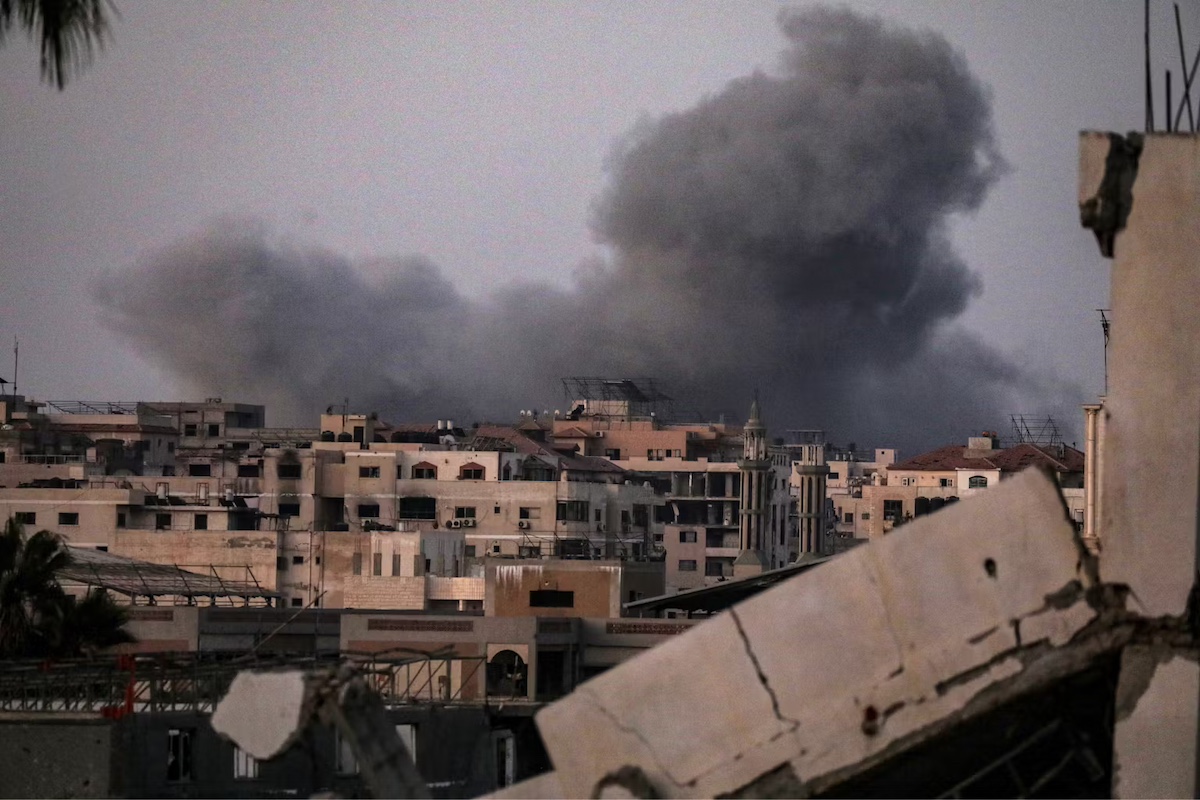
The United States, in collaboration with Israel, has unveiled a 20-point peace plan aimed at resolving the prolonged conflict with Hamas in Gaza. This comprehensive framework, endorsed by key Arab states, the UK, and France, seeks to bring an immediate end to hostilities, release Palestinian prisoners, and establish a new governance structure for Gaza. However, the plan faces significant challenges, particularly from Hamas and internal Israeli political dynamics. Hamas, excluded from the drafting process, is reportedly reviewing the proposal but may perceive it as an ultimatum. Israeli Prime Minister Benjamin Netanyahu’s coalition is also under strain, with key figures like Finance Minister Bezalel Smotrich openly opposing the plan, labeling it a diplomatic failure. The proposal includes provisions for humanitarian aid, a security perimeter around Gaza, and a transitional governance body chaired by Donald Trump. Yet, ambiguity around Israeli troop withdrawal, disarmament, and Palestinian statehood remains contentious. While the plan offers some concessions to Hamas, such as prisoner releases and amnesty, its success hinges on overcoming deep-seated mistrust and political resistance from both sides.
-

Internet access returns to Afghanistan after Taliban blackout
Internet and telecommunications services in Afghanistan are gradually being reinstated following a nationwide blackout imposed by the Taliban government, which sparked widespread criticism. Local journalists reported that connectivity is being restored across various provinces, while Netblocks, an internet monitoring organization, confirmed a ‘partial restoration’ of network services based on live data. The 48-hour shutdown severely disrupted businesses, halted flights, restricted access to emergency services, and heightened concerns about the further marginalization of women and girls, whose rights have been significantly curtailed since the Taliban regained power in 2021. The Taliban has yet to provide an official explanation for the blackout. However, last month, a spokesperson for the Taliban governor in Balkh province cited the shutdown as a measure ‘for the prevention of vices.’ Since their return to power, the Taliban has enforced numerous restrictions aligned with their interpretation of Islamic Sharia law. Afghan women have described the internet as a crucial link to the outside world, especially after the Taliban banned girls over the age of 12 from receiving an education. Women’s employment opportunities have also been drastically limited, and in September, books authored by women were removed from university curricula. The United Nations condemned the shutdown, warning that it left Afghanistan nearly entirely isolated from the global community and risked ‘inflicting significant harm on the Afghan people, including by threatening economic stability and exacerbating one of the world’s worst humanitarian crises.’
-
British man, 23, faces drug charges in Thailand
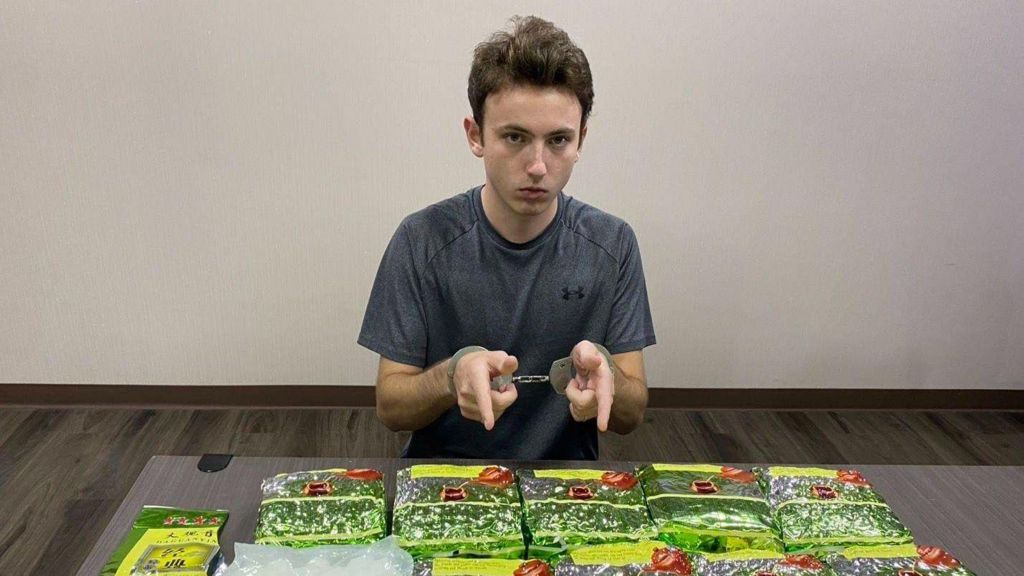
Thai authorities have apprehended a 23-year-old British man, George Wilson from Buckinghamshire, on charges of drug smuggling in Bangkok. The arrest took place at a hotel in the Sukhumvit area, where police discovered 9.1 kilograms (20 pounds) of crystal methamphetamine concealed in foil bags labeled as tea. The Metropolitan Police Bureau has confirmed that charges are being filed against Wilson for the possession and intended commercial sale of Category I controlled narcotics, specifically methamphetamine. The investigation was initiated following a tip-off about a planned narcotics handover involving foreign nationals at the hotel. Wilson has denied any knowledge of the suitcase’s contents in video footage captured during the arrest. The UK Foreign Office has acknowledged the incident, stating that it is in contact with Thai authorities. Thailand enforces stringent drug laws, with even minor possession offenses potentially resulting in severe penalties, including hefty fines and imprisonment. The case has drawn significant attention, with Thai police sharing images of the arrest on social media platforms.
-
UN approves larger force to combat Haiti gang violence
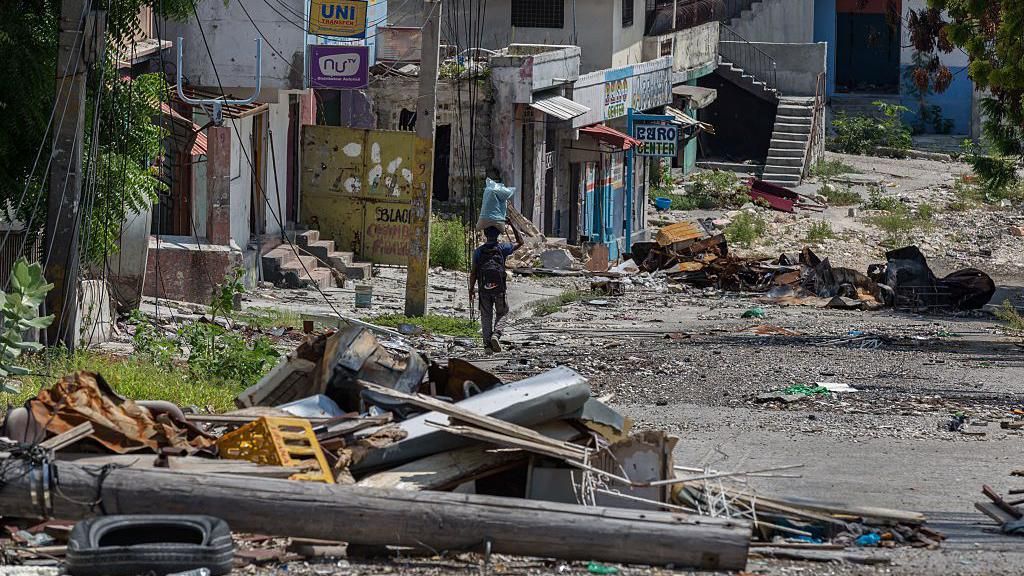
The United Nations Security Council has greenlit a significant expansion of international security forces in Haiti to address the escalating gang violence that has ravaged the Caribbean nation. The newly established ‘Gang Suppression Force’ (GSF) will comprise up to 5,550 police and military personnel, equipped with the authority to detain suspected gang members. This move aims to bolster the Kenyan-led Multinational Security Support mission (MSS), which, despite its initial mandate for 2,500 members, has struggled with insufficient numbers and resources since its deployment in 2023. The MSS has been largely ineffective in curbing the violence, which claimed over 5,500 lives in 2024 alone. Armed gangs now control approximately 85% of Haiti’s capital, Port-au-Prince, exacerbating the country’s ongoing economic and political crises following the assassination of its president in 2021. The UN Security Council adopted a US-proposed resolution on Tuesday to establish the GSF, which will collaborate with Haitian authorities to enhance security and facilitate humanitarian access. The current MSS force, numbering fewer than 1,000 officers, has been overwhelmed by the well-armed gangs. US Ambassador to the UN Mike Waltz emphasized that the expanded mission, five times the size of its predecessor, is crucial to restoring stability. The resolution also includes the creation of a UN support office in Haiti to provide logistical and operational assistance. Haiti’s UN representative, Ericq Pierre, hailed the decision as a pivotal moment in the nation’s struggle against one of its most severe challenges. The GSF’s deployment timeline and contributing countries remain unclear, but the move comes as nearly 1.3 million Haitians have been internally displaced due to rampant violence. Gangs continue to expand their territories, committing human rights violations such as child exploitation, murder, and trafficking.
-

Sudanese city under siege: ‘My son’s whole body is full of shrapnel’
The city of el-Fasher in Sudan’s Darfur region has become the epicenter of a brutal conflict as the paramilitary Rapid Support Forces (RSF) tighten their grip on the area. For 17 months, the RSF has besieged the city, which lies in their ethnic heartland, and recent weeks have seen significant advances toward key military sites. The conflict, which erupted in 2023 following a power struggle between the RSF and the Sudanese Armed Forces (SAF), has left tens of thousands of civilians trapped in a living nightmare.
-
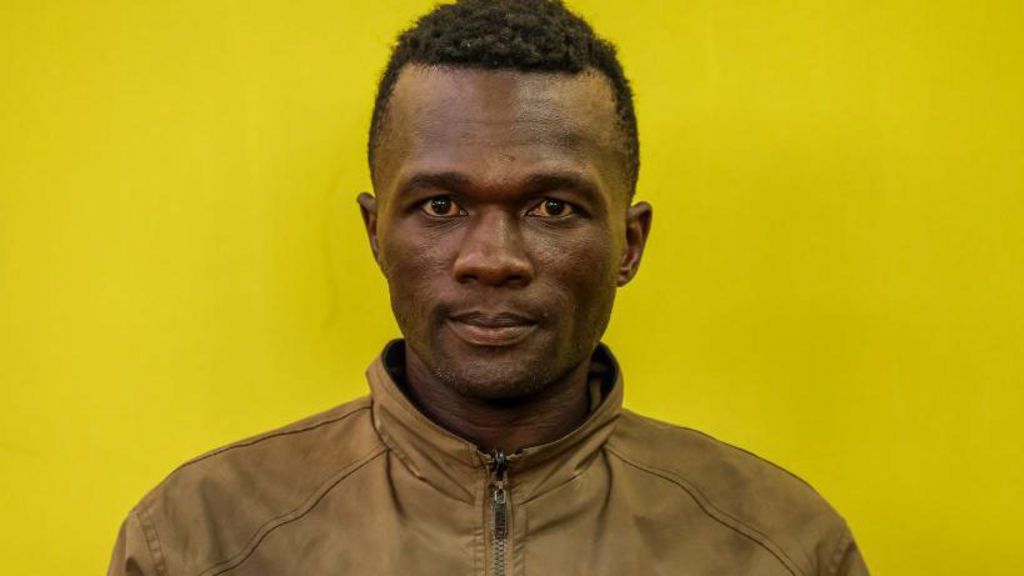
Kenya offers reward as anger grows over failure to arrest suspected serial killer
Kenyan authorities have announced a reward of 1 million shillings ($7,700) for information leading to the arrest of Collins Jumaisi Khalusha, a suspected serial killer who escaped police custody over a year ago. Khalusha, the prime suspect in the murders of more than 40 women, fled from a high-security police station in Nairobi on August 20, 2024, along with 12 others. The victims’ mutilated bodies were discovered in a disused quarry near the capital, sparking widespread outrage and criticism of the police’s handling of the case. Despite initial arrests of officers allegedly involved in his escape, Khalusha remains at large. Activists have accused the police of negligence, with some claiming that additional bodies may still be rotting in the quarry. The Directorate of Criminal Investigations (DCI) announced the reward following a local media documentary highlighting police inaction. Critics, however, view the move as a reactive measure rather than a genuine effort to solve the case. Interior Minister Kipchumba Murkomen has described the escape as ‘regrettable,’ while Khalusha’s lawyer alleged that his client was tortured into confessing. The case continues to raise questions about Kenya’s law enforcement capabilities and accountability.